NBC News Politics
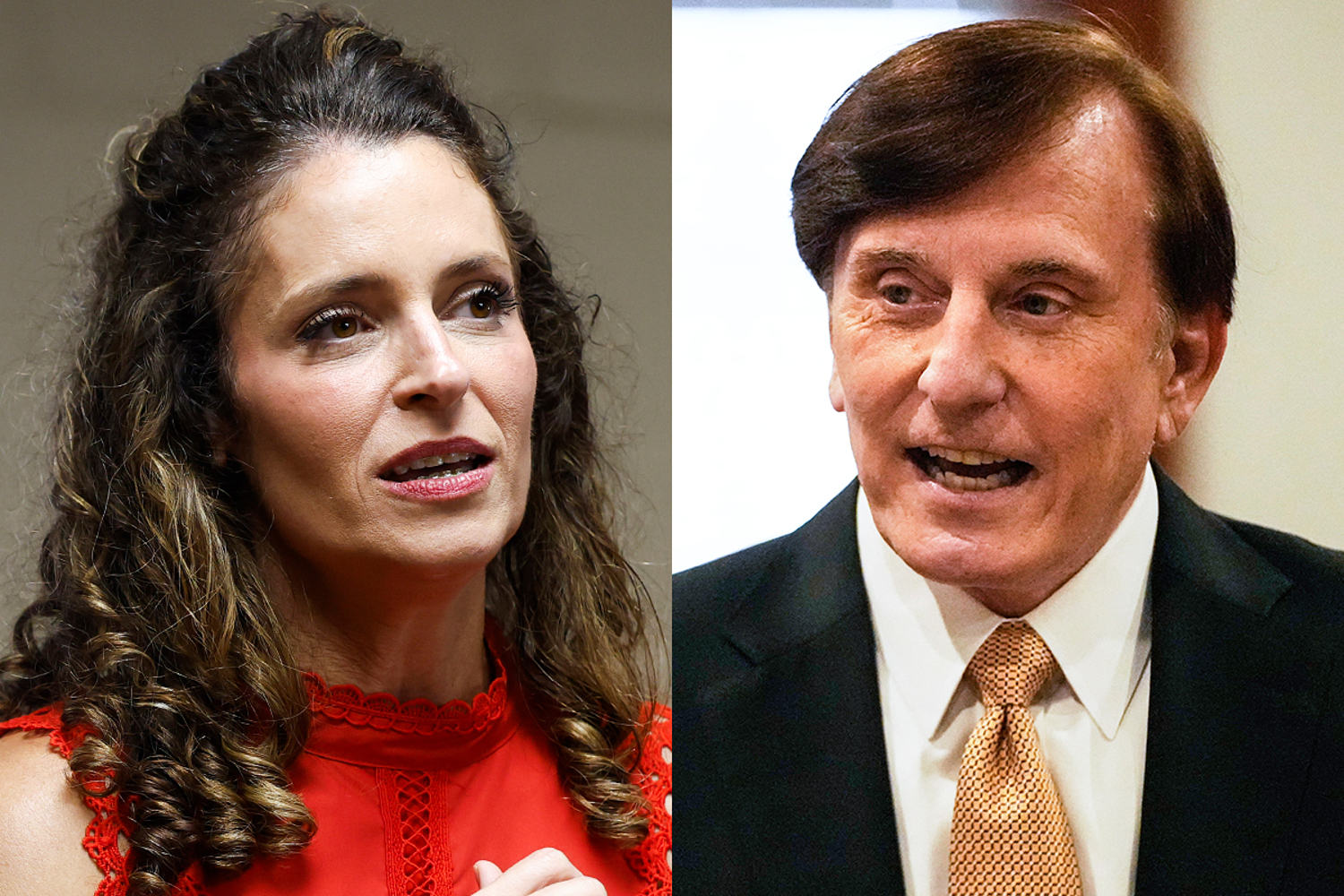
Trump’s endorsement faces another test in Louisiana Senate primary runoff
President Donald Trump’s endorsement will once again be on the ballot Saturday in the GOP primary runoff for Senate in Louisiana.
Center Left
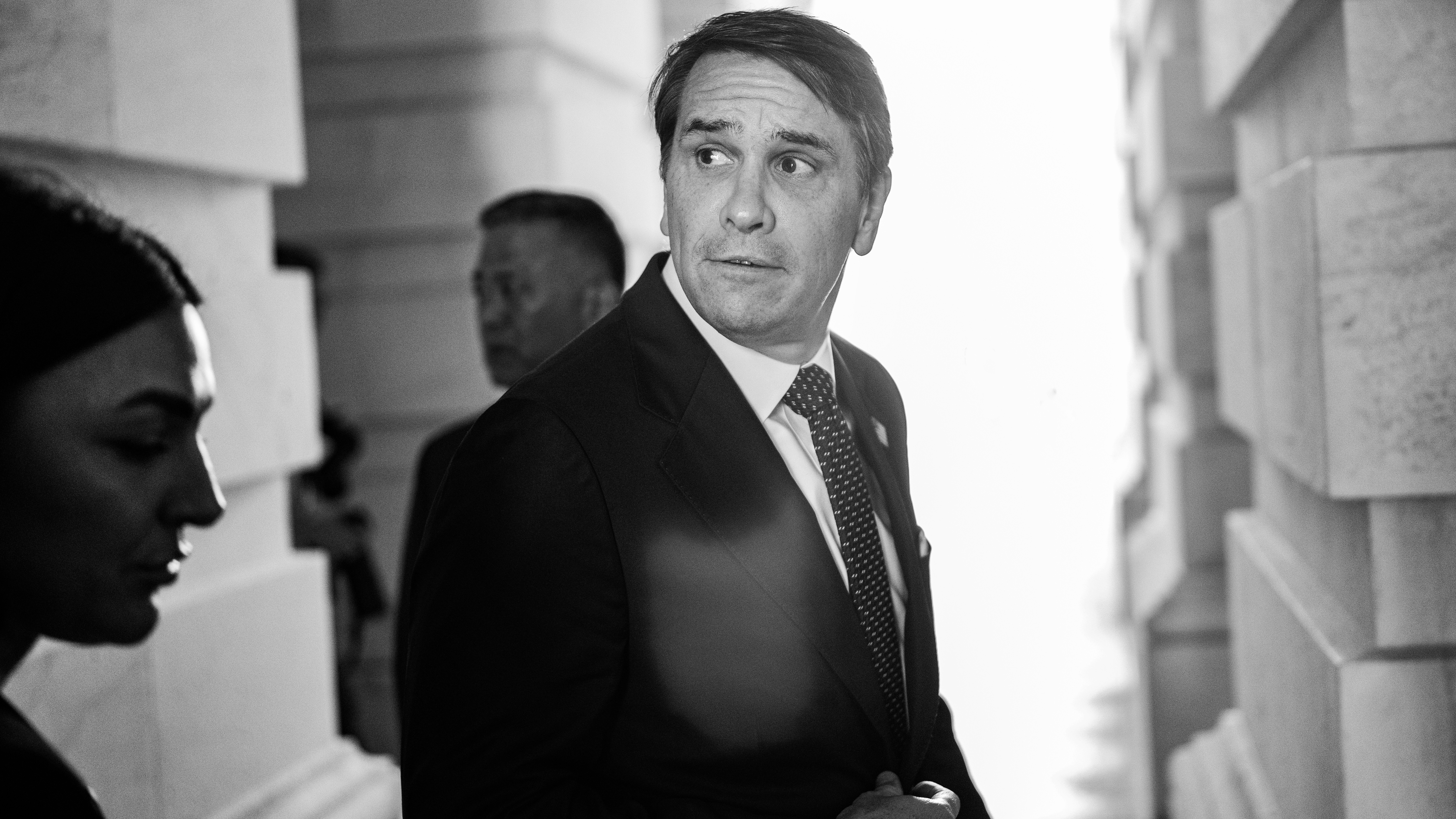
Trump’s former attorney general proposes a Senate blessing of Trump’s threats to the rule of law.
President Donald Trump’s endorsement will once again be on the ballot Saturday in the GOP primary runoff for Senate in Louisiana.
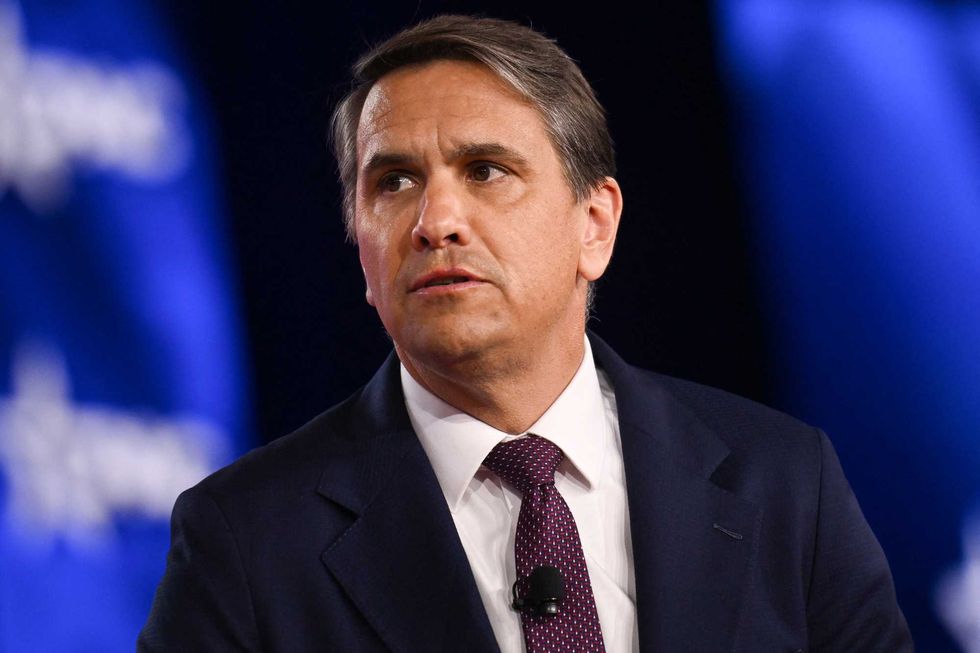
Jack Goldsmith, who previously served as the assistant attorney general for the Office of Legal Counsel under President George W. Bush, is issuing a stark warning Republican senators not to confirm Todd Blanche as attorney general.Thus far, Blanche has been auditioning for the attorney general gig, CNN said, by issuing indictments of President Donald Trump's political foes, whether or not they'll even make it to trial. Blanche was a former personal lawyer to Trump in a failed criminal defense against 34 felony fraud charges in New York. As Politico stated in April, Blanche is a "Trump loyalist who relishes every opportunity to pick a fight on the president’s behalf."“The DOJ is not a personal law firm, yet Donald Trump has installed another one of his former personal defense lawyers to lead the DOJ,” Rep. Don Beyer (D-Va.) wrote on social media at the time. “His blind allegiance to Trump is not a qualification for the job. He is wholly unfit to lead the DOJ.”The objections appear to also spread to conservatives like Goldsmith. Gregg Nunziata, the executive director for the Society for the Rule of Law, flagged Goldsmith's comments on X Friday. "If the Senate confirms Blanche, it’s not just confirming someone as attorney general; it’s endorsing Trump weaponization. That’s what’s at stake in the Senate confirmation: whether the Senate will exercise what I believe are its responsibilities to ensure that law enforcement isn’t abused. This is one very important check on that," Nunziata wrote."Now, to be clear," he added, "Blanche is going to be acting as attorney general one way or the other. But the question is whether the Senate will endorse what's been going on."Goldsmith and Bauer compared it to the nomination of Bill Pulte for the director of national intelligence post, which Trump withdrew and replaced with another appointee whom some also consider unqualified. The conversation was part of a discussion with former White House Counsel under President Barack Obama, Bob Bauer for his Substack and comes before former Attorney General Bill Barr wrote his glowing endorsement of Blanche for the Wall Street Journal. Attorney General Todd Blanche? by Jack GoldsmithThe vital role of the Senate in preventing law enforcement abuse Read on Substack
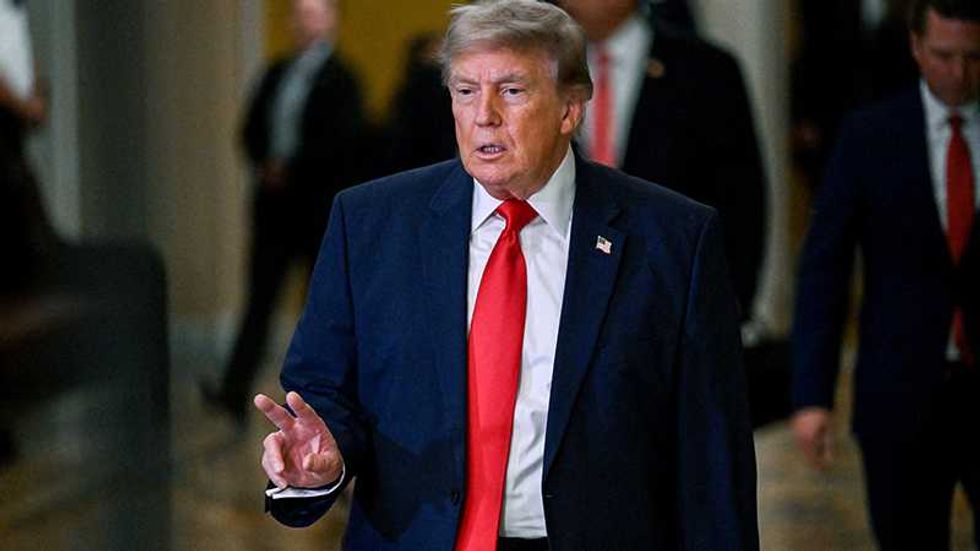
A president, by Constitutional design, has no legal authority or direct role in administering, altering, or conducting elections. Authority over the mechanics of elections is legally split between state governments and Congress, leaving no constitutional role for the executive branch.That did not stop Trump from commandeering the US Post Office with instructions to deliver mail ballots only to people on Trump-approved, Trump-purged voter lists. Trump’s “ENSURING CITIZENSHIP VERIFICATION AND INTEGRITY IN FEDERAL ELECTIONS” Executive Order, issued March 31, 2026, is his bold scheme to wrest election control from the states, which are Constitutionally vested with that authority, to transfer it to the federal government, which is not. On May 29,an eagerly compliant United States Postal Service issued proposed rules to effectuate Trump’s EO. On June 25, a federal judge ruled that “no federal law permits (Trump) to control mail-in voting through U.S.P.S.”Trump’s fear of the midterms and the accountability they threaten is palpable. Alongside his unprecedented post office ploy, he has ordered FBI raids and DOJ investigations of democratic voter outreach organizations, as he teases the deployment of armed federal agents to polling places. Sending armed troops to intimidate voters is, for obvious reasons, forbidden by federal law, and has not been done by any US president since the Civil War era.Trump is complementing these nefarious efforts with an all-out appropriation of state voter rolls, from which he has extracted data to build a master federal data base which has also been ruled illegal.A federal judge blocks Trump’s Orwellian databaseThreatening to cut funding to states that refuse to turn over their rolls, he has already sent federal agents to seize voter records in Arizona, Georgia, and Michigan. It’s plain extortion: To avoid losing federal resources they have already paid into, states must agree to run their voter rolls through the administration’s SAVE database (Systematic Alien Verification for Entitlements, not to be confused with Trump’s SAVE America Act), to verify citizenship. The SAVE database has been expanded, widely tested, and determined to be deeply flawed. In St. Louis County alone, for example, roughly 35% of the people labeled noncitizens were citizens who registered to vote at naturalization ceremonies.Trump has been using states’ voter roll data to build an illegal, nationwide database of Americans’ private information including home addresses, social security numbers, and other confidential “data-mined” information extracted by Palantir Technologies, a data mining and analytics firm co-founded by JD Vance promoter Peter Thiel. On Monday, a federal judge put a stop to it.In League of Women Voters v. DHS, US District Judge Sparkle Sooknanan ruled that the federal government “knowingly trampled on the privacy rights of American citizens in a manner that threatens the sacred right to vote” by utilizing an unauthorized voter-screening database. The court found the administration’s actions presented “major violations” of the Privacy Act, the Social Security Act, and the Administrative Procedure Act.A closer lookIn her landmark 75-page ruling, Judge Sooknanan excoriated the Trump administration for ignoring federal privacy laws as it overhauled and expanded the SAVE system into what she characterized as a “faulty citizenship checker.” The worst of her criticism was reserved for how recklessly the administration handled Americans’ personal data to expand the program. She wrote that “agencies were scrambling to comply with (Trump’s March 31) Executive Order aimed at reshaping federal elections, which directed them to create a system for mass voter verification,” and that in doing so, they “haphazardly combined and repurposed the private information of millions of Americans, including citizenship data that they knew to be unreliable.”She found that the system specifically violated the Social Security Act’s prohibition on disclosing Social Security numbers. The judge sharply condemned real-world consequences, noting that (Republican) states had “partnered with the federal government to access the database and are actively removing United States citizens from voter rolls based on inaccurate information.”She pointed to concrete examples from Texas where naturalized citizens were wrongly flagged and had their registrations canceled or placed under review, but citizens in Texas are not alone. The SAVE system merged Social Security data with immigration files extracted across multiple state and federal platforms, resulting in widespread data flaws and false positive matches. System studies revealed faulty data matching, outdated records, and user compliance failures resulting in high rates of false positives.

President Donald Trump‘s first-term Attorney General Bill Barr is making an aggressive public push for Senate Republicans to confirm Todd Blanche as the nation’s next attorney general, arguing the president’s acting Justice Department chief is the best person to lead the department. In a Wall Street Journal op-ed published Thursday, Barr wrote that Blanche is […]
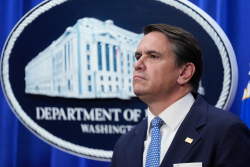
He is well-qualified and will run the department as well as anyone could under President Trump.

Anthony Constantino, the CEO of Sticker Mule, won his primary race on Tuesday against the Republican Party-endorsed candidate, Assemblymember Robert Smullen. The post Gutsy Trump-Endorsed CEO of Sticker Mule Anthony Constantino Wins New York 21 District Primary to Replace Elise Stefanik appeared first on The Gateway Pundit.
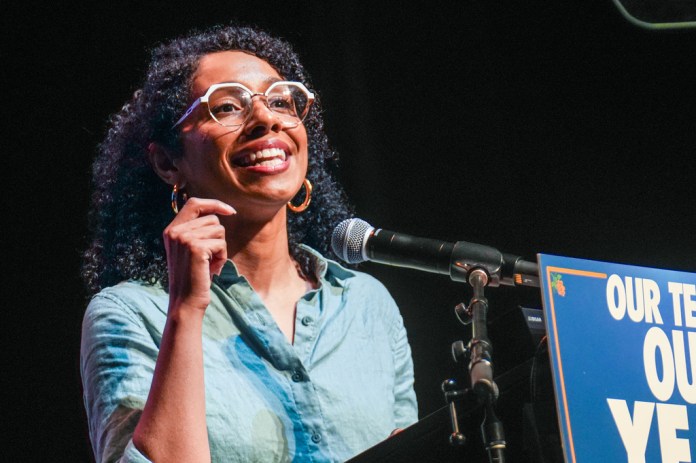
Darializa Avila Chevalier won the Democratic primary election for New York City’s 13th Congressional District on Tuesday night, defeating Rep. Adriano Espaillat (D-NY). Chevalier, a self-described socialist whom New York City Mayor Zohran Mamdani endorsed, defeated the five-term congressman by a margin of 49.4% of the vote to Espaillat’s 45.9%, good for a lead of […]
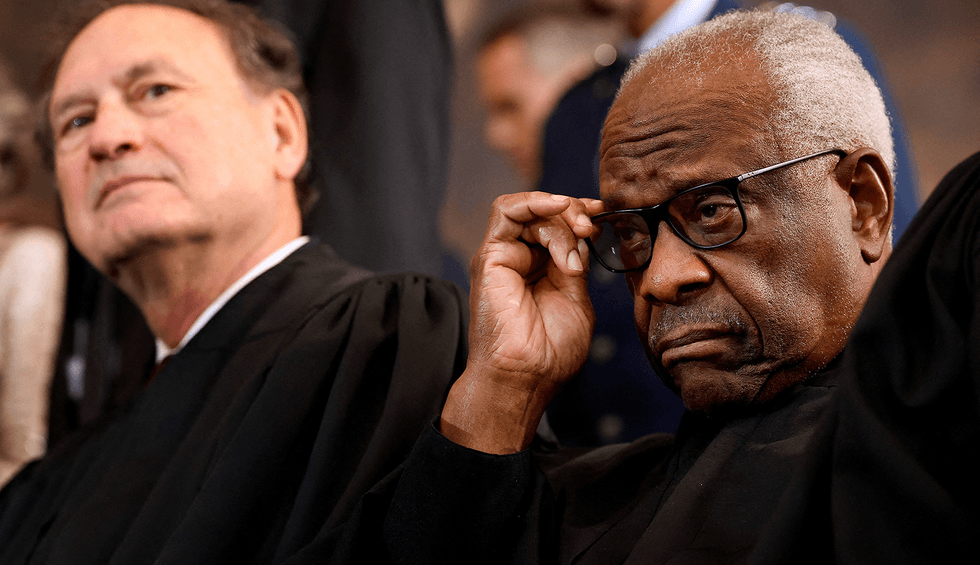
Clarence Thomas went more than 10 years without asking a single substantive question from the bench. His silence between 2006 and 2016 prompted commentators to call his courtroom quietude embarrassing, a sign of fatigue and a lack of intellectual candlepower. Even earlier in his career, he had earned the nickname of “Scalia’s Puppet” for his habit of joining majority opinions written by Justice Antonin Scalia, the outspoken and reactionary “originalist” who shared the dais with him until his death in 2016.But the characterization of Thomas as an inattentive echo of Scalia is wrong. Thomas has always been more extreme and dangerous than Scalia, and his influence has never been greater. After his bruising 1991 confirmation hearing, Thomas set his eyes on the goal of moving American law backward to the laissez-faire era of the Gilded Age, undoing the regulatory state of the New Deal, weakening the civil rights legislation of the 1950s and ’60s and undermining many of the forward-looking precedent decisions issued by the Warren Court. As Thomas reportedly told two of his law clerks in 1993, he planned to serve until 2034, and until then would continue to make the lives of liberals “miserable.” He has already made good on that pledge: He is now the second-longest serving Supreme Court justice in history. Thomas has always been more extreme and dangerous than Scalia, and his influence has never been greater. Thomas is best known for concurrences and dissents that seemed culled from the lunatic fringe when he wrote them, but were later embraced by the majority as the court moved hard right. On affirmative action, in a 1995 case on government contracting (Adarand Constructors v. Pena), his concurrence denounced “remedial racial preferences” in federal hiring as a form of “racial paternalism.” This was an astonishing choice of words for the nation’s second Black Supreme Court justice, who overcame childhood poverty and after a brief flirtation with Black nationalism, became the beneficiary of affirmative action at Yale Law School. Twenty-eight years later, however, in a majority opinion written by Chief Justice John Roberts (Students for Fair Admissions v. Harvard), the court ended affirmative action in higher education.On abortion in a 2000 case (Stenberg v. Carhart) that invalidated Nebraska’s late-term abortion ban, Thomas dissented, arguing that the Roe v. Wade decison was “grievously wrong,” and that nothing in the Constitution “dictates that a State” must legalize abortion. Twenty-two years later, Samuel Alito’s majority opinion in Dobbs v. Jackson Women’s Health Organization adopted Thomas’ view. Ditto for the Second Amendment. In Printz v. United States, a 1997 gun-regulation case, Thomas contributed a concurrence arguing that the amendment encompassed a personal right to keep and bear arms rather than simply a right connected with service in state militias, as prior case law had clearly held. Eleven years later, in District of Columbia v. Heller, the court recognized the personal right in an opinion authored by Scalia. Thomas went on to expand the personal right in 2022 with his majority opinion in New York State Rifle & Pistol Association v. Bruen, a decision that severely handicaps state and local authorities from enforcing gun-control laws. Thomas is also on record advising the court to revisit its precedent decisions on the right to court-appointed counsel in criminal trials (Gideon v. Wainwright, 1963); the right of married persons to contraception (Griswold v. Connecticut, 1965); the right of adults to engage in private consensual sex (Lawrence v. Texas, 2003); and the right to same-sex marriage (Obergefell v. Hodges, 2015). He has also called for the court to reconsider 1964’s New York Times v. Sullivan, the landmark case establishing First Amendment protections in defamation cases involving public officials and public figures, which is widely considered the lynchpin of freedom of the press in America. In a recent column published by the influential Scotusblog website, constitutional law scholar Erwin Chemerinsky noted that “Thomas is the only justice … who has openly said that precedent deserves little weight in constitutional law.” Despite his laid-back courtroom demeanor, Thomas has also been an active and loquacious speaker out of court on the right-wing banquet and convention circuit, especially in meetings of the Federalist Society and events hosted by Hillsdale College, the Michigan-based private Christian institution long recognized as a hub for conservative thought leaders and a breeding ground for the right-wing’s ever expanding culture wars. Supreme Court justices typically attend academic, judicial and bar-related conferences, and initially, Thomas’ public remarks were fairly judge-like, focusing on time-honored topics like judicial independence.