What's in the Iran deal Trump says he's ready to sign
Center Left
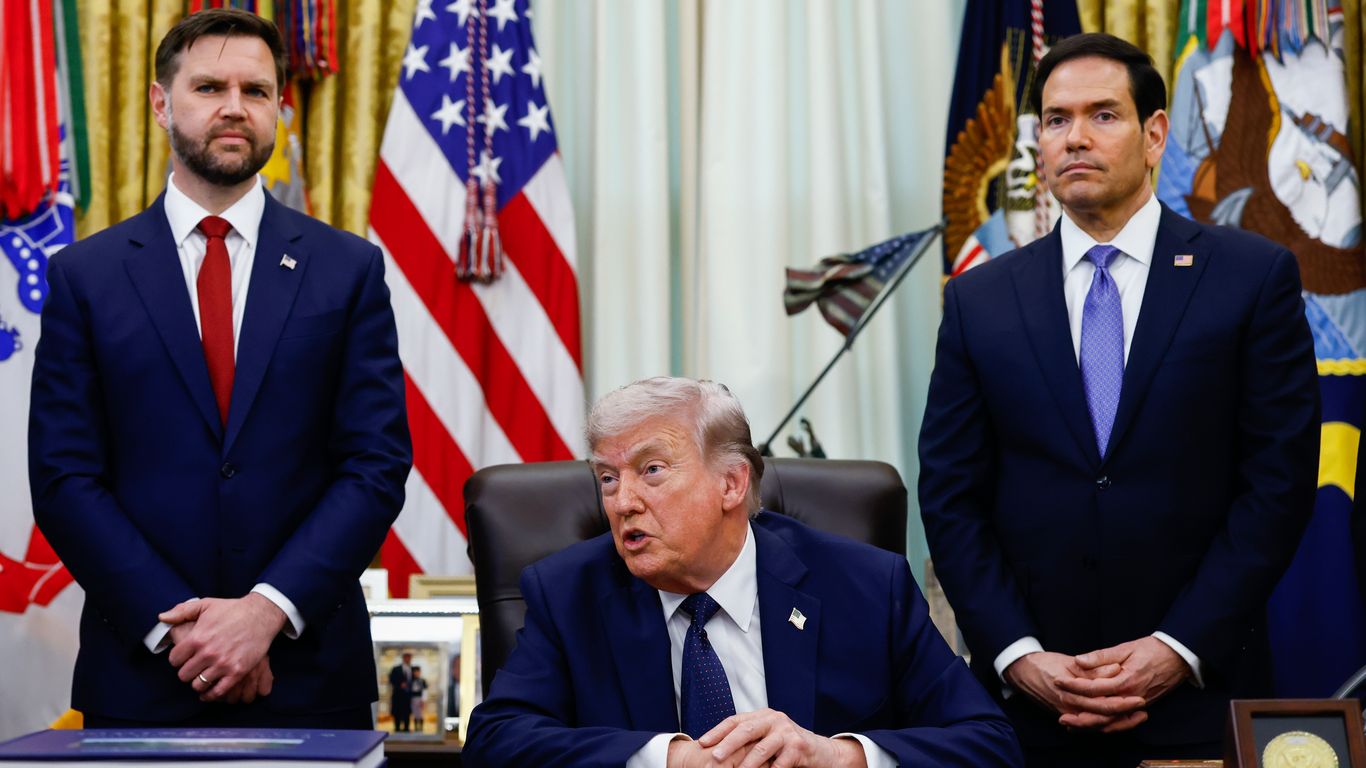
The U.S.-Iran memorandum of understanding President Trump claims will soon be signed calls for the Strait of Hormuz to reopen immediately without tolls and for Iran to receive sanctions relief based on compliance, according to a diplomat from one of the mediating countries and a U.S. official. Why it matters: The MOU would extend the ceasefire for 60 days, including in Lebanon, during which time nuclear negotiations would be held. The text includes a framework for addressing Iran's enriched uranium stockpile, though any action on Iran's nuclear program would depend on a second, more detailed accord.State of play: The diplomat from one of the mediating countries, who walked Axios through the latest text, said "the U.S. and Iran have agreed on the text of a deal," but acknowledged the deal still needed final sign-off.As of Thursday evening, the deal had been approved on the Iranian side at high levels but likely not by Supreme Leader Mojtaba Khamenei, two sources with knowledge said. Trump said he expected a signing ceremony over the weekend. A spokesperson for Iran's foreign ministry said Tehran had "not yet reached a final decision."The White House has thought a deal was close several times over the past two months, only for talks to fall through. The diplomat expressed optimism that, this time, the text would stick.The latest: Four U.S. Air Force C-17 planes departed to Europe on Thursday, moving equipment for possible travel by Vice President Vance to a signing ceremony in Geneva in the coming days.Behind the scenes: According to two diplomats from two mediating countries and two U.S. officials, the tentative agreement was reached on Wednesday night after hours of negotiations between Qatari mediator Ali Al-Thawadi and Iranian Foreign Minister Abbas Araghchi.During the talks in Tehran, Al-Thawadi spoke on the phone multiple times with Trump's envoys, Steve Witkoff and Jared Kushner, two sources said.Trump's announcement that a deal had been finalized came as a surprise to Israeli Prime Minister Benjamin Netanyahu.In recent days, Netanyahu found himself in the dark, calling allies close to the Trump administration to try and gather information, according to a U.S. source with direct knowledge. Breaking it down: Under the MOU, Iran would make certain commitments on its nuclear program — first and foremost to never acquire a nuclear weapon and to resolve the standoff around its enriched uranium.A senior U.S. official said Trump agreed that one of the options for resolving the issue could be down-blending Iran's highly enriched uranium inside the country under the supervision of UN inspectors. Any steps on Iran's nuclear program would only take place if a second deal is reached — an uncertain prospect given how difficult the far less technical negotiations over the MOU have been.The diplomat claimed the MOU "goes into details on all the nuclear issues" and "satisfies all U.S. requirements."Zoom in: The MOU calls for the strait to be reopened immediately without tolls, with a return to pre-war shipping volumes within 30 days. In return, the U.S. blockade would also be lifted. U.S. officials previously told Axios that after reopening the strait, Iran would be given temporary sanctions waivers to allow it to sell oil for 60 days. That would generate precious revenue for Tehran.The sanctions relief would increase if Iran complies with the initial agreement and shows "good faith" in subsequent negotiations. "There is no set date for sanctions relief and it will be tied to the implementation of the deal," the diplomat said.The intrigue: It's unclear whether the text includes any detailed explanation of what will happen with the billions of Iranian dollars frozen overseas. Iran has insisted that it must receive some money immediately upon signing any initial deal, while the U.S. has said it would be released in tranches based on compliance.A U.S. source outside the administration expressed concern that the issue of the frozen funds may be addressed in a secret side agreement. A U.S. official recently denied that possibility to Axios.The U.S., Iran and Qatar in recent days discussed a mechanism by which Iran would gain access to some of its frozen funds in Qatar for purchasing humanitarian goods, according to a U.S. official and a source from one of the mediating countries. What's next: The deal, which was mediated jointly by Qatar and Pakistan, will be called the Islamabad agreement — if, that is, both sides ultimately agree to sign."We are working with the parties to put the final touches on the deal and set a date for the signing ceremony," the diplomat from one of the mediating countries said.
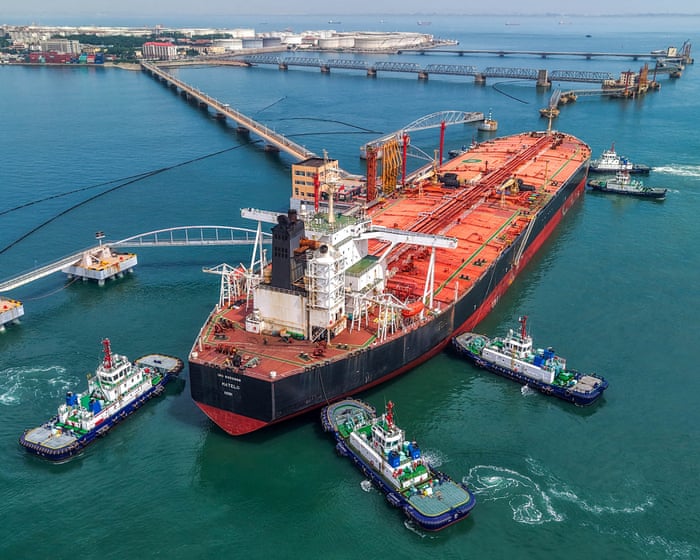
On Thursday morning, President Donald Trump threatened to hit Iran “VERY HARD,” seize its main oil export terminal at Kharg Island, and take “total control” of its energy industry. By the afternoon, he’d canceled it all on indications that Iran had approved “discussions and final points” toward a deal to reopen the Strait of Hormuz […]
Brent crude falls as optimism rises strait of Hormuz could reopen over the weekendBusiness live – latest updatesGlobal oil prices fell on Friday to lows not seen since the first week of the Iran crisis after Donald Trump claimed he was close to reaching a peace deal with Tehran.The price of Brent crude began to tumble from about $93 a barrel in overnight trade after the US president called off further military strikes against Iran scheduled for the evening. Continue reading...
The mayor of a Pennsylvania borough defended his use of the N-word during a confrontation with children and young adults at a local park — despite outrage from local parents.Daniel Berard, a registered Republican and mayor of Northumberland, Pennsylvania, told Raw Story via a phone call about an April 17 incident at the Second Street Playground where he said he gave the group a “lawful order” to leave the park.In a video of the incident viewed by Raw Story, Berard uses the N-word after the parkgoers repeatedly called him the N-word and other insults.“Didn't you hear the disrespect and sour treatment that these juveniles treated me with?” Berard asked Raw Story.“It's self-explanatory, and when they called me N—, they called me on the film at least four times, and off the film in the beginning they called me that multiple times. Multiple times. And my response to them is, ‘I'm not your N—.’”Berard used the racial slur again while speaking with Raw Story.“It's a despicable, despiteful (sic), disrespectful word to say to anyone, and these kids didn't know me, and they were swinging that word … like it's part of their vocabulary, and my response to them was, ‘I'm not your N-word.’ That's what I said,” Berard said.Tara Phelan, a mother of a 13-year-old biracial son who was present during the incident, said her son told her the mayor said to the group, “You N— have been told you are not allowed to be at this park once it's dark.”Phelan, a 46-year-old full-time caretaker in Northumberland, said Berard made the comment unprompted and “was using the hard ‘R,’” causing her son to come home upset.He was a mess,” Phelan, who is white, said of her son, who is half-Black. “He just was in disbelief. There was a lot of fear there.” Tara Phelan (second from right), one of the parents speaking out against the mayor of Northumberland, Pennsylvania, with her family (Photo courtesy of Tara Phelan)Berard told Raw Story the claim that he was unprovoked was a "lie." The beginning of the incident was not captured on video. "I used the hard 'R.' They used the 'ga,'" Berard said."Same word, just spoken a different way, and they can claim all they want I said this awful word to them unprovoked, but that’s simply not true."Berard said he "did not know what color they were — did not matter to me" about the parkgoers he interacted with on April 17.Phelan and other residents addressed the incident at a Northumberland Borough Council meeting on May 5 but were disappointed by the mayor’s response, which Phelan called “very smug.”“I was hoping that the response would be that he would issue some kind of a public apology and try and do better, or step down if he's not going to serve all of the members of this community,” Phelan said.Angela Jodon, a 31-year-old Northumberland mother who works in human services, attended the Council meeting and spoke up about the incident after she said her 13-year-old daughter was chased the day before by a man calling her the N-word.“There's some words that you're just not allowed to say, and it's pretty well universally understood that is not a word people say, and [the mayor] was saying it with a hard ‘er’,” Jodon, who is Black, told Raw Story after she saw the video of the incident.“There is a version of the word we all know with the ‘A’ at the end, and it is used amongst people of color towards each other, but that is a word that is not allowed with the hard ‘er.’“Everybody knows that. Socially, it's unacceptable anymore, and it has been unacceptable for a very long time, and I believe because he's in a position of power, he felt like he could say it … it doesn't matter what context you're using it. It's offensive, and it's terrifying for people of color to hear the people that's representing them in the community saying that as well.”‘Unconscionable’Phelan said her son was on his way out of the park around 8:18 p.m. when the exchange with Berard happened. Her 20-year-old daughter was waiting to pick him up before his 8:30 p.m. curfew, and the children know “they have to be out of there by the time it gets dark,” she said.Jeramee Clark, a 20-year-old construction laborer from Sunbury, was present during the incident. He estimated about 20 people were present at the park, ages 13 to 20.Clark, who is Black, said he spoke with a police officer who “did tell us, as long as we're not disturbing the peace or anything, whatsoever, we're fine being there,” even after the park lights were on. Second Street Playground in Northumberland, Pennsylvania (Photo courtesy of Tara Phelan)Berard said part of his job is “to uphold the ordinances of the borough” and that the group told him they would still return after he asked them to leave. Berard said the parkgoers came back to play basketball, prompting him to call the police to tell them to leave.Clark disputed Berard’s account, noting that the mayor was in the alleyway during the exchange.
This story was originally published by the Guardian and is reproduced here as part of the Climate Desk collaboration. Donald Trump’s immigration crackdown is largely targeting people from the countries most vulnerable to displacement from climate-driven disasters, a Guardian analysis shows. As the Trump administration pushes policies to boost planet-heating fossil fuels, millions of people are being forced to flee their homelands due to […]
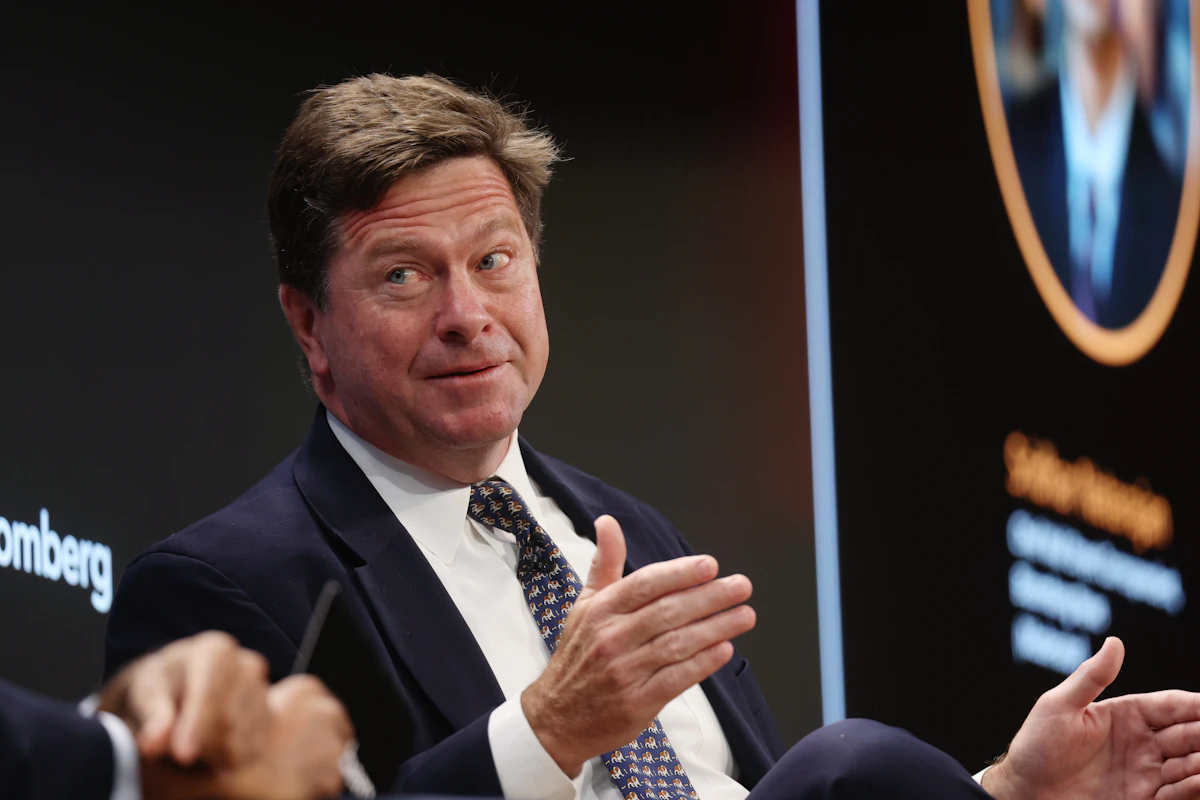
The Trump administration’s Epstein investigator is getting his shot at running U.S. national intelligence.The president’s nominating process to replace Tulsi Gabbard took a sudden right turn Thursday when he named Jay Clayton, the U.S. attorney for the Southern District of New York, as his permanent director of national intelligence.“Few people anywhere in the Legal Community are respected at the level of Jay. I encourage the United States Senate to confirm Jay as soon as possible,” Donald Trump wrote on Truth Social.Clayton has previously worked as a partner at Sullivan & Cromwell, providing counsel on corporate crisis management. He was also an adjunct professor at the University of Pennsylvania’s law school. He was handed his role atop the Southern District of New York without any prosecutorial experience, and seemingly does not have any relevant experience to run America’s national security operation, either.The president had initially tapped Bill Pulte, a national real estate developer serving as the director of the Federal Housing Finance Agency, to temporarily serve in Gabbard’s stead. But Pulte—who similarly had no relevant experience for the job—became a point of contention with lawmakers, who argued that his appointment, even just as acting DNI, was effectively illegal as his résumé lacked requirements for the job that had been written into the law.To prevent Pulte becoming permanent DNI, Democrats blocked efforts to renew FISA Section 702, a statute that allows federal agencies such as the NSA and the CIA to surveil people without warrants, but that is set to expire Friday.It is not yet clear how Clayton will change opinions—or the written requirements. Why the White House singled him out as an exceptional candidate to satisfy the administration’s agenda is far less murky.Clayton has passed countless litmus tests proving his loyalty to the MAGA movement. He has seeded doubt in America’s election integrity, claiming as recently as Monday that there is a “deep problem with voting in America.” He has also defended Trump’s $1.8 billion taxpayer-bankrolled slush fund for the president’s aggrieved political allies, arguing with CNBC last month that Trump was entitled to “recourse” after a government contractor leaked his tax returns.“Anybody whose tax returns have been intentionally leaked should have recourse against the government,” Clayton said.And Clayton unquestioningly did the president’s bidding with regard to his appointment to the SDNY, probing Jeffrey Epstein’s social connections—so long as they tied back to former Democratic President Bill Clinton, former Obama administration adviser Larry Summers, and Democratic donor Reid Hoffman. Later, Clayton was handed an additional Trump administration priority in overseeing the investigation into Venezuelan President Nicolás Maduro, despite his dubious financial ties to the cases.It is not clear how quickly the Senate will move to confirm Clayton’s confirmation. Among other steps, Clayton still has to fill out a detailed questionnaire, undergo an FBI background check, and sit for a public hearing before the upper chamber conducts its final vote.This story has been updated.
A chorus of Senate and House Republicans broke sharply with President Donald Trump Thursday over his escalating threats to Iran, with one loyalist invoking the specter of Vietnam and others warning the conflict will cost them in the midterm elections.The complaints grew louder within hours after Trump threatened to seize Kharg Island, a critical Iranian oil hub, in the latest of a string of statements that have whipsawed allies and adversaries alike — and for many Republican lawmakers, it was a threat too far, reported CNN."I don't support boots on the ground. I don't think America has the stomach for that," said Rep. Nick LaLota (R-NY), who declined to rule out backing a formal congressional vote to refuse to authorize the conflict — a move that would put him on a collision course with party leadership.The sharpest warning came from Sen. John Kennedy (R-LA), one of Trump's most reliable allies on Capitol Hill, who said he was "worried" about the Kharg Island plan and offered a blunt historical parallel that few in his party have been willing to voice."This is how it started in Vietnam," Kennedy said, while also acknowledging the steep economic toll the conflict is already exacting on American households.That toll is rapidly becoming the central anxiety for Republicans facing voters in November. Gas prices and inflation are spiking again, and many lawmakers say the White House has badly mishandled its messaging — a frustration compounded by Trump's recent remark that he "loves" inflation, which drew open bewilderment from members of his own party."Makes absolutely no sense to me," said Sen. John Cornyn (R-TX). “The fact that we’re not talking about or focused on the things that most people care about at election time, kitchen table issues, I think, is a problem.”Even Republicans who support the war agree the president and his administration have not done a great job explaining why it's necessary, and that could hurt GOP congressional candidates this fall."People often vote their pocketbook," said Rep. Kevin Cramer (R-ND). "If people don’t feel secure financially, they oftentimes obviously respond by choosing somebody else.”
Should a desperate Donald Trump sign off on the latest deal with Iran that led him to call off a major attack late Thursday, he would suffer a “major humiliation” based on leaked details.That is according to Insider editor Michael Weiss, who appeared on MS NOW’s “Morning Joe” on Friday morning and claimed that the president has come to the realization that he was duped into the whole endeavor.Pointing out that the president has announced an imminent deal is at hand countless times, co-host Joe Scarborough asked, “Why do we keep hearing the same thing over and over and over again when the Iranians have rejected this deal time and again, and hardliners in America have rejected this deal?”Weiss replied, “I mean, I just want to read you — Iran's Mehr News Agency put out their version of this deal. Now, again, underscore we ... don't know if this is going to be the memorandum of understanding. But in their version of the deal they get $300 billion in reconstruction money, $24 billion in a cash infusion, half of which will come before the negotiations begin.”“Remember, this isn't a deal, this is an agreement to keep talking and an extension of a cease-fire. There's nothing new in here,” he elaborated. “Again, the Iranian version that talks about the missile program or financing or arming terrorist proxies like Lebanese Hezbollah.”“I mean, this would be an utter humiliation. I could see why Trump would want JD Vance to go to a signing ceremony instead of Donald Trump,” he laughed.He continued, “If this is any pale shade of what this thing is going to look like — look, I think he knows he's being had. He knows he's been abased by a regime that shouldn't exist by his lights, right? We were going in to do regime change. The Israelis certainly thought we were going to do regime change. We were going to arm the Kurds. We were going to install Ahmadinejad, a Holocaust-denying former president, as our preferred satrap."All of these plans came to dust, and he just wants out of it. I think [MS NOW’s] Jonathan [Lemire] is right: he's got buyer's remorse. He thinks he's been sold a bill of goods. He probably has been. And he just wants this thing over and done with. He's already looking at Cuba.” - YouTube youtu.be
President Donald Trump is planning to hassle Congress to expunge his impeachments.The president is trying to get Republican lawmakers to remove his impeachments from the record even though legally such a move is impossible, reported The Wall Street Journal’s Annie Linskey, Olivia Beavers and Natalie Andrews on Thursday.“It should be done because I did nothing wrong,” Trump told the Journal. “It was a rigged deal—it was a whole rigged situation.”The Journal noted that this could backfire, saying “Any move to attempt to erase the two impeachments, in 2019 and 2021, would open up a debate about Trump’s past behavior in office, forcing GOP lawmakers to relitigate charges of abuse of power, obstruction of Congress and inciting an insurrection. Facing the prospect of losing their majority in the House, Republicans are trying to shift focus to the economy and high costs, the issues that voters care about most.”Yet even though “the measure likely wouldn’t be considered until after the November election,” the issue could still become a political lightning rod. “Trump has posted news clips about voiding the impeachments on his Truth Social account,” the Journal reported. “But this week, he played down his own role in the effort. ‘If they want to do it, I’m honored by it,’ the president said.”The Journal added that House Speaker Mike Johnson (R—LA) has discussed the resolution with Trump. He has also discussed it with Harvard law professor emeritus Alan Dershowitz“I think it makes a lot of sense the more the evidence comes out, the more we know they really were sham impeachments,” Johnson told the Journal, later adding that “we were saying it at the time, now we know. And they make a very compelling case that it should be expunged from the record, because it was a hyperpartisan attack job.”Speaking with this journalist for Salon in 2019, Dershowitz — who later defended Trump during one of his impeachment trials — denied that he would ever refuse to step down if he lost an election, which is what prompted the impeachment at which Dershowitz did not represent Trump.“No president will refuse to step down if his opponent is elected in his place,” Dershowitz told Salon. “It just will not happen, and the American public would never tolerate it.”Discussing the Wall Street Journal, CNN’s correspondents agreed that Trump’s attempt to scrub the impeachment is both purely symbolic and likely to resurrect the Ukraine coercion and election denying scandals that prompted those impeachments in the first place. - YouTube youtu.be