RedState

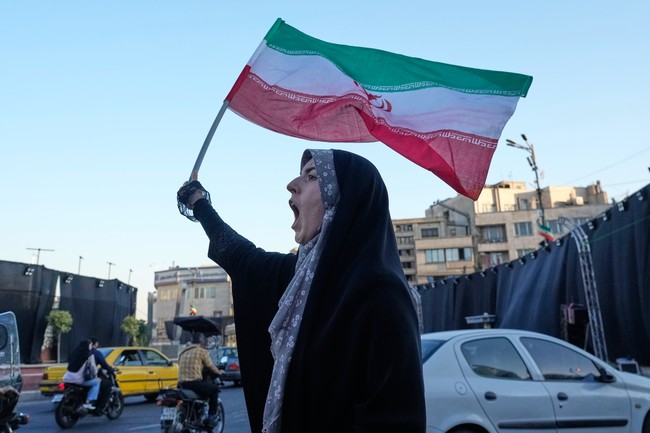
The U.S. military is conducting strikes on Iranian targets in the area of the Strait of Hormuz in retaliation for an attack Saturday morning on a commercial tanker, the U.S. military central command said.Why it matters: This is the second wave of U.S. strikes in Iran over the last 24 hours, amid increasing tensions in the strait —which could put the shaky U.S.-Iran memorandum of understanding at risk. Driving the news: On Saturday morning the Iranian Revolutionary Guards Corps launched an attack drone at the M/T Kiku tanker, which was passing in the Strait of Hormuz with more than two million barrels of crude oil, CENTCOM said.The incident happened several hours after the U.S. conducted strikes on Iranian targets in retaliation for another attack on a commercial ship on Thursday. The Iranians retaliated to the first wave of U.S. strikes by attacking targets in Bahrain early Saturday. State of play: CENTCOM said in a statement that U.S. aircraft targeted Iranian military surveillance infrastructure, communication systems, air defense sites, drone storage facilities, and minelayer capabilities.What they are saying: "Iran was given a chance to honor the ceasefire agreement but elected not to," CENTCOM said. This is a developing story.
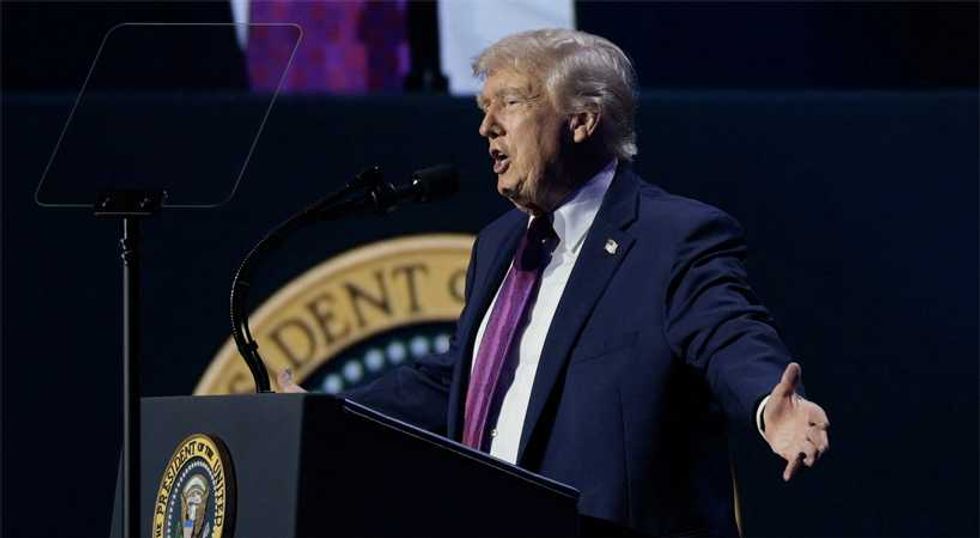
President Donald Trump's claim that "everybody" stayed until the end of his State Fair kickoff speech was false — and it revived a boast he has been making, and getting wrong, for years, according to a CNN fact-check by Daniel Dale.Trump posted on social media on Thursday about the address he had delivered the previous day to launch the Great American State Fair on the National Mall in Washington, D.C."Everybody stayed right until the end of my Speech because they loved hearing about a truly successful America," Trump wrote.That wasn't accurate, Dale reported. Video posted by The Bulwark, a Trump-critical media outlet, showed dozens of people streaming out of the event roughly 17 minutes into the president's 28-minute address. CNN senior correspondent Donie O'Sullivan, who was on the scene interviewing attendees, said he saw hundreds of people heading for the exits while Trump was still speaking.As Dale noted, there are plenty of unremarkable reasons people left. O'Sullivan said some attendees told him they had come to see the pre-speech military jet flyovers. The crowd for the officially nonpartisan 250th-anniversary event, held on the pedestrian-friendly Mall in the heavily Democratic capital, likely included more casual onlookers than a typical Trump rally. And, Dale acknowledged, most of the crowd did stay until the end — but Trump was the one who claimed "everybody" remained.Dale wrote that it isn't clear whether Trump actually noticed people leaving or saw the Bulwark video. But he placed the claim in the context of what he described as Trump's long record as "a serial liar about trivial matters" and a chronic exaggerator of his crowd sizes and popularity, noting the president has proven highly sensitive to facts that puncture his cultivated image of singular magnetism.The boast is a recycled one. Dale traced it back to Trump's 2024 campaign, when then-Vice President Kamala Harris said during their debate that people left his rallies early "out of exhaustion and boredom." Trump shot back that "people don't leave my rallies" and repeated variations of the claim at events in Arizona, North Carolina, and Michigan.He wasn't correct then either, Dale reported, citing contemporaneous accounts from multiple outlets. The Detroit Free Press observed a Michigan crowd growing "noticeably thinner" during an 85-minute speech, while The New York Times described a "steady exodus" within minutes of a North Carolina speech days before the election. The Washington Post documented "scores of people" leaving early across many 2024 events, and The Guardian reported that roughly three in 10 attendees left a Georgia event before Trump finished.None of those early departures stopped Trump from winning the election, Dale noted.The fact-check also highlighted a revealing moment from a September 2024 Michigan rally, when Trump tangled himself in the claim in real time — beginning to acknowledge "the people that you see leaving," then catching himself to insist "nobody ever leaves," before adding that when they do, he finishes "up quick," and finally suggesting anyone getting up was merely lining up for backstage photos. As Dale put it, that monologue made clear the boast simply wasn't true.
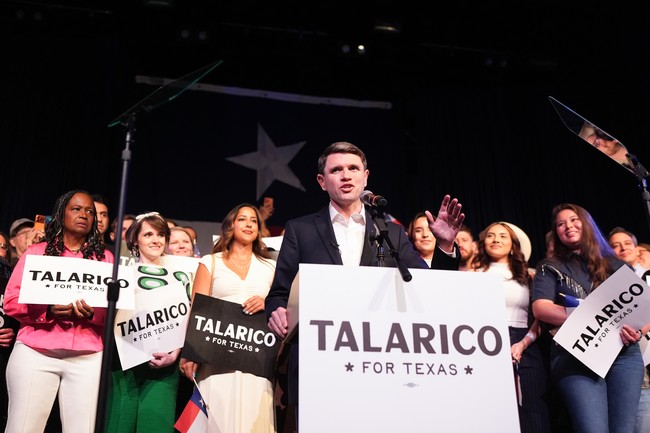

House Speaker Mike Johnson floated the idea of getting a tattoo Sunday in honor of President Donald Trump and his agenda, telling Fox News exactly what it would say and where he would get it.Speaking with Fox News’ Maria Bartiromo, Johnson was asked about Trump’s controversial voter ID bill known as the SAVE Act, which Trump has furiously insisted Republicans instead refer to as the “SAVE America Act,” despite the bill officially being called the “SAVE Act.”“The president and I laughed about it in the Oval [Office] last week,” Johnson said. “I told him, 'You know Mr. President, I don't have any tattoos, but if I did, it'd say “Save America” on my shoulder,’ okay? We passed it three times in the House already, we're going to pass it again!”As Johnson noted that the tattoo would be on his shoulder, he oddly pointed to his chest.Last week, Trump vowed to block the passage of an affordable housing bill Congress passed on a bipartisan basis until the SAVE Act was delivered to his desk for final approval.Described by some critics as a form of “voter suppression,” The SAVE Act would require voters to provide proof of citizenship to register to vote, something experts say could pose hurdles for the 52% of voters who don’t possess a passport and the 11% who don’t have access to their birth certificate. The bill would also disproportionately affect voters with lower incomes, who make up a significant share of Democratic Party voters.Mike Johnson says if he got a tattoo it would be to honor Trump and his agenda on his shoulder (he says as he points to his chest) pic.twitter.com/rigPEFruk5— Alexander Willis (@ReporterWillis) June 28, 2026
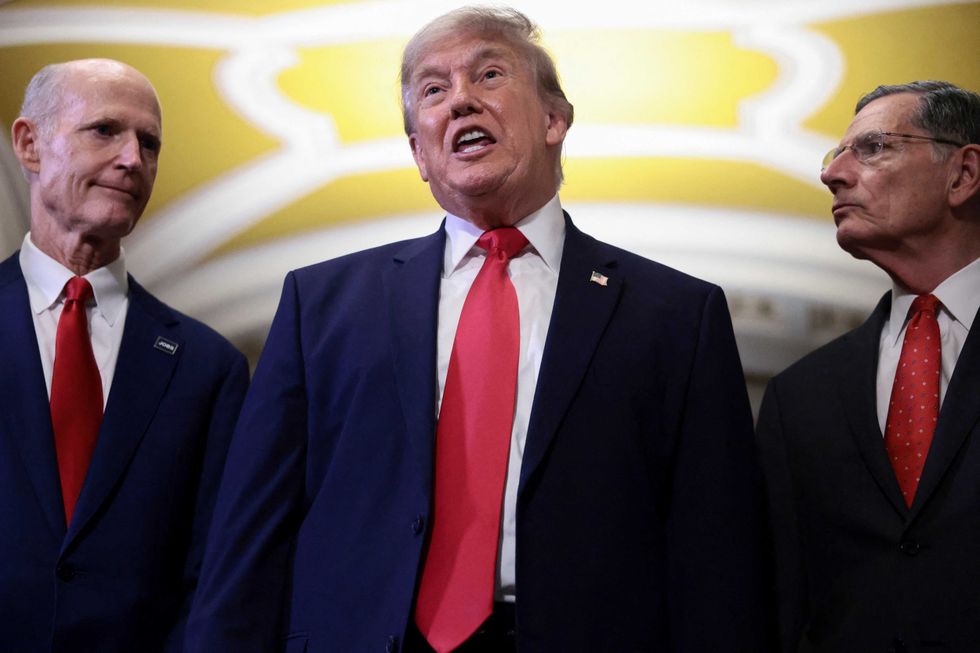
President Donald Trump has spent the last several weeks sparking chaos for Senate Republicans, who only now, according to New York Times columnist Jamelle Bouie, are “coming to understand” the threat the president poses, though the realization may be “a bit too late.”Trump has aggressively pushed Senate Republicans to advance his controversial voter ID bill known as the SAVE Act, despite Senate Majority Leader John Thune’s insistence that the bill lacks adequate support in the GOP caucus. Trump also derailed the Senate GOP’s entire agenda with a surprise cancellation of a Senate confirmation hearing, and caused further chaos by refusing to sign a bi-partisan bill on affordable housing.With the midterm elections just months away, Senate Republicans, Bouie argued, are starting to wake up to the threat Trump poses for their own political survival.“Trump does not identify himself with the Republican Party. He identifies himself with his own political standing. And so, if he feels he needs to do something to protect his standing that harms Republicans, he’ll do it without even thinking,” Bouie said in an episode of “The Opinions,” transcribed by The New York Times. “And Senate Republicans in particular, who did not expect to be fighting for their majority this fall, are somehow only now coming to understand that, yes, if you are in his way, he is going to make life difficult for you, even if that costs you a Senate majority. And there’s a 50/50 chance, 60/40 chance that, yeah, it costs the Republicans their Senate majority.”Amid Trump’s cratering favorability among Americans, the Senate may very well end up in Democratic Party control, an idea that analysts previously thought unthinkable. But Senate Republicans’ realization may have come too late, Bouie argued.“Politically for them, it’s just like a bit too late, right?” Bouie said. “They already spent all of 2025 tying themselves incredibly tightly to the administration under, as I read it, irrational exuberance – this idea that kind of caught hold, I think, throughout a large part of American politics that Trump’s win represented some sort of MAGA sea change in American life.”
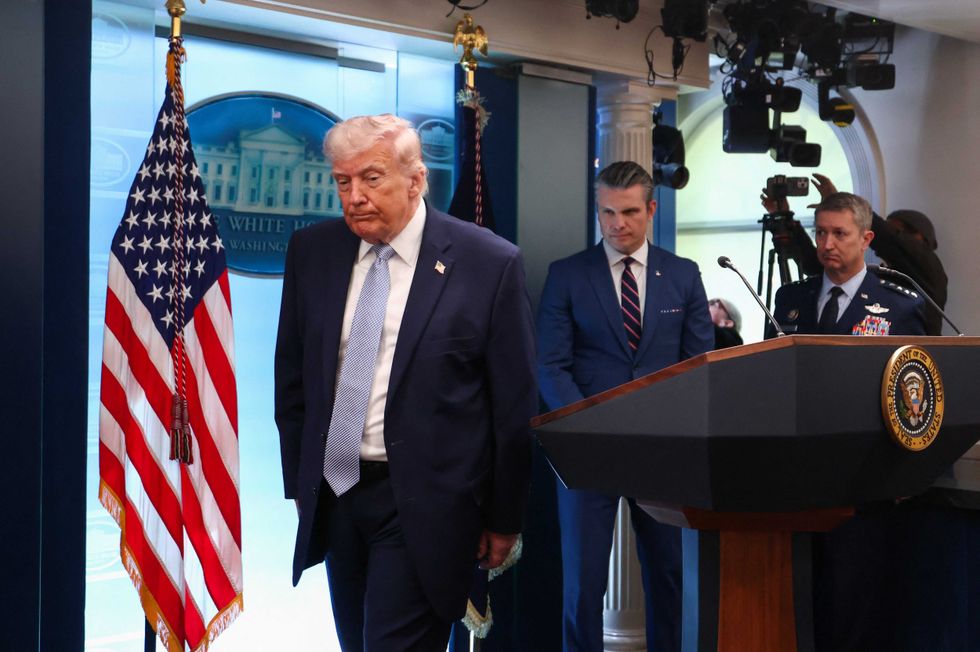
The Trump White House waged a behind-the-scenes pressure campaign on the obscure federal board responsible for shielding government workers from unfair firings, ultimately securing a ruling that could hand the president sweeping power to purge the civil service and install loyalists throughout the government, according to a New York Times investigation.The report centers on the Merit Systems Protection Board, an independent agency whose job is to act as a neutral arbiter between federal agencies and dismissed workers. In a March ruling the Times described as landing "like a thunderbolt" in legal circles, the board broke with decades of precedent and embraced the White House's argument that Article II of the Constitution gives President Donald Trump the power to fire officials without due process.According to the Times, the decision came after a concerted pressure campaign waged both publicly and privately — an effort the paper likened to "calling a federal judge and telling him how to rule." That private push, the report said, was led by James Sherk, a special assistant to the president who has spent years focused on making it easier to quickly fire federal workers.At the center of the account is a late-November meeting at the Eisenhower Executive Office Building, after which the board's acting chair, Henry Kerner, gathered a small group of staff and appeared "shaken and unsure how to proceed," per the Times. Kerner reportedly recounted that administration officials had conveyed their belief that the board was bound to follow the Justice Department's Office of Legal Counsel opinion on the Article II cases.The White House disputed that characterization. Officials said the meeting's primary purpose was to interview Kerner for a possible nomination as permanent chair and insisted he was not told how to rule — which a White House official said showed the idea of a pressure campaign was "categorically false."A White House spokeswoman, Allison Schuster, defended the underlying philosophy in stark terms."There can constitutionally be no independent executive branch agencies because independence from the president would mean independence from the voters who elected him," Schuster told the Times.Legal experts saw the ruling very differently. Nicholas Bednar, a University of Minnesota law professor who studies the federal civil service, said the revelation of White House involvement undermines the decision's legitimacy."Knowing that it was made with influence from the White House means the decision was not based on positions of law," Bednar told the Times, adding that it "reflects the same ideological considerations that is driving the evisceration of the federal civil service."The Times noted the striking internal logic of the ruling: for the first time in its history, the board embraced a constitutional argument that, taken to its conclusion, would invalidate its own existence — since the board itself is a product of the same Civil Service Reform Act that Article II theory would override.Former board members underscored the magnitude. Raymond Limon, who left the board in February of last year, called it "a monumental decision, reversing years of board law and determining who and who does not get board protections." He added: "It is seismic."Some federal employment specialists, the Times reported, equated the ruling to the overturning of Roe v. Wade. The full Federal Circuit has since agreed to review the case, an unusual step that highlights its significance.The report closed on a telling scene from this month, when Sherk stood in the Oval Office as Trump signed an executive order stripping job protections from nearly 8,000 workers in policy-making roles. Told the order was Sherk's idea, Trump summoned him to the Resolute Desk.Sherk explained that the order treated policymakers like private-sector workers: "If they're messing up, they can be removed quickly.""That's great," Trump replied, according to the Times. "And you were very much involved in this?""I was, sir," Sherk said, according to the reporting.

Iran has "no choice" but to develop a nuclear bomb, a media outlet linked to the Islamic Revolutionary Guard Corps said — the latest threat to the US-organized peace deal.

After two late goals in another game sealed Iran’s fate, Team Melli was left to rue one of the most brutal exits in World Cup history.