RealClearPolitics - Homepage
What SCOTUS Election Ruling Means for Trump's Tantrums
Republicans lost a bid to throw out Mississippi's three-day grace period for absentee ballots, but the president is still itching for a fight.
Center Right

Ten days after the signing of the Trump administration’s memorandum of understanding with Iran, the two sides are battling again for control of the Strait of Hormuz and accusing each other of violating their agreements. On social media, President Donald Trump said, “There may come a point when we are no longer able to be reasonable and will be forced to militarily complete the job that we very successfully started. If that happens, the Islamic Republic will no longer exist.” NBC’s Keir S
Republicans lost a bid to throw out Mississippi's three-day grace period for absentee ballots, but the president is still itching for a fight.
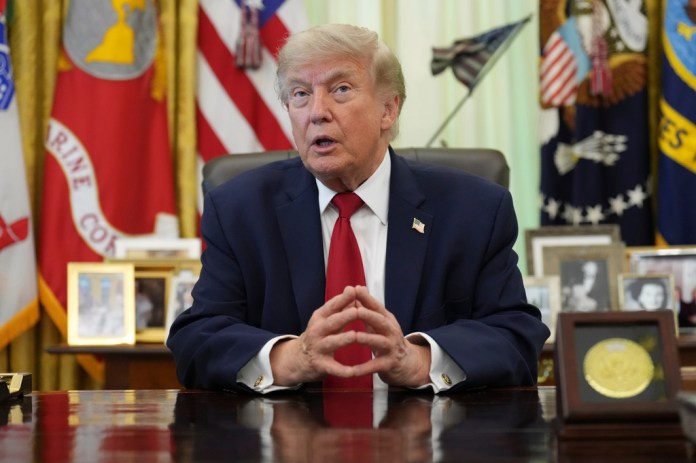
President Donald Trump on Tuesday called on Congress to limit birthright citizenship after the Supreme Court issued a ruling rejecting his push to overhaul the policy. Trump’s position puts him at odds with several leading lawmakers in the Republican Party, who called for a constitutional amendment to limit birthright citizenship after the justices handed down […]
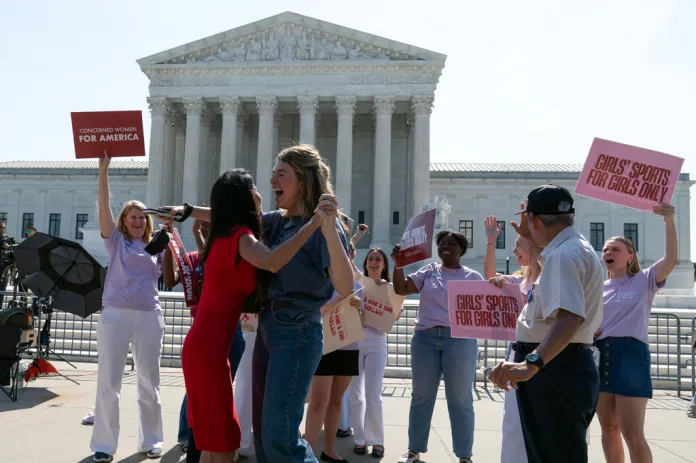
President Donald Trump celebrated two Supreme Court rulings on Tuesday that upheld state laws barring biological males from competing in women’s sports and struck down restrictions on coordinated campaign spending between political parties and candidates, calling the decisions major victories. The court issued a 6-3 decision upholding Idaho’s Fairness in Women’s Sports Act and West […]
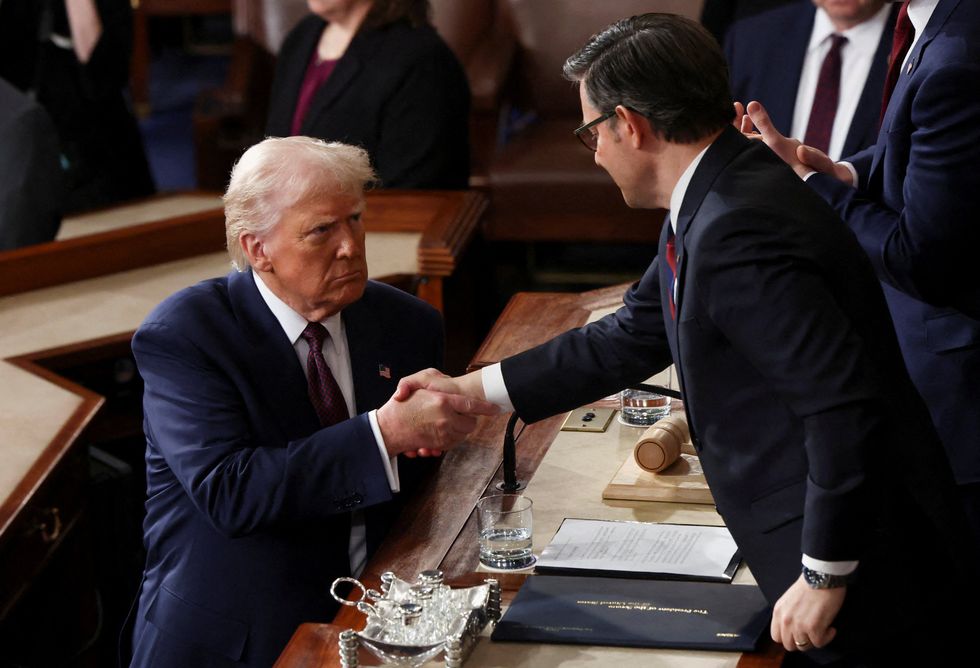
Speaker Mike Johnson was in the middle of a news conference when the U.S. Supreme Court announced its decision on President Donald Trump's executive order eliminating the constitutional right to birthright citizenship. Johnson grumbled audibly and said he was “very disappointed” with the ruling, though he conceded it was a "textualist, originalist view" by the Court since it's plainly enshrined in the 14th Amendment. However, he said that it's time to amend the U.S. Constitution to end birthright citizenship because it has been "grossly abused in recent years.""We have, you know — it's become a tourism — birthing tourism, they call, you know, a trend where people will just come and you just come onto the soil and have your child and then they're able to avail themselves of the welfare state and everything else. It's been abused," said Johnson. A study by the Immigration Policy Institute using data from the U.S. Census showed that approximately 0.7 percent of births in the U.S. "could be attributed to birth tourism." They aren't certain whether or not they are, but that is the maximum amount it could be"And so I'm sure that we'll continue to look at that," Johnson continued. "I mean they I'm sure the conclusion from this opinion is going to be that you got to amend the Constitution to fix that. As we all know, it's a big challenge to amend the Constitution. It's only happened 27 times in our whole nation's history. And the reason is because you got to have two-thirds of the both chambers of Congress and three-fourths of the states to ratify. It's usually, you know, at least a many-year-long process and very complicated. Um we'll see."He closed by saying that "we'll have to deal with it as a Congress." Johnson has failed to pass much legislation since taking over as Speaker of the House. In 2025, the House set a record for the fewest votes and fewest bills passed in recent years, the New York Times reported. Republicans hold the majority in the House, Senate and White House.

The president claimed that an ‘all time RECORD’ amount of oil exited the strait on June 22.
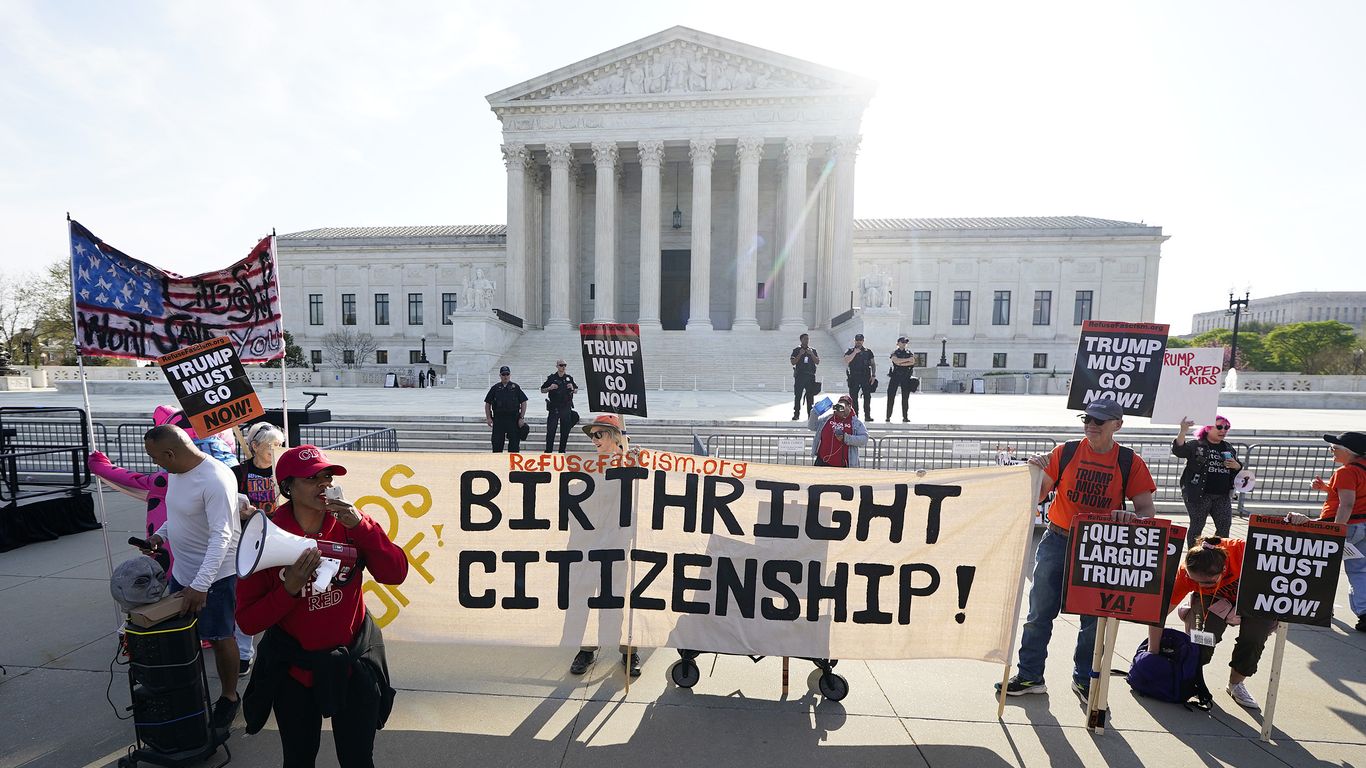
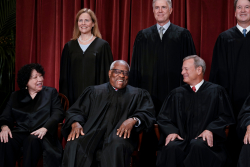
The Supreme Court struck down President Trump's executive order restricting birthright citizenship on Tuesday, reaffirming the long-held belief that any person born on American soil is a citizen.Why it matters: The decision is a blow to Trump, who sought to limit by executive fiat who is eligible for American citizenship as part of his widespread immigration crackdown.What they're saying: "Citizenship, then and now, was the right to have rights— to freely participate in our political community," Chief Justice John Roberts wrote for the five-justice majority."Children born in the United States to parents unlawfully or temporarily present are 'subject to the jurisdiction' of the United States and are citizens at birth under the Fourteenth Amendment's Citizenship Clause."Yes, but: In a dissenting opinion, Justice Clarence Thomas said "[b]oth the Civil Rights Act and the Citizenship Clause guaranteed citizenship to persons born and domiciled in the United States regardless of their race.""Because many potential applications of the President's Order are consistent with the original public meaning of the Citizenship Clause, I respectfully dissent."Threat level: If the administration had succeeded in its arguments, millions of babies would no longer be eligible for citizenship, losing their rights to work authorization, safety net provisions, voting and more.Some of those children could have become stateless with no guaranteed rights at all if their parents' home countries refused to grant them citizenship. Prior to the decision, Trump had lambasted Justices Neil Gorsuch and Amy Coney Barrett — both of whom he had appointed — on Truth Social, anticipating that they would vote against him on birthright citizenship."I don't want loyalty, but I do want and expect it for our Country," he said.Catch up quick: Trump's order sought to limit birthright citizenship to people who have at least one legally present parent in the U.S.The order was based on a once-fringe position that the 14th Amendment doesn't expand to those present in America illegally because they aren't "subject to the jurisdiction" of America, as required in the amendment.The majority of the justices appeared skeptical of the Trump administration's arguments during the case's initial oral arguments, including Roberts.Zoom in: Two of Trump's three appointees sided, at least in part, with the president.Justice Brett Kavanaugh concurred with the judgment but disagreed with the court's reasoning, arguing that Trump's executive order violated a separate immigration statute. Thomas was joined by Gorsuch, who wrote that "By definition, temporary visitors to this country do not choose to make a permanent home here, and their children thus cannot claim the privilege of citizenship.""Because the executive order is lawful at least to this extent, respondents' facial challenge must fail."By the numbers: Two-thirds of Americans support preserving the 14th Amendment's right to birthright citizenship.That includes the majority of Independents and many Republicans.Roughly 53% of Trump's most religious voting block — white evangelical Protestants — say they support the constitutionally guaranteed right.Go deeper: What's at risk if SCOTUS sides with Trump in birthright citizenship caseEditor's note: This story was updated with additional information and context throughout.

House Speaker Mike Johnson (R-LA) let out a growling sound when a reporter told him in real-time that the Supreme Court had rejected President Donald Trump's birthright citizenship executive order. Johnson was attending a House Republican Caucus meeting and spoke to reporters when he was told about the high court's decision to uphold birthright citizenship."Oh dear, what'd they rule?" Johnson asked.A reporter read the high court's decision — and Johnson let out an audible groaning sound."I need to read the opinion, OK. But you can say that's a textualist, originalist view," Johnson said."I do think this has been grossly abused in recent years," he added. an unhappy Mike Johnson growls when informed in real time by a reporter that the Supreme Court ruled to uphold birthright citizenship pic.twitter.com/VYMw0krto6— Aaron Rupar (@atrupar) June 30, 2026
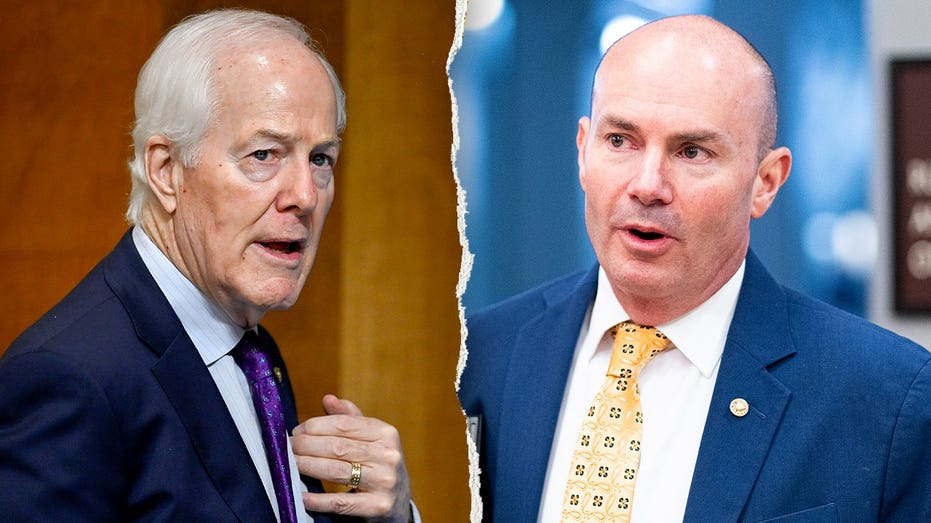
Sens. Mike Lee and John Cornyn clash publicly on X over whether a talking filibuster strategy can force the SAVE America Act through the Senate.