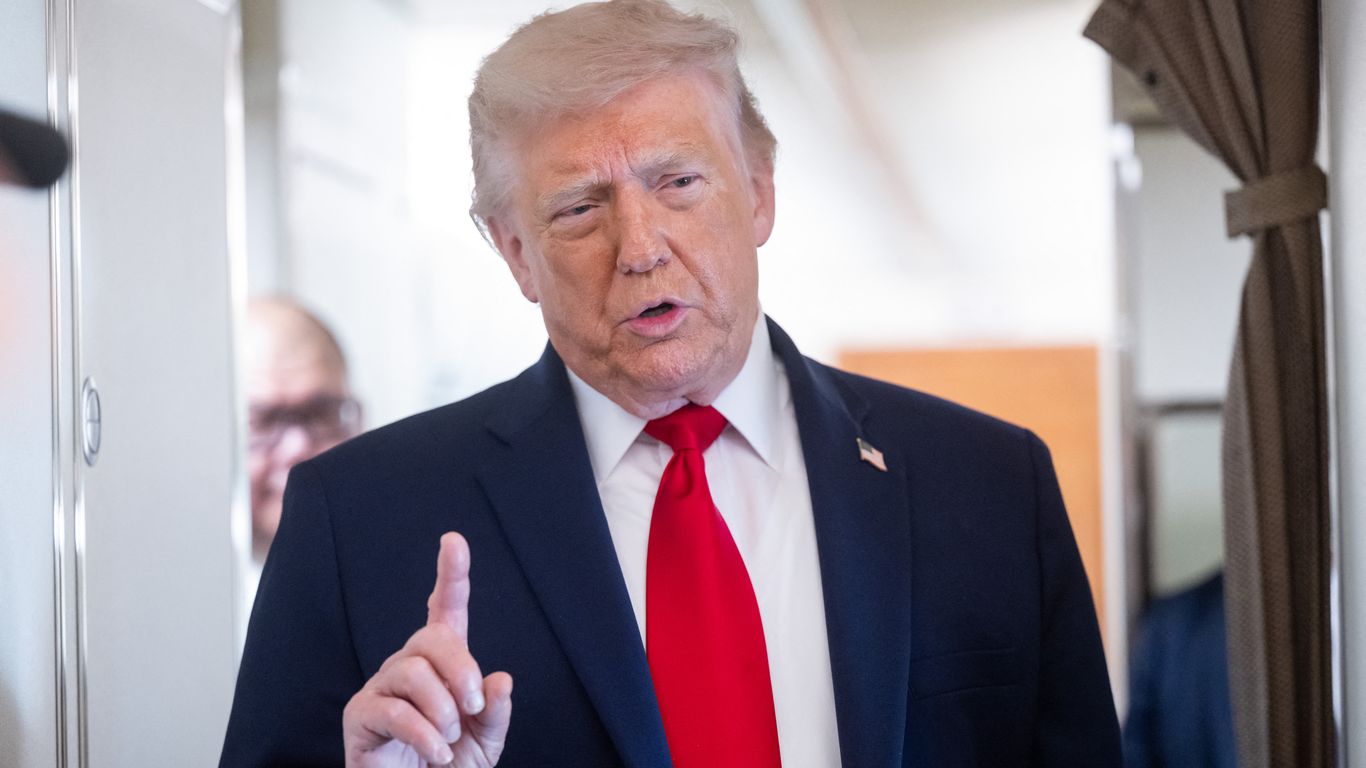
Lawsuit seeks to stop the UFC fight on the White House South Lawn for Trump’s birthday
The Public Integrity Project claims the event violates park rules and lacks environmental review.

President Trump told Israeli Prime Minister Benjamin Netanyahu Sunday not to retaliate against Iran's missile attack and allow more time for diplomacy, according to a senior U.S. official and an Israeli source familiar with details of the call.Why it matters: Trump's effort to restrain an Israeli response signals his administration's push to keep escalating Israel-Iran tensions from derailing ongoing U.S. negotiations with Tehran.State of play: Trump told Axios before the call that he planned to urge Netanyahu not to retaliate against Iran's missile attack, which Tehran said was a response to an Israeli strike in Beirut earlier Sunday.The senior U.S. official said the Trump administration didn't give a "green light" to the Israeli strike in Beirut.Behind the scenes: Trump told Netanyahu during the call to hold off because "we are close to doing something good in terms of a deal," according to the U.S. official.Netanyahu pushed back but ultimately "pseudo agreed" to stand down, the official said.The official said Sunday's call was calmer than last week's tense exchange between the leaders and that Trump did not raise his voice at Netanyahu."We think the president bought a little bit of time. He is pretty adamant that we are close to a deal with Iran. I don't think anything is imminent in terms of an Israeli strike," the U.S. official said."We are in a moment in time — that why jeopardize a potential deal when you are in the fourth quarter. The President thinks that we have been in this thing for three months — now is the time to end this thing," the U.S. official added.What he's saying: Trump told the Financial Times that Netanyahu "won't have any choice" but to accept any deal the U.S. secures from negotiations with Iran."I call the shots. I call all the shots. He doesn't call the shots," Trump said of Netanyahu.Go deeper: Israel strikes Beirut after Hezbollah attackEditor's note: This is a breaking news story. Please check back for updates.
The Public Integrity Project claims the event violates park rules and lacks environmental review.
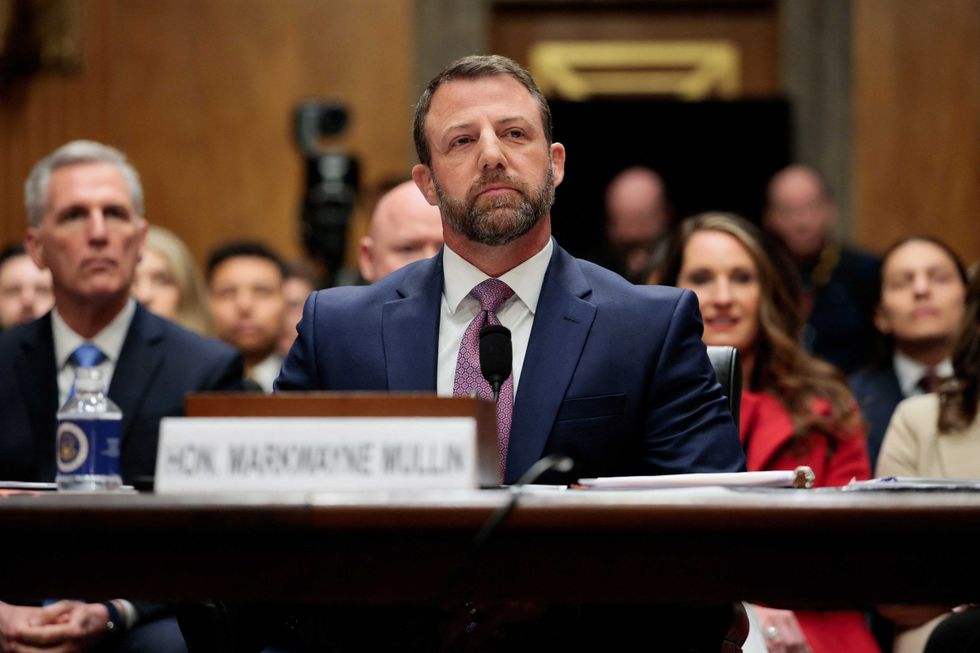
Markwayne Mullin may have been brought in to straighten out the Department of Homeland Security following former Secretary Kristi Noem's tenure, but a new report shows that Mullin may be more of the same, according to one legal expert. The Independent reported in late May that Mullin regularly uses a controversial $70 million Gulfstream jet to fly home to Oklahoma on Thursdays and doesn't return to work until Monday afternoon, meaning he works at most three days a week in Washington, D.C. The aircraft includes a queen bed, a bar, and showers, according to the report. It was one of nine jets the Trump administration approved to purchase with funds meant for Immigration and Customs Enforcement, it added. Legal expert Shant Karnikian discussed the report during a new episode of the podcast, "Civil Action," on Sunday. "We'll see how long this lasts," Karnikian said of Mullin's tenure in the Trump administration. "This is apparently the swamp draining that Donald Trump had in mind."Mullin was brought in to replace Noem after the former secretary publicly undercut President Donald Trump about funding for advertising campaigns featuring Noem. While Mullin told Senators during his confirmation hearing that he would help get Homeland Security back on track, some of his actions seem to suggest otherwise. For instance, Mullin has called for ICE to return to its old training methods that were curtailed following months of violent clashes between federal agents and protesters. Mullin has also been combative with lawmakers who have questioned his leadership at the department. Karnikian estimated that Mullin's use of a government jet to travel home is "50-times" more expensive than if he flew commercial with the same schedule. "The outrageous part of this is not, ' Oh, it's so much money, and this is so extravagant, blah blah blah.' That is a problem with most of the country struggling to fly around like that and avail yourself of those amenities," he said.
Iranian officials involved with the peace negotiations between the regime and the United States said on Sunday that the peace deal with President Donald Trump is "no longer feasible" following the latest round of attacks, MS NOW's Inzamam Rashid reported on "The Weekend: Primetime." "An Iranian official linked with the talks between the U.S. and Iran has sent me a message this evening — and remember, it's early in the morning out here in the region — and they've said to me that a deal with President Trump is no longer feasible at this stage," Rashid reported. The report came at a time when Iran had fired missiles into a civilian area of Israel in response to Israel attacking the southern suburbs of Beirut, Lebanon. Iran had threatened last week to retaliate for a hypothetical strike against Beirut. "This official blamed President Trump for the current situation inside Lebanon and the current escalation, I presume the escalation, meaning what the Iranian response has been given," Rashid continued. "It's been Iran's red line not to attack Beirut all along. So this is a pretty interesting development, because it means that Iran now ... feels that it cannot now have open dialog with President Trump and sign off on a deal which both sides have been working pretty tirelessly." The war in Iran, which began in late February, has stretched past the 100-day mark. The war has been disastrous for global energy prices, which have shocked the U.S. and European economies.
President Donald Trump appears to be scrambling for a peace deal to end the war in Iran, but some of the president's "massive failures" are preventing that deal from materializing, according to one analyst. Trump spoke with Israeli Prime Minister Benjamin Netanyahu on Sunday about finding a way to deescalate tensions between Iran and Israel. The call happened after Iran fired multiple missiles into civilian areas of Israel for the first time since the war started in late February. David Rhode, MS NOW's senior national security reporter, said on Sunday during a segment on MS NOW's "PoliticsNation" that the call shows Trump is eager for a peace deal. However, he noted that a couple of issues that have lingered since the beginning of the war seem to be prolonging the peace process. Those issues are the closure of the Strait of Hormuz, a critical global waterway for energy trade, and the continuous bombing campaigns conducted by Iran at U.S. allies in the Middle East. "Apparently, the president and his top aides did not plan for the Strait of Hormuz to be closed," Rhode said. "Iranian missiles and drones have been able to strike ... all the countries people see on their maps there: Kuwait, Bahrain, Saudi Arabia, Qatar, the UAE. The U.S. cannot stop Iranian drone and missile strikes against those American allies in the gulf.""That's a massive failure by the Trump White House to not anticipate that and also not anticipate that Iran would close the Strait of Hormuz," he continued. "So I think this administration needs a peace deal and needs it quickly. And the president has just not handled this war well."
Iran's participation has become one of the most complex stories of the tournament.
President Trump has responded to Iran launching missiles at Northern Israel, calling on both sides to immediately de-escalate and return to peace negotiations. "Israel had its strike and Iran had its strike. The post DEVELOPING: Trump Responds After Iran Launches Strikes Against Israel, Says He’s “Not Happy” About Israel’s Strikes in Beirut and Will Call Benjamin Netanyahu (VIDEO) appeared first on The Gateway Pundit.
During the interview, the president was repeatedly challenged on several points by the show's presenter Kristen Welker.