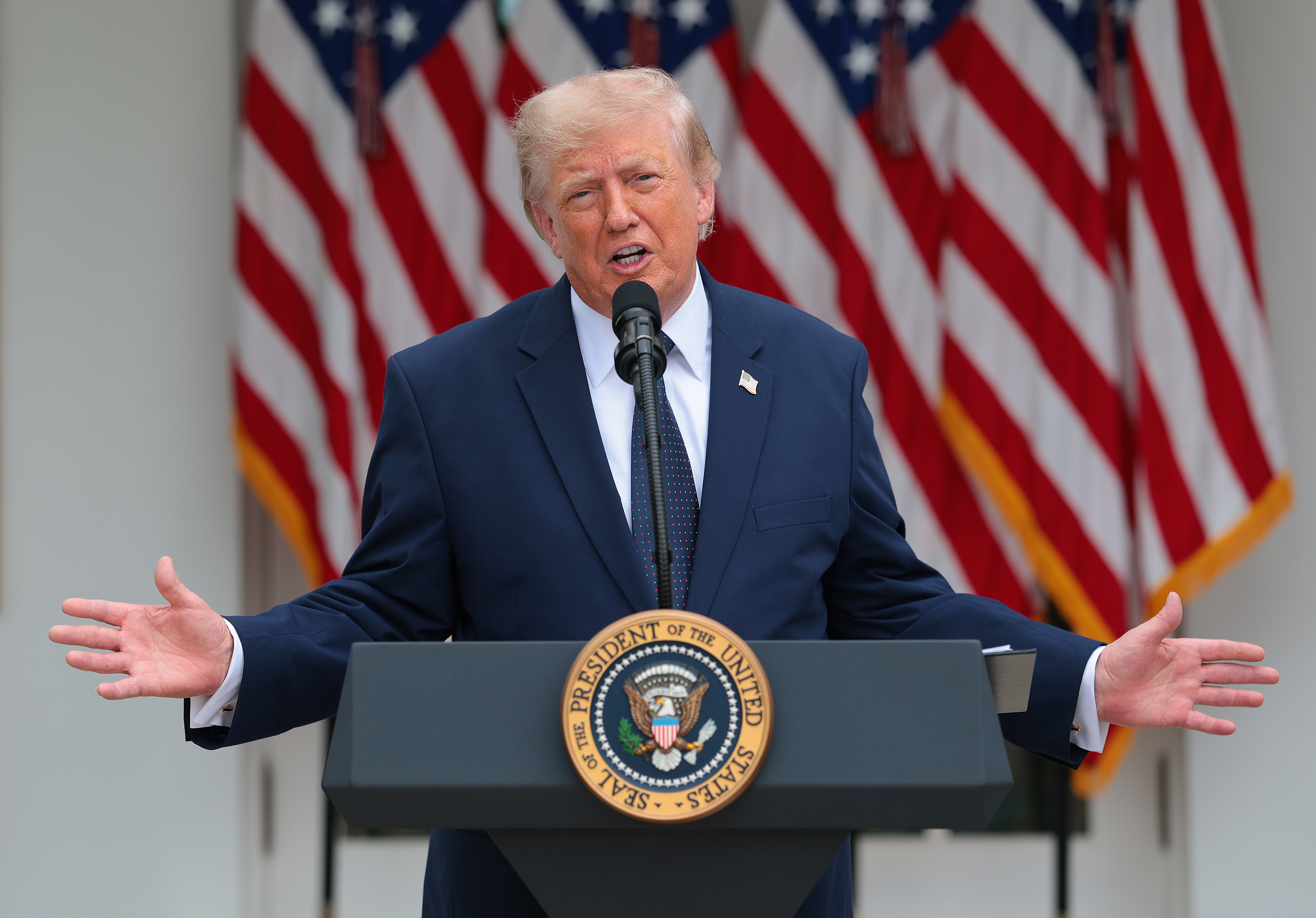
Washington Examiner Executive Editor Bob Cusack said Republicans are more divided now than when President Donald Trump’s One Big Beautiful Bill Act passed a year ago. “Democrats don’t like this bill, they call it the ‘big ugly bill,’ but unlike Obamacare and Democratic bills, Democrats don’t go as far to say, ‘We want to repeal […]
Jeffrey Epstein's relationship with a firm once run by Commerce Secretary Howard Lutnick may date back 11 years further than previously known, according to a newly unearthed document flagged by independent journalist Kaitlyn Pierce, who writes under the name Kait Justice.Lutnick told The New York Post last year that he had cut off all ties with Epstein in 2005, but the Justice Department's release of Epstein-related files quickly contradicted that claim. The files showed Lutnick visited Epstein's private island in 2012 and that the two maintained contact through at least 2018.Lutnick and Epstein were also discovered to have been “in business together as recently as 2014,” per CBS News, with the two of them both signing onto a deal to acquire stakes in a now-defunct technology company called Adfin. Lutnick was explicitly asked by the House Oversight Committee in May whether he was aware of any other business dealings between Epstein and Cantor Fitzgerald, the financial services firm he once ran before handing off control to his sons after joining the Trump administration. Lutnick said, “to the best of my recollection,” there were no other business dealings between Epstein and Cantor.Justice, while searching through millions of Epstein-related files, stumbled upon a telling FedEx invoice that she suggested may undercut that claim.“I did not expect to find Epstein in Cantor’s records,” Justice wrote in a report published Monday on her Substack.The invoice is dated July 27, 2001, and reveals that Darren Indyke – once Epstein’s personal lawyer – had sent an overnight envelope from Epstein’s office in New York City, New York, to a Robert F. Mace at Cantor Fitzgerald Securities, located on the 104th floor of the One World Trade Center. Mace was Cantor’s employment lawyer, and would be killed in the 9/11 attacks just 53 days after being sent the envelope from Epstein.“The invoice clearly doesn’t tell us what the envelope contained, but it does place Epstein’s office in direct contact with Lutnick’s firm 11 years before the relationship Lutnick described to Congress supposedly began,” Justice wrote. “Cantor’s customer and trading records could show whether Epstein or any of his companies had an account there, what they bought or sold through the firm and when the relationship actually began.”Justice uncovered another Epstein-related correspondence when sifting through Cantor’s history: a 2009 email to Epstein with a message attributed to a Rich Barnett.“HOward [sic] Lutnick would like to speak to you...one of his employees asked me if Howard could have your number so he may call you,” the emailed message reads. “Would you like me to give him your number? They did not give me Howard's number....”Justice could not verify the identity of Barnett, though his identity appeared to cause confusion during the House Oversight Committee’s interview of Lutnick.“Barnett makes the story stranger because no one can seem to agree about whom he worked for. When congressional investigators showed Lutnick the 2009 message, he said Barnett worked for him at Cantor, was ‘on my staff’ and handled construction matters,” Justice wrote. “Committee counsel later described Barnett as an Epstein employee. Epstein’s records establish Barnett’s employment on that side, but the public transcript does not show investigators producing Cantor payroll, contracts or payment records that could determine whether Barnett also worked for Lutnick or Cantor.”
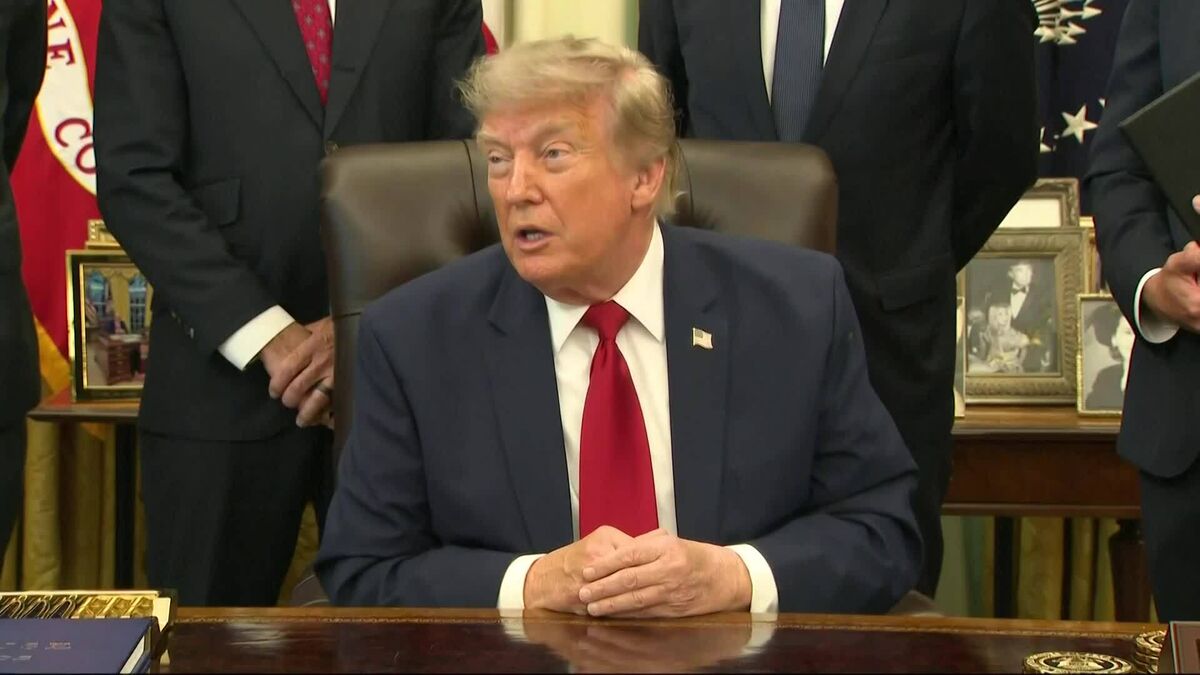
President Donald Trump remained adamant that he has not considered replacing Senate Majority Leader John Thune (R-SD) as the pair clash over the president’s demands that the Senate pass the SAVE America Act. “I haven’t even thought of it,” Trump told reporters Monday when asked if he wants to see Thune replaced. Earlier Monday, Trump […]
President Trump's economic sales pitch is colliding with voters' sour moods on high prices and the economy as the 2026 midterms loom.Why it matters: Economic frustration is giving Democrats an opening on the issue that often decides elections — and could help them erase Republicans' narrow congressional majorities in November.Trump has previously dismissed economic concerns, assuring voters that prices will come down and that affordability is an issue made up by political rivals to hurt his administration and the GOP. But Trump's speech in Michigan is meant to tout the administration's economic policies — though they aren't sitting particularly well with voters. The White House didn't respond to Axios' request for comment.By the numbers: Roughly 35% of Americans approve of Trump's handling of the economy, whereas 65% disapprove, per a CBS News/YouGov poll of 2,193 adults conducted July 22-24.About 29% approve of Trump's handling of inflation, while 71% disapprove.Only 24% of Americans view the economy as excellent or good under the Trump administration this year, down 8 percentage points from July 2025, when 32% viewed the economy as good, according to a Fox News poll conducted July 17-20.Zoom in: But the economy remains top of mind for voters, with 29% telling Pew Research Center that they want candidates in their home district to focus more on it than anything else this election cycle.Notably, neither party has an advantage down ballot on their approach to economic issues. 37% told Pew they most agree with the Democratic Party, while 36% said Republicans.According to a Fox News poll, 54% feel Democrats would do better with the economy compared to 45% who felt the same about Republicans. What we're watching: Who has the winning message for voters come November. Currently, Democrats have an 11-point advantage (68% to 57%) over Republicans regarding enthusiasm for voters to go to the polls, followed by Independents at 41%. Independent voters will remain a key voting bloc and are essential to win over for whichever party ultimately controls Congress beginning next year. Go deeper: Trump's economic polling is in freefall
Over the course of his war with Iran, President Donald Trump has made inflammatory remarks that many have suggested implied his intention to use nuclear weapons. Now a whistleblower from his first term warns that he “watched Donald Trump talk about nuclear weapons like they were presidential toys,” and that “he may be closer to playing with them than you think.”This is according to Miles Taylor, who served as deputy chief of staff at the Department of National Security during Trump’s first administration, at the time famously penning an anonymous article revealing the existence of a resistance movement working within the White House. On Monday, he published a new piece explaining why Trump has a “fixation” with using nuclear weapons. “Last week,” writes Taylor, “the president told Axios he was ‘close’ to ordering a ‘massive attack’ on Iran … The threat had the same ominous feel of his April comments that ‘a whole civilization will die tonight.’ It was an insinuation that he possessed super powers — and might break the world’s nuclear taboo to end the stalemate.” The pause didn’t mean the war was off, however, and Trump told Axios why he thought the war had to continue: “They haven’t received enough pain yet.” “Not enough pain,” notes Taylor. “I’ve heard rhetoric like that from him before. And it wasn’t about Iran.”“Back in 2017,” Taylor explains, “Trump judged that the only way to bring North Korea to heel was to make it suffer. He tweeted furiously at ‘Rocketman’ Kim Jong-un and promised ‘fire, fury and frankly power the likes of which this world has never seen before’ if the hermit kingdom didn’t meet his demands. That was Trump’s first wink-nod to the fact that he possessed an arsenal of nuclear bombs and was ready to use them. Kim answered by threatening to fire missiles at Guam and testing a nuclear-capable missile that could strike the U.S. mainland.”Taylor says the situation escalated so rapidly that Defense Secretary James Mattis began preparing DHS officials for an all-out nuclear war. “For the first time in the Department of Homeland Security’s history, we ran exercises for a potential real-life nuclear strike on American soil, because frankly, we couldn’t rule out that our own president might take us into such an apocalyptic situation.”According to Taylor, the president’s motivation was simple: “Trump wanted to see something blow up, and the rest of us built contingency plans around that desire. Thankfully, he didn’t launch nukes at North Korea. But General Mattis also isn’t at the Pentagon anymore. ‘Pistol Pete’ Hegseth is.”Taylor asserts that “Trump’s nuclear fantasies go way back. When he was a candidate in 2016, MSNBC’s Joe Scarborough said a foreign policy adviser had come away from a briefing with Trump rattled, because Trump asked, three separate times, some version of the question: ‘If we have nuclear weapons, why can’t we use them?’ Candidate Trump also told The New York Times he wasn’t sure it ‘would be a bad thing for us’ if Japan built its own nuclear deterrent against North Korea, and he told CNN’s Anderson Cooper that Saudi Arabia should have nukes, too, ‘absolutely.’” And “since then, Trump has toyed with nuclear weapons more openly and more recklessly than any American president ever entrusted with the stewardship of the bomb.”Now, amid an “unresolved war with Iran,” warns Taylor, “you get the picture of a president who’s just one mood swing away from putting his finger on the proverbial red button.”Taylor says that Trump’s motivation is not difficult to grasp, writing, “Donald Trump has spent his entire presidency on a power quest, always hunting for the next most powerful thing he can do. And nuclear weapons are at the top of that list. To say that he’s ‘toying’ with extreme powers is probably the wrong phraseology. He’s addicted to power. Very much like it’s an intoxicant. When his own chief of staff, Susie Wiles, told The Atlantic that her boss had an ‘alcoholic’s personality,’ it wasn’t a mere slip of the tongue. That’s how everyone who’s served the man has come to see him … He has an uncontrollable, pathological, junkie-like urge to power.”“If deploying troops to seize foreign leaders and raining missiles on other nations isn’t cutting it anymore,” Taylor concludes. “I worry about where the quest leads next. I’ve written before about how close Trump got to using the bomb the first time. Let’s not forget what Trump reportedly absconded with after he left the presidency: U.S. nuclear secrets. Back in office, the fixation has returned.”
President Trump still won’t say where exactly the $13 billion of Venezuelan oil revenue that his administration collected has gone.“There’s some reports that the United States has taken in $13 billion from Venezuela,” a reporter asked Trump at the Air Force One press gaggle on Monday afternoon. “Where is that money going?”“Thirteen billion from Venezuela? I think even more than that,” Trump replied. “Venezuela, we paid for that war many times over. And that’ll happen with Iran also. We paid for the war many times over.”“But where’s that money going?”“No other president can say that for a long time,” Trump continued, ignoring the question. “We had a cost.... We paid for it many many times over. And now, as you know, we have a very good relationship with Venezuela.”“But where is the money going?” the reporter asked yet again.“It goes toward running the country.”“No … the money that the U.S. is taking in, where is that money going?”“From Venezuela?”“Yes.”“Towards running the country. It can go to the military. Congress has to approve it.... We’re taking in a lot of money. Billions and billions of dollars from Venezuela.”The president couldn’t offer anything close to a straight answer on where those billions went. First, the story was that it’d go back to the Venezuelan people, whom Trump pretends to care about very much. But last week, the Financial Times reported that after six months and two devastating earthquakes, the money is still nowhere to be found. The publication reported that the Trump administration must have collected an estimated $13 billion, though Trump’s statement on Monday is the first hint at an actual number.The last solid lead we had on that money was when Semafor reported that Trump would be keeping proceeds from the first sale in an offshore bank account based in Qatar. Maybe that has something to do with his nonanswer. Q: There's some reports that the United States has taken in $13 billion from Venezuela. What where is that money going?Trump: That will happen with Iran also. Q: Where is the money going?Trump: Running the country. pic.twitter.com/yGvQDtGQJj— Acyn (@Acyn) July 27, 2026
Drawing attention to the importance of the U.S. auto industry, President Trump takes a trip to the GM proving ground in Milford, Michigan to deliver remarks and view a drag race and vehicle demonstration. Livestream Links of the Event Below: . . . Posted in Big Government, Big Stupid Government, Donald Trump, Economy, media […]
The post President Trump Visits GM Testing and Proving Ground in Milford, Michigan – 2:00pm ET Livestream appeared first on The Last Refuge.