Avi Loeb, a Harvard astronomer who has made headlines with his theories about alien encounters, will lead a White House scientific advisory council on UFOs.
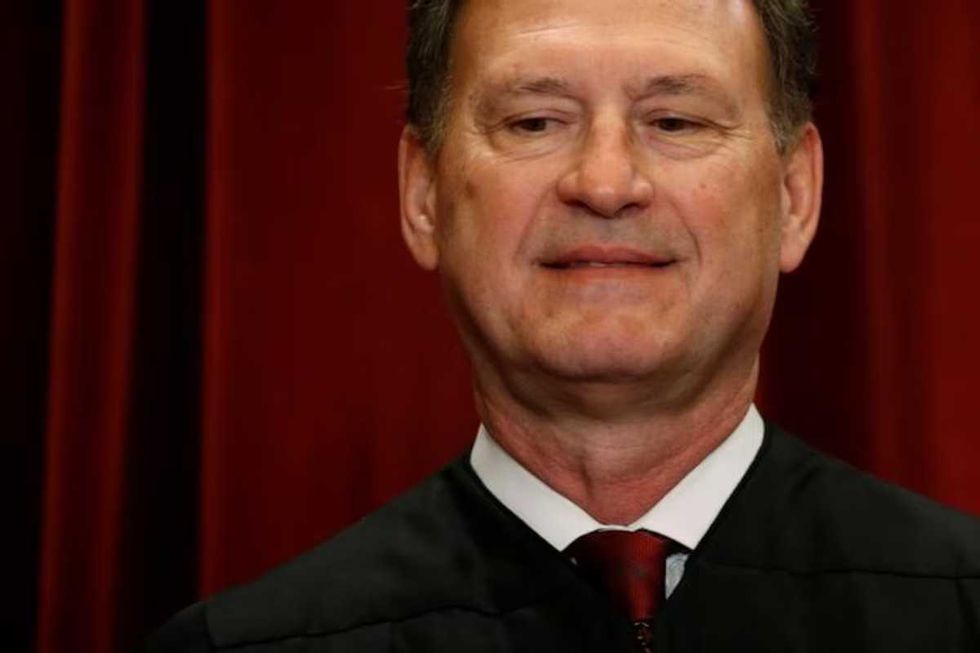
Supreme Court Justice Samuel Alito may have planted the story of his resignation that was published then retracted by NPR on Tuesday in an attempt to uncover a leak in his staff. This so-called “canary trap,” says one advocate of the theory, is the only explanation for the news outlet’s mistake. This is according to conservative journalist Miranda Devine, who posted on Wednesday, “The only way the Totenberg-Alito story makes sense is that this veteran NPR legal reporter had a trusted and highly placed source inside SCOTUS who confirmed that Alito was retiring. No editor would publish such a story unless the reporter were reliable. A reliable reporter does not say 'oh I thought I heard something' without double-checking with a source to confirm. Ideally she would call Alito to confirm as well. But somehow Totenberg and her editors at NPR were satisfied that her sourcing was impeccable without official on the record confirmation.”In other words, Devine is saying that it is highly unlikely that such a story would be run based solely on what the NPR journalist who wrote the story, Nina Totenberg, claimed was something she misheard in the court halls. Typically a new organization requires a report to be confirmed, and as CNN noted, Totenberg’s explanation “didn’t fully explain why NPR published the report without additional confirmation.”With all this in mind, Devine suggests, it is more likely that Totenberg, in fact, did have a second source inside the court who had provided reliable information in the past. “That leaves a very small list of suspects,” writes Devine. “Someone close to Alito who was very confident that he was retiring. As people have speculated, Alito may have planted a false tale to catch out the leaker: a canary trap.”This theory appears to have been first raised by a conservative podcaster who on Tuesday posted, “Did Justice Alito just Canary Trap the Dobbs v Jackson leaker????”A canary trap is a leak‑sniffing tactic where one seeds slightly different versions of sensitive information to different people so the specific version that is revealed identifies the source. As the poster mentioned, in the lead-up to the Supreme Court’s highly consequential 2022 ruling regarding Dobbs vs. Jackson Women’s Health Organization, which ultimately overturned Roe vs. Wade, a draft of the opinion was leaked to Politico, and the source of the leak has remained a mystery ever since. The canary trap, then, could be an attempt to identify that person. This isn’t the only theory surrounding the resignation. According to Douglas Farrar, Former Director of Public Affairs at the Federal Trade Commission, “This looks like an embargo broken to me,” referring to the practice of providing sensitive information to reporters on the condition that they “embargo” it until a certain time. If that is the case, concludes Farrar, “I expect we'll see Alito announce his retirement soon.”
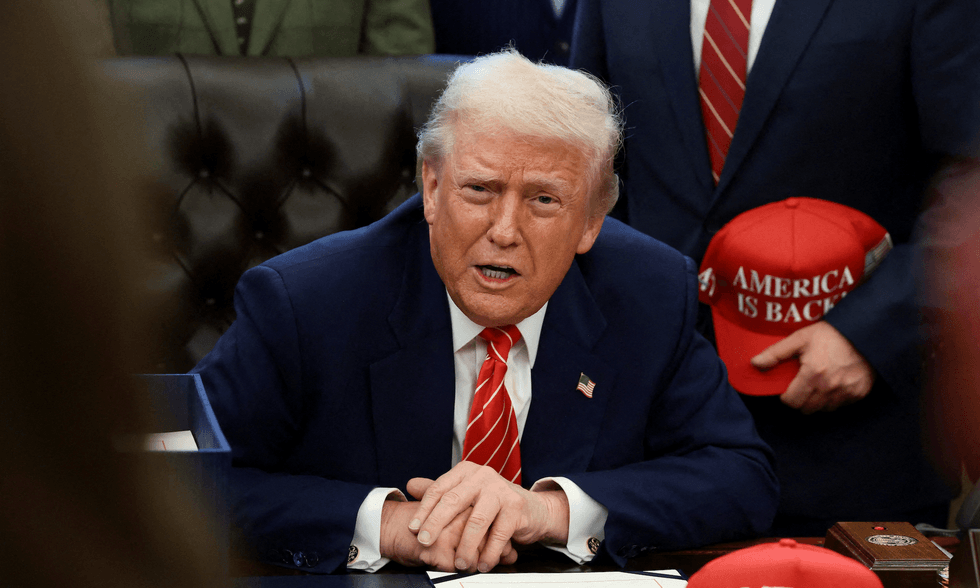
Georgia Republican Senate candidate Rep. Mike Collins (R-GA) is parroting President Donald Trump's 2020 election conspiracy theories, even though it's a "losing message," as one data analyst said. Trump's administration staged an FBI raid on the Fulton County elections offices, claiming that they needed all ballots cast to search for election fraud. Speaking to CNN on Monday, however, data analyst Harry Enten made it clear that if Collins wants to win, he should keep his mouth shut about 2020. He's in good company when it comes to the Republican Party, but the rest of America is calling it bunk. "I mean, they just believe this garbage," Enten said about the GOP. "Look at this: GOP that says that the 2020 election was stolen."In 2021, 60 percent of Republicans said that the 2020 election was stolen, and in 2026, that number has risen to 63 percent. Enten said that Collins is "starting to feel a whole lot like Herschel Walker 2.0." Walker lost his election in 2022. He explained that Collins' comments to CNN's Manu Raju make sense in the larger GOP narrative, but when it comes to reality, the rest of America isn't along for the ride. "Most Republicans, despite all of the evidence to the contrary, believe that the 2020 election was, in fact, stolen," said Enten. That's all well and good in a primary, but the general electorate doesn't embrace the sentiment. "The Republican Party [is] all the way over on the right, and the rest of the American public is in the same camp, and the actual — this is the real world we're dealing with here," an animated Enten said. In 2021, 59 percent of Americans didn't believe the election was stolen, and that number has jumped up to 64 percent who said that they don't think the election was stolen. "So what you see is the American people believe in the results, rightfully believe in the results of the 2020 election, and then you have Republicans all the way in another camp. It is a losing message!" he concluded. "That's why I say that Mike Collins is starting to sound like Herschel Walker 2.0," he concluded.