Texas Senate runoff sees surge of anti-Muslim rhetoric in campaign ads
Center Left
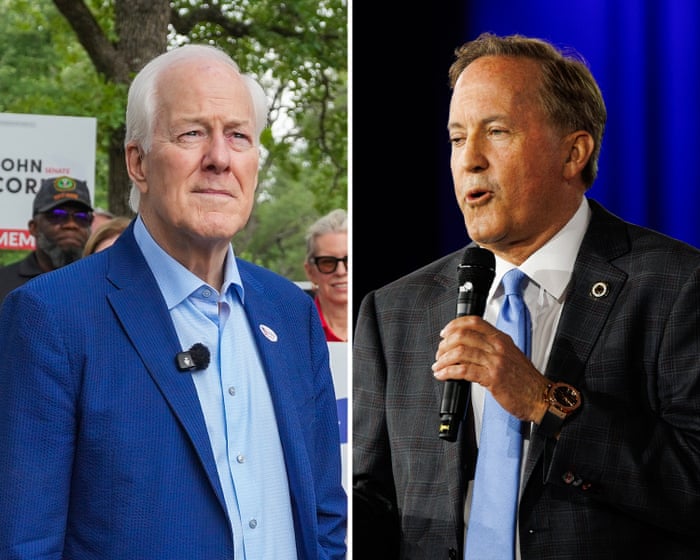
Runoff between John Cornyn and Ken Paxton features ads and legal disputes targeting Texas MuslimsIn the bitter and expensive US Senate runoff between John Cornyn, the incumbent, and Ken Paxton, the Texas attorney general, the state’s Muslim community has been a frequent target for campaign ads and legal challenges.Both candidates have tried to portray the other as either too soft on the supposed threat of Islam or insufficiently aggressive toward Muslim institutions. Continue reading...
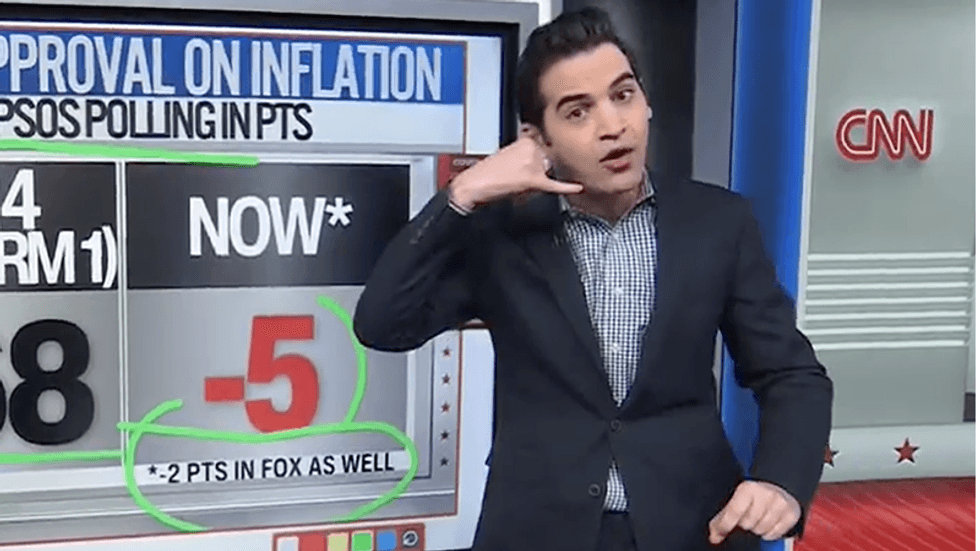
"The calls are coming from inside the house," CNN host John Berman said on Tuesday.CNN data analyst Harry Enten agreed."Why don't we talk about the key issue of inflation," Enten began. "And what are we talking about? We're talking about a complete collapse of the floor. Look at this. Republicans' net approval of Trump on inflation. You know, you go back when he was running for reelection back in 2024. For term number one, look at that net approval rating. It was plus 68 points in terms of how they viewed Republicans' views on inflation and Trump."Term number two is a different matter."Look at this! Collapse!" exclaimed Enten, citing the Ipsos poll. " ... There are now multiple polls showing that Donald John Trump is underwater within his own Republican Party."On gas prices, Enten said that Republicans are "calling again." The numbers last summer show a 51-point approval, while it has now shifted to minus four, a 55-point swing."This isn't just something about the center of the electorate. This is with Donald Trump's base as well. This is a huge shift. He's underwater again, the floor completely collapsing underneath," said Enten. "So, you know, we're talking about the collapsing floor, but, you know, if this is an old ruddy house that we don't really care about, then who really cares?" Enten said about the GOP's poor polls. "But this is the house that is most important because you take a look here. Okay, Republicans' top issue is the economy and the cost of living."In Jan. 2026, 43 percent of Republicans identified the cost of living as the most important issue. That is now 54 percent of Republicans who say it's important. "Multiple polls showing him underwater on inflation," Enten closed. "A very, very, creaky floor."
Is President Trump’s grip on the party faltering? Tuesday’s Texas GOP primary race, particularly the contest between incumbent Sen. John Cornyn and state Attorney General Ken Paxton, will be a test. What comes next after the controversial autopsy on the Democratic Party’s 2024 losses? Join The Hill’s Amie Parnes and Editor in Chief Ian Swanson…
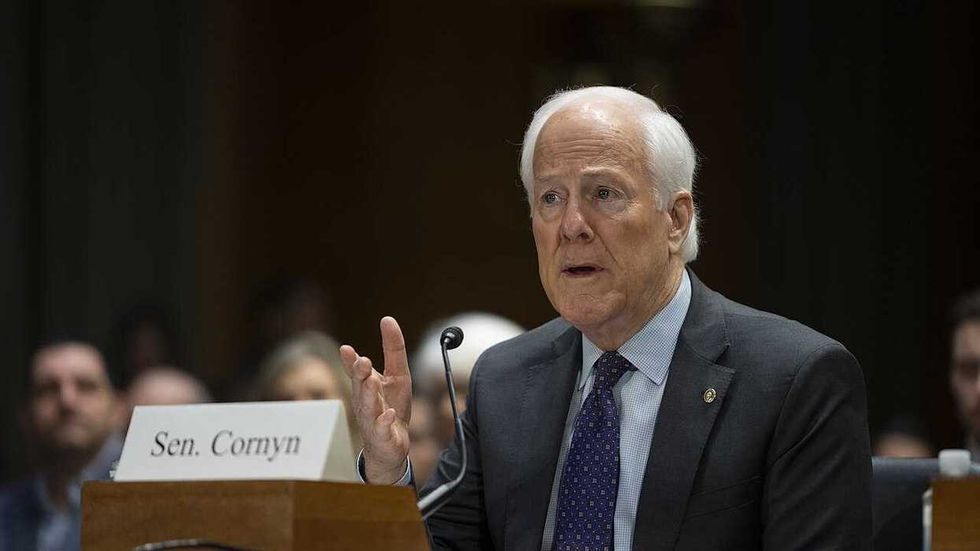
This Tuesday night, May 26 in a U.S. Senate primary runoff, Texas Republicans will choose between incumbent Sen. John Cornyn and State Attorney General Ken Paxton — a far-right conspiracy theorist who President Donald Trump endorsed. Paxton is clearly the more MAGA of the two, while Cornyn is being supported by Senate Majority Leader John Thune (R-South Dakota) and other traditional GOP establishment conservatives. According to Politico reporters Liz Crampton and Samuel Benson, this primary is so "brutal" that some GOP insiders are "worried the party will emerge in tatters.""Armed with President Donald Trump's endorsement," the journalists explain in Politico, "Paxton has emerged as the clear frontrunner in the final days of a Texas Senate runoff where the MAGA-aligned, scandal-plagued firebrand state attorney general has weathered millions of dollars in attack ads. But Cornyn, the establishment favorite and a giant of the Senate seeking a fifth term in office, is putting up a hard fight until the end, bolstered by a massive war chest and solidarity from senior leadership in Congress…. The race has become increasingly vicious in the final stretch, with Cornyn accusing the attorney general of being ethically unfit for office and Paxton arguing that the incumbent, 74, is too old to continue serving in the Senate."Crampton and Benson continue, "Their relentless mudslinging has only deepened existing divisions between the GOP's hardliners and traditional moderates. Several Republicans in both Texas and Washington warn that Trump's decision to endorse Paxton over Cornyn has alienated lawmakers on Capitol Hill — and risks turning off major GOP donors who will be critical during an expensive general election."One of the Republicans who is sounding the alarm is Daniel Garza, president of the Texas-based conservative group, the LIBRE Institute.Garza told Politico, "In Spanish, they call it lucha de gigantes — a fight between two giants. Post-runoff, you're going to have to mend a lot of fences."Some conservatives, including Thune and Washington Post columnist George Will, believe that the Democratic nominee, Texas State Rep. James Talarico, would have a better shot against Paxton than he would against Cornyn. And Crampton and Benson note that "national Republicans" are "growing increasingly worried that having Paxton as the nominee will force them to spend massively to hold onto the seat, sucking away resources from other top battlegrounds."A GOP state lawmaker in Texas, interviewed on condition of anonymity, told Politico, "The vitriol is going to be real. (Trump) has destroyed that trust there. No matter what we do for you, you will still stab us in the back. That's what he did to Cornyn."A GOP strategist, also interviewed by Politico on condition of anonymity, said of Cornyn, "To say he's the most adored politician by the donor class in Texas is an understatement. That's why this is hard to come to grips with, because he was viewed as the gatekeeper to every major donor in the state, and there's not a close second."Veteran GOP strategist Mark McKinnon told Politico, "If Cornyn loses, he will be (the) last of the compassionate conservatives — and it will signal the end of years of Republican ascendancy in the Lone Star State."
Texas will host a slate of high-profile primary runoff races Tuesday, with Republicans and Democrats alike eyeing the Lone Star State as a major battleground ahead of the midterm elections. Several races advanced to runoffs after no candidate received more than 50% of the vote in the March 3 primary, the first major nominating contest […]
'Never in a million years, dude, would I have ever imagined this outcome. Like, if a year ago someone told me, I'd be like, That's stupid. That's like a fairy tale.'
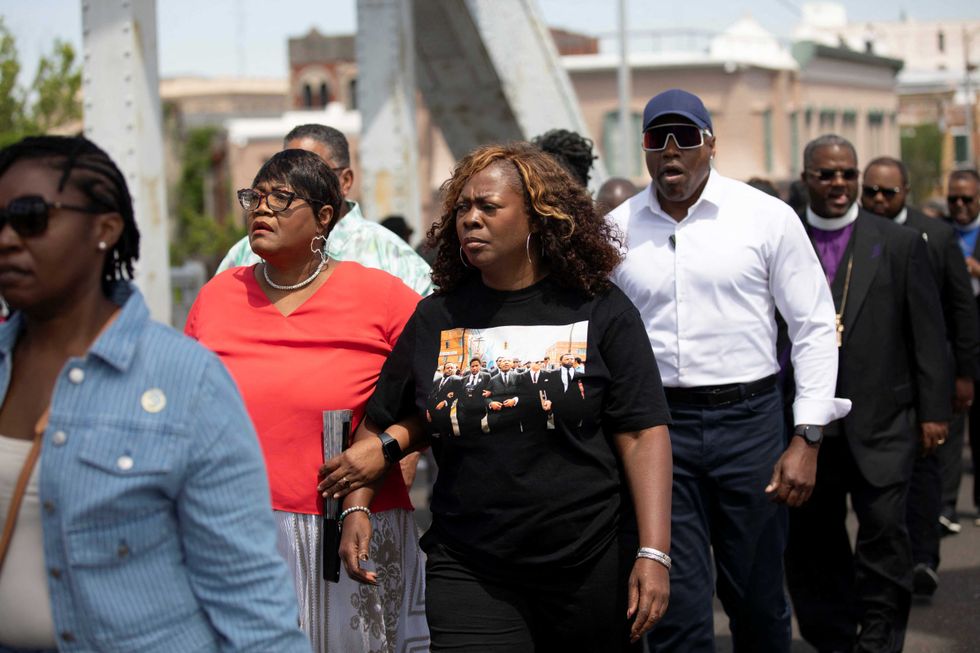
Last week’s primary election didn’t feature any races with both a Democrat and a Republican on the ballot, but Georgia Democrats still feel like they won.If you are one of the more than 2 million Georgians who cast a ballot, you will likely recall the poll worker asking you to choose a Democratic, Republican or nonpartisan ballot.In all, Democrats pulled more than 1 million ballots to Republicans’ nearly 940,000, or about 52.6% to 45.4%.Democratic Party of Georgia Chairman Charlie Bailey said that margin is the biggest for Democrats since 1998 and shows that voters are ready to line up in November behind candidates like U.S. Sen. Jon Ossoff and former Atlanta Mayor Keisha Lance Bottoms, the Democratic nominees for U.S. Senate and Georgia governor.“It’s just another piece of evidence of growing Democratic momentum, the work of the party, the strength of Jon Ossoff, the strength of Keisha Lance Bottoms coming into this governor’s race,” he said. “People are fed up with (Republicans), and what those numbers in the primary tell you is that that momentum is building towards November, when they’re going to vote these Republicans out.”In 2018, a midterm year with President Donald Trump in the White House and an open race for Georgia governor at the top of the ticket, Republicans pulled more ballots than Democrats by about 52% to 48%.Comparing the number of ballots drawn is not a perfect measure. Some people choose the other party’s ballot because they live in an area dominated by that party and they want to have a say in local races, or because they want to promote a weaker opponent for their candidate in the general election.Still, the discrepancy spells good news for Democrats looking ahead to the Nov. 3 election, says Emory University political science professor Andra Gillespie.“What it connotes or implies is that Democratic candidates are capturing the imagination of voters in ways that, if this energy can be sustained, could be helpful for them in terms of flipping seats nationally, and in Republican states like Georgia, narrowing those margins between Democrats and Republicans, even in contests where Republicans are the odds-on favorite,” she said.The difference in ballots is even more notable because Republicans had more high-profile races, said University of Georgia political science professor Trey Hood. No Democrat challenged incumbent U.S. Sen. Jon Ossoff, while Republicans had competitive races for U.S. Senate and Georgia governor at the top of the ticket.Hood said it’s also notable that Republicans who voted on Election Day did not outnumber Democrats by a large margin. Republicans only had about 4,000 more voters on Election Day than Democrats, about 508,000 to 504,000. Hood said that might signal a shift in GOP voter behavior, with more conservatives preferring to cast a ballot during Georgia’s three weeks of early voting.“I don’t know that we can expect to necessarily see a huge surge in Republican turnout on Election Day anymore,” he said.Voter demographics strong for DemocratsResults also show demographics that tend to favor Democratic candidates in Georgia had a strong showing.Statistically, Black voters in Georgia largely favor Democrats, and they made up nearly 32% of the vote.“If Black turnout was 31% in a general election, yeah, that would be probably a good Democratic year,” Hood said. “I mean, before now, the highest it’s ever been is about 29%. And the more Black turnout as a percentage of the total electorate, the less of the white share of the vote you have to draw off as a Democrat. So if that pattern held and Black turnout was 31% in the general, it would be big.”Data from the secretary of state’s office also shows that the electorate was nearly 57% female and 43% male. That number is likely boosted by high turnout among Black women, who are registered to vote at a higher rate than Black men.Reality check?Still, the high Democratic turnout was not enough to land a pair of Democratic-aligned candidates on the state Supreme Court, and not everyone thinks the numbers show the wind is at Democrats’ back.Georgia Republican Party Chairman Josh McKoon said turnout in primary elections does not correlate with general election turnout.McKoon said he chalks up the ballot discrepancy to the typical midterm backlash to the party in the White House and Democrats having a competitive field for governor for what he said was the first time in more than two decades.“It was Mark Taylor and then it was Jason Carter, then it was Stacey Abrams twice,” he said. “Now, this time they actually had a wide open primary, and a lot of people ran. And so, yes, it’s not surprising that they had more than their usual turnout because usually they don’t have anything to turn out for.