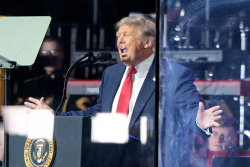
Trump Throws Tantrum, Holds Housing Bill Hostage
"This bill is a major step toward reducing housing costs for millions of American families, and Donald Trump just doesn't care," Elizabeth Warren told HuffPost.

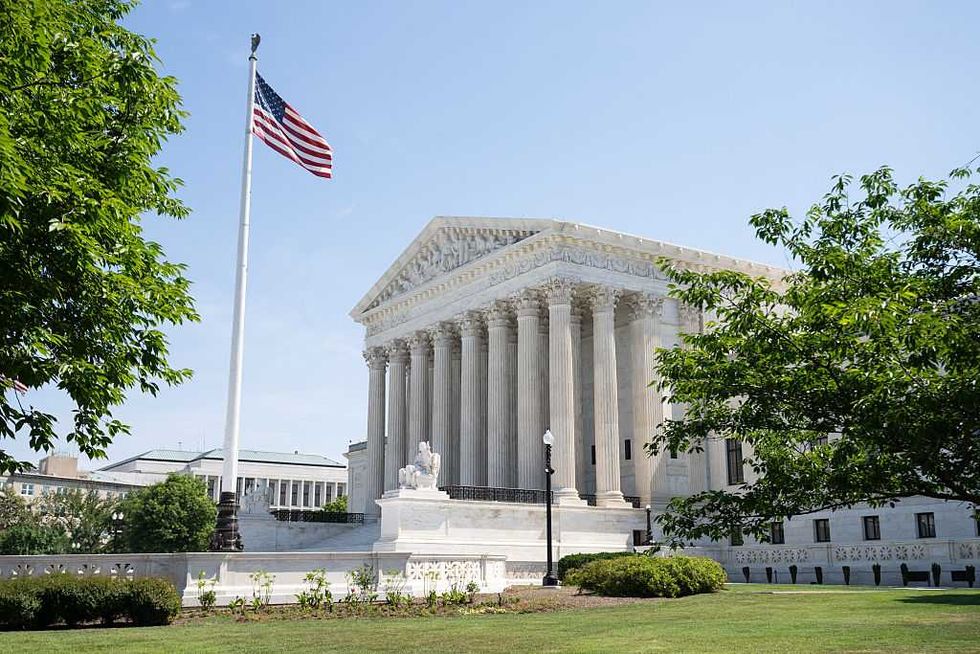
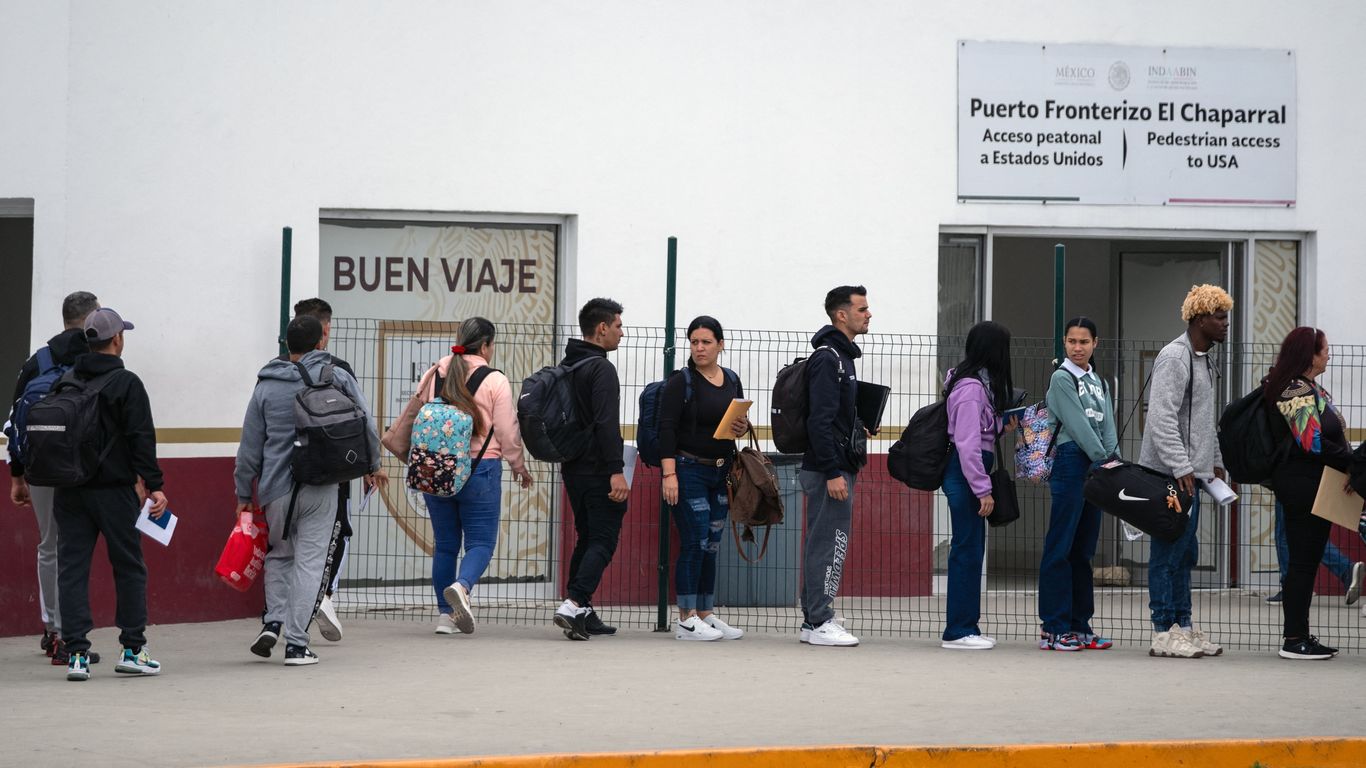
The Supreme Court on Thursday cleared the way for the Trump administration to turn away asylum seekers at the southern border who haven't yet crossed into U.S. territory.Why it matters: The Court's decision resolves a years-long legal fight over a Border Patrol practice when there's limited bandwidth to process people at a port of entry.Driving the news: "An alien standing in Mexico does not 'arriv[e] in the United States' by attempting, and failing, to set foot in this country. An alien 'arrives in the United States' only when he crosses the border," Justice Samuel Alito wrote the majority opinion for Mullin v. Al Otro Lado.The turn away system, sometimes called metering, was first used by Customs and Border Protection under the Obama administration in 2016 to manage capacity at ports of entry during high waves of traffic. It was later expanded by the first Trump administration.These asylum seekers would then typically wait in Mexico until the ports' flow reduced and there was another opportunity to attempt to enter the country. But the policy still allowed people with valid travel documents to enter the country any time.The policy was overturned by a judge during the Biden administration.Zoom out: Lawyers representing Al Otro Lado, a non-profit legal services organization that aids migrants and means "the other side" in Spanish, failed to convince judges that immigration law bound agents to process all asylum seekers at these ports of entry. During oral arguments, Alito questioned attorneys about what it means to arrive in the U.S., which an explicit part of law on how someone can claim asylum in the U.S."Do you think someone who comes to the front door of a house and knocks at the door has arrived in the house?" Alito asked the advocates' attorneys, using an analog for the port of entry.The bottom line: "We had to go all the way to SCOTUS to vindicate the principle that an alien is not "in the United States" until he is, in fact, in the United States," James Percival, the Department of Homeland Security's General Counsel, said in a statement.
"This bill is a major step toward reducing housing costs for millions of American families, and Donald Trump just doesn't care," Elizabeth Warren told HuffPost.
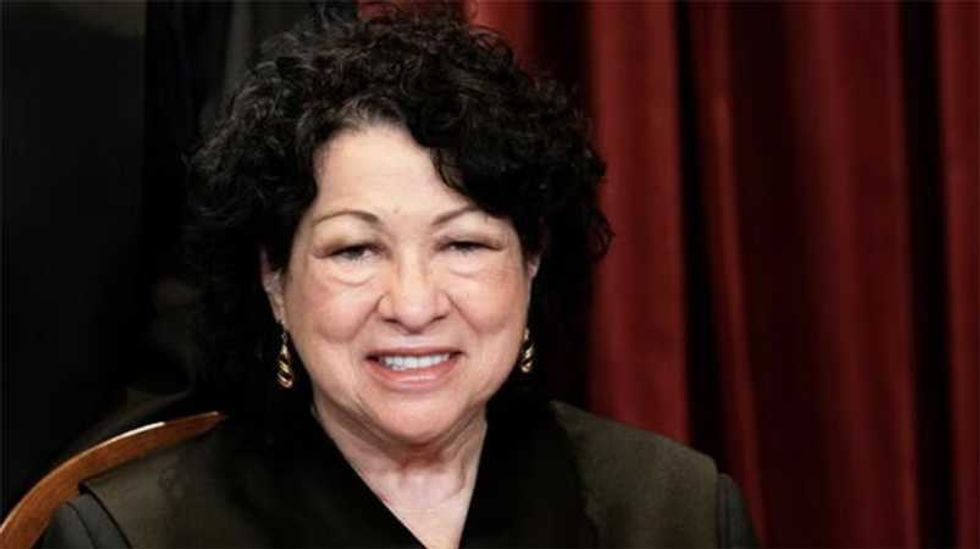
A decision by Justice Sonia Sotomayor to take 12 minutes of the court’s time on Thursday to read her dissent in a 6-3 ruling that makes it significantly harder for asylum seekers who traveled through Mexico and South America to enter the US provoked Justice Sam Alito to take an unseemly potshot at her, which stunned court regulars.According to MS NOW legal analyst Lisa Rubin, arch-conservative Alito sat and listened to a very “calm” Sotomayor read her dissent, with Rubin pointing out, “That is certainly not unusual.”“But here there was a moment of tension between Justices Sotomayor, with her dissent and Justice Alito, who wrote the majority opinion here,” she elaborated. “Producer Peggy Helman, who is in the court for the reading of all of these decisions, said that Justice Alito said in response out loud, ‘There's much I would have added if I had known a dissent would be read from the bench.’”“She [Helman] said that people in the Supreme Court, in the gallery gasped when he said that because this is a group of people that, for all of their differences in terms of legal, interpretive methodology or even the outcome of cases, they like to make it seem as if they get a long; that they are all just rowing in the same direction, trying to do their job to uphold the rule of law” Rubin reported. “Even when their conceptions of what the rule of law is differs, that very obvious public fracture between the two of them was one that was surprising even to the most veteran court watchers in the room today,” she added. - YouTube youtu.be
The U.S. Supreme Court sided with the Trump administration on Thursday in a dispute over an immigration policy critical to combating migrant surges at America’s southern border. The decision was 6-3, with Justices Sonia Sotomayor, Elena Kagan, and Ketanji Brown Jackson in the dissent. Known as Mullin v. Alt Otro Lado, the case centers around […]
Former Rep. Adam Kinzinger (R-IL) announced on Thursday that he created a new political action committee to support candidates who possess the “courage” to stand up against the Trump administration and protect Democratic institutions. Back the Bold, the official name of the PAC, is aimed at elevating Democratic and independent candidates who challenge the Trump […]
This was the right result, but the decision should have been unanimous.
The decision means similar laws in other states likewise violate the Second Amendment, and it casts doubt on the constitutionality of location-specific gun bans that cover a lot of territory.
The Supreme Court has ruled in favor of Homeland Security Secretary Markwayne Mullin and the Trump administration regarding when asylum-seekers officially "arrive" in the U.S.In a 6-3 decision split along ideological lines, the Court held that aliens seeking asylum do not “arrive in the United States” until they physically cross the border into the country and therefore are not entitled to inspection by border officials until they have entered onto U.S. soil.'An alien "arrives in the United States" only when he crosses the border.'The case stems from the federal government’s “metering” policy — first adopted in 2016 amid a surge of migrants at the southern border — that limited the number of aliens whom Customs and Border Patrol agents would inspect each day for asylum. When a port of entry reached capacity, officials physically prevented additional aliens from entering until capacity became available again. In 2017, asylum-seekers and Al Otro Lado, an immigration advocacy organization, brought forward a class-action lawsuit arguing that the federal government was unlawfully denying aliens access to asylum procedures. The federal district court in Southern California granted summary judgment in favor of the noncitizens and declared the government’s policy unlawful. The metering policy was then discontinued in November 2021, though the second Trump administration has attempted to revive it. A divided Ninth Circuit panel affirmed the summary judgment, ruling that an alien “arrives in the United States” when said alien — even while standing on the Mexico side of the border — encounters a U.S. official and thus must be inspected for asylum claims. Writing for the majority, Justice Samuel Alito reversed the lower court’s ruling. The court held that the meaning of “arrives in the United States” requires physically entering the country. Therefore, under the Immigration and Nationality Act of 1952, an alien standing on the Mexico side of the border is not entitled to inspection by a U.S. official. “We hold that an alien who is standing in Mexico does not ‘arriv[e] in the United States’ by attempting, and failing, to set foot in this country. An alien ‘arrives in the United States’ only when he crosses the border,” Alito wrote.RELATED: Ketanji Brown Jackson melts down over SCOTUS ruling against Hawaii gun law: 'The court's objective is protecting guns' U.S. Supreme Court Associate Justices Samuel Alito (L) and Clarence Thomas (R).Chip Somodevilla/POOL/AFP/Getty ImagesThe court highlighted the text of other INA provisions and subsequent amendments to the statute to indicate that Congress intended asylum and inspection rights to apply only after an alien enters the country. “That Congress amended §1158(a) in IIRIRA to replace ‘at a land border or port of entry’ with ‘arrives in the United States’ suggests that we should not read those phrases — which carry different ordinary meanings — to have the same meaning.”Justice Sonia Sotomayor, joined by Justices Elena Kagan and Ketanji Brown Jackson, dissented, arguing that Congress intended border officials to inspect and process all aliens who present themselves at ports of entry, regardless of whether they have physically stepped into the U.S. The dissent contended that the majority’s decision “ignores the statutory context and history” of the INA and weakens the asylum protections Congress created for people fleeing persecution. "The Court today holds that the Executive Branch may circumvent all these mandatory procedures by having U.S. immigration officers stand at the border and physically block noncitizens from setting a foot onto U.S. soil.” Sotomayor added, "The Court's illogical interpretation is driven almost entirely by a fixation on a single word: 'in.'"Like Blaze News? Bypass the censors, sign up for our newsletters, and get stories like this direct to your inbox. Sign up here!
The ruling rejected the Trump administration’s attempt to change federal election procedures through an executive order.