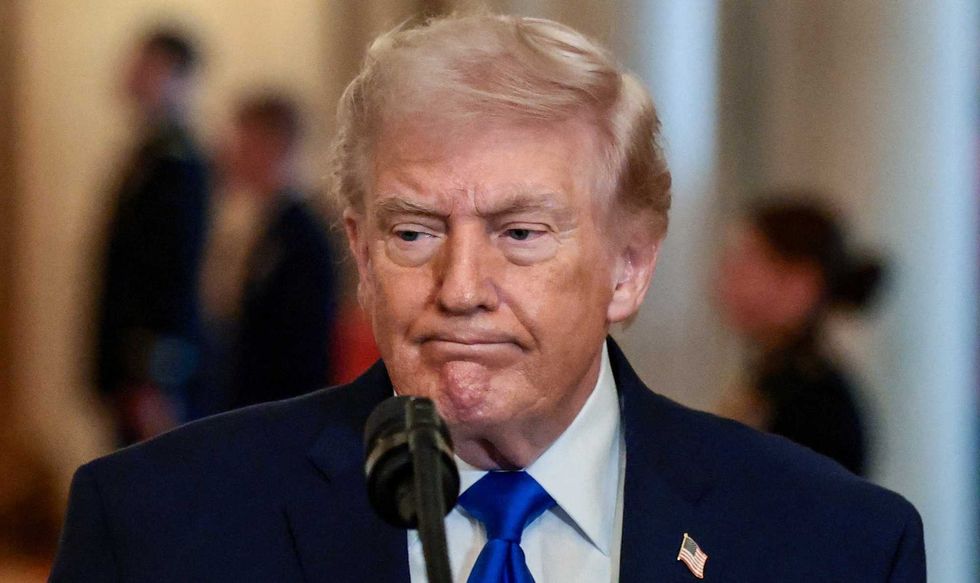
‘I am horrified’: Senator blasts Hirono’s ‘bizarre’ leftist agenda to protect ‘violent murderers, violent rapists’
'If you are convicted in a court of law of these crimes, absolutely, we should not only convict you, but we should deport you. Gone!'

Senate Republicans advanced ICE and Border Patrol funding through the end of President Trump's second term, after beating back multiple amendments targeting his priorities during an 18-hour "vote-a-rama."Why it matters: The party-line vote had been deeply in doubt over the past weeks, as senators revolted against the "anti-weaponization fund" and spending requests for the president's White House renovations. The final vote was 52-47, with Sen. Lisa Murkowski (R-Alaska) voting "no" and Sen. Michael Bennet (D-Colo.) not voting. The "vote-a-rama" allowed senators to offer unlimited amendments, forcing GOP leadership to repeatedly defeat amendments that targeted the two Trump provisions.Zoom in: In the vote's opening act — a series of Democratic amendments designed to force uncomfortable votes for Republicans — Senate Majority Leader John Thune (R-S.D.) relied on Sen. Bill Cassidy (R-La.) to help defeat a Democratic proposal targeting the "anti-weaponization fund."Cassidy's vote allowed a pair of politically vulnerable Republicans — Sens. Jon Husted (Ohio) and Dan Sullivan (Alaska) — to side with Democrats without jeopardizing the amendment's defeat.For both senators, it marked one of their first meaningful breaks with a president whose political standing appears to be sliding.The vote failed, 49-50. Sen. Susan Collins (R-Maine), who is also vulnerable but was expected to vote with Democrats, joined Husted and Sullivan in voting for the amendment.Between the lines: On Trump's ballroom, the universe of Republicans willing to buck their party expanded, with seven GOP senators voting with Democrats to bar any funds for it. But the threshold for that vote was at 60, leading it to fail.Collins, Husted and Sullivan again voted with the Democrats.But so did Sens. Jerry Moran (R-Kan.), Thom Tillis (R-N.C.), Murkowski and Cassidy. Moran is up for reelection in 2028.Zoom out: The vote-a-rama comes as Senate Republicans grapple with deteriorating polling and a series of Trump decisions that have led some GOP senators to question his political judgment.Many Republicans are privately skeptical of Trump's choice of FHFA Director Bill Pulte as acting director of national intelligence.Trump sought to ease concerns by saying Thursday that Pulte would not be his permanent nominee — a move aimed in part at preventing the nomination from complicating the reauthorization of Section 702 of FISA.But enough Republicans joined Democrats in voting to block a procedural vote on FISA renewal that the vote failed shortly after reconciliation advanced early Friday morning.
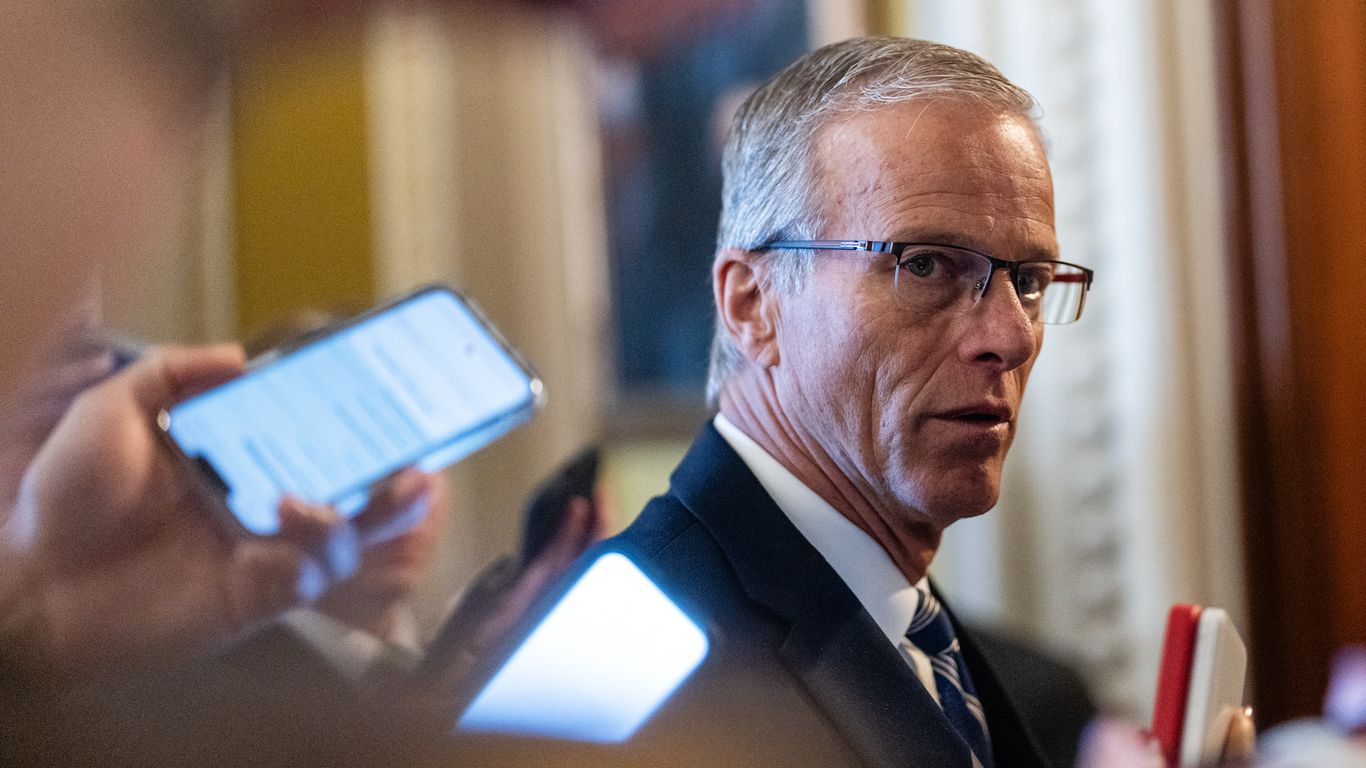
'If you are convicted in a court of law of these crimes, absolutely, we should not only convict you, but we should deport you. Gone!'
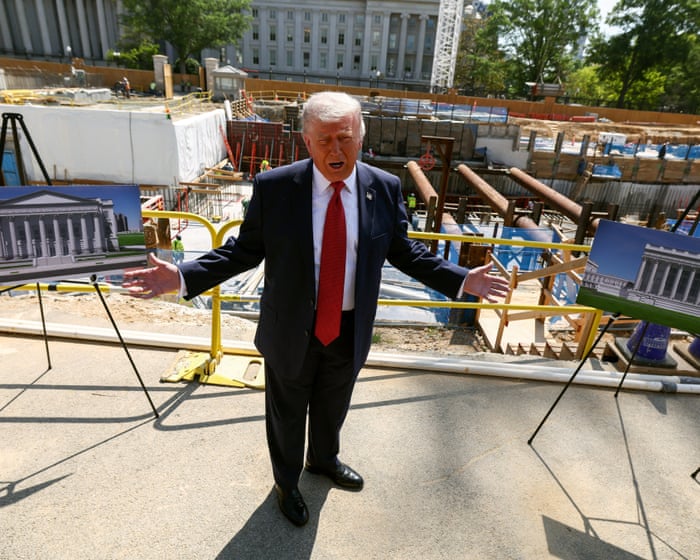
Trump administration has asked DC circuit court of appeals to reverse lower court decision which blocked construction of $400m ballroomNo court has the authority to halt construction of Donald Trump’s White House ballroom and a secure underground facility, a Department of Justice lawyer has argued, suggesting only US Congress had the power to stop the project.The Trump administration has asked the Washington DC circuit court of appeals to reverse a lower court decision which blocked construction of a $400m ballroom on the site of the White House’s demolished East Wing. Construction of a secure bunker for staff underground at the site was allowed to proceed while the dispute between Washington DC preservationists and the White House continues. Continue reading...
The ballroom has been the source of much debate since Trump had the East Wing of the White House demolished last year to make room for the grandiose design.
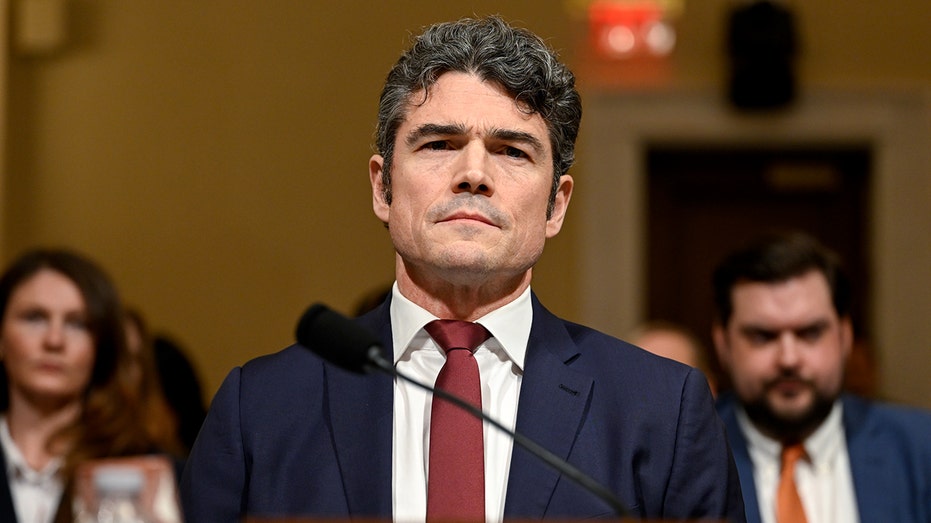
Former National Counterterrorism Center Director Joe Kent endorses Mark Lynch, a candidate challenging Sen. Lindsey Graham in the South Carolina GOP U.S. Senate primary.
President Trump said he’s hopeful acting Director of National Intelligence Bill Pulte will shrink the size of his new office, saying it’s “too big.” The comments came in an interview the president gave The Wall Street Journal amid controversy over his installation of Pulte, who will also remain at the helm of the Federal Housing…
President Donald Trump, on Thursday, announced that he plans to nominate Acting U.S. Attorney General Todd Blanche to head the U.S. Department of Justice (DOJ) for a full term. The same day, Trump also told reporters that he has no plans to nominate Acting National Intelligence Director Bill Pulte as a permanent replacement for Tulsi Gabbard. Trump's Pulte appointment is drawing widespread criticism, as he has no intel experience. But according to law professor and former federal prosecutor Barbara McQuade, Trump views "incompetence" as a plus — not a minus — in his administration.Trump, McQuade laments in an opinion column for MS NOW, chooses "incompetent" or inexperienced appointees on purpose because they are less likely to question his policies. "Pulte was, and remains, the head of the Federal Housing Finance Agency — hardly the background one would expect for the leader of America's 18 intelligence agencies," the former DOJ prosecutor writes. "That's particularly true during a time when America is at war with Iran, a hostile foreign adversary whom the U.S. government considers a state sponsor of terrorism…. Pulte replaces Tulsi Gabbard, who resigned from the post last month amid disagreements over the threat posed by Iran."McQuade continues, "Gabbard's resume was thin, but at least she had experience in the military and in Congress. Pulte appears to lack any national security expertise at all. In fact, his only apparent qualification is unflinching loyalty to the president and an eagerness to weaponize the government against Trump's perceived foes."McQuade notes that she was working in DOJ in 2001 when Congress — in response to the 9/11 terrorist attacks — created the director of national intelligence (DNI) position, which requires one to oversee "the nation's collection, analysis, and dissemination of information relating to terrorist plots, cyberattacks, the proliferation of weapons of mass destruction, and malign foreign influence.""Why would a president want to fill such a sensitive and important position with someone who lacks any bona fide credentials?" McQuade writes. "Perhaps the appointment reflects what historian Ruth Ben-Ghiat calls 'engineered incompetence.' When a leader appoints an individual to an office that is above their station, the official becomes beholden to the leader — who, in turn, gains absolute control. Knowing they are in over their head, the official is less likely to assert independent judgment or to object when the leader acts in his self-interest instead of the public good."McQuade adds, "Engineered incompetence explains how a Fox News host, (Pete Hegseth), gets appointed secretary of defense and promptly shares sensitive attack plans over a Signal chat…. Effective leaders value candid advice, even when it means hearing things that conflict with their policy preferences. A leader who ignores unpleasant news is one who is unprepared to make clear-eyed choices on behalf of the people he was elected to serve. With a loyalist like Pulte leading the president's daily intelligence brief, the engineered incompetence itself poses a grave risk to our national security."
President Donald Trump has instructed Bill Pulte, the controversial new acting head of the Office of the Director of National Intelligence (ODNI), to execute sweeping personnel cuts across the nation's 18 federal intelligence agencies and units before a permanent successor is confirmed.In an interview with The Wall Street Journal, Trump revealed his explicit mandate to Pulte, who lacks the necessary security clearances, to dramatically reduce the size of an agency he views as "unnecessary and/or too big.""I'd like to see it smaller. I think there are a lot of people in there that shouldn't be there," Trump admitted to The Journal, specifically targeting career officials from the Biden and Obama administrations. When asked directly if he was ordering firings, Trump confirmed the instruction. "I want him to 'start the process,'" Trump said, adding that his eventual permanent nominee should continue the purge once confirmed.Trump bluntly framed Pulte's temporary status as an operational advantage rather than a limitation. "You're less shackled," Trump said of the acting designation. "It sort of gives you more power, you know, for a somewhat limited period of time."The president outlined a calculated strategy to complete major structural changes before his permanent appointee takes office, allowing the future ODNI to inherit a smaller, ideologically aligned agency rather than managing the cuts themselves."Frankly, it might be good for him to shake it up before people come," Trump explained. "Because, if he [Pulte] reduced the size, in conjunction with me…and in conjunction with possibly the person coming in…he can do a lot of the hard work and we wouldn't have to saddle somebody that goes in."The approach reflects Trump's broader effort to reshape the intelligence community according to his preferences, The Journal reported. Pulte, who has no prior intelligence experience and has been highly critical of the FBI and other agencies, is widely viewed as unlikely to survive Senate confirmation despite his acting appointment.Pulte and ODNI representatives declined to comment to The Journal on the directives.
On Friday, the Trump administration celebrated a better-than-expected jobs report, which showed the U.S. gained 172,000 jobs in May. But while President Donald Trump may be patting himself on the back, one respected economist warns that the good news misses a “clear paint point” that shows the economy is shakier than the job numbers suggest. “This is the clear pain point in the economy,” posted Heather Long, chief economist at Navy Federal. “Wage growth in May was the lowest in 5 years. May wage gains: 3.4 percent (for past year). May inflation: Likely to be ~4 percent.”That’s bad math for the economy, meaning that inflation is outpacing wage gains. Or as Long puts it, “It's easier to get a job now, but it's hard to find a job where your pay will keep up with current inflation.” What’s more, Long notes that wage gains have hit their lowest point in five years, since May 2021, when the pandemic was still wreaking havoc on the global economy. Other experts have agreed with Long’s not-so-fast assessment of Friday’s positive job report.According to Bankrate Senior Economic Analyst Mark Hamrick, “It's very likely, given recent trends, that real wages will continue to fall and workers and their families will find it increasingly difficult to make ends meet.” Hamrick also argues that affordability challenges have reduced job mobility, and that what job growth there has been is limited to a few sectors, which doesn’t bode well for economic strength overall. At the same time, he suggests that a strong labor market makes it less likely that the Fed will cut the interest rate, resulting in higher borrowing costs and slower business expansion. And as U.S. economic policy expert and former chief economist for the GOP Ways and Means Committee, Donald Schneider, noted, there is an interesting correlation between the rising job numbers and the removal of a key Trump policy: tariffs. Schneider shared a chart that plots both the effective tariff rate and job growth, saying, “These things might be related.”The chart indicates that as Trump’s tariffs began to fall at the end of last year, the plunging job growth rate started leveling off. Then tariffs plummeted after the Supreme Court slapped them down in February, and lo and behold, that’s precisely when the job numbers began racing upwards. So as Scheider points out, there appears to be a direct link between the two trends. Trump has announced his intentions to reintroduce tariffs.Europac chief economist Pete Schiff noted another issue with the job news, posting, “Unfortunately, all of those jobs were either in leisure and hospitality, or in government or government-related services. That drives demand for imported goods, increasing trade deficits and goods prices.”As one of his respondents explained, “We are subsidizing consumer demand without creating the domestic goods to match. Pumping government payrolls and service wages gives consumers cash to spend, but since the U.S. isn't producing physical goods, that liquidity immediately leaks out of the country to buy foreign imports.”“Exactly,” Schiff agreed.