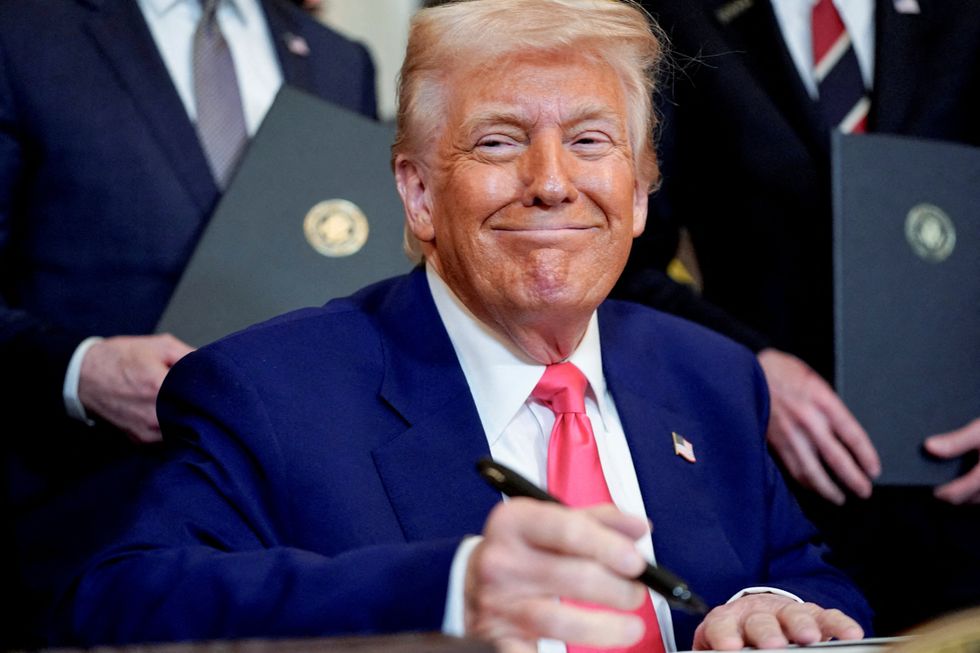
President Donald Trump's controversial new intelligence chief is clearing house, and career officers warn the man swinging the axe doesn't know what he's cutting.Bill Pulte, Trump's loyal acting director of national intelligence, began notifying dozens of intelligence officials of their terminations Thursday, part of a downsizing Trump ordered when he installed Pulte at the office two weeks ago, MS NOW reported Friday. An intelligence official, who spoke anonymously citing fear of reprisal, told the outlet that leadership is targeting workers it believes are "deep state" and accused them of failing to hand up a complete picture of available intelligence.But former officials aren't buying his rationale. Several told MS NOW they had never heard of intelligence officers withholding information from their superiors. "The premise is absurd," one said. Another questioned how Pulte, who ran the federal housing agency and has no intelligence background, could reach such a conclusion within days of arriving.“I have a real question of how he would know this. This isn’t a guy who is familiar with intelligence,” a former official told the outlet. “How is he going to get to the bottom of this and rely on any information with a matter of fidelity? It would be like me taking over a hospital and firing dozens of surgeons in a matter of days.”The cuts follow Pulte's earlier removal of six political appointees who served under his predecessor, Tulsi Gabbard. His arrival has drawn alarm across party lines: he took the post without ever holding a security clearance, and he can stay in the acting role past November's midterms under federal vacancy rules. Critics note his office doesn't collect intelligence of its own, relying instead on the CIA, the NSA and more than a dozen other agencies to supply it.Democrats and some Republicans fear the purge is less about efficiency than about clearing out analysts who might resist Trump's election claims. The ODNI says it is providing "elite, apolitical intelligence that keeps America safe."
The Trump administration concluded a recent mineral deal with Kazakhstan that, not surprisingly, enriches not only President Donald Trump’s own family but that of his secretary of commerce, Howard Lutnick. Trump’s two eldest sons, part owners of Dominari Securities, are set to profit from the Kazakh tungsten deal. So is Cantor Fitzgerald, the investment firm run by Lutnick’s two sons.As The New York Times pointed out in its investigation of the scheme, “Their sons were soon doing business with partners in a deal that their fathers were negotiating, continuing a pattern of self-enrichment in the second Trump administration that has few precedents in American history.”The phrases “self-enrichment” and “few precedents” are interesting ways of characterizing this latest instance of the administration’s corruption. Isn’t self-enrichment a good thing, in the sense of profiting from your own hard work? By contrast, the article doesn’t mention the word “corruption” at all. Perhaps the Times is worried about getting hit by yet another Trump legal challenge (in October last year, Trump refiled a $15 billion defamation suit against the paper for its coverage of his 2024 presidential campaign).There are indeed several precedents in American history for what Trump is doing. These previous corruption scandals—Credit Mobilier, Whiskey Ring, Teapot Dome—wrecked the reputations of presidents and cast long shadows over American politics. They also helped to produce the kind of safeguards that Trump is now destroying.Foreign policy is a tool by which the administration levies a toll on any entity that has the temerity to be a country other than the United States. As with much of Trump’s disrespect for norms, his corruption has been massive and largely in full view. The two outstanding questions are: Will Trump and company ever be held accountable for their graft and will this corruption have an enduring impact on political institutions in the United States?Tracking the DamageIf scandalous behavior unfolds in full view of everyone, is it still a scandal? “Scandal” suggests something hidden, something whispered about, something revealed. Trump’s actions are full frontal. They are both brazen and matter-of-fact.According to the Trump administration and its extended family, the money skimmed off the top of economic transactions is just smart politics. The administration has endeavored to negotiate every peace deal, trade agreement, investment arrangement, and mineral pact in such a way as to deliver Trump, his family, and their circle of close supporters a good chunk of change.This is Trump’s interpretation of the American dream: Folks would be downright foolish not to profit from their position. All the great tycoons made their money, from railroads to AI, by being in the right place at the right time with the right amount of ruthlessness. In Trump’s case, however, he is using taxpayer money to cover the risk. And most the time, given the terms of the arrangement, there is hardly any risk because Trump is using his presidential power to game the system. That’s what he really means by the “art of the deal.” Trump only deals from a marked deck of cards.The Center for American Progress runs Trump’s Take, which estimates that the president has received a little over $2.6 billion in cash and gifts since he took office in January 2025.The graft is not secret, though sometimes the actual amounts involved are obscured by layers of complex finance. Trump’s recent mandatory financial disclosure offers some details. But thanks to a number of websites, it’s become quite easy to track in real time the growing amount of Trump’s slice of the pie.The Center for American Progress runs Trump’s Take, which estimates that the president has received a little over $2.6 billion in cash and gifts since he took office in January 2025. Much of this money has come from various crypto schemes, including the Trump meme coin, but also such dubious ventures as the documentary about Melania Trump and a number of legal settlements (more colloquially known as shakedowns). Corruption Counter puts the value at $2.2 billion and includes such recent items as the $100 million savings for Trump from the recent effort to bar the Internal Revenue Service from auditing the president. (Courts blocked the overall $1.8 billion “settlement fund,” but the Justice Department is upholding the IRS amnesty.)If you want to keep track just of the crypto deals, the Democrats on the House Oversight Committee maintain the Trump Family Digital Grift Wealth Tracker. Senator Chris Murphy (D-Conn.) keeps his own list, which highlights the insider trading around the Iran War and a defense contract with Dell after the president invested in the company. David Kirkpatrick, at The New Yorker, has been keeping a running total of Trump’s ballooning assets. In January, he updated his total to $4 billion, which details, among other things, the Gulf money flowing into Trump pockets.
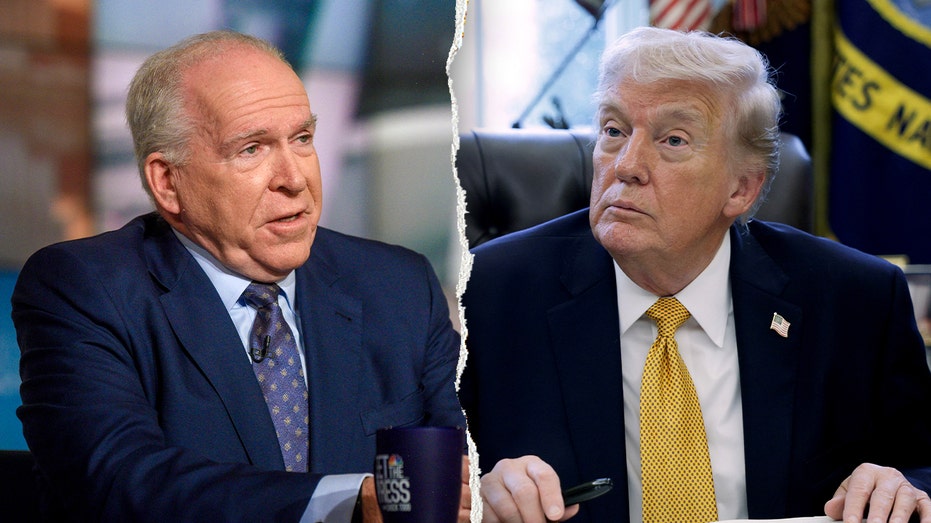
Former CIA Director John Brennan, who helped oversee the intelligence community’s investigation into alleged ties between Donald Trump’s 2016 campaign and Russia, sued the Justice Department on Wednesday before prosecutors have even charged him with a crime. Brennan filed a lawsuit in federal court seeking an order requiring the Trump administration to preserve records related ...
Former CIA Director John Brennan is suing the Trump administration and demanding an order requiring the administration to preserive its investigation records.
On Tuesday morning, amidst the release of several consequential Supreme Court rulings, NPR ran a story stating that Justice Samuel Alito had just announced his retirement — but he hadn’t. The news outlet quickly retracted the story, issuing an apology. But according to one DC insider, this minor media incident may have in fact revealed Alito’s impending retirement, which would have major implications for the future of the court and country. “Given that the Speaker had a statement ready to go, and that Nina Totenberg is the dean of the SCOTUS press corps, who is a logical recipient of this big retirement story, this looks like an embargo broken to me,” posted Douglas Farrar, Former Director of Public Affairs at the Federal Trade Commission. “I expect we'll see Alito announce his retirement soon.”Farrar was referring to three key points. First, the retracted NPR story by Nina Totenberg. Second, the rumor that House Speaker Mike Johnson (R-LA) had sent an email to staff and stakeholders with the subject “Thank you, Justice Alito.” And finally, the concept of a “media embargo,” in which a piece of news is shared with select media outlets with the understanding that it won’t be revealed until an agreed-upon time, allowing journalists to prepare their stories. As Farrar suggests, the NPR story and Johnson email could both be the result of a broken embargo, and Alito’s actual announcement is soon to come.If that is the case, it means two things. First, and less importantly, Totenberg and someone working in Johnson’s communications team have a lot of explaining to do, and they are unlikely to be trusted with scoops in the future. But more importantly, if Alito is in fact leaving, that means President Donald Trump will appoint his replacement — a move he would be eager to press with the midterms looming. If the Republican Party takes the losses that are projected and loses its majority, the Democrats will be significantly better positioned to oppose confirmation of his nominees. If Alito is indeed retiring, it would represent a strategic move on the part of conservatives, affording Trump the opportunity to select his fourth judge rather than leaving the possibility open to a Democratic successor were Alito to retire or die during a future term. This ensures that Republicans will shape the court for a generation and have a major impact on how the judiciary drives policy for decades to come. While this certainly represents a threat to the Democratic agenda, interestingly enough, rumors of Alito’s retirement came as the Supreme Court issued a consequential ruling in which three conservative justices — including two appointed by Trump — slapped down the president’s executive order attacking birthright citizenship.
Kevin Roberts, the president of the conservative Heritage Foundation, called the Supreme Court ruling on Tuesday upholding birthright citizenship a “tremendous betrayal of the public.” “The Justices in the majority have inflamed the all-out assault on our sovereignty and cheapened the sacred value of American citizenship,” Roberts wrote on social platform X. “Universal birthright citizenship…