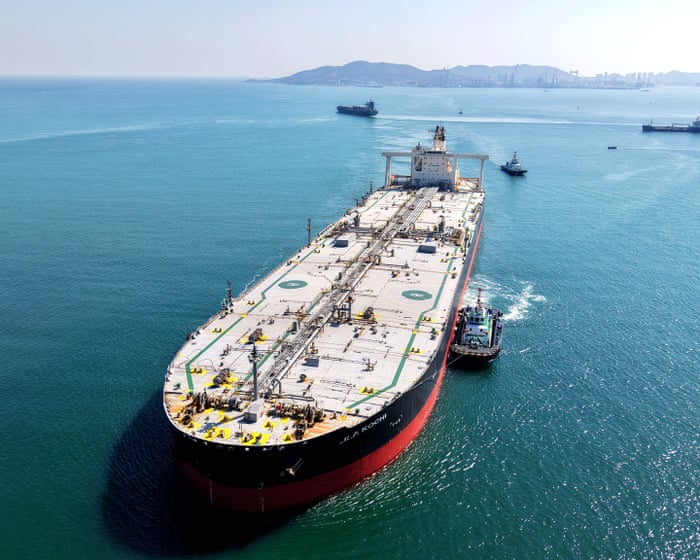
Return to pre-crisis oil and gas supplies months away even if strait of Hormuz reopens
Center Left
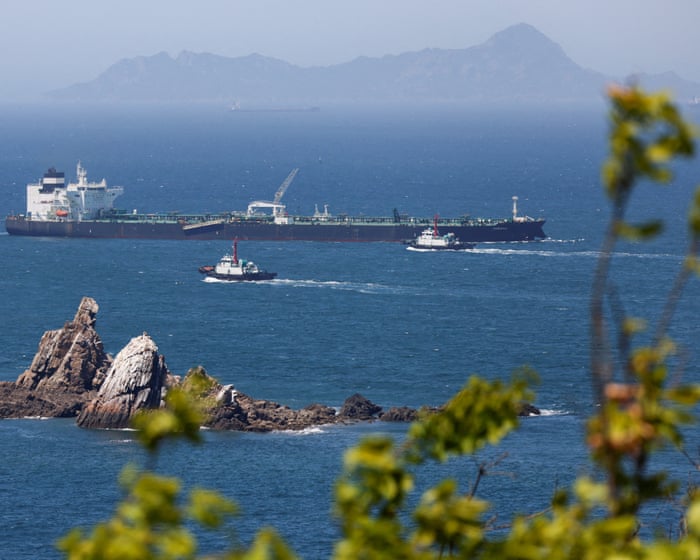
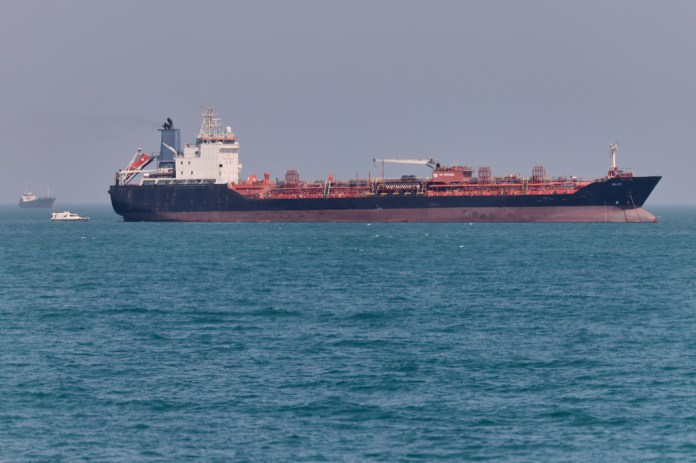
Markets welcome US-Iran peace deal but prices may stay high as buyers race to refill depleted emergency crude stockpilesOil prices hit three-month low and markets rallyBusiness live – latest updatesAfter more than 100 days of the greatest recorded disruption to the world’s energy supplies, the global oil and gas markets have breathed a sigh of relief.Hours after Donald Trump confirmed that a US-Iran peace deal would lead to the reopening of the strait of Hormuz to tankers carrying millions of barrels of oil and gas, the price of Brent crude tumbled to lows of $83 a barrel. Wholesale gas prices fell about 6%. Continue reading...
Crude oil prices fell to a three-month low Monday after President Donald Trump announced that the United States and Iran had reached a deal, which resumed tanker traffic through the Strait of Hormuz. Benchmark crude fell nearly 5% to around $83 per barrel, while U.S. West Texas Intermediate crude dropped below $81 per barrel for […]
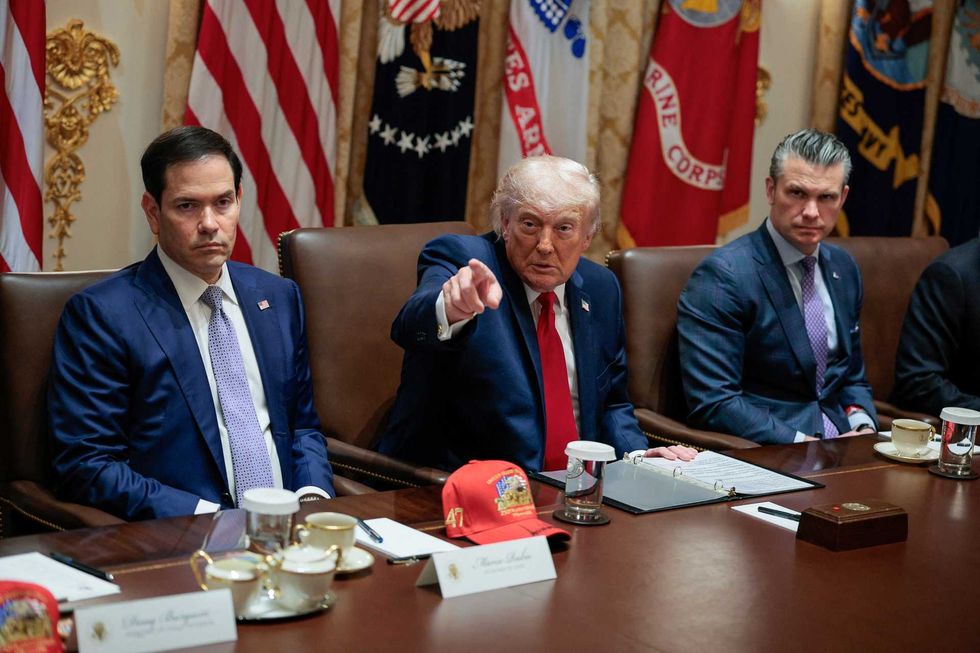
Secretary of State Marco Rubio and Defense Secretary Pete Hegseth's jobs may be at stake if they continue to oppose President Donald Trump's Iran deal, a senior White House official warned.The threat emerged in a report published Sunday by the right-leaning Israeli daily Israel Hayom, which detailed a bitter internal White House battle over the emerging memorandum of understanding with Tehran."The debate has been settled. Those who oppose it may pay a personal price," a senior US official told the outlet.According to the report, Vice President JD Vance, envoy Steve Witkoff, and Trump envoy Jared Kushner have driven the push for a deal, arguing the Iranian regime is unlikely to collapse soon and that Gulf states — particularly Qatar — have pressed hard for an agreement.Rubio and Hegseth argued the opposite: that Iran is buckling under economic pressure and Washington should tighten the screws, not ease them. The two men had been the public faces of that harder line — touting "Project Freedom," a plan to reopen the Strait of Hormuz by force, only for Trump to shelve it hours after they publicly praised it.Trump has since sided firmly with the deal camp. Treasury Secretary Scott Bessent reportedly warned that lifting sanctions would be nearly impossible to reverse, but the Israel Hayom report said his objections changed the terms only slightly."This is an American game being managed with utter foolishness…Trump is acting badly and against the American interest, not only the Israeli one," Oded Ailam, a former senior Mossad official, told Israel Hayom.Sanctions on Iranian oil sales are expected to be lifted — at least in part — after the Strait of Hormuz fully reopens, according to the report.
An agreement has been reached between the United States and Iran to end the war and reopen the Strait of Hormuz, according to President Donald Trump and Iranian officials. A document signing is expected to take place Friday. NBC’s Keir Simmons reports on the details of the deal for TODAY.
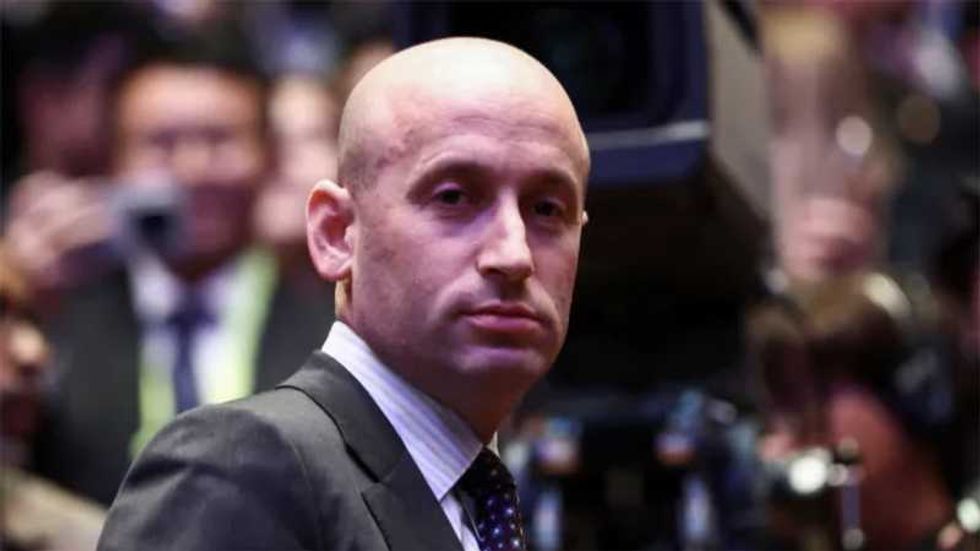
A small group of arch-conservative lawyers inside the Trump White House quietly fought back against Stephen Miller and Vice President JD Vance's push to suspend constitutional rights, according to internal memos and accounts drawn from a forthcoming book on Donald Trump's second term.The internal resistance — remarkable in an administration that rarely tolerates dissent — centered on proposals pushed by Miller to habeas corpus to accelerate deportations and invoke the Insurrection Act to deploy military force against immigration protesters, reported New York Times correspondents Maggie Haberman and Jonathan Swan in their forthcoming book, “Regime Change: Inside the Imperial Presidency of Donald Trump.”In both cases, it was not Democrats or federal judges who blocked the moves, but Trump's own senior staff.The key figure was Will Scharf, the White House staff secretary and a Harvard-trained lawyer who had helped build the legal arguments behind Trump's presidential immunity victory at the Supreme Court. Scharf was no moderate. He had embraced the most contentious elements of Trump's agenda and believed the former president had been politically persecuted after 2020, but he drew a line on these radical proposals.In a confidential memo dated April 29, 2025, addressed to White House Chief of Staff Susie Wiles, Scharf laid out a meticulous legal case against suspending habeas corpus — the centuries-old right allowing individuals to challenge their imprisonment before a judge.The memo traced the right to the American Revolution, noted it had been formally suspended only four times in U.S. history, all during wartime, and warned that any attempt to suspend it without congressional authorization would almost certainly be struck down in court, creating a costly and self-inflicted legal crisis."Denial of habeas corpus rights was a key grievance underlying the American Revolution," Scharf wrote, adding that all three branches of government had historically been reluctant to interfere with the right "only in the direst of circumstances."Miller, the administration's immigration hard-liner, had been pushing the idea as a way to bypass federal judges who were slowing deportations. The president was receptive, asking advisers about Abraham Lincoln's Civil War-era suspension of the writ. But Scharf's memo, combined with skepticism from White House Counsel David Warrington, helped stall the proposal. Some West Wing officials privately called the idea "insane."The second confrontation came in late January, when Vance walked into a senior staff meeting and pressed for immediate invocation of the Insurrection Act following protests in Minnesota, where federal agents had shot and killed two American citizens during immigration enforcement operations. Vance argued swift action would deter future unrest and Miller supported the move.Scharf again pushed back, arguing the law simply did not fit the circumstances, and Deputy Chief of Staff James Blair reinforced the point politically, asking the room what the Insurrection Act would actually achieve that existing powers could not. Nobody had a convincing answer, and White House communications director Stephen Cheung expressed his concerns about the public relations emergency the move would present.The meeting ended without a decision. The Insurrection Act was not invoked.However, the reporters noted that the notion of suspending habeas corpus has not been set aside and remains in consideration by some White House insiders who see the law as a potent way to test the limits of presidential power.
Stocks rose on Monday after the U.S. and Iran reached a tentative deal to end hostilities, with oil prices falling ahead of the potential opening of the Strait of Hormuz. Futures for the S&P 500 were up more than 1.2 percent as of just after 9 a.m. Nasdaq futures, meanwhile, were up nearly 2.1 percent.…
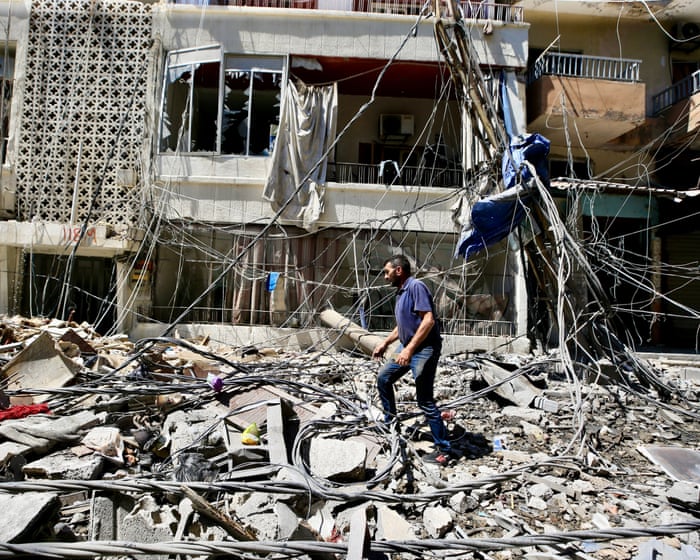
As the world waited for rational outcomes from irrational players, the people being bombed were forced to adjust to the fact of terror as part of daily life“Humans take a lot of killing,” wrote Frank McCourt in Angela’s Ashes. As bleak a phrase as it is, McCourt was talking about resilience, how much poverty and abuse a person can withstand and still survive. But the other side of human capacity for pain is how much can be forced upon us and normalised. It is bewildering how war – shocking and intolerable at first – quickly becomes a matter of fact. Few conflicts have demonstrated that more vividly than the war on Iran. For months it was a matter of low-grade strikes, hot and cold rhetoric, and near-conclusions to the hostilities that never came. Sharp political crisis manifested as grinding hardship and upheaval for the people.We have a peace deal now, for that be thankful, but think what preceded it. Over the past week alone, Donald Trump had ordered strikes on Iran, and expressed a desire to take Kharg Island, which handles 90% of Iran’s crude oil exports. He then prematurely declared that the US had ended the war on Iran in a “great settlement”. The markets did their customary flicker in response to the announcement of a deal, but the rest of us, not invested in oil futures, could have been forgiven for not registering a reaction to imminent peace – he had made the same promise almost 40 times. In press conferences, social media posts and interviews over the past few months, Trump had said relax, it’s almost over. Just how not over it was can be traced by the strikes and counter-strikes across the region, the closure of the strait of Hormuz, general global economic upheaval and specific Middle East destabilisation. Continue reading...
Donald Trump posts ‘Let the oil flow’ as US-Iran peace deal sparks immediate drop for Brent crudeMiddle East crisis: live updatesPeace deal between US and Iran announced, with strait of Hormuz expected to reopenWhat do we know about the US-Iran peace deal – and what questions remain?Global oil prices have tumbled amid fresh hopes that a US-Iran peace deal may end the greatest energy supply crisis in the history of the market.The price of Brent crude dropped 4% to below $84 (£62) a barrel as the new trading week began in financial centres across Asia-Pacific, amid optimism that the strait of Hormuz could reopen shortly and bring a return of Gulf oil exports to the market. Continue reading...
Middle Eastern nations are building out their oil shipping infrastructure, seeking long-term workarounds for the Strait of Hormuz to make it less of chokepoint. Iran’s blockade of the waterway, through which about 20 percent of the world’s oil consumption flowed on a typical day prior to the war, has upended markets and sent global oil…