Michigan’s Democratic Senate primary carries 2020 echoes: From the Politics Desk
Center Left
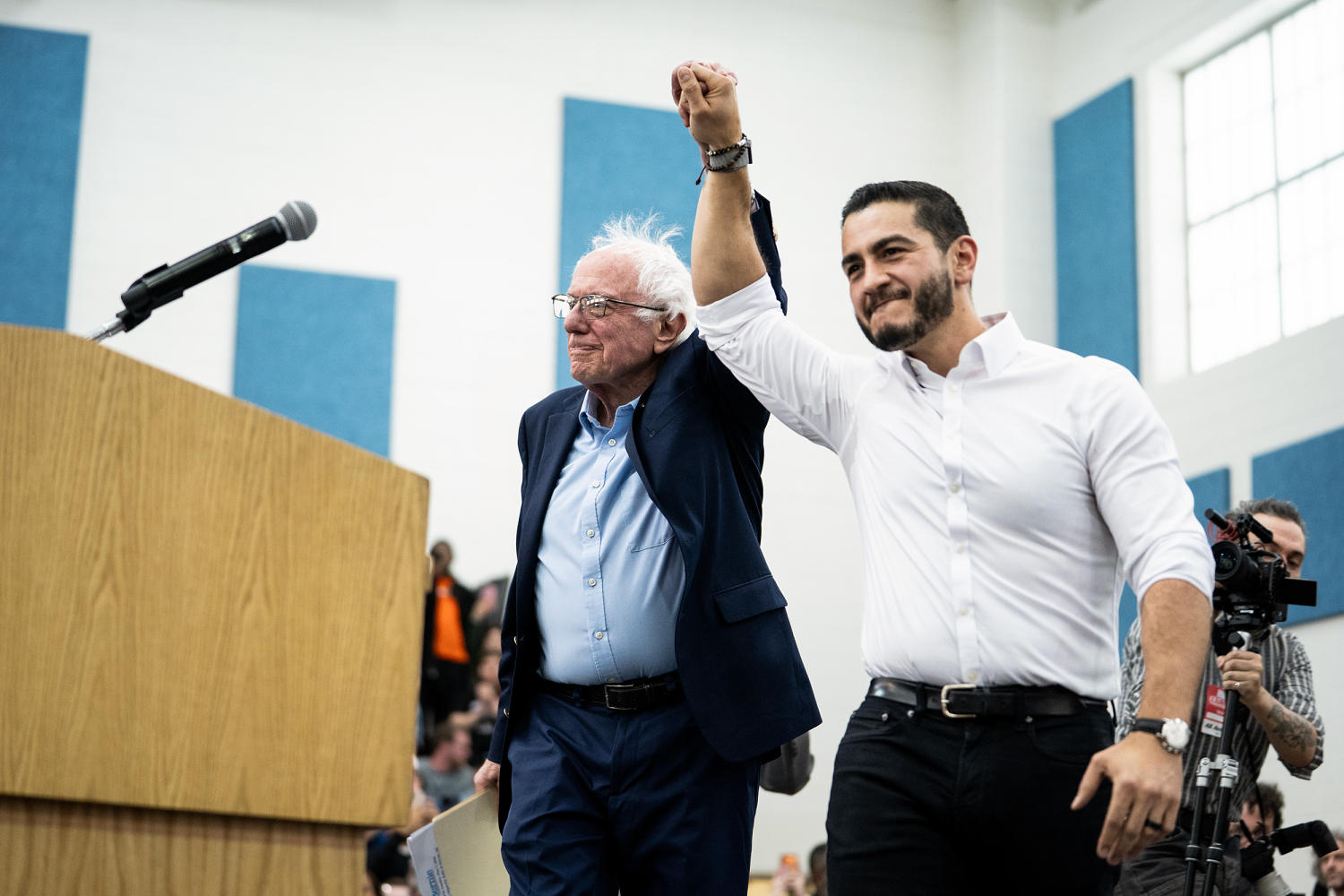
In today’s edition, Sahil Kapur draws parallels between Michigan’s Democratic Senate race and the 2020 presidential primary. Plus, we dive into President Donald Trump’s day at the Supreme Court.
Now that Democratic Socialists of America (DSA) candidates are popping up in races all over the country, actual Democrats are starting to get questions from a nervous media which wonders how all of this happened.
The post Jesse Watters Points Out That the ‘BIG TENT’ Talking Points Have Gone Out as Democrats Try to Explain Away the Rise of the DSA (VIDEO) appeared first on The Gateway Pundit.
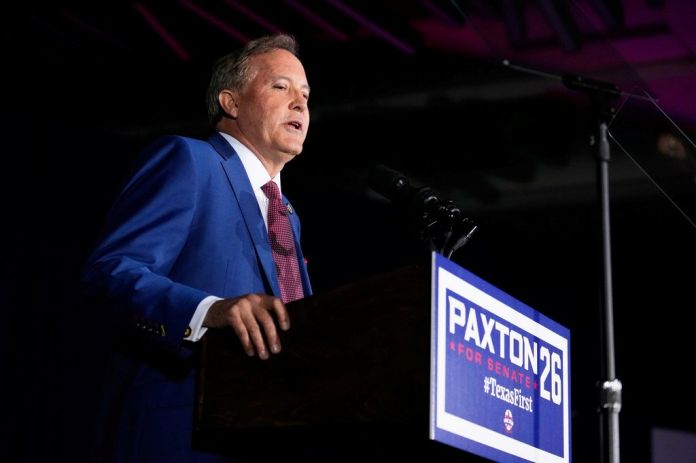
Texas Democrats tore into Republican Senate candidate Ken Paxton after a video emerged showing him flying with his alleged mistress to Iceland ahead of Independence Day. The 2026 Texas Senate race between Paxton and Democratic state Rep. James Talarico has emerged as one of the most personally contentious of the midterm elections. Democrats were given […]
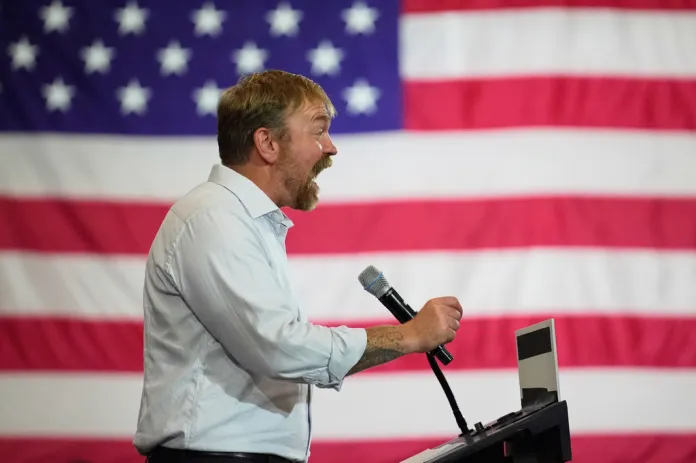
The Democratic National Committee omitted Graham Platner of Maine from its photo of the top five Democratic nominees in their respective Senate races. A poll tracker account on X noted Platner’s absence from the image that featured former North Carolina Gov. Roy Cooper, Sen. Jon Ossoff (D-GA), Texas state Rep. James Talarico, former Ohio Sen. […]
It's hard to believe, but apparently "the entire GOP political ecosystem" is now dedicated to the idea that what worked in 2024 is going to work in the coming congressional elections. Every level is focused on "building a turnout operation with the sole focus of identifying, engaging and ultimately persuading 'low propensity' voters," according to Alex Roarty.In a story in NOTUS today, Roarty reported that operatives have been planning to run the same play "from almost the moment the 2024 campaign ended." By focusing on nonvoters – people "who maybe cast a ballot two years ago but often skip midterm elections" – the aim is "solving a traditional problem for parties in power during midterm elections when their voters become more complacent and turn out in lower numbers than their opposition’s."Why is this hard to believe? First, because the fundamentals for 2026 are arguably the same as they were in 2024, but dramatically worse, in which public opinion turned sharply against the party in power due to inflation, prices, wages and the economy generally. The obvious difference is the party in power is not the one that Donald Trump and the Republicans ran against two years ago. A new poll puts his overall approval at 30 percent, with 82 percent saying that they expect conditions to get worse over the coming year. Importantly, people keep telling pollsters that they hold the president personally responsible for their misery.But there's another reason the GOP's "plan to win" is hard to believe – it depends on a paradox. On the one hand, operatives believe that Trump supporters who usually vote are not going to show up. On the other hand, they believe Trump supporters who usually do not vote – "low propensity voters" – will show up to replace Trump voters who are not going to show up. In other words, "the entire GOP political ecosystem" believes that voters won't vote but nonvoters will. Everyone sees this house of cards but no one is ready to admit it. "We kind of compare notes on everything, making sure that we’re all seeing the world the same way. Which we do,” CLF’s Joe Pileggi told NOTUS. “There’s no fragmentation in our thinking.”I guess unity is the play you make when you don't have a better play. After all, Republican consultants gotta get paid, too.It used to be that casual voters supported Democrats during presidential elections, then disappeared until the next one. That gave the GOP the advantage during midterms. Trump changed that. He chased away educated and mostly white middle- and upper-middle class voters, and replaced them with working-class voters who were more racially diverse but less prone to voting. Democrats have had the advantage since. Even the 2022 midterms, when Joe Biden was president, did not produce a red wave. The Republicans took the House but barely. The economy was in better shape back then. Last week, the Post released a review of 990 races, over three cycles, in 25 states. It found that "turnout is rising in Democratic primaries even when they aren’t hotly contested and the nominee has little chance of winning in the general election." The Post looked at all the Democratic House primaries held so far this year and found that, in more than 90 percent of them, "voters cast more ballots than during 2022, when Republicans flipped the House. So far this year, people cast 12.6 million ballots in Democratic House primaries compared with 8.6 million in GOP primaries" (my italics).
A Republican senator stepped up to correct President Donald Trump after he became confused over the bill that he has said is the "No. 1 priority."Sen. Bill Cassidy (R-LA) posted the correction on X on Monday after Trump called him out directly as one of five Republican senators blocking the Safeguard American Voter Eligibility Act, Trump's top election-overhaul bill."all Dumocrats, and our five Republican Senate Hold Outs, Lisa Murkowski, Susan Collins, Thom Tillis, Bill Cassidy, and Mitch McConnell must vote to SAVE OUR COUNTRY," Trump posted on Truth Social after the U.S. Supreme Court ruled against him on mail-in ballots."Mr. President, I don't know which version of the SAVE America Act you're referring to, but I am a cosponsor and support the latest version," Cassidy fired back on X."I don't know which staffer misled you, but thank you for your attention to this matter!!""Btw, it's irresponsible to postpone signing the Housing bill due to the SAVE Act," Cassidy added. "We need to start delivering relief to people for the high cost of housing ASAP!!"Trump had told House Republicans in March that passing the SAVE America Act was the "No. 1 priority" for Congress and vowed he would "not sign anything" until it passed — including a bipartisan housing bill already on his desk.That housing bill remains unsigned.