Key takeaways from supreme court birthright ruling: ‘Citizenship is the right to have rights’
Center Left
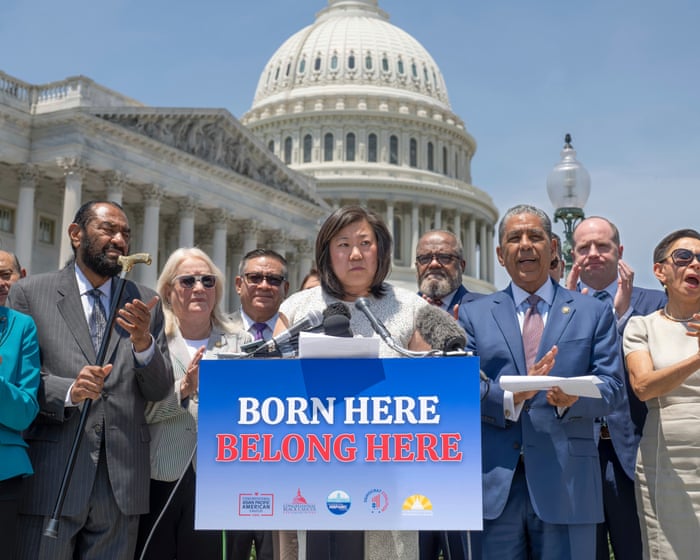
Court rules Trump’s executive order limiting foundational right violated the 14th amendment of the constitutionExplainer: What is birthright citizenship?Supreme court decisions often provide a window into the court’s ideological leanings and judicial philosophies. In recent years, the court, which is composed of six conservative and three liberal justices, has issued rulings that have dramatically reshaped the federal government and American life.On Tuesday, the court struck down Donald Trump’s attempt to end birthright citizenship, delivering a blow to a central piece of the Trump administration’s agenda in one of the most highly anticipated decisions of the term. Continue reading...
Bill Maher is the perfect liberal, at least on paper -- yet despite his talk shows being nominated for Emmy awards more than 40 times, it's only in Donald Trump's Washington that Maher finally gets the recognition he craves.
A spate of rulings from the Supreme Court couldn’t be more of a mandate if they were handed down, gift-wrapped, and sealed with a kiss by God: The mass deportation of illegal aliens is legal and imperative if there’s any hope of saving this country. One ruling declared it within the president’s authority to interpret […]
A Republican-controlled House panel on Monday refused to allow a floor vote on a bipartisan amendment to prevent closer integration of the American and Israeli militaries, which human rights organizations say would deepen US complicity in Israeli war crimes.“This is unconscionable,” Rep. Ro Khanna (D-Calif.), who led the proposed amendment alongside Rep. Thomas Massie (R-Ky.), said in a video posted to social media on Tuesday. “They’re not even giving us a vote on the amendment.”Khanna vowed that “Thomas and I will continue to fight to make sure we don’t compromise American sovereignty.”Watch:Congress has blocked the amendment @RepThomasMassie and I introduced to stop the integration of our military with Israel’s. It is unconscionable to not even have a vote. We will be continuing on and will not be intimidated by the pro-Israel lobby. pic.twitter.com/6ai93L0rAY— Ro Khanna (@RoKhanna) June 30, 2026 The Khanna-Massie amendment would have removed the US-Israel Defense Technology Cooperation Initiative from annual military policy legislation currently moving through Congress. The initiative, laid out in Section 219 of the House’s National Defense Authorization Act (NDAA), instructs the Pentagon to “designate an executive agent... responsible for synchronizing cooperative efforts between the United States and Israel, to expand and accelerate bilateral defense technology research, development, testing, evaluation, integration, and industrial cooperation.”On Monday, the House Rules Committee unveiled a list of NDAA amendments that it decided would get a full House vote, and the Khanna-Massie proposal was absent. Ben Freeman noted at Responsible Statecraft that the rules panel made its decision “after no debate” on the amendment.“By rejecting the Khanna and Massie amendment, the Rules Committee on Monday ensured the American public would not even get to see how their representatives would vote on this pivotal issue,” Freeman wrote. “This is despite unprecedented levels of public distrust in the Israeli government and widespread public outrage directed at these proposals.”The fight to block the US-Israel Defense Technology Cooperation Initiative—which is enthusiastically backed by the pro-Israel lobbying group AIPAC—is not necessarily over.Sen. Bernie Sanders (I-Vt.) said earlier this month that lawmakers “must” strip the initiative from the NDAA, signaling a possible fight over the provision in the upper chamber. A summary of the Senate version of the NDAA states that the legislation would establish “the United States-Israel Defense Technology Cooperation Initiative to expand and accelerate bilateral defense technology research, development, testing, evaluation, coordination, and industrial cooperation between the US andIsrael.”Leading human rights organizations, including Amnesty International USA and Human Rights Watch (HRW), have urged lawmakers to reject the cooperation initiative, with the latter group warning that the proposal would “deepen US military cooperation with Israel while walling that cooperation off from further congressional oversight.”“Israeli forces’ widespread war crimes, crimes against humanity, and its ongoing acts of genocide in Gaza should give the United States pause about closer military association,” said Akshaya Kumar, HRW’s director of crisis advocacy. “Instead, Section 219 proposes to deepen entanglement, in a way that makes the risks of complicity ongoing. Legislators still have a chance to strip this damaging proposal out.”
The Supreme Court gutted one of President Trump's signature policies, rejecting his effort to end birthright citizenship. Jan Crawford has more details.
The Supreme Court justices weighed in on whether states can ban transgender athletes from competing in female school and college sports. Jan Crawford has more.
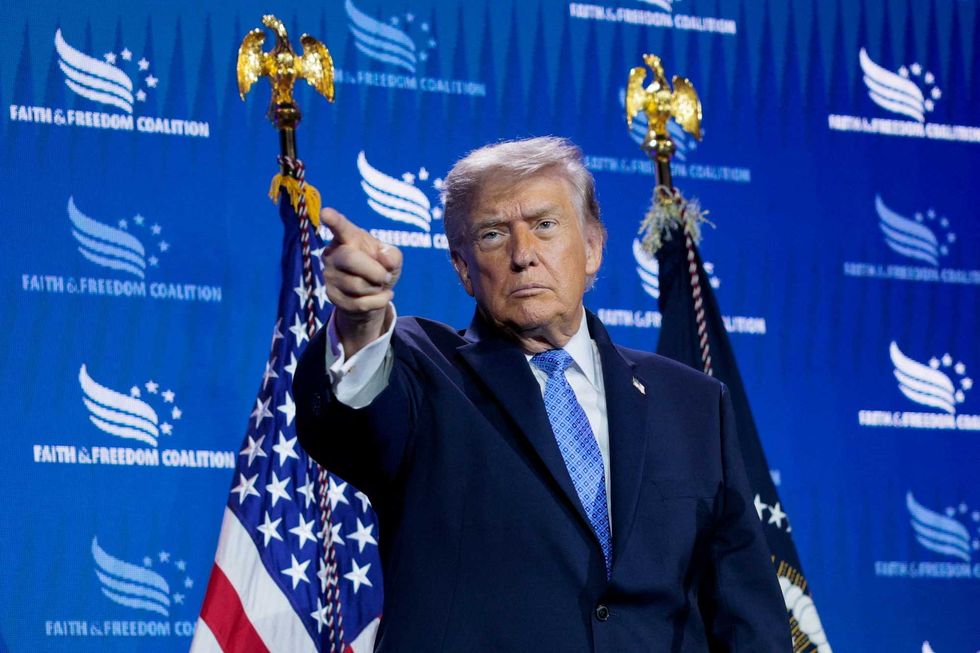
President Donald Trump lost big at the Supreme Court on Tuesday as a majority of the justices struck down his executive order abolishing birthright citizenship in the United States — but it's possible there's an alternate reality in which he could have won this, the conservative Wall Street Journal editorial board wrote.Specifically, they argued, Trump could have tried a much less sweeping change to America's citizenship system, and gotten a more favorable result out of it."An interesting counterfactual is how the Justices might have come out on a narrower order, if Mr. Trump had tried to end birthright citizenship for transients alone," wrote the board, which has been forecasting Trump's loss on this issue for months. But instead, "he took the advice of those who recommended an expansive constitutional challenge because he thought the issue was a political winner, and his defeat is all the greater for it."With Chief Justice John Roberts issuing an absolute judgment in favor of constitutional protections for birthright citizenship, this is no longer possible without an amendment to the Constitution.A key consequence of the ruling, noted the board, is that "today’s 'Dreamers' will give birth to citizens, rather than a second generation living in limbo" — which is for the better, the board argued. "The ability to assimilate newcomers has always been an American strength, while falling birthrates will soon make that an even greater American advantage."As for the specter of "birth tourism," the board concluded, "If [it's] as big a problem as Mr. Trump says, he can make a sustained case for a constitutional amendment."
Justices to consider whether bans on AR-15s and similar semi-automatic firearms violate second amendmentThe US supreme court will consider whether bans on AR-15 rifles and similar semiautomatic firearms are constitutional.The justices said on Tuesday they will hear appeals challenging bans in Connecticut and the Chicago area in the next term. Continue reading...