Israeli Strikes in Lebanon Create Roadblocks for US-Iran Peace
Center Left
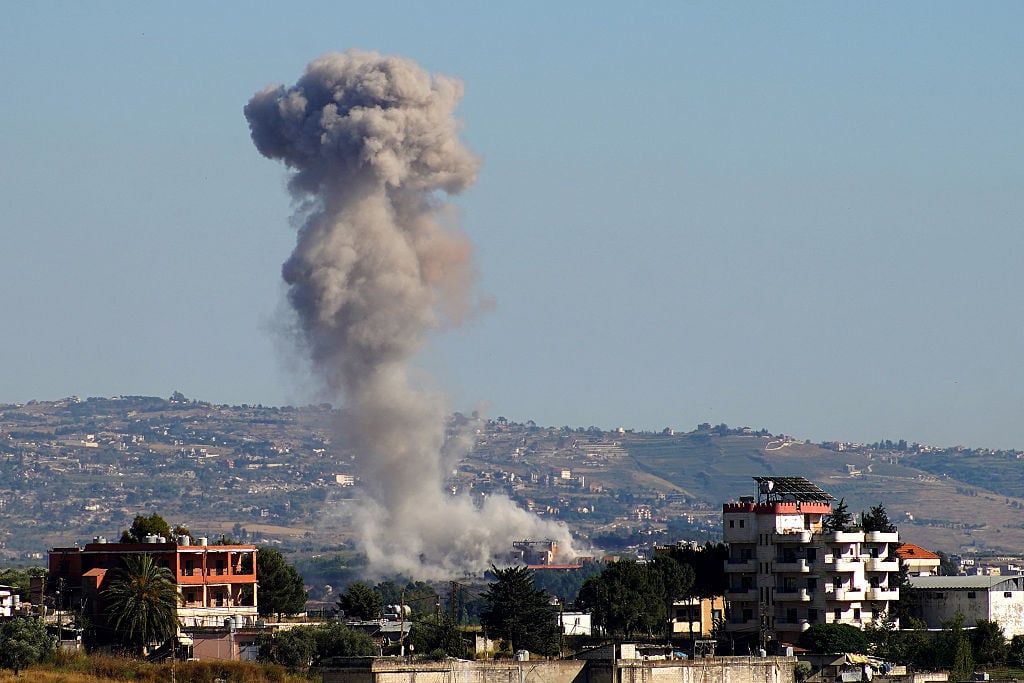
The latest United States-brokered ceasefire in Lebanon did not last a day, with columns of smoke rising from Tyre in South Lebanon from new Israeli strikes. It’s a setback to President Donald Trump’s efforts to achieve a peace deal with Iran. NBC’s Richard Engel reports for TODAY.
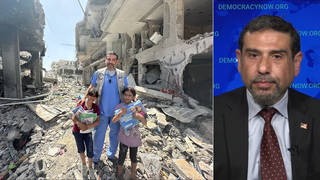
We speak with Dr. Adam Hamawy, the former U.S. Army combat surgeon who just won the Democratic nomination in New Jersey’s 12th Congressional District. He is now the heavy favorite to win the Democratic-leaning district in November and, if elected, would become New Jersey’s first Muslim member of Congress. Hamawy is an outspoken advocate for Palestinian rights and volunteered in Gaza during Israel’s genocidal assault on the territory. He has been endorsed by prominent progressives like Senator Bernie Sanders and Congressmember Alexandria Ocasio-Cortez, as well as Illinois Senator Tammy Duckworth, who credits Hamawy with saving her life after her helicopter was shot down in Iraq in 2004.
“I was running on something very simple: that we should be spending on healthcare, not bombs,” Hamawy tells Democracy Now!, criticizing the $1 trillion Pentagon budget. “We need to be spending some of that right here at home to restore our nation, to fund universal healthcare like Medicare for All, to fund tuition-free public college, to rebuild our roads and bridges, to address the housing crisis.”
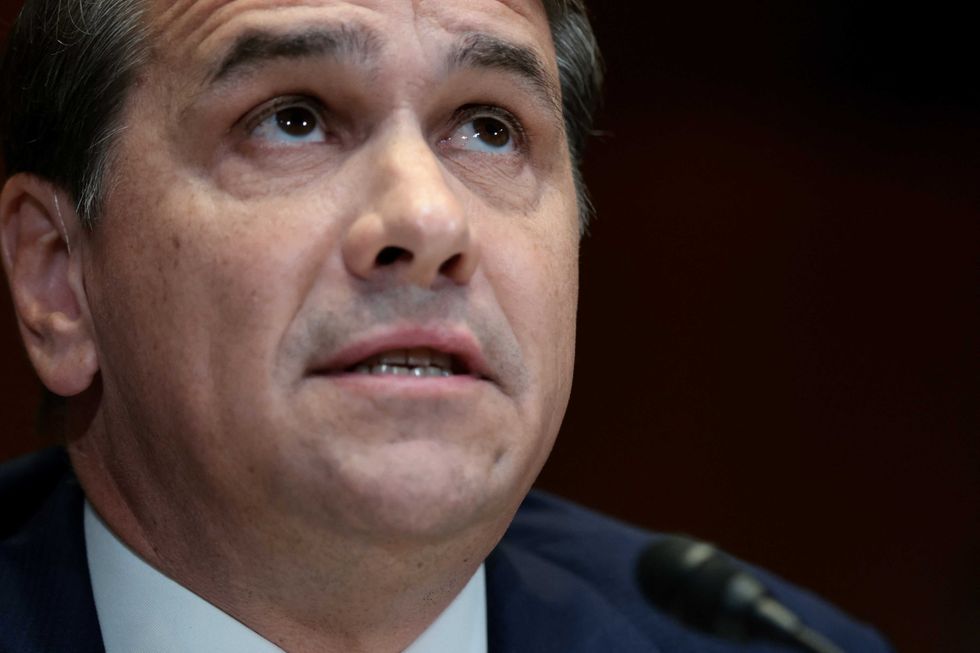
Acting Attorney General Todd Blanche boasted Thursday that he is installing "roadblocks" inside the Justice Department to prevent Democrats from prosecuting President Donald Trump after his term ends — the latest in a string of moves critics say have turned the DOJ into a personal protection service for the president."We can just keep on exposing it and putting roadblocks in place so it never happens again," Blanche told NewsNation host Katie Pavlich in an exclusive interview, first surfaced by journalist Aaron Rupar, adding that he worries about "some Democrats coming out and actually already forecasting what they're gonna try to do if they get leadership again."It isn't the first time Blanche has used his perch atop the DOJ to benefit Trump directly. Last month, Blanche signed a one-page addendum declaring the federal government "FOREVER BARRED" from pursuing any IRS audit or tax claim against Trump, his family, or his businesses — part of a settlement stemming from Trump's $10 billion lawsuit over the leak of his tax records. Critics dispute the administration's claim that the protection covers only existing audits and not future ones.Blanche also spent weeks defending a nearly $1.8 billion taxpayer-funded "anti-weaponization" fund before killing it after Senate Republicans revolted.And last November, Blanche urged young lawyers at a Federalist Society conference to join what he called a "war" against "rogue activist judges" blocking Trump's agenda — remarks that drew a sharp rebuke from a coalition of 50 former federal judges.Blanche was Trump's personal criminal defense attorney before joining the administration, representing him in three of his four criminal cases.
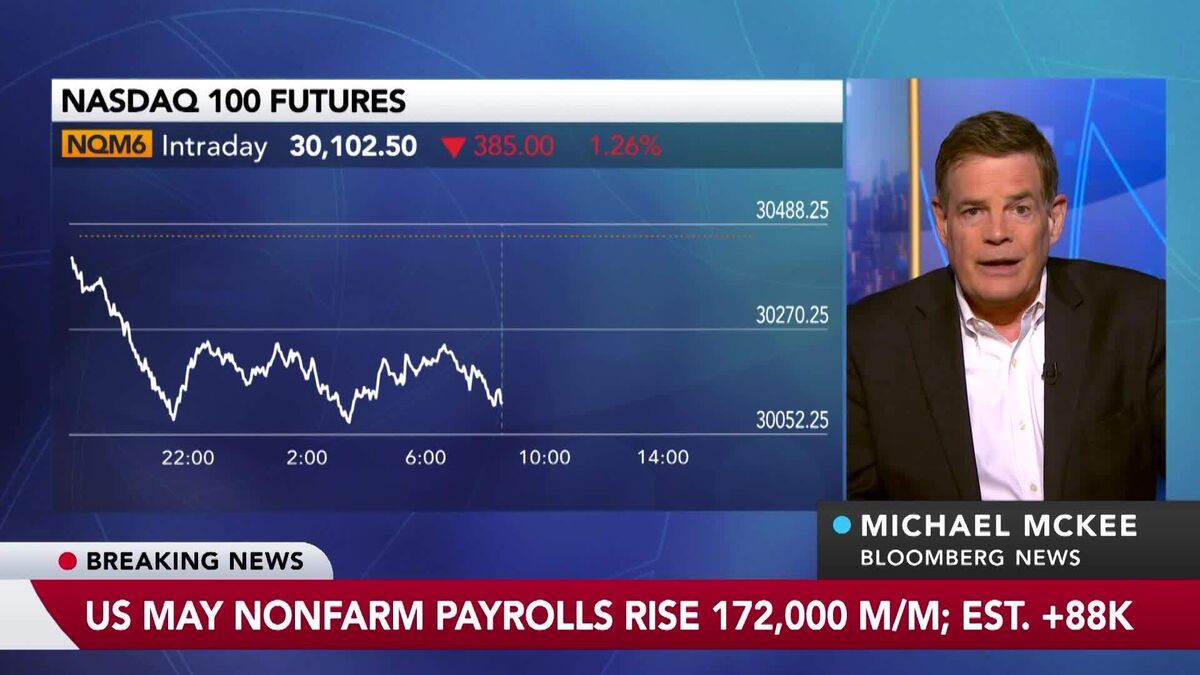
Hiring in the US surged in May. 172,000 jobs were created topping all forecasts. The estimate was for 88,000. The unemployment rate held steady at 4.3%. Bloomberg's Michael McKee has more on this blowout report on Bloomberg Surveillance. (Source: Bloomberg)
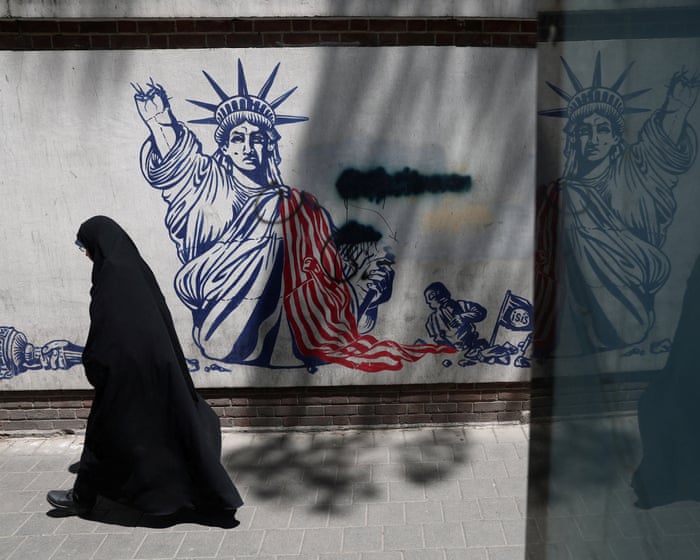
The ceasefire has held just enough to prevent a return to all-out war, but neither side is close to achieving peaceThe US-Iran ceasefire is entering yet another round of escalation since it came into effect on 8 April. This week, there have been further strikes on Iran by the US, and Iranian retaliation on Kuwait and Bahrain, alongside Israeli escalation in Lebanon. Earlier flare-ups over the past two months were quickly contained. Both sides have tried to keep the balance between no war and no peace. But as this ceasefire drags on it risks becoming yet another Middle East stalemate, albeit one with international economic and political consequences.Four obstacles are preventing progress. The first is trust. Iran does not believe Donald Trump can deliver a deal, much less stick to one. The fear is not only that Washington will walk away again but that the goalposts will keep moving, where first nuclear limits are imposed, followed by missiles, then regional policy and finally further political concessions dressed up as security guarantees.Sanam Vakil is the director of the Middle East and North Africa programme at Chatham HouseDo you have an opinion on the issues raised in this article? If you would like to submit a response of up to 300 words by email to be considered for publication in our letters section, please click here. Continue reading...
The rejected cease-fire agreement and the continued exchanging of fire between Israel and the Hezbollah militant group in Lebanon casts a shadow over the progress of U.S.-Iran peace negotiations.
As the war with Iran drags on with no conclusion in sight and its consequences continue to spin out, former Defense Secretary and CIA Director Leon Panetta has a dire assessment of the situation: the conflict in the Middle East is “Trump’s Vietnam.”Panetta — who presided over the Pentagon during the Obama administration and helped lead the operation that killed Osama bin Laden — delivered this alarming appraisal on Thursday while appearing on CNN to discuss the faltering U.S.-Iranian peace talks, saying, “I think what you're seeing is that this war is very much turning into Trump's Vietnam. In Vietnam, we negotiated, but in the end, the North Vietnamese took total control. We were lucky to get our forces out. I think we're heading in the same direction with this war.”Spanning 1955 to 1975, the Vietnam War famously became a quagmire from which the U.S. could not extract itself, resulting in the deaths of nearly 60,000 Americans and millions of Vietnamese and other Southeast Asians. The conflict left a major stain on the U.S. reputation, and it is today invoked when discussing intractable wars with particularly severe political fallout. Commentators have increasingly raised the specter of Vietnam as the war with Iran has ground on, but Panetta’s assertion raises the volume of such talk. “In Vietnam, we never got a straight story from the administration as to what was happening,” said Panetta when asked what brought him to his conclusion. “And I'm not sure we're getting a straight story right now from this administration as to what's happening in negotiations with Iran.” He also noted that though US-Vietnamese negotiations went on for some time, resolving some issues, “in the end, North Vietnam won that war.”He projected that something similar will happen with Iran.“What I sense here is that no matter what we try to negotiate with a hardline regime in Iran, they're going to be in control of the Straits of Hormuz," he warned. "And they are going to do everything they can to try to continue enrichment so that ultimately, they can develop a nuclear weapon.”Panetta went on to note another parallel between the wars in Iran and Vietnam: a presidential tendency to miscalculate how easily the confrontation would be won. “At the very beginning of this war, the president said, based on Israeli assurances, that once the leadership was killed, that within a few days the regime would collapse,” Panetta explained. “That did not happen. Our intelligence made very clear that was never going to happen, so it was a terrible miscalculation.”With all this in mind and the shadow of Vietnam looming, Panetta’s conclusion was not optimistic: “The hardline regime remains in power, and as long as they are in power, whatever we try to negotiate, very frankly, is only going to be temporary. I think where we're headed is some kind of flimsy agreement here, but in four or five years, I think the United States and Israel may very well have to go back to war with Iran.” - YouTube www.youtube.com
The following is a lightly edited transcript of the June 5 episode of the Daily Blast podcast. Listen to it here.Greg Sargent: This is The Daily Blast from The New Republic, produced and presented by the DSR Network. I’m your host, Greg Sargent.After the House voted this week to end Donald Trump’s war in Iran, Trump exploded in fury at the four Republicans who sided with Democrats against him. He called them grandstanders while simultaneously mocking the vote as meaningless. It’s not meaningless, of course. It shows that Republicans are now taking new steps to break with Trump. And importantly, it comes as the leaks are getting worse for him. We’re learning more about his blundering incompetence from insiders, which is itself another sign of his ongoing weakening.So is there a path to forcing Trump to end this conflict and what’s likely to happen now in the war itself? We’re talking about it all with Emily Horne, a former veteran of the State Department and National Security Council. Emily, good to have you back on.Emily Horne: Thanks, Greg, for having me.Sargent: So the House passed a bill Wednesday directing Trump to end the conflict, with four Republicans breaking ranks. The Senate could pass this, and because it’s a certain type of resolution, it’s not subject to a veto, but Trump can probably not follow it. Still, this is significant, isn’t it, Emily? Can you tell us why?Horne: The fact that you have Republicans that are willing to cross the aisle at this particular moment is really telling politically. This war has been wildly unpopular from day one, and the longer that it drags on—we’re entering month three when we were promised this would be a quick overnight operation—as costs to voters begin to mount, as energy prices continue to rise with no end in sight, as airline prices continue to soar, no pun intended, as we approach the summer travel season. And unfortunately, terribly, tragically, as more American service members continue to die or be injured in conflict in the Middle East, the more this war expands regionally and the more innocent civilian lives are lost, the harder that it becomes for Republicans to defend this war when in fact many of them were running on the principle that Trump would not get Americans into open-ended foreign conflicts. That’s a lot harder to defend when we are at month three of an open-ended conflict.Sargent: Trump exploded on Truth Social Thursday over this vote, raging that it’s meaningless. He said it was passed by “four bad Republicans and all of the Dumocrats.” Trump also raged that this is happening, “right in the middle of my final negotiations to end the war with the Islamic Republic of Iran. Who would do such an unpatriotic thing?” And he even raged that Republicans are “grandstanders who should be ashamed of themselves.” Emily, what’s your reaction to that?Horne: This vote is not happening as a coincidence. This vote is happening now because the 90-day deadline for a War Powers resolution has come and gone, and we are still in this war. And so this has not exactly been a Congress that has taken its oath of office to both the letter and the spirit of the law, but it’s nice to finally see some backbone and some acknowledgment that they do have a constitutional duty to do things like allow the president to declare war or not, that that is a pretty important part of their oath, in fact. So while procedurally this may not change anything, politically, again, I think this is a really important moment.Sargent: I think it’s the worst of all worlds for Trump and Republicans in this way as well. Of the four Republicans who crossed over, only two of them are vulnerable this fall, which means all the other House Republicans who are top targets in the election were too frightened to distance themselves from Trump. And now they’re on the hook for voting to continue the war, which means holding the House is going to be harder for Republicans because the war is just absolutely killing them. Republicans have done this to themselves even as Trump has also been delivered a rebuke. It’s just an all-around failure in every way for them, no?Horne: Well, OK, we’re five months out from the election. I’m certainly not making any predictions about what is going to happen in the midterms, but there’s no question that this war is wildly unpopular across the political spectrum. And again, as costs continue to rise, as diplomacy continues to falter, and as the chaos continues to reign across the Middle East—not just in the Strait of Hormuz—with no end in sight, this is a war that is entirely of Trump’s making. And going back even years and years ago to the first Trump administration, we had a diplomatic deal. He blew it up in 2018. He started us down this path a long time ago. And even then, he still had many chances to not wind up in this current situation. He still had multiple off-ramps where diplomacy was still a realistic option.