Illinois representative talks bill that would regulate AI companies
Source: NBC News Politics · Bias: Center Left
Summary
The Illinois House of Representatives passed a bill that would set a new standard for regulating America’s leading AI companies if Gov. JB Pritzker signs it. NBC News' Gadi Schwartz talks to Rep. Daniel Didech about what the bill entails.
Illinois representative talks bill that would regulate AI companies
Center Left
The Illinois House of Representatives passed a bill that would set a new standard for regulating America’s leading AI companies if Gov. JB Pritzker signs it. NBC News' Gadi Schwartz talks to Rep. Daniel Didech about what the bill entails.
The funniest part of the MSNBC report about the issue is their claim that Pulte has not been in office long enough to know who the Deep State embeds are. “I have a real question of how he would know this. This isn’t a guy who is familiar with intelligence,” said the former official, who […]
The post REPORT: Acting DNI Bill Pulte Fires Dozens of ODNI Staff for Politicizing Intelligence, Insubordination, Gross Misconduct appeared first on The Last Refuge.
Acting DNI Bill Pulte has fired more "Deep State" intel officials, according to MS NOW.
The post Happy Freedom 250! Acting DNI Bill Pulte Fires More “Deep State” Intel Officials appeared first on The Gateway Pundit.
MS NOW reports voters appear to be mindful of President Donald Trump raking in millions of dollars this summer while their own air-conditioning bills are creeping out of reach of their monthly home budget.Across much of the country, the 4th of July weekend is bringing more than just fireworks. It's also bringing dangerous and potentially record-breaking heat from the Midwest all the way to the northeast with heat indexes potentially climbing well above 100 degrees.More than 160 million people in 30 states are currently under extreme heat warnings this holiday weekend, with little sign of relief from either Mother Nature or the Trump economy. In places like New York, for example, humidity can make a 100-degree day feels like 110, 115 degrees. And it is, of course, considerably more humid in many Southern red states.MS NOW reporter Moses Small marched out into the street and talked to voters fleeing high home utility bills at city cooling centers.“Yeah, it's stressful,” said New York resident Daniela Crespo. “I've been anticipating looking at the forecast, thinking about, how many days am I going to run the AC? What temperature am I going to set it at? What is this going to cost me? It definitely has been on my mind.”Crespa added, however, that even as her own monthly electric bill blows up in her face and she struggles to control it by adjusting her AC to the tip of tolerance she is markedly aware of the extreme wealth pooling out of the White House and the Trump family’s bank accounts.“I mean, I think it really distills the kind of moment we're in with the level of corruption that we're seeing at the very highest levels of government,” Crespa told Snow, speaking on Trump making $2 billion in White House related monetization schemes and crypto machinations since returning to the White House.“When it gets to this hot, families tell me they really do think about the utility bills and their bank accounts,” said Snow, “especially with the Bureau of Labor Statistics reporting inflation up 4.2 percent in the past year — but within that, a 23.5 percent jump on energy costs.”Snow added that a CNBC analysis claims Americans, on average, have spent an extra almost $450 in gas and electric prices alone since Trump unilaterally kicked off his war in Iraq. Meanwhile, the money the Trump family is making while occupying the White House appears to smell with enough corruption to make Democrats competitive even in some of the reddest farm states this November. - YouTube youtu.be
During a recent appearance on the Sean Hannity Show, Senator John Fetterman of Pennsylvania revealed the one thing that would make him leave the Democrat Party.
The post Senator John Fetterman Reveals the One Thing That Would Make Him Leave the Democrat Party (VIDEO) appeared first on The Gateway Pundit.
The fight that scrubbed the world's most powerful AI models from the internet featured personality clashes, industry confusion, and international backlash.Why it matters: Anthropic's models are back online, but the impact of its 20-day showdown with the Trump administration will be long lasting.Behind the scenes: It began when Amazon, Anthropic's partner and investor, sounded an alarm that was later disputed by cybersecurity experts.It warned about a "jailbreaking" issue it found with the AI lab's latest models, Mythos and Fable — meaning a technical flaw that could have caused a failure of their guardrails.Amazon flagged its concerns to the administration, triggering sweeping export controls. A U.S. official said the government conducted its own tests once it became apparent that the issue needed to be addressed.Cybersecurity experts, however, later wrote in an open letter to the administration that other leading AI models have the same issue Amazon warned about with Anthropic.On June 12, Commerce Secretary Howard Lutnick, at the direction of President Trump, called Anthropic CEO Dario Amodei. Lutnick made clear to Amodei the issue needed to be resolved fast and alerted the CEO that the company would be receiving a letter imposing sweeping export controls, the U.S. official said.Amodei called Lutnick back that night after receiving the letter, realizing it effectively meant the models would have to be taken offline — to which Lutnick responded that was indeed the goal.That decision led to a three-week, multi-agency crash course in AI safety.Anthropic deployed engineers to Washington D.C. According to a U.S. official, the company wanted to prove everything was already resolved and further changes were being fine tuned.But the federal Center for AI Standards and Innovation and the National Security Agency said those changes weren't good enough, prompting further fixes, according to the U.S. official.Gradually, various agency heads approved of the changes, and on July 1 the models were released, the official said.Out of all of the administration officials Amazon's Andy Jassy could have called, it was Treasury Secretary Scott Bessent who first heard about the jailbreaking issue found in the company report, according to a separate source familiar.Bessent was early to sound the alarm on Mythos, work with White House Chief of Staff Susie Wiles to re-engage the embattled company, and help get a cybersecurity executive order across the finish line.While technical discussions to address the jailbreaking issue took place in D.C., it was Bessent who stood next to President Trump during the G7 where allies called for global cooperation on safety standards.At the center of the showdown was Commerce Secretary Howard Lutnick, who also flanked Trump at the G7 meeting while his department's teams led technical discussions.National cyber director Sean Cairncross, the White House Office of Science and Technology Policy, Treasury Department chief information officer Sam Corcos, and the NSA also all participated in technical discussions, according to various sources.Washington mobilized faster to hold scores of meetings and pulled in far more agencies than one would expect for a single technical issue, one source said.The tension spiraled amid personality clashes and poor communication.Anthropic eventually understood that in order to be successful they needed to be on the same side as the government, the U.S. official said.As discussions turned more technical, Anthropic policy chief Sarah Heck and Anthropic co-founder Tom Brown got more involved. Brown also had multiple conversations with Lutnick and Cairncross the weekend of June 12.There was never a moment where Dario stepped offstage and someone else replaced him, one source said, adding that Brown's technical expertise allowed him to sit in a room with government specialists and go line‑by‑line through how models behave under stress.Between the lines: It remains uncertain when and how Anthropic's models will be released to ally countries around the world — which proponents say is key to beating China — or how other labs from OpenAI to Google will release their latest models.OpenAI, whose latest model GPT-5.6 is on hold, did not have visibility into discussions between Anthropic and the White House and is engaged in daily technical discussions on the release of its own model, a source said.The bottom line: There's a lot of work left to be done on a framework for approving future models with a clear inclusive process that has transparency standards and timelines, sources familiar said.
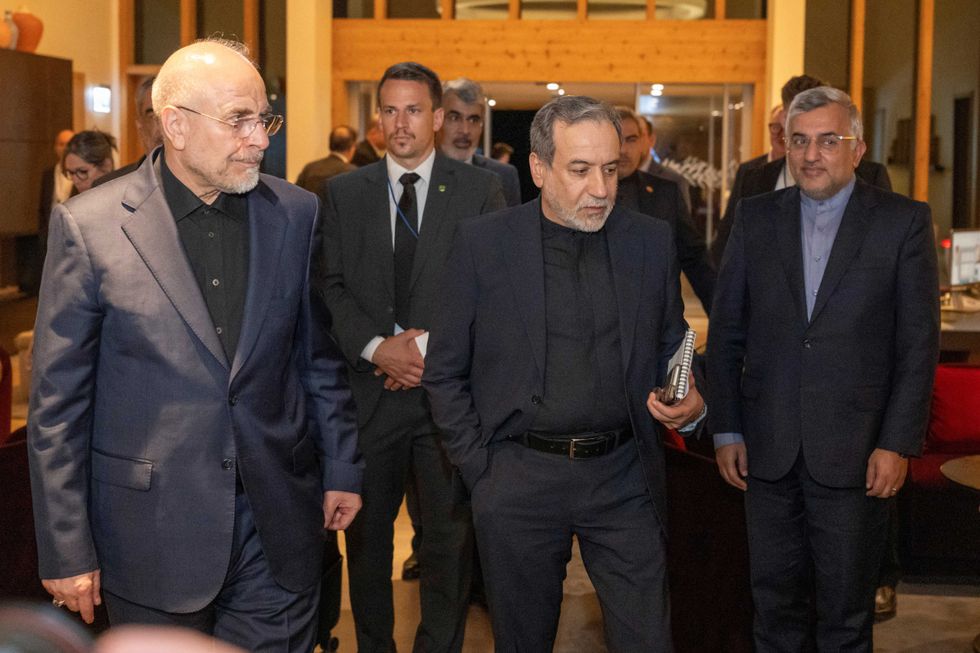
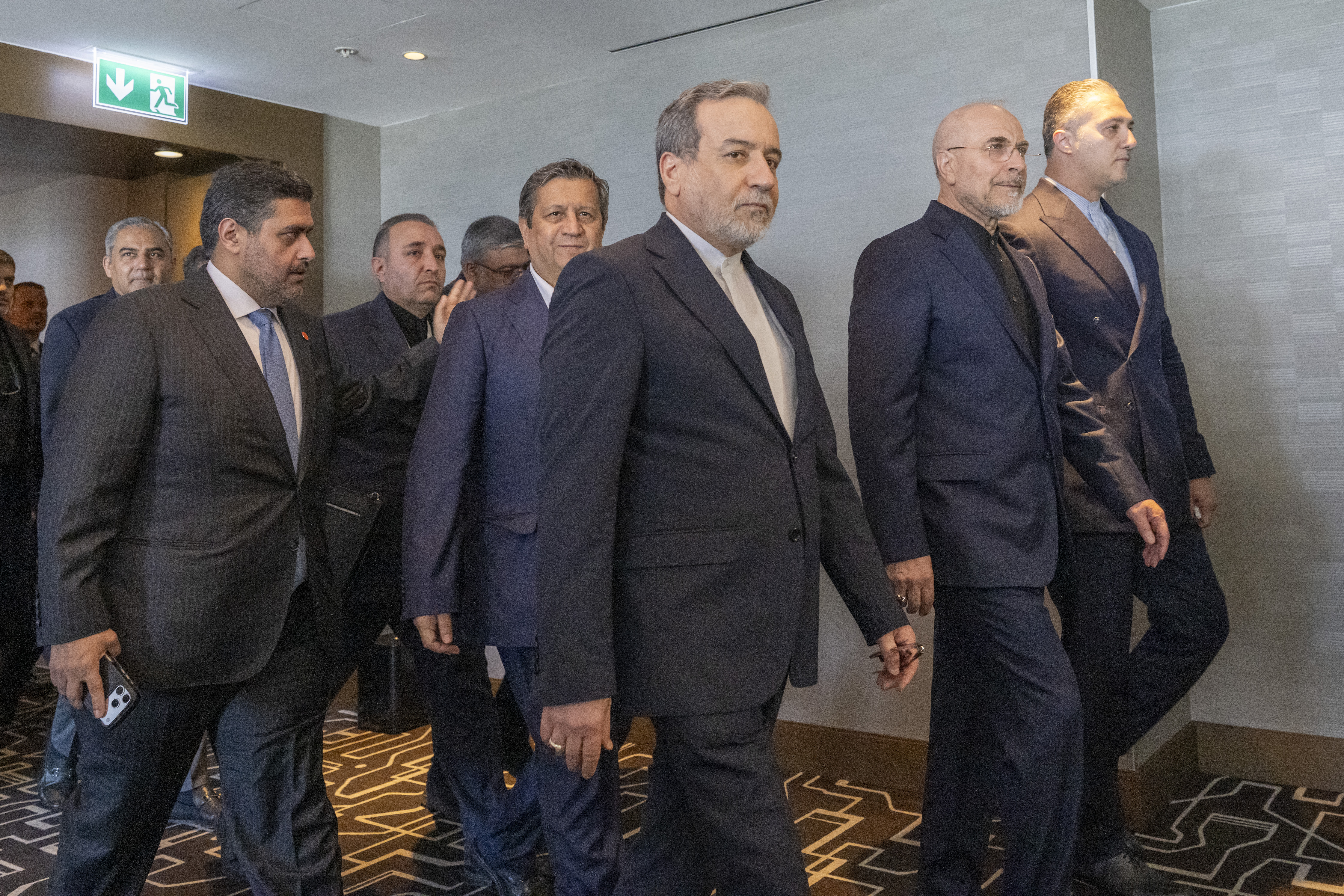
Trump administration officials reportedly believed that the Israeli government intended to assassinate Iran’s top negotiators—including the country’s foreign minister—during peace talks with the US in an effort to sabotage diplomatic progress.The New York Times reported Thursday that “American concerns about the targeting of two particular Iranian officials—Abbas Araghchi, Iran’s foreign minister, and Mohammad Bagher Ghalibaf, the speaker of the Parliament—spiked during delicate ceasefire negotiations that began in April.” In response, the US “went so far as to ask other countries in the region to warn Iran about the possibility Israel could target the two officials,” according to the Times, which cited unnamed current and former American officials.The US and Israel have killed dozens of top Iranian officials since launching their illegal joint war in late February. But the allied countries reportedly removed Araghchi and Ghalibaf from their target list in late March, opening the possibility of high-level negotiations to end the war.But Israel remained bent on targeting the negotiators, according to the Times, whose reporting was later corroborated by The Washington Post.The Times detailed one dramatic incident in April, when Ghalibaf was planning to travel to Pakistan’s capital to meet with US Vice President JD Vance:Pakistani fighter jets escorted the Iranian airplanes carrying a delegation of more than 70 Iranians from the border of Iran to Islamabad and back again when the session was over.But on the way back to Tehran, an Israeli security threat emerged.Iran’s security forces notified the plane carrying Mr. Ghalibaf back to Tehran that they had picked up intelligence that Israel planned to attack the plane and that two Israeli fighter jets had entered Iran’s airspace from its western border near Iraq, the two officials said.Mahdi Mohammadi, a senior adviser for Mr. Ghalibaf, who accompanied him to Islamabad, confirmed this account on his social media page. The plane made an emergency landing in the city of Mashhad, Iran’s closest airport to the Pakistani border, and the Iranian delegation traveled some eight hours by land back to Tehran, Mr. Mohammadi and the two officials said.The Post reported that “cracks emerged” between the US and Israeli approaches to the war following Israel’s assassination of top Iranian national security official Ali Larijani in March.“They’ve wiped out everybody,” Trump told reporters in late March, suggesting Israel’s assassination campaign was making it difficult to find potential negotiating partners.Trita Parsi, executive vice president of the Quincy Institute for Responsible Statecraft, wrote in response to the new reporting that “Israel is a state that, on paper, is a US partner, but in reality is so extreme in its obsession to undermine US diplomacy that it even tries to assassinate those the US engages with in crucial negotiations.”“I can’t recall a government as terrified of peace as the one running Israel,” Parsi added.At present, the Israeli government—led by Prime Minister Benjamin Netanyahu—is endangering tenuous US-Iran peace talks with its continued occupation of and assault on Lebanon, which Iran has highlighted as a key factor in the negotiations.Visiting occupied southern Lebanon earlier this week, Netanyahu declared to Israeli troops that “our insistence is that we will not leave... until the threat is removed.”Parsi wrote earlier this week that “beyond his long-standing desire to use American force to subjugate Iran to Israeli domination and achieve a regional balance favorable to Israel,” Netanyahu “now also has stark political and personal reasons to restart the war” with Iran.“The [US and Iran’s memorandum of understanding] has come at a steep political cost for Netanyahu,” wrote Parsi. “His prospects for reelection in October are weaker than they have been in months. Once seen as the Israeli leader uniquely capable of delivering President Trump, he now confronts the prospect that both the war and the ensuing diplomacy will leave Israel in a strategically weaker position—undermining the very case he has made for his leadership.”“And of course,” Parsi added, “if he loses the elections, he will likely spend the next few years in jail, as he will lose his immunity as prime minister and face trial over corruption charges.”The story was published in partnership with Common Dreams, read the original here.