How Jerome Powell navigated pandemic, inflation and Trump
Source: Axios · Bias: Center Left
Summary
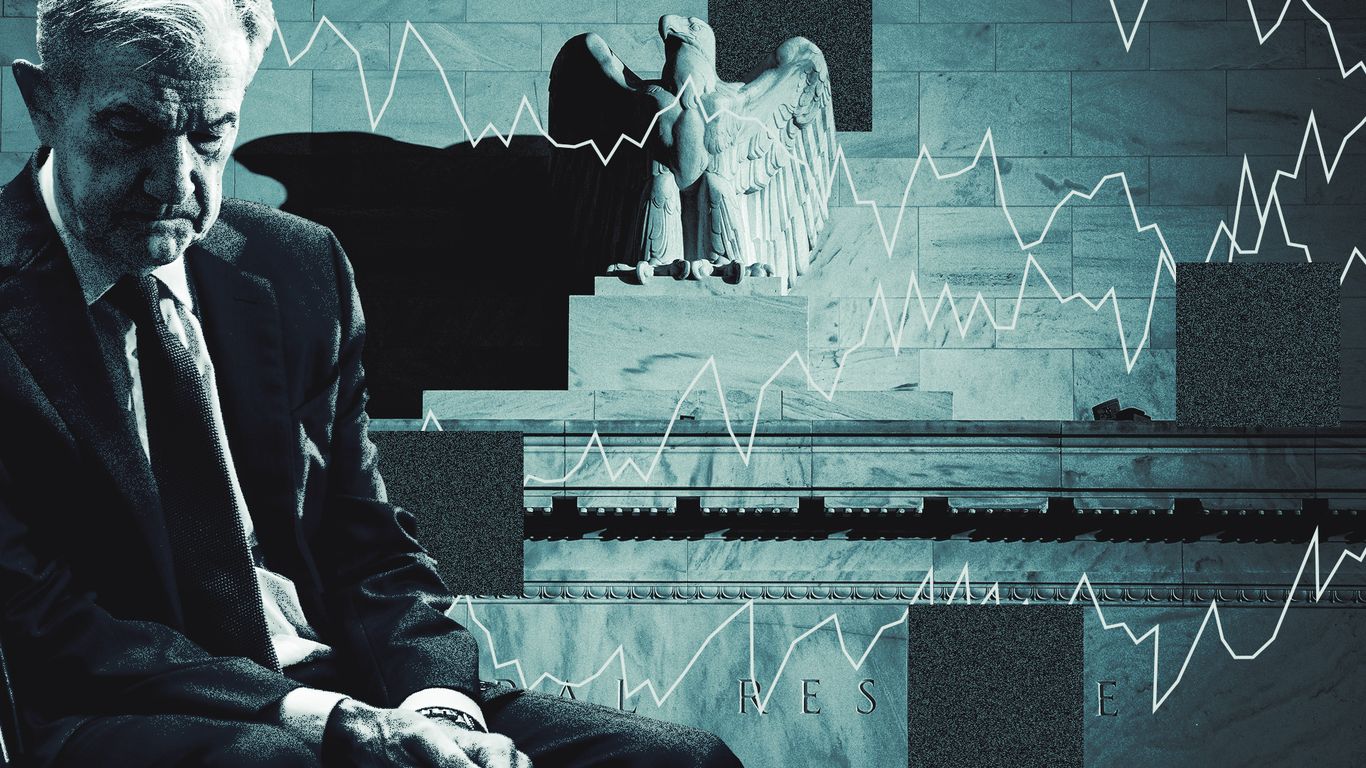
In his eight years at the helm of America's central bank, Jerome Hayden Powell has guided the U.S. economy through extreme tumult and fought off unprecedented presidential efforts to undermine the Federal Reserve's independence.But that's not what I'll tell my now-young children about Powell once they're old enough to care about central bankers.The big picture: It is Powell's approach to duty and public service that is his ultimate legacy as a leader and that will shape his place in history.The specific highs and lows of his chairmanship, which ends Friday, flow from an underlying sensibility that seems almost from another time.In an era when attention, outrage, and spectacle are the currency of the realm, he put his head down and did the work.Zoom out: For the better part of the last decade, I've either watched on a screen or been physically present for pretty much everything Powell has said in public. Two sentences stick most in my memory.April 2020: The world was on lockdown, the unemployment rate was nearly 15%, GDP was in free fall, and the future appeared bleak."None of us has the luxury of choosing our challenges; fate and history provide them for us," Powell said. "Our job is to meet the tests we are presented."What follows is an assessment of how Powell attempted to do just that — and the successes and failures along the way. Powell's first press conference in March 2018. Photo: Alex Wong/Getty ImagesThe accidental Fed chairJust weeks before President Trump nominated him to the chair in 2017, I surveyed a group of astute Fed watchers on who would get the nod — and their consensus put Powell at a whopping 5%.Powell has no advanced training as an economist and was not a close adviser to any of the three presidents who appointed him to the Fed.His ascent to the top ranks of global economic policy is, instead, a story of hard work and being ready when the moment called upon him.Zoom in: Powell, a career Wall Street lawyer and dealmaker, was semi-retired when President Obama named him a governor in 2011.Powell was also a Republican, albeit of a different era; he had served in President George H.W. Bush's Treasury Department. He became a workhorse on the Fed Board of Governors under chair Janet Yellen, helping run the central bank's payment systems and other under-the-radar nitty-gritty.In Powell, Treasury Secretary Steven Mnuchin found a Fed chair candidate who knew how the Fed worked, would largely continue the stimulative monetary policies of the Yellen era, and fit Trump's desire for appointments out of "central casting."Trump would soon sour on Powell as the Fed pushed toward raising interest rates over the course of 2018.But presidential attacks notwithstanding, the Powell Fed played a major role in both the remarkable prosperity of the circa-2019 Trump economy and in preventing a much more devastating economic collapse from the pandemic. Powell, left, in Jackson Hole in August 2018. Photo: David Paul Morris/Bloomberg via Getty ImagesGuided by the starsAt the Kansas City Fed's annual symposium in Jackson Hole, Wyo., in August 2018, Powell laid out a shift in how Fed leadership thought about America's economic potential.The official name was "Monetary Policy in a Changing Economy," but eight years later, it is known in central banking circles as the "guided by the stars speech."In it, he argued that in their dependence on theoretical models for concepts like the "neutral interest rate" and "natural unemployment rate," the Fed had taken their relationships as overly certain.Maybe, for example, unemployment could go lower than once assumed without causing prices to spike.The upshot of this was that the Fed should take care to allow the economy of the late 2010s to keep growing and the labor market to keep improving until there was clear evidence in the data that inflation or other downsides were materializing.A year later, Powell and the Fed were doing a "mid-cycle adjustment," cutting interest rates three times even though the unemployment rate was at two-decade lows and GDP growth kept powering along.The reason? The growth outlook had become bumpier and inflation remained subdued.Flashback: It's easy to forget just how spectacular the 2019 economy was. The unemployment rate averaged 3.7%. Inflation was 1.8%. Wages rose 3.3%. And mortgage rates were under 4%.That's a pretty much perfect mix of economic conditions. If only it could have lasted.Yes, but: Did the "guided by the stars" mindset and success of 2018-2019 make the Powell Fed too slow to intervene when inflation emerged as the predominant economic problem in 2021?
Related Coverage
- Melania gives Congress private deadline as she works around Trump's team: report (Far Left — Raw Story)
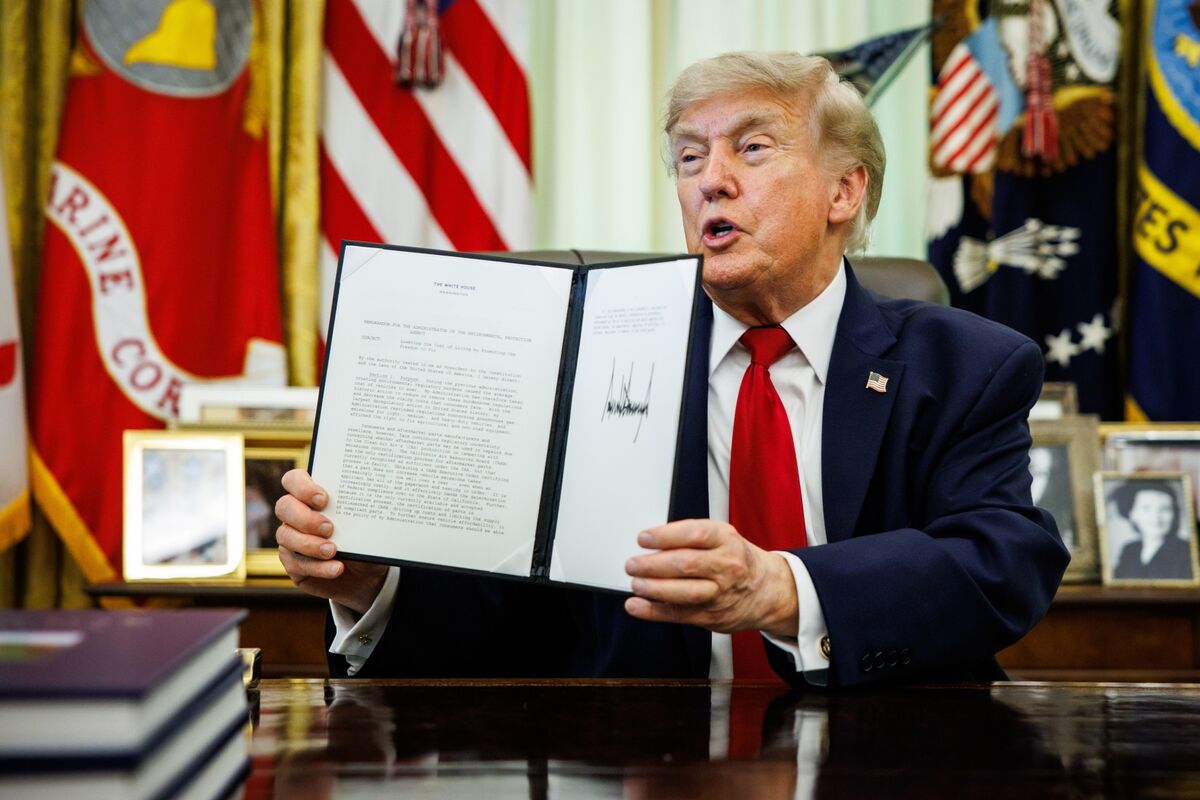
- Trump announces pardons for pollution violators prosecuted for "fixing their car" (Center — Politics - CBSNews.com)
- Trump Pardons Six People Pursued for ‘Fixing Their Car’ (Center — Bloomberg Politics)
- Sources: Trump likely to pardon pollution violators; weighing clemency for Diddy (Center — Politics - CBSNews.com)
- Fox host warns Trump will pay for his 'breathtaking' corruption (Left — Alternet.org)
- Trump Scores Appeals Court Victory in Battle Over National Park Historical Displays (Right — RedState)
- Signs of Victory: I-95 Welcomes President Donald Trump Int'l Airport (Right — RedState)
- Trump’s ‘ramped up’ rhetoric leaves unifying tone of July Fourth speech in question (Center Left — NBC News Politics)
Daily Analysis
Read the full Parallax Pulse for May 15, 2026 — an AI-powered analysis of how Left and Right media covered the biggest stories this day.
More Headlines From May 15, 2026
- Mullin rips Spanberger for ‘criminalizing’ DHS while ICE arrests illegal alien felon in her ‘sanctuary’ state (Right)
- The CIA Lands in Havana: Trump Sends a Direct Message to the Cuban Regime (Far Right)
- Do gas tax holidays actually bring relief at the pump? (Center)
- Key takeaways from Trump's China trip (Center)
- How A.I. Was the Elephant in the Room at the Trump-Xi Summit (Center Left)