Republican Party to host historic midterm convention in Dallas, Trump announces on Truth Social
President Donald Trump announced on Truth Social that the Republican Party will host its first-ever midterm convention in Dallas, Texas, Sept. 9-10.

The Senate GOP campaign arm won a major Supreme Court boost in the party's bid to hold congressional majorities on Tuesday.Why it matters: Republicans' reliance on mega-donors and their cash-flush committees positions them to benefit more than Democrats from the ruling, which allows committees to spend unlimited sums in coordination with candidates as they face electoral headwinds in November. GOP officials reacted with glee to the Tuesday ruling, deriding Democrats who have criticized the decision for giving more power to the wealthiest donors."The tool is available to both sides. It should be a bipartisan issue," the NRSC's political director, Brendan Jaspers, told stakeholders on a Tuesday call, adding that Democrats are just "upset the playing field is being leveled in this way."Zooming in: The ruling means that committee dollars will stretch significantly further because they can now take advantage of cheaper ad prices available to candidates — 3 times to 13 times cheaper, according to an NRSC memo.Campaigns will also be able to tap committees' lower postage rates and benefit from streaming ad packages the committees have negotiated across states.The decision also lets committees work directly with campaigns on spending that had been capped for decades.Following the ruling, the Senate GOP campaign committee announced it would sunset its independent expenditures unit, moving to almost all coordinated ad buys with candidates — leveraging the new rules.NRSC deputy executive director Stephen DeMaura touted "total and complete victory" on the call. Officials said they have spent months preparing for this decision.By the numbers: The Republican National Committee has $125 million in cash-on-hand to the Democratic National Committee's $15 million (plus $18 million in debt) as of the end of May, according to their most recent FEC filings.The Senate GOP arm has $49 million to Democrats' $39 million.The House GOP arm has $82 million to Democrats' $73 million. Yes, but: Democrats still have much stronger grassroots and direct-to-campaign fundraising.Democratic candidates consistently out-raise Republicans at the, and the party has long leveraged ActBlue's small-dollar fundraising power."We are still vastly outspent by Democrats," DeMaura warned stakeholders, saying their stronger committee-level spending "is going to be wiped out by their small-dollar advantage."Catch up quick: The case, NRSC v. Federal Election Commission, was brought by two Republican committees, Vice President Vance and former Ohio Rep. Steve Chabot.The ruling is the latest campaign finance decision from SCOTUS to narrow the government's power to restrict political spending.
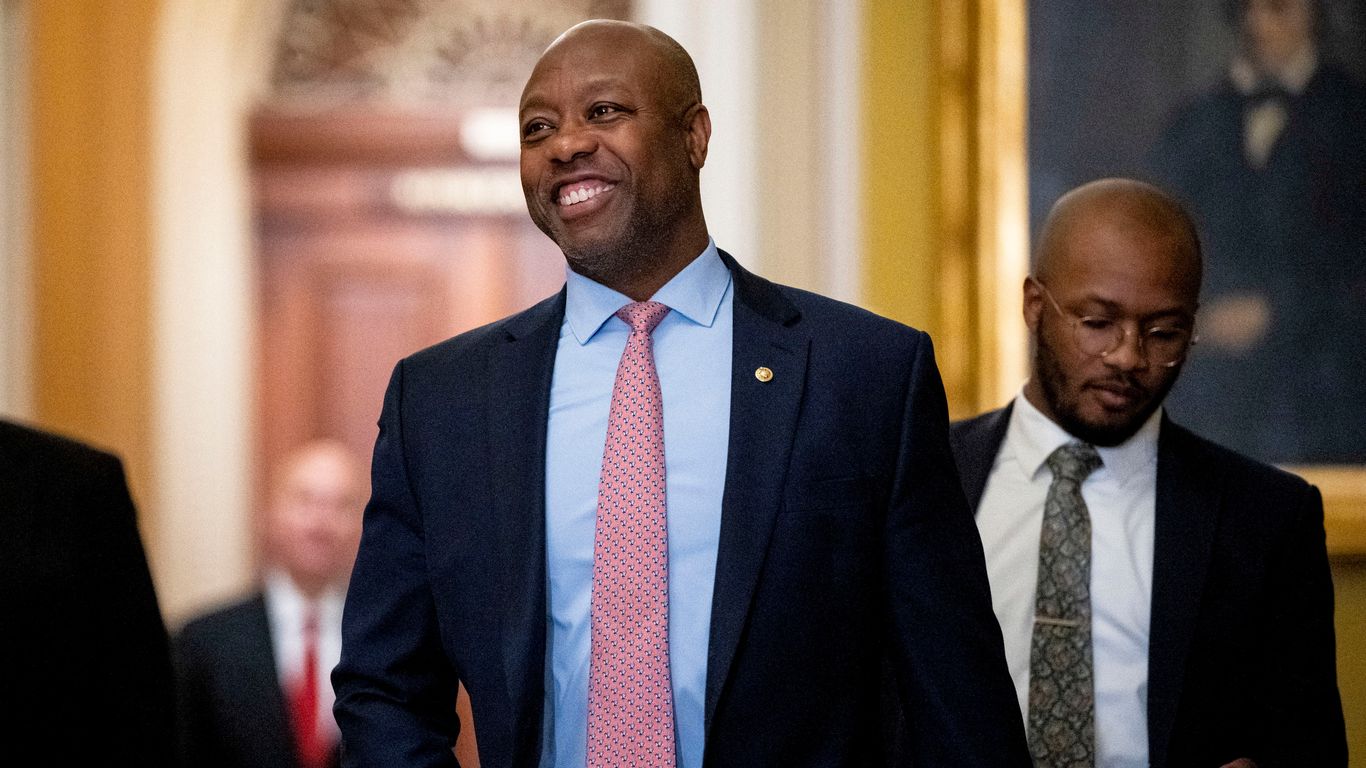
President Donald Trump announced on Truth Social that the Republican Party will host its first-ever midterm convention in Dallas, Texas, Sept. 9-10.
A Republican-controlled House panel on Monday refused to allow a floor vote on a bipartisan amendment to prevent closer integration of the American and Israeli militaries, which human rights organizations say would deepen US complicity in Israeli war crimes.“This is unconscionable,” Rep. Ro Khanna (D-Calif.), who led the proposed amendment alongside Rep. Thomas Massie (R-Ky.), said in a video posted to social media on Tuesday. “They’re not even giving us a vote on the amendment.”Khanna vowed that “Thomas and I will continue to fight to make sure we don’t compromise American sovereignty.”Watch:Congress has blocked the amendment @RepThomasMassie and I introduced to stop the integration of our military with Israel’s. It is unconscionable to not even have a vote. We will be continuing on and will not be intimidated by the pro-Israel lobby. pic.twitter.com/6ai93L0rAY— Ro Khanna (@RoKhanna) June 30, 2026 The Khanna-Massie amendment would have removed the US-Israel Defense Technology Cooperation Initiative from annual military policy legislation currently moving through Congress. The initiative, laid out in Section 219 of the House’s National Defense Authorization Act (NDAA), instructs the Pentagon to “designate an executive agent... responsible for synchronizing cooperative efforts between the United States and Israel, to expand and accelerate bilateral defense technology research, development, testing, evaluation, integration, and industrial cooperation.”On Monday, the House Rules Committee unveiled a list of NDAA amendments that it decided would get a full House vote, and the Khanna-Massie proposal was absent. Ben Freeman noted at Responsible Statecraft that the rules panel made its decision “after no debate” on the amendment.“By rejecting the Khanna and Massie amendment, the Rules Committee on Monday ensured the American public would not even get to see how their representatives would vote on this pivotal issue,” Freeman wrote. “This is despite unprecedented levels of public distrust in the Israeli government and widespread public outrage directed at these proposals.”The fight to block the US-Israel Defense Technology Cooperation Initiative—which is enthusiastically backed by the pro-Israel lobbying group AIPAC—is not necessarily over.Sen. Bernie Sanders (I-Vt.) said earlier this month that lawmakers “must” strip the initiative from the NDAA, signaling a possible fight over the provision in the upper chamber. A summary of the Senate version of the NDAA states that the legislation would establish “the United States-Israel Defense Technology Cooperation Initiative to expand and accelerate bilateral defense technology research, development, testing, evaluation, coordination, and industrial cooperation between the US andIsrael.”Leading human rights organizations, including Amnesty International USA and Human Rights Watch (HRW), have urged lawmakers to reject the cooperation initiative, with the latter group warning that the proposal would “deepen US military cooperation with Israel while walling that cooperation off from further congressional oversight.”“Israeli forces’ widespread war crimes, crimes against humanity, and its ongoing acts of genocide in Gaza should give the United States pause about closer military association,” said Akshaya Kumar, HRW’s director of crisis advocacy. “Instead, Section 219 proposes to deepen entanglement, in a way that makes the risks of complicity ongoing. Legislators still have a chance to strip this damaging proposal out.”
Justices to consider whether bans on AR-15s and similar semi-automatic firearms violate second amendmentThe US supreme court will consider whether bans on AR-15 rifles and similar semiautomatic firearms are constitutional.The justices said on Tuesday they will hear appeals challenging bans in Connecticut and the Chicago area in the next term. Continue reading...
The Supreme Court on Tuesday struck down federal limits on how much political parties may spend in coordination with candidates, handing party committees a major win and reshaping campaign-finance rules ahead of the midterms.Why it matters: Freed from the caps, party committees can now spend without limit alongside their candidates — making them a far more powerful magnet for the big-dollar money that's flooded into super PACs over the past 15 years.Driving the news: In a 6–3 decision with a majority opinion by Justice Brett Kavanaugh, the court held that the coordinated party expenditure limits violate the First Amendment.The decision overturns a 25-year-old precedent that had upheld the same limits.The intrigue: The decision comes at a time when insurgent anti-establishment candidates have garnered success in both parties.Supporters of striking down Congress' limits on coordination have said the guardrails weaken parties while super PACs and other outside groups have become dominant players, especially after the court's landmark 2010 Citizens United decision.Critics say removing the caps could let major donors evade the few remaining anti-corruption safeguards, which is a stepping stone to allowing PACs to directly coordinate with candidates.The decision could make party committees more attractive vehicles for donor money in competitive races.What they're saying: "More speech is generally better than less speech," Kavanaugh wrote for the majority.In dissent, Justice Elena Kagan warned that the ruling brings about an old era of corruption: The "Court ushers back in the same opportunities for quid pro quo corruption that the contribution limits were meant to check."President Trump praised the ruling on Truth Social, calling it "A BIG WIN FOR REPUBLICANS and, more importantly, The First Amendment!" His administration had declined to defend the law in court.Catch up quick: The case, National Republican Senatorial Committee v. Federal Election Commission, was brought by two Republican committees, Vice President Vance and former Ohio Rep. Steve Chabot.They argued the law prevented party committees from coordinating effectively with their own candidates on core political speech.The ruling is the latest in a line of Supreme Court campaign-finance decisions narrowing the government's power to restrict political spending.

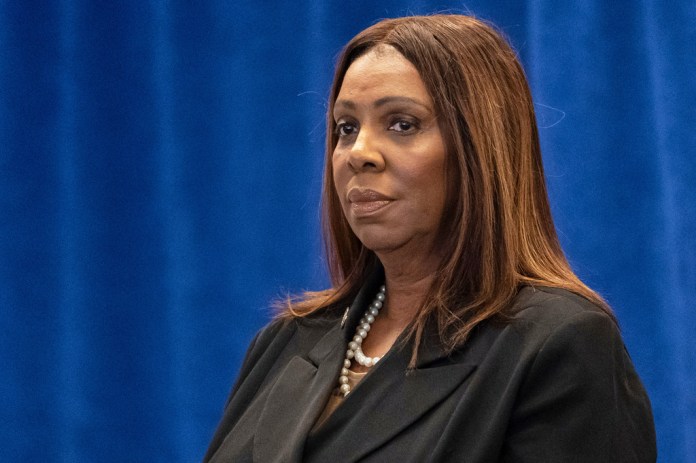
The Trump administration announced Tuesday that it is cutting off federal funding for New York’s Medicaid Fraud Control Unit, arguing the office has failed to adequately prosecute Medicaid fraud despite overseeing one of the nation’s largest programs. In a letter to New York Attorney General Letitia James, Department of Health and Human Services officials said […]
On the surface, Monday's Supreme Court ruling that keeps Lisa Cook in place as a Federal Reserve governor for now was a win for believers that the central bank works best when insulated from the day-to-day control of the president. The details aren't so clear.The big picture: The court punted on several key questions that will determine how much ability President Trump and his successors have to fire Fed governors.Moreover, the decision was closer than many court watchers anticipated, with four of six conservative justices dissenting.Another key ruling Monday grants the president broad latitude to fire heads of independent agencies that aren't the Fed, contrary to a 91-year-old precedent. It shows deep skepticism among the conservative majority about the constitutionality of Congress insulating agencies from presidential control.Fed independence is hanging by a narrow legal asterisk citing America's long, tenuous history with central banking.State of play: Cook will remain on the Board of Governors following the ruling. But the Supreme Court gave little guidance on how high the bar is for a president to fire a Fed governor for cause, nor did it indicate what procedures a president must follow to overcome that bar.In Monday's Trump v. Cook decision, Chief Justice John Roberts, writing for the 5-4 majority, rejected both the Trump administration's arguments that a Fed governor can be fired over mere concerns about their integrity and the argument made by Cook's attorneys that she can be fired only for "inefficiency, neglect of duty, or malfeasance.""Having rejected both parties' positions, we need not fully demarcate the contours of 'cause' today." Of note: The court similarly suggested that Cook was entitled to some due process to establish cause, rather than to be fired on presidential whim. But it declined to lay out exactly what that should be."At minimum, Cook was entitled to some explanation of the evidence at issue, some avenue for a response, and a deadline by which a response would be due." But Roberts then wrote that the court can only assess the "validity and sufficiency of such charges" after the president sets up this legal process and Cook has responded.What they're saying: "The court is now in the position of procrastinators everywhere: let's let future SCOTUS handle that one," quipped Peter Conti-Brown, the University of Pennsylvania legal scholar.Between the lines: Cook's role as a governor has been in legal limbo for 10 months now, and we still don't know exactly what the standard is for the president to fire her or how he can legally do so.If anything, the majority opinion seemed to bend over backward not to prejudge those issues. That raises the possibility that a president has wide latitude to fire Fed governors for pretext so long as they dot a few more i's and cross more t's than Trump did in the Cook case.If Trump or a future president wants to fire Fed governors over policy differences, it raises the possibility they can find any ticky-tack rationale, convene a legal process run by sycophants and achieve the same goal.Reality check: The original sin here is that Congress, in establishing the Fed, left things vague as to what would constitute "cause" for a president to fire a Fed governor and how that cause should be properly adjudicated.The Federal Reserve Act says only that governors' terms are 14 years "unless sooner removed for cause by the President" without giving more detail.The bottom line: If Congress wants to create clearer guardrails around the firing of Fed governors, it will need to pass legislation. In the meantime, the protections offered by the courts are limited, and still unresolved.
The Supreme Court ruling that upholds states’ rights to ban transgender athletes from competing in girls and women’ sports provoked wailing from by the usual suspects.
The change is likely to benefit Republicans, who brought the case and rely more on large donors.