Georgia Republicans backtrack on redistricting plans
Center Left
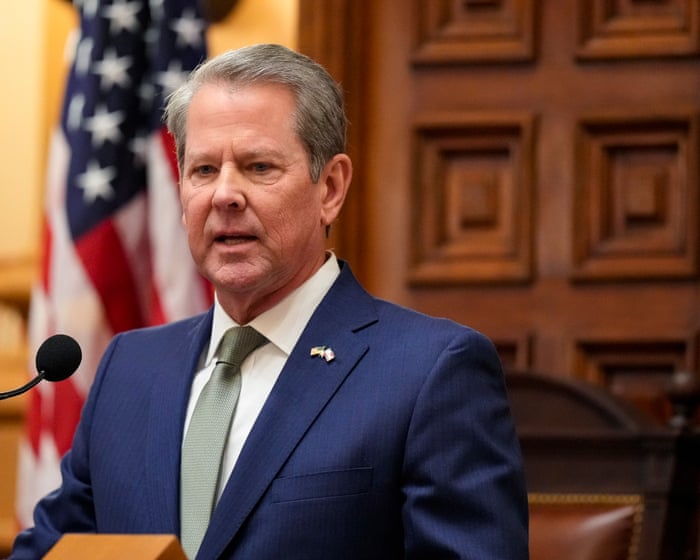
State lawmakers told Gov. Brian Kemp, who called them into a special session, that they didn’t have enough time to draw new maps that would have taken effect for the 2028 elections.
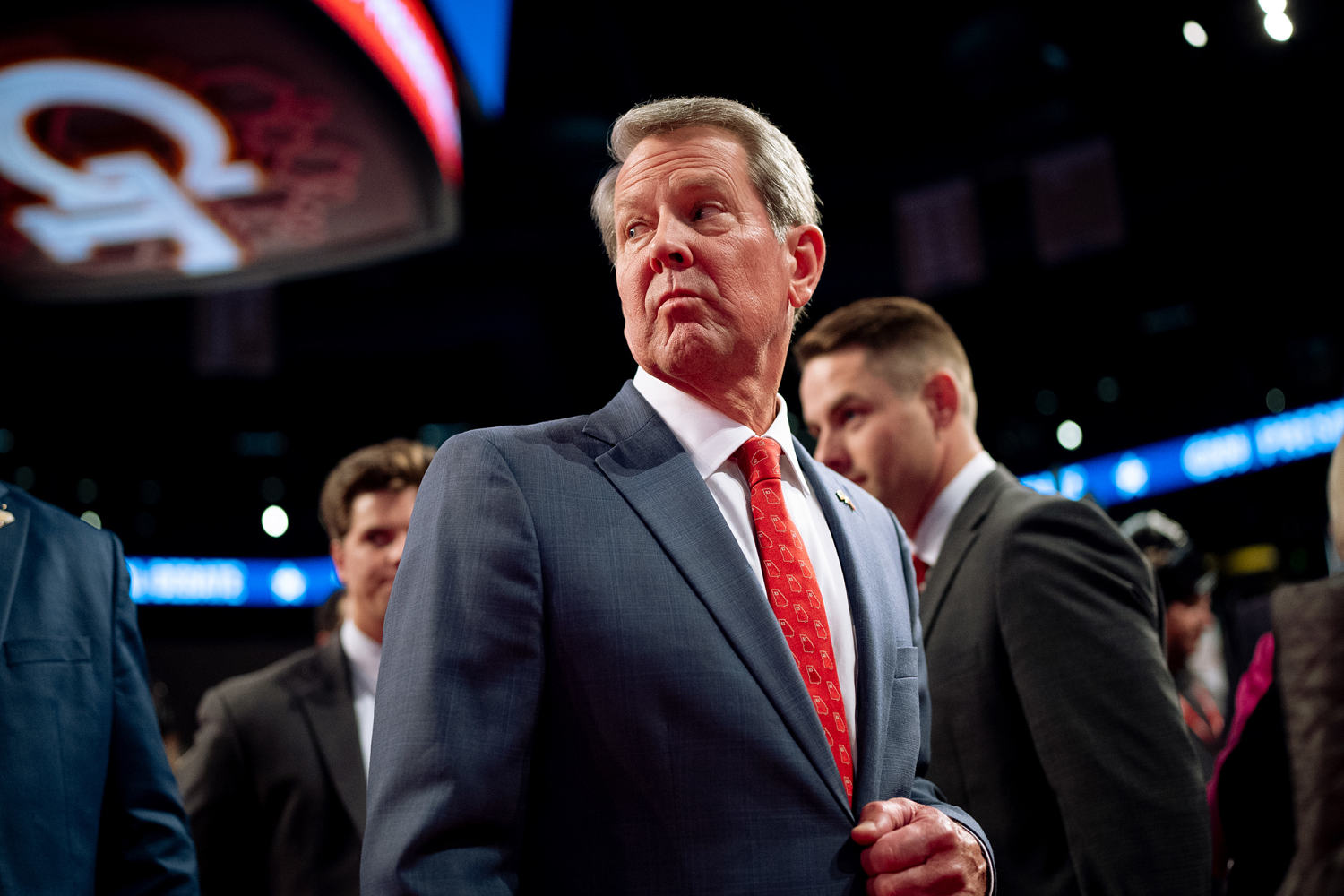
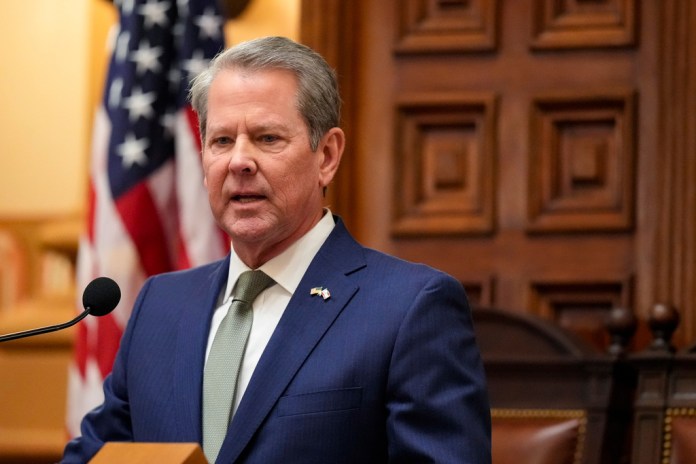
Lawmakers cite rushed timeline and public input despite pressure to redraw districts after supreme court opinionGeorgia Republicans declined to redraw the state’s congressional map during a special session, citing a rushed timeline and incomplete understanding of the ramifications of a recent US supreme court decision that effectively gutted a major section of the Voting Rights Act.“We believe that it’s important to do things the Georgia way, responsibly, transparently, and with ample opportunity for public input,” said Jon Burns, the Georgia house speaker. Continue reading...
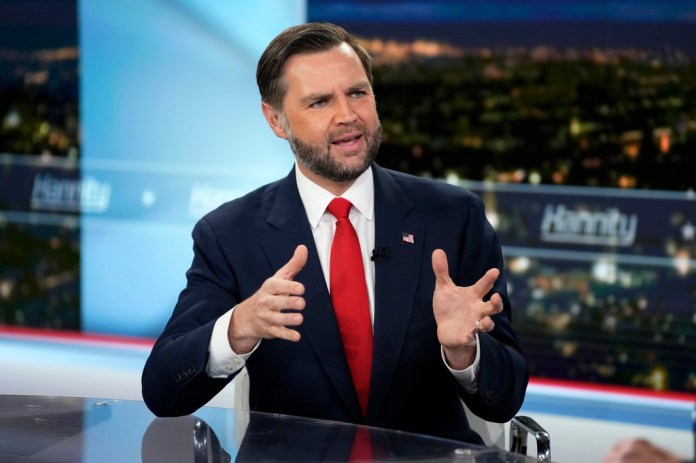
In a blitz of media appearances on Tuesday, Vice President JD Vance took friendly fire from the hosts at Fox & Friends and Gutfeld!, and some not-so-friendly fire from the hosts of The View. On the surface, Vance was trying to drum up interest in his new book, Communion: Finding My Way Back to Faith, […]
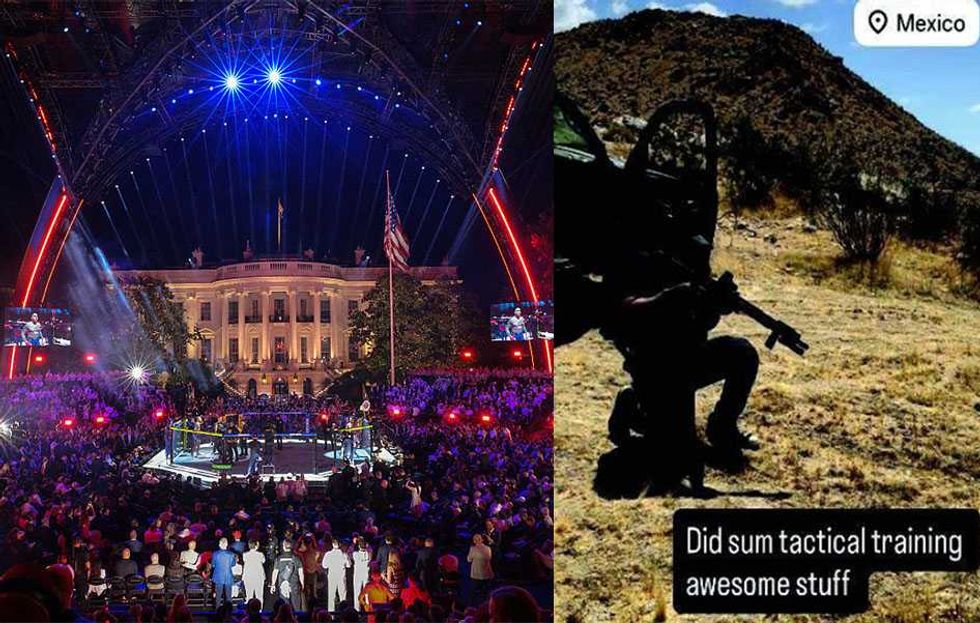
A Democrat-aligned lawfare outfit filed a lawsuit on behalf of a pair of anti-Trump protesters earlier this month in the hope of shutting down the UFC Freedom 250 event on the White House South Lawn last Sunday.Evidently, the Public Integrity Project and activist plaintiffs were not the only ones keen to rain on President Donald Trump's parade.'The landscape has changed.'The FBI announced on Tuesday that an alleged assassination plot targeting the UFC event was uncovered on June 10 and ultimately thwarted thanks to a timely phone call from a concerned mother and the rapid action of local and federal law enforcement agencies.Five men have been charged in the alleged plot to assassinate "high value targets" at the UFC event: Tycen C. Proper, 19, of Danville, Ohio; Bryan Omar Roa, 24, of Calimesa, California; Michael Alan Thomas 32, of Pinon Hills, California; Daniel K. Eskridge, 32, of Kidder, Missouri; and Abraham Hermosillo Alvarez, 31, of Omaha, Nebraska.According to the Justice Department, the suspects' plan consisted of two parts: First, they would use explosive drones in and around the event to prompt an evacuation; and second, they would deploy snipers to assassinate specific individuals within the fleeing crowd. In addition to the estimated 4,300 people present for the invite-only event on the South Lawn, there were roughly 85,000 additional people gathered nearby during the back-to-back fights.One of the suspects, Michael Thomas, allegedly discussed the four "tiers" of this anti-government plot: the first being the gunmen on the ground; the second being the drivers and drone operators; the third being logistical suppliers; and the fourth being social media suppliers.In addition to allegedly advocating for jail breaks for surviving tier 1 members in the aftermath of the planned attack, Thomas allegedly underscored the need for suspects to train for "gorilla [sic] style warfare."Another suspect, Daniel Eskridge, allegedly proposed that they form "5 teams of 3 each team consisting of 1 sniper, 1 tier one operator as support/ look out, [and] one drone operator."RELATED: James Comey-style 'threat' against Trump apparently etched into National Mall grass Screenshots of messages and maps on a suspect's phone and a photo of another suspect's equipment. Justice Department.Another suspect, Alvarez, allegedly suggested that snipers could escape to the Potomac River after taking their shots and identified an old church in Nebraska as a potential safe house.Multiple federal complaints filed in relation to the case across the country allege that Tycen C. Proper told investigators that the ball got rolling on the plan around March. While there were apparently more individuals involved in the discussions at the outset — roughly 19 — Proper allegedly claimed that the more serious plotters migrated their conversations to an encrypted chat app.The FBI alleged beyond amassing firearms, ammunition, and tactical gear at his Ohio home, Proper identified multiple targets, including multiple members of Congress and business executives.According to an affidavit submitted with Proper's complaint, the Ohio suspect proposed the following lawmakers as targets: Republican Senators Marsha Blackburn (Tenn.), Jim Justice (W.Va.), and Shelley Moore Capito (W.Va.), and Republican Representatives for West Virginia Carol Miller and Riley Moore.The targets were allegedly chosen in part because of their perceived coziness with the Israeli lobby.Trump, Vice President JD Vance, and Elon Musk's names were also allegedly floated as targets in the suspects' conversations.The affidavit indicates that the alleged plot — the purpose of which was to "jumpstart" a revolution in the United States — was foiled thanks to the vigilance of Proper's mother, who called law enforcement on the evening of June 10, expressing concerns about her son's recent conduct, including his firearm purchases and communications online.The Knox County Sheriff's Office and Danville Police Department arrived 20 minutes later and soon learned from Proper's father that the teen, who lived at home, was allegedly planning "recons" with individuals he met online; planning to leave to meet up with those individuals on the weekend of June 13; had spent roughly $3,000 of his graduation money to purchase camping gear, firearms, ammunition, plate carriers, and food; and had quit his job recently in preparation for his big excursion.The following day, the Knox County Sheriff's Office got the FBI involved.If convicted of conspiracy to commit murder, each of the defendants faces a maximum of life in prison and a $250,000 fine. They each face an additional five years in prison apiece if convicted of conspiracy to commit violence on the White House grounds."The FBI, our law enforcement partners and our U.S.
The Georgia legislature plans to hold off on redrawing the state’s congressional map during Wednesday’s special legislative session, despite a request from Gov. Brian Kemp (R-GA) to take up redistricting ahead of the 2028 election cycle. Instead, Republican leaders said they want lawmakers to focus on tax relief measures and ratifying the state’s gas tax […]
The leaders of the Georgia legislature pulled the plug on gerrymandering away U.S. House seats held by Black Democrats just hours before a special session was to begin.
Georgia Republicans on Wednesday rejected GOP Governor Brian Kemp's call to redraw the state's 2028 Congressional map.
The post BREAKING: Georgia Republicans Reject Governor Kemp’s Call For 2028 Redistricting That Would Add 2 GOP Seats appeared first on The Gateway Pundit.
The vote is the heart of democracy. Every two years, citizen organizations mobilize to register Americans and ensure they are on the rolls. That work is especially vital in poor and minority communities. The Ohio Organizing Collaborative is the leading voter registration group in the Buckeye State. In 2024, it registered 100,000 voters.The group helped lead the fight for fair maps against an egregious gerrymander in Ohio. The Brennan Center represented it in court, where we prevailed repeatedly. When legislators simply ignored those court rulings, the activists went to Ohio voters. Together with a former chief justice of the state supreme court, Republican Maureen O’Connor, they supported a campaign to pass a state constitutional amendment to create a nonpartisan redistricting commission. They called the amendment Citizens Not Politicians. It would have benefited neither party but empowered voters. The ballot measure fell short in 2024, but it was an example of nonpartisan, cross-ideological civic activism at its best. That’s why what happened late last week is so troubling. Indeed, so outrageous.In a massive sweep, 100 FBI agents and other federal officers raided the Ohio Organizing Collaborative’s office and fanned out to the homes of volunteers, board members, and staff. Agents seized phones and computers, scooped up papers, and questioned startled citizens.If citizens are afraid to register to vote, or to help others register, mission accomplished.The rationale? According to a search warrant, the hunt for voter registration fraud.This gives every indication of being an extraordinary abuse of power. It is part of a strategy that aims to intimidate voters and those who would help them exercise the franchise.This is, after all, the same Justice Department that repeatedly has probed or prosecuted President Donald Trump’s critics, only to see those cases crumble before grand juries and judges. Combine that with an FBI led by Kash Patel, who wrote an election-denying children’s book about his fealty to the “king.”This expanded strategy was mapped out in Project 2025, the Heritage Foundation’s blueprint for what became many Trump administration policies. Use the Justice Department, it urged, to go after state election officials and registration groups. Hunt the imaginary threat of widespread voter misconduct.The Heritage Foundation for decades has been a principal purveyor of the myth that many voters are committing fraud. Now the entire federal government is in the grip of that conspiracy theory.A reminder: The Brennan Center’s research shows that you are more likely to be struck by lightning than to commit voter fraud.What will be produced by this massive display of prosecutorial force? Probably not much of anything but—its progenitors likely hope—dread. If citizens are afraid to register to vote, or to help others register, mission accomplished.In fact, the strategy seems focused not on enforcing the law but fomenting fear.We saw that in January when the FBI raided the election office in Fulton County, Georgia, seeking to “prove” that Joe Biden did not win the 2020 election there. When the affidavit that authorized the raid was released, it turned out to be a collection of long-debunked claims. The raid sent a message to election officials everywhere: If you oversee an election where we dislike the results, you might be met by a knock on the door.We saw it last week when Trump declared that California’s primary election was “rigged,” because a Republican reality show star did not finish in the top two for the mayoral election in deeply Democratic Los Angeles.We saw it last year when armed, masked federal border patrol agents showed up in force at a press event held by California Gov. Gavin Newsom to announce a redistricting ballot measure.What can we do to protect voters?We should stand up for those working to register and mobilize voters and ensure they have the best legal advice and follow the rules. We should redouble efforts to protect election officials who face torrents of abuse. We should encourage states to step up, by passing legislation to make doubly sure that Immigration and Customs Enforcement and other federal law enforcement agencies cannot wreak havoc at the polls. We should lift up the nonpartisan work of police, prosecutors, and sheriffs through the Committee for Safe and Secure Elections, which brings together election officials and law enforcement to train officials around the country. And we should unite against efforts to interfere in elections or intimidate voters.The Brennan Center honored the Ohio Organizing Collaborative in 2024 at our annual Brennan Legacy Award Dinner, together with Chief Justice O’Connor. I told the crowd, “This is kind of a buddy movie that I want to watch.”Molly Shack, the group’s dynamic leader, told attendees about how it approached its work.
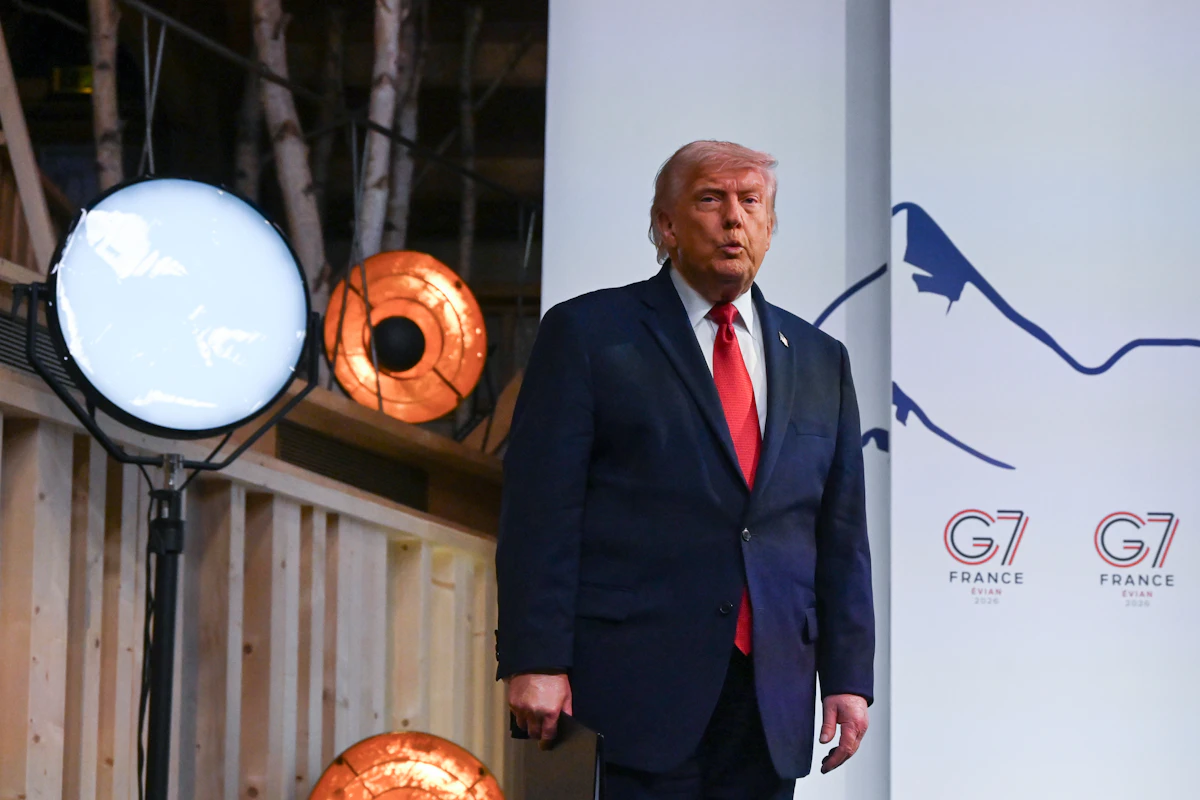
The Trump administration’s Iran peace deal will require America to loom large over the country for many years to come.The president admitted during a press conference at the G7 summit in France Wednesday that there is nothing enforceable in the drafted agreement, but rather that the constant threat of bombs should be enough to keep Iran committed to its terms.“There’s nothing enforceable in the deal itself, is that correct?” asked a reporter.“Doesn’t have to be,” Trump said wearily. “I let them know. I said, look, if you don’t adhere to the agreement, I don’t want to do that, but we’re going to bomb the hell out of you.”“And I don’t think that they’re going to veer from the agreement. What else am I going to do? I’m not going to say, ‘I’m going to take you to court,’” he mused. “‘Let me take you to court, let me sue you.’ No, we’re going to bomb the hell out of them if they violate the agreement.”Q: On Iran, there's nothing enforceable in the deal itself, is that correct?TRUMP: There doesn't have to be. I let them know. I said, 'Look, if you don't adhere to the agreement, we're gonna bomb the hell out of you.' pic.twitter.com/KbXPsLfU42— Aaron Rupar (@atrupar) June 17, 2026The text of the arrangement has not yet been made public, though both the White House and Tehran already signed the deal on Sunday. U.S. officials read the American draft of the agreement to reporters after Trump’s press conference, but did not release the document. Iran has not released a draft.The latest draft reportedly proposes the immediate reopening of the Strait of Hormuz under Iran’s direction, a commitment from the U.S. not to interfere in Iranian affairs, and a reiteration of Iran’s commitment not to produce nuclear weapons, echoing language included in the 2015 Joint Comprehensive Plan of Action.One component of the plan has become the subject of much debate: a $300 billion reconstruction fund for Iran, which was originally understood to be provided at cost to U.S. taxpayers. Top Trump officials have wavered on the specs of the fund—first claiming that Iran would receive no money, then practically confirming the fund, then backtracking again to claim that the aid package would be bankrolled by Iran’s regional neighbors yet managed by the U.S.The murky arrangement does not seem to include details on whether or not Iran will stop enriching their uranium—a highly anticipated component and one of the White House’s most pressing demands. Failing to obtain commitments regarding Iran’s nuclear program would make the deal far weaker than the Obama administration’s JCPOA.