From Overnight Airstrikes to Peace Talks: A Timeline of the U.S.-Iran War
Center Left
More than 100 days after U.S. airstrikes in Iran triggered a regional conflict with global repercussions, negotiators are embarking on a path to peace. Here are the key developments that led to this point.
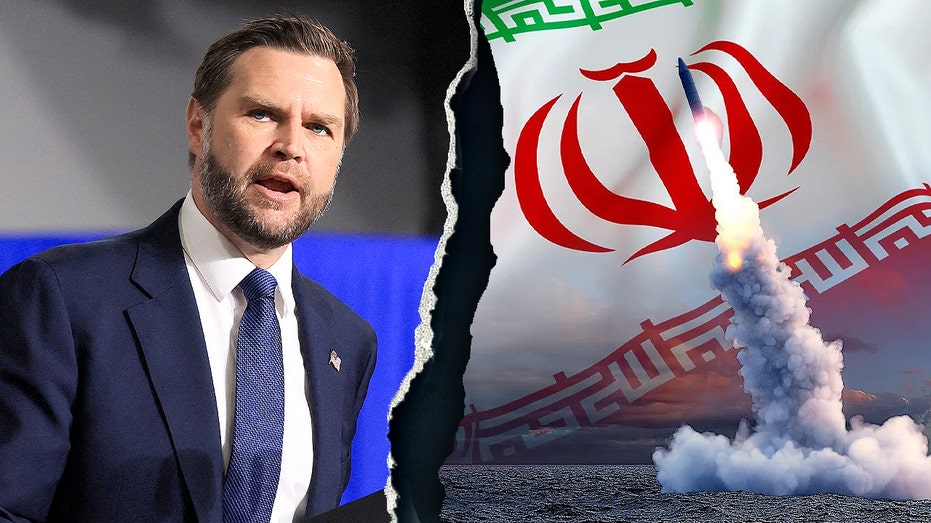
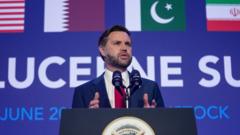
Vice President JD Vance said Iran has agreed to let nuclear inspectors back into the country, as experts warn Trump’s new Iran framework must avoid Obama-era inspection flaws.
President Trump escalated pressure on Iran with fresh threats as confusion continues over whether the Strait of Hormuz is truly open and whether peace talks are making any real progress. We break down the latest diplomatic twists, Vice President JD Vance’s negotiations, and the ongoing Israel-Lebanon complications hanging over a potential deal. Meanwhile, Trump says...
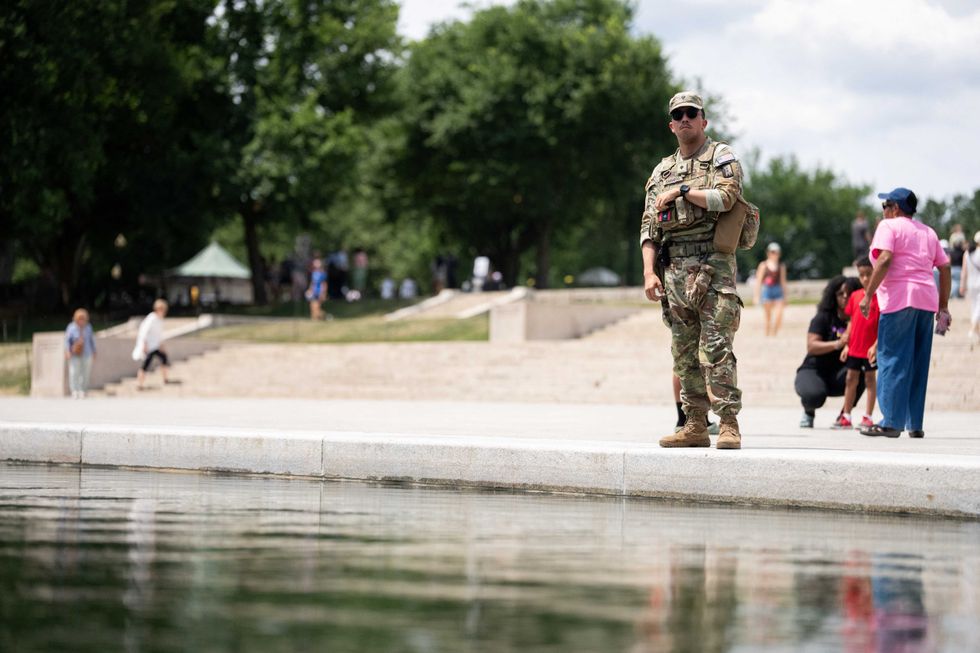
A woman was allegedly issued a citation and escorted away from the reflecting pool on Monday after dipping her hand into the water, TMZ reported.Members of the National Guard, U.S. Marshals, and police officers were seen questioning her at the location, according to TMZ. She declined to speak with TMZ after the incident.The Washington, D.C. landmark has been plagued with algae blooms, a dead duckling, and damage following a controversial multi-million dollar remodel.President Donald Trump on Monday threatened that anyone who vandalizes the monument would face 10 years in prison.The Lincoln Memorial Reflecting Pool is getting treated like the Mona Lisa these days ... and one woman got a ticket to prove it. 😳 pic.twitter.com/WcMn8WWt6t— TMZ (@TMZ) June 22, 2026
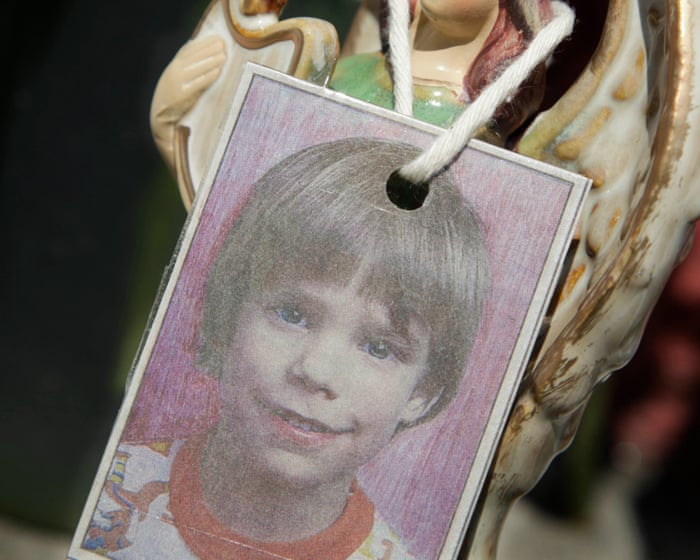
Appeals court had ruled Pedro Hernandez, 64, was wrongly convicted over 1979 disappearance of New York six-year-oldThe US supreme court has reinstated a murder conviction in the long winding case of Etan Patz, whose 1979 disappearance at age six from New York City garnered national headlines.In a 6-3 decision on Monday, the supreme court agreed with New York prosecutors in their request to reverse a lower court ruling that had thrown out the murder conviction of Pedro Hernandez, 64, in the Patz case. Continue reading...
The Iranian delegation negotiating a peace deal with the US in Switzerland almost walked out after a barrage of President Donald Trump's social media posts.
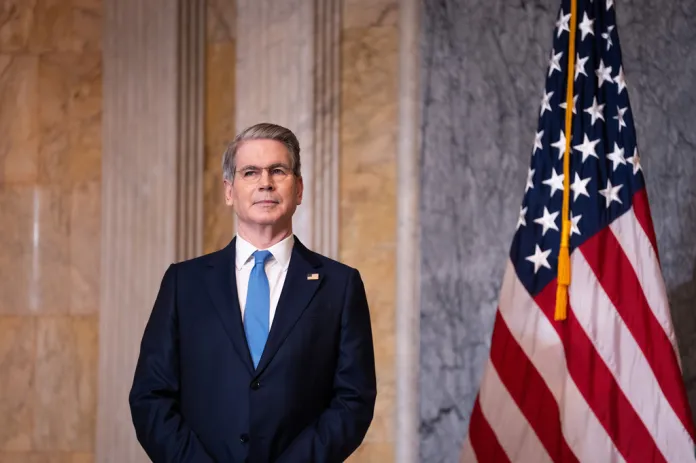
The Treasury Department temporarily waived sanctions on Iranian oil on Monday as part of the Trump administration’s deal with Tehran to end the war in the Middle East. “In line with the ongoing productive talks in Switzerland, Iran has committed to free and open transit in the Strait of Hormuz and to permit International Atomic […]
With the Supreme Court soon to rule on three of President Donald Trump’s key priorities, court commentators say he is escalating his attacks against the very conservative justices he appointed. “As the justices prepare to rule on three signature Trump initiatives,” writes Washington Post Supreme Court reporter Justin Jouvenal, including “limiting birthright citizenship, firing the heads of independent agencies and reshaping the Federal Reserve… many legal experts believe that the justices have signaled they will rule against Trump on two out of the three, blocking his bid to deny citizenship to those who were born to parents here illegally or lacking permanent residency, as well as his effort to remove a governor of the Fed board.” This is almost certain to draw the president’s ire.According to Jeffrey L. Fisher, a law professor at Stanford University, “It seems like almost 100 years since you’ve had a clash approaching this level between the president and the court. You’d have to go back to the New Deal to have any kind of an analogue.” Says Jouvenal, Trump’s growing fight with the court is especially notable as he himself appointed three of its conservative justices, who have already been instrumental in handing him several key victories over the course of his first term, like allowing him to freeze foreign aid and dismantle the Department of Education. But as Jouvenal writes, “The wins have not satisfied Trump, who has attacked the court — including his own nominees — in increasingly caustic and personal terms that legal scholars say have little historical precedent; Trump has called the justices ‘bad,’ ‘stupid,’ ‘weak’ and other epithets.”According to one MAGA ally who helped secure Trump-appointed Justice Neil Gorsuch’s seat, the president’s attacks on the justices are a good thing because “Sometimes feeling the heat helps people see the light." To rule against Trump, he argued, would "destroy the legitimacy" of the court. Harvard University law professor Richard Lazarus says that, ultimately, Trump believes that conservative justices should be loyal to him rather than act as an independent branch of government. “There’s no question that Trump, starting with the tariff case, has taken aim at the court and made quite clear his expectation that justices who were nominated by Republican presidents should vote for his positions,” Lazarus said.After the court struck down most of Trump’s tariffs in February, with conservative justices Gorsuch, Amy Coney Barrett, and Chief Justice John Roberts joining liberals in the decision, the president erupted over the outcome, saying he was “ashamed” of the justices and that it was an “embarrassment to their families.” Then in April, he became the first sitting president to attend court arguments in what was widely viewed as an attempt to pressure conservative justices. Shortly after that, “Trump accused the liberal justices of embracing ‘warped and perverse policies, ideas, and cases’ and said the conservatives ‘give the Democrats win after win.’ He added that ‘certain “Republican” Justices have just gone weak, stupid, and bad.’" Then, Trump posted a nearly 550-word rant where he complained about conservative justices’ lack of “loyalty,” claiming, “Well, maybe Neil, and Amy, just had a really bad day, but our Country can only handle so many decisions of that magnitude before it breaks down, and cracks!!!”For their part, say insiders, the justices have privately grappled with whether to quietly ignore the attacks or offer a more forceful public response. So far, they have avoided criticizing Trump directly. When recently asked about the question of judicial loyalty to the president, Gorsuch did assert that his “loyalty is to the Constitution.” And Roberts has argued that attacks against judges and justices are “dangerous” and have ”got to stop," though he did not specify Trump as the assailant.