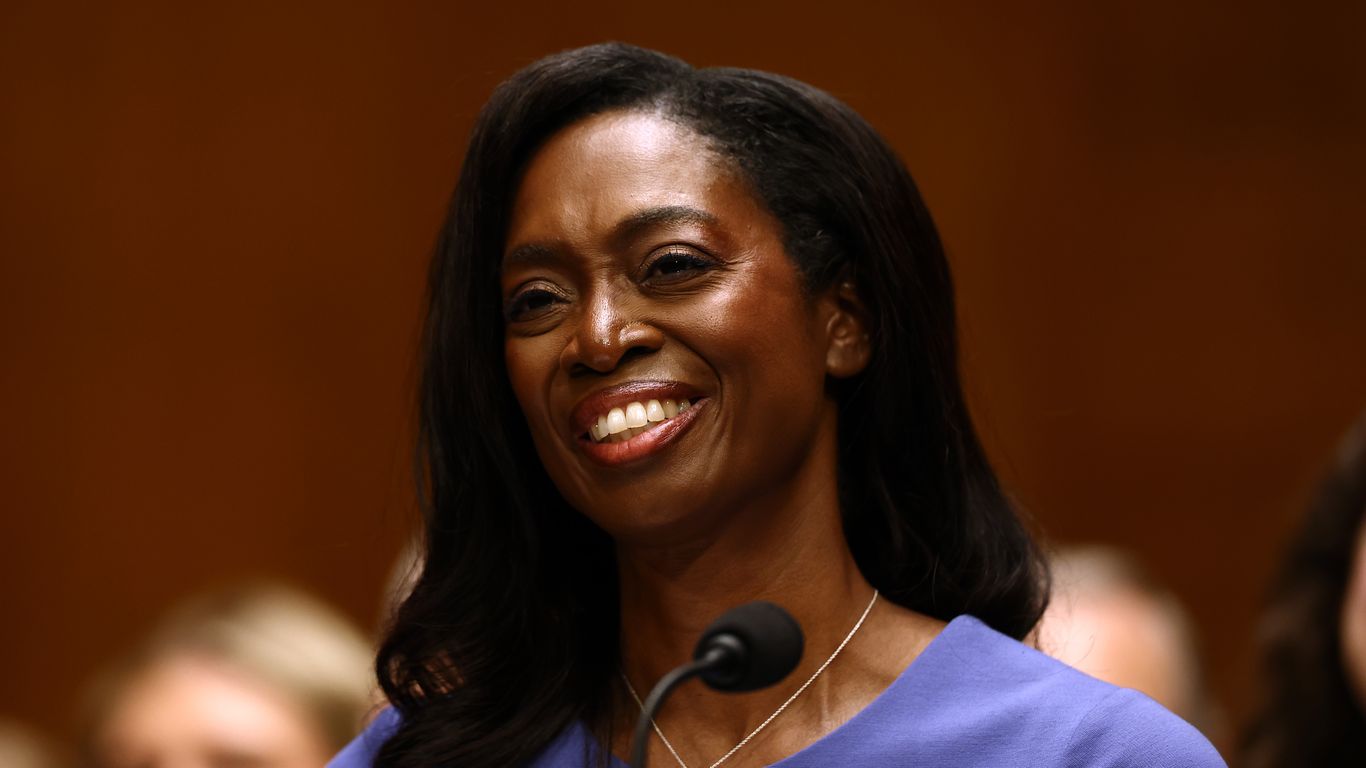
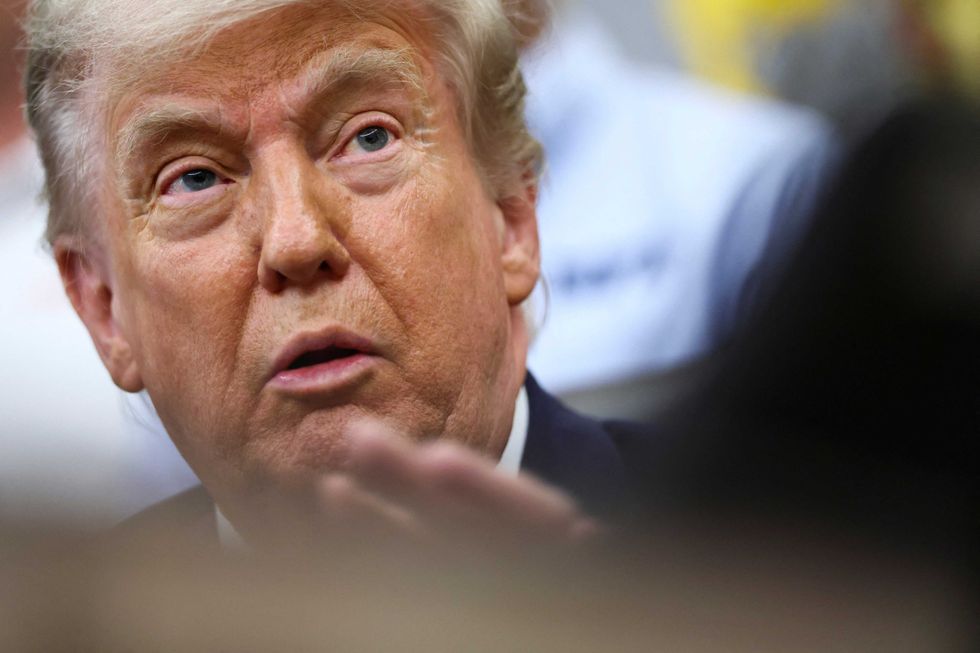
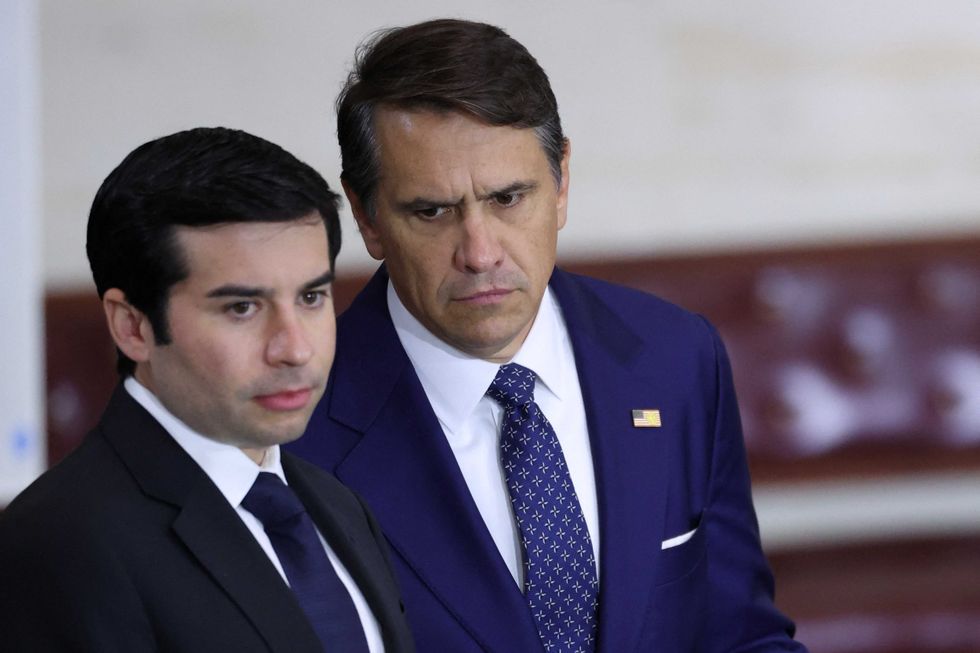
The Senate health committee approved the nomination of Erica Schwartz for Centers for Disease Control director Thursday, a step toward refilling the depleted ranks of the Trump administration's health care leadership.The committee also approved the nomination of Sean Kaufman, who's in line for assistant secretary for preparedness and response and had been in trouble because of past anti-vaccine statements.Why it matters: The votes showed Republicans, at least, are still willing to accept the administration's assurances about the nominees even though committee chair Bill Cassidy has made it clear he's uneasy with Health Secretary Robert F. Kennedy Jr.'s policies.The narrow committee endorsements put both nominees in line for votes to be confirmed by the full Senate, which have yet to be scheduled.By the numbers: Schwartz was approved 12-10, while Kaufman was approved 12-11.Driving the news: Cassidy said he got a few concessions from HHS to justify his support for Kaufman, including promises of "key personnel changes and better oversight to ensure that science and not ideology is driving decision making.""Mr. Kaufman has said some pretty stupid things and irresponsible things regarding immunization. He has owned up to that in his conversations with me," Cassidy said."I am assured that if he is confirmed, he will not be involved in vaccine policy."Cassidy warned that "there will be future leverage points for this committee over future appointees if these commitments are not kept."Between the lines: Neither nomination was a slam dunk. The votes were supposed to happen last week, but they had to be postponed because Republicans couldn't get enough senators to show up for the vote — and because they had more questions about Kaufman.Context: Schwartz faced tough questioning during her July 15 confirmation hearing over whether she could steer clear of political interference and chart a course for the beleaguered public health agency.While she vowed to "never betray the science" and rebuild trust in the CDC, Schwartz hedged on whether she would tell Congress if she was told to adopt "unscientific" or harmful policies, saying she didn't believe either President Trump or Kennedy would do that.Schwartz was Trump's third nominee to lead the CDC, following Susan Monarez, who was fired after less than a month in the role claiming she was dismissed for refusing to rubber-stamp Kennedy's vaccine policies.The former deputy surgeon general was viewed as a less polarizing pick than some of Trump's past health nominees. Public health experts have said she'd face challenges stabilizing an agency that's lacked a full-time political leader for almost a year and is beset by morale and staffing problems.
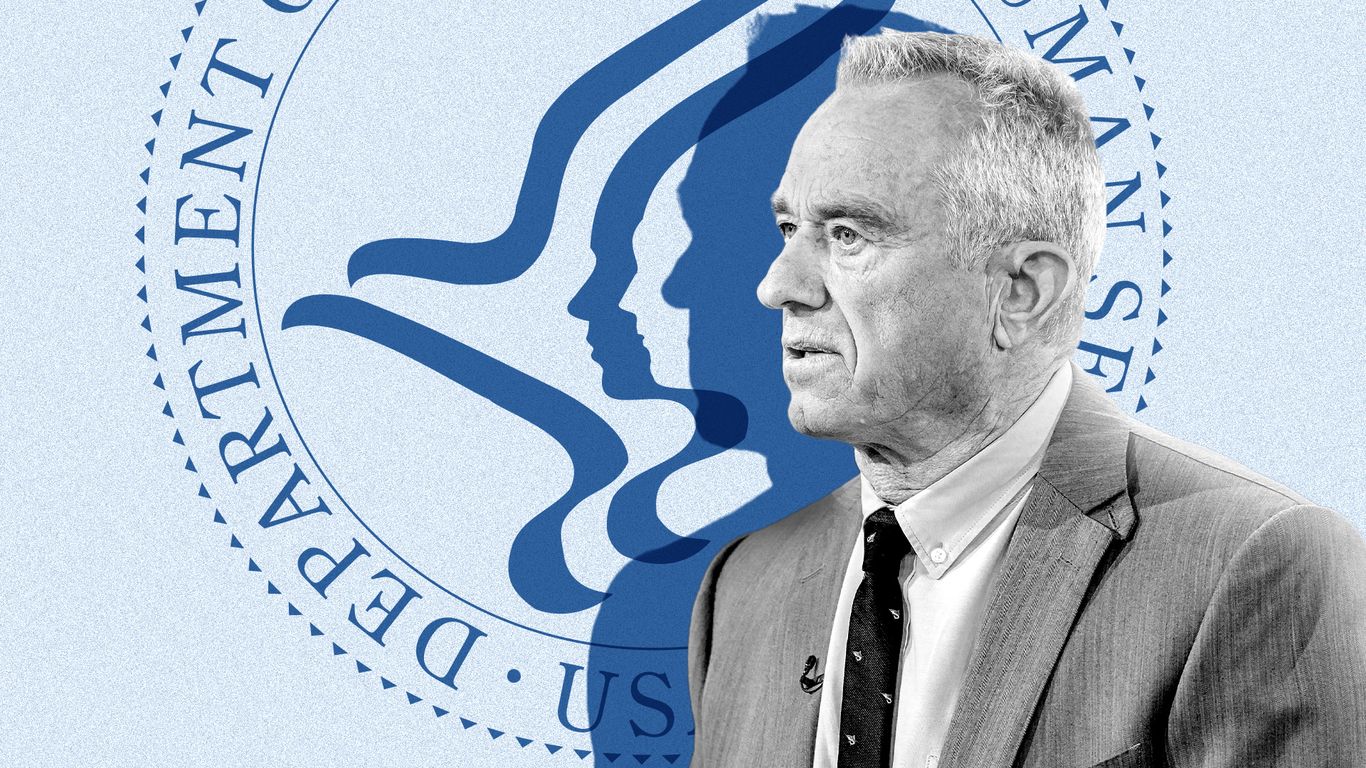
The Department of Health and Human Services keeps saying it's turning over a new leaf, but it has only been partially successful — and controversial vaccine policymaking appears to be back on the table.Why it matters: Though the agency reset was launched with the midterm elections in mind, it's already under strain and the elections are still more than three months away.State of play: Until this week, the administration had spent most of this year toning down its approach to vaccines, after it became clear through polling that vaccine skepticism was a political liability for the GOP in the midterm elections.But it wasn't just vaccines. The Food and Drug Administration had become dysfunctional enough that critics were warning of irreparable harms to the biotech industry and lost cures for patients, and the Centers for Disease Control and Prevention has been without a Senate-confirmed director for the vast majority of Trump's second term.At the same time, HHS elevated people with much more traditional backgrounds to senior positions within the department, most notably installing Chris Klomp effectively as chief of staff.Former FDA commissioner Marty Makary and top regulator Vinay Prasad both left their jobs in the following months, signaling what the biopharma industry hoped would be a reset on a relationship that had become poisonous.Other controversial personnel either left the administration or — in the case of surgeon general nominee Casey Means — failed to be confirmed.Where it stands: The projection of a return to business as usual experienced some serious cracks this week.The Senate confirmation of Sean Kaufman, the administration's nominee to lead the Administration for Strategic Preparedness and Response, seemed to be in trouble over his past anti-vaccine statements, though the Senate health committee did approve his nomination Thursday.And most prominently, the WSJ reported that President Trump has been pressuring Health Secretary Robert F. Kennedy Jr. to do more on vaccines, including probing the alleged connection between vaccines and autism and reducing the number of shots children receive."💯 true," a source close to HHS and the White House texted Axios in response to the story.That's a stark departure from White House staff urging the department to tone it down — but a testament to the president's genuine commitment to the topic.Scientists have repeatedly said there's no evidence of a connection between vaccines and autism.The other side: The administration's nominee to lead the CDC, Erica Schwartz, was approved by the Senate health committee with significantly less drama Thursday, even earning a Democrat's vote.And while the FDA is lacking permanent leadership, both the acting commissioner and the acting heads of drug regulation have received widespread praise from industry and other critics of the agency under Makary's tenure.Klomp, who has been nominated as deputy secretary, continues to be largely regarded as competent and a steadying hand.HHS said in a statement: "We have an exceptional team in place across the Department, that is dedicated to serving the American people and carrying out President Trump's bold vision to reverse the chronic disease epidemic, restore trust in public health, and put prevention at the center of health policy as we Make America Healthy Again."Between the lines: The likelihood that controversial vaccine policy returns with a vengeance post-midterms is completely underappreciated across Washington.Sources close to the administration are confident that vaccine-skeptical rhetoric and policy actions will resume in a few months."I have full expectation that many of MAHA's goals will reappear after midterms. They'll actually get finalized in the second half of the administration, and the real question is what happens in the next administration?" said David Mansdoerfer, a senior HHS official during Trump's first term.What they're saying: Parents' "questions and concerns about America's skyrocketing autism rates have long been ignored if not mocked. That changed the day President Trump took office, and the Trump administration is committed to leaving no stone unturned to finally address these concerns with Gold Standard Science," White House spokesman Kush Desai said in a statement.The intrigue: Trump's urgency could add longevity to Kennedy's tenure. There's been rampant speculation about whether the secretary will leave the administration after the midterm elections, with many sources believing he'll be gone after they're over."Of course this means that the Secretary will stay to the end of the Administration," the source close to HHS and the White House told me."He's been stymied time and again by staff who were worried about the political optics of questioning vaccines.
Democratic socialists look like they're about to rack up a stunning new victory: Their candidate in Michigan's Senate Democratic primary has the momentum heading into Tuesday's primary.Why it matters: A win by Abdul El-Sayed in the swing state would turbocharge the party's left flank and validate establishment fears about the party's direction. The big picture: Establishment Democrats have watched in horror as democratic socialist candidates pull off one win after another in House primaries this year. The Michigan primary brings the ideological clash to its biggest stage yet. El-Sayed, who's backed by Sen. Bernie Sanders and Rep. Alexandria Ocasio-Cortez, is taking on an establishment favorite in a race that's become a proxy fight between the party's far-left and center-left wings.Democratic leaders have gone all-in for Michigan Rep. Haley Stevens because they think she can win moderate voters — and El-Sayed can't.But El-Sayed has vaulted to a hefty lead in the final stretch of the campaign. One survey this week had him up 15 points. Other polls have shown him with smaller but still substantial leads.The political stakes don't get much higher. If Democrats lose Michigan on Nov. 3, they almost certainly aren't winning the Senate.State of play: Together with Zohran Mamdani's victory in the New York City mayor's race, democratic socialists have proven they're not on the periphery of the party anymore — the center of gravity has shifted unmistakably in their direction.A CNN poll out Thursday showed about a third of Democratic voters identify as democratic socialists — and they're the most motivated to turn out.But winning House primaries is one thing. Winning a statewide Senate primary in one of the nation's premier battlegrounds is another.Driving the news: El-Sayed has gained ground as the campaign progressed.Stevens had a sizable lead early on, with El-Sayed in second and state senator Mallory McMorrow trailing. But El-Sayed moved up over the past two months, and in the weeks since McMorrow dropped out in early July, established himself as the frontrunner in polls.Stevens is the consensus choice of the Democratic establishment. Senate Majority Leader Chuck Schumer lined up behind her early. Michigan Gov. Gretchen Whitmer came aboard late, with an endorsement last week.The primary is also a monumental moment for AIPAC. The pro-Israel organization and affiliated groups have poured roughly $30 million into boosting Stevens — the most it's ever spent in a single race, per the AP.Israel is a central dividing line in the race: Stevens has described herself as a "proud pro-Israel Democrat." El-Sayed has accused the country of committing genocide in Gaza.The intrigue: The bigger question for Democrats is whether the party is undergoing the kind of makeover Republicans experienced a decade ago with Donald Trump — or if the democratic socialist surge is confined to the bluest enclaves.No primary this year will offer a clearer answer than Michigan's.Democratic socialists argue they're filling a vacuum. Even as establishment Democrats say El-Sayed can't win, they've struggled to articulate their own vision beyond "Trump is bad" and "stuff is too expensive."The other side: Republicans dejected by President Trump's record low approval rating and unpopular war are suddenly reveling in the opposition's leftward lunge.Trump has adopted a campaign strategy that boils down to: "You may not like me, but do you really want those crazy communists instead?"El-Sayed doesn't identify as a democratic socialist, but DSA organizers are going all out to help him. Sanders (I-Vt.) and Ocasio-Cortez (D-N.Y.) have both campaigned for him.Trump undoubtedly would cast the epidemiologist and former Rhodes scholar as another Democratic "communist."What we're watching: An El-Sayed win would only be step one for the democratic socialist cause. To truly show the far-left wing can compete in the most competitive terrain, he'd need to win in November against Rep. Mike Rogers, the presumptive Republican nominee.
EXCLUSIVE — Steve Bannon is predicting that President Donald Trump’s increasingly strained relationship with Senate Majority Leader John Thune (R-SD) is headed toward an irreparable break, arguing that a showdown over acting Attorney General Todd Blanche’s nomination may be the final straw. Bannon, Trump’s former chief strategist and a close outside ally, told the Washington […]
A conservative lawyer explained that President Donald Trump waited years to make his key defense in a defamation case because he "forgot" it.During an episode of The Illegal News, congressional candidate and former MAGA insider George Conway talked about Trump's case against E. Jean Carroll. The Trump administration's Solicitor General recently asked the Supreme Court to overturn Carroll's successful $83.3 million defamation lawsuit against Trump.The Solicitor General is arguing that Trump isn't liable for the defamatory statements he made against Carroll because he was president when he made them.The argument is based on the idea of presidential immunity, but Trump didn't make the argument earlier because he "forgets to assert the immunity" during the original proceedings, Conway said while recounting the timeline."Now he's arguing that this judgment should be reversed," Conway said. "Even though he didn't make the presidential immunity argument for like three or four years."Conway argued that Trump can't revive an immunity defense he sat on for years, comparing it to the way lawmakers can't waive and then reclaim the immunity that protects their official speech. Trump is "a big boy" who should have known to raise it first, Conway said.The reason the argument never came up during the original proceedings, Conway said, was that Trump's former attorney, Alina Habba, shot it down. Trump's team instead spent years fighting on separate grounds tied to the Westfall Act, which drove the case into what Conway called a "procedural morass."Conway added that it would be "remarkable" if the Supreme Court decided to take the case, saying the justices avoid fact-heavy disputes.
Acting Attorney General Todd Blanche is inching closer to criminal charges, and even a Trump pardon won't save him, according to a legal expert.During an interview on Legal Breakdown, former prosecutor Glenn Kirschner dug into a new development with the Epstein files. The Trump Department of Justice handed over unredacted Epstein records to a judge on Thursday, and host Brian Tyler Cohen asked what kind of consequences Blanche still faces.Kirschner told Cohen that if Blanche handed over doctored files to the judge, he could face a "criminal investigation" and "obstruction of justice" charges.Cohen speculated, "If Trump holds true to his general ethos as it relates to law and order, he's going to dole out pardons to everybody in his vicinity," so "Todd Blanche probably does have a pardon waiting for him, especially if he's acting on Trump's behalf."However, Blanche still won't be off the hook, Kirschner said, "if Donald Trump delivers a pardon to Todd Blanche and there is some sort of showing, there's some evidence that Todd Blanche and Donald Trump were actually in a conspiracy together to cover up potentially incriminating information about Donald Trump."Kirschner explained that the Department of Justice under a future presidency can still challenge Blanche's pardon in federal court, and if a judge rules against the pardon, prosecutors can press the obstruction of justice charges."It will be incumbent upon the next Department of Justice, again once the rule of law comes back into the light of day, to march into court proudly and challenge that corruptly delivered pardon," Kirschner said.