
BBC News
US says it struck Iranian radar sites as Iran targets American forces in Kuwait
Iran and the US say they have carried out fresh strikes around the Strait of Hormuz, with Kuwait condemning "repeated" Iranian attacks.
Center
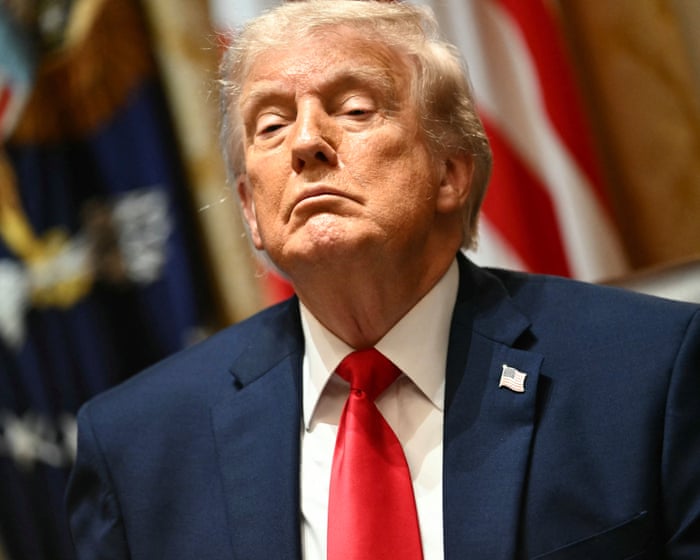
Chuck Schumer shares plans to force vote on ‘anti-weaponization’ fund and accuses Trump of ‘corruption’Democrats in the US Senate vowed to force Republicans to vote on a $1.8bn “MAGA slush fund” established as part of a resolution of Donald Trump’s long-shot lawsuit against the Internal Revenue Service.The US president has described the secretive and loosely controlled “anti-weaponization fund” as a means of paying the victims of politicized prosecutions. Members of his own party are among those who have expressed alarm. Continue reading...
Iran and the US say they have carried out fresh strikes around the Strait of Hormuz, with Kuwait condemning "repeated" Iranian attacks.
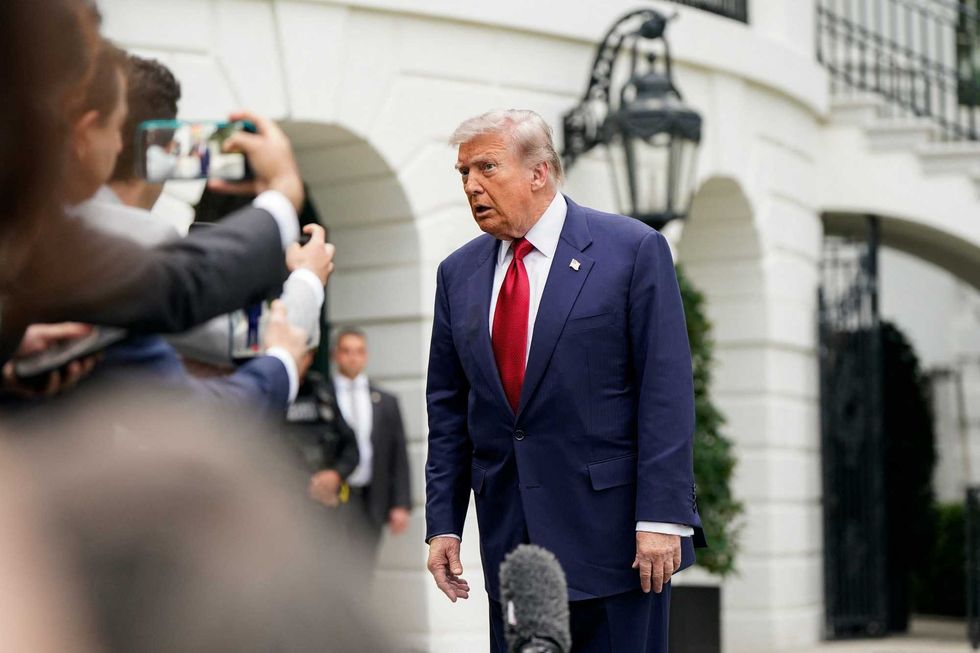
A survey discussed by attorneys Brian Kabateck and Shant Karnikian found that 94% of judges and lawyers believe President Donald Trump's second administration poses a greater threat to the rule of law than his first. "Here we are. It's gotten that much worse," Karnikian said on their podcast "Civil Action."Karnikian called the results astounding, also noting the erosion of faith in American institutions. Since his second inauguration, Trump has clashed with the federal judiciary, attacking judges who ruled against him, including Supreme Court justices who struck down his tariff policies. Trump has also attempted to leverage the judiciary, including settling an Internal Revenue Service, or IRS, lawsuit over leaked tax returns to create a fund potentially benefiting allies —a move federal judges have criticized. Kabateck highlighted the Supreme Court's use of the "shadow docket," where rulings occur without public visibility, characterizing it as a dangerous precedent.Watch the video below. Your browser does not support the video tag.
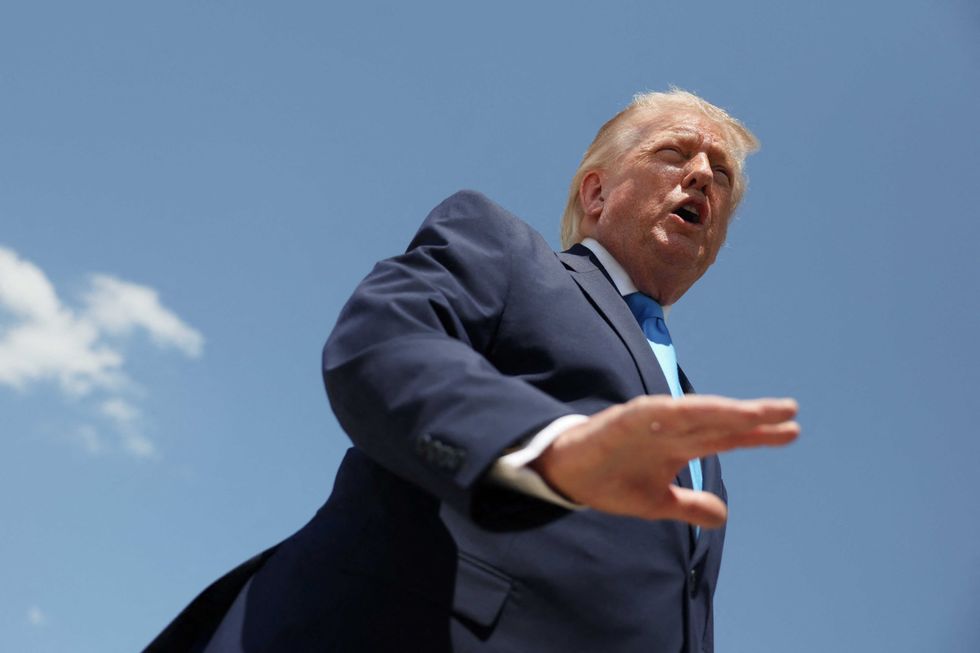
Iran has struck at least 20 American military facilities across the Middle East since the start of the war, according to a new satellite imagery and video analysis — significantly more than the United States has publicly acknowledged.The attacks have targeted key bases across eight countries, including Saudi Arabia, the United Arab Emirates, Qatar, Kuwait, Iraq, Jordan, Bahrain and Oman, causing damage that analysts say runs into the hundreds of millions of dollars, according to the analysis by BBC Verify – and some experts put the number of bases hit as high as 28.Among the most significant losses are three Terminal High Altitude Area Defense — or THAAD — batteries, among the most sophisticated anti-missile systems in the American arsenal. The U.S. is known to operate only eight such batteries worldwide, each costing approximately $1 billion to manufacture, and a former senior Irish defense official told BBC Verify the batteries form the core of a "highly complex" regional defense network that cannot be "quickly or easily replaced."At Prince Sultan Airbase in Saudi Arabia, satellite images show damaged refueling and surveillance aircraft, smoking craters and what analysts identified as a destroyed E-3 Sentry surveillance plane that could cost up to $700 million to replace and the report showed least 42 aircraft in total — including F-15s, F-35s, 24 MQ-9 Reaper drones and an A-10 attack plane — have been destroyed or damaged since February.Analysts say Iran's tactics evolved significantly as the conflict progressed, shifting from mass missile barrages designed to overwhelm defenses to smaller, precisely targeted strikes on high-value assets. Experts told BBC Verify that American forces "appear to have been guilty of a degree of early-war complacency" in failing to relocate aircraft as Iranian tactics sharpened.The Pentagon has not disputed the BBC's findings, with a defense official declining to comment citing "operational security." The U.S. also requested that Planet, a major satellite imagery provider, impose an indefinite restriction on new images of Iran and much of the Middle East.With the fragile U.S.-Iran ceasefire again under strain, analysts warn that depleted air defense stocks leave American bases across the Gulf increasingly vulnerable should fighting resume.
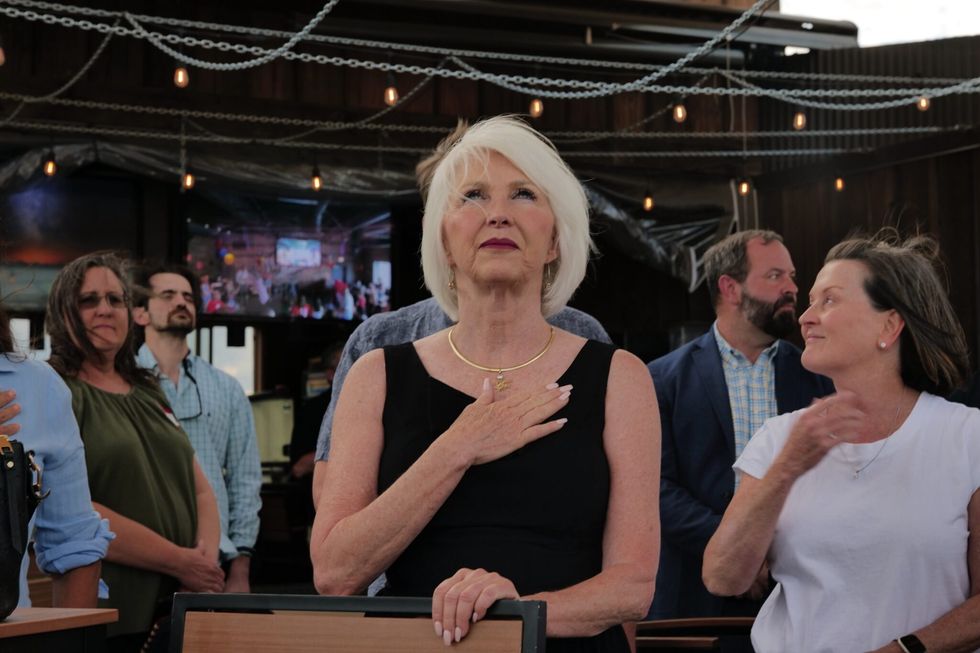
Tina Peters walked out of a Colorado prison Monday morning and headed for Steve Bannon's War Room — where the convicted election denier told the MAGA faithful she wants a job in the Trump administration."I would like for President Trump — I'd like to be more involved in prison reform," Peters said on the podcast, adding she'd pursue it "if that's the way the Lord leads me."Peters, 70, was released Monday from La Vista Correctional Facility in Pueblo after serving less than a quarter of her nine-year sentence for election interference. Colorado Democratic Gov. Jared Polis commuted her sentence to four and a half years last month following a sustained pressure campaign by President Donald Trump.Peters was convicted in 2024 on four felony and three misdemeanor counts after she snuck an unauthorized operative affiliated with MyPillow CEO Mike Lindell into her Mesa County elections office to copy Dominion Voting Systems equipment during a 2021 software update.On Bannon's show, Peters described deteriorating health behind bars — acid reflux, blood sugar problems from a diet of salt and sugar — and raised concerns about the use of Suboxone in women's prisons, claiming inmates are put on the drug and can't get off."There's no way to rehabilitate them with the way the prisons are run currently," she said.But prison reform wasn't her only ambition. Peters made it clear she has no intention of abandoning her election-conspiracy crusade, citing recent and upcoming races — including New York City mayoral winner Zohran Mamdani and Virginia Gov. Abigail Spanberger (D) — as evidence that Democrats cannot be trusted at the ballot box."I know that the Democrats are going to cheat," she said, "and no one's really addressing the problem."The problem, in Peters' telling, remains the same one that landed her in prison.

WASHINGTON — Democratic Party leaders from a dozen states traveled to Washington, D.C., at the end of May to press for their voters to cast the first ballots in the next presidential primary.State representatives argued that diversifying the early states would ensure Democrats nominate a presidential candidate who not only holds broad appeal among the base, but can ultimately win over independent voters in swing states and the White House in November 2028.A final decision from the Democratic National Committee’s Rules and Bylaws Committee will, however, have to contend with state laws and the officials who actually set primary dates.Iowa and New Hampshire traditionally hold the first caucus and first primary election for presidential candidates — though South Carolina had the first DNC-sanctioned primary in 2024 — and both states argued it’s better to stay that way.“Look, New Hampshire will make every effort it can to comply with the Rules and Bylaws Committee, but there are some factors outside of our control,” said U.S. Sen. Maggie Hassan. “Our secretary of state is required by law to schedule the New Hampshire primary before other states.”A “Write-In Joe Biden” campaign sign in a Portsmouth, New Hampshire, snow bank in 2024, when New Hampshire held its primary first in the nation in defiance of the Democratic National Committee. (Photo by Hadley Barndollar/New Hampshire Bulletin)New Hampshire Democrats, she said, don’t believe their voters should pick the nominee, but would instead vet “the nominee so that they are better prepared for the states that follow, which will by definition be larger, more diverse and that’s really important too.”“The one other thing I will add is that the Republicans are going to have the first-in-the-nation primary be New Hampshire,” Hassan added. “And there is a big vacuum when a whole bunch of Republican presidential candidates are coming into our state, highlighting local candidates who are Republicans and there isn’t the same fulsome, evenly balanced Democratic response. And I think that can put us at a disadvantage at the local level and occasionally at the federal level as well.”Iowa Democrat Scott Brennan told panel members that state law “requires that we be a caucus and that we go before any competing process.”Iowa Democratic Party Chair Rita Hart also noted that Republicans and the journalists who cover their campaigns will be in the state for months ahead of the GOP presidential primary.“In 2028, no matter what your decision is regarding the nominating calendar, Iowa will be the center of politics because the Republicans will be here right along with scads of national reporters,” she said.Members of the DNC’s Rules and Bylaws Committee asked questions throughout the two days of presentations, including what states were doing to protect voter privacy, whether states had implemented restrictions on abortion and how much rent will cost campaign staffers for a one-bedroom apartment in larger cities.State Democratic Party members repeatedly told the committee that voters in their home states are best positioned to winnow down what is expected to be a large group of presidential candidates. Here’s some of what they argued:South CarolinaSouth Carolina Democratic Party Chair Christale Spain said her presentation wasn’t about keeping the state toward the front of the calendar for “nostalgia,” but “about whether the Democratic Party understands where the fight for democracy actually is.”“This is not a routine calendar debate,” she said. “Republicans are not debating theory, they’re moving in real time to weaken voting rights, redraw maps, dilute Black political power and change the rules where they don’t like the voters’ choices.”The Democratic Party, Spain said, must ensure that Black voters “help shape the nomination from the beginning” and argued South Carolina is best positioned to do that.“If Black voters are the backbone of the Democratic Party, then the calendar should reflect that,” she added.Spain also called on the national party to recognize that Southern states hold crucial Democratic voters, despite the fact that region of the country typically gives its Electoral College votes to Republican presidential candidates during the general election.“If Democrats want a long-term national majority, we cannot write off the deep South and then act surprised when the math doesn’t work,” she said.Drawing a contrast with many of the other states, Spain noted that in South Carolina, the Democratic Party’s executive committee picks the date of its primary, not state law or the secretary of state.New Mexico New Mexico Gov. Michelle Lujan Grisham told the panel her state had “everything to offer” the party and its presidential candidates.“We’re a minority-majority state,” she said.
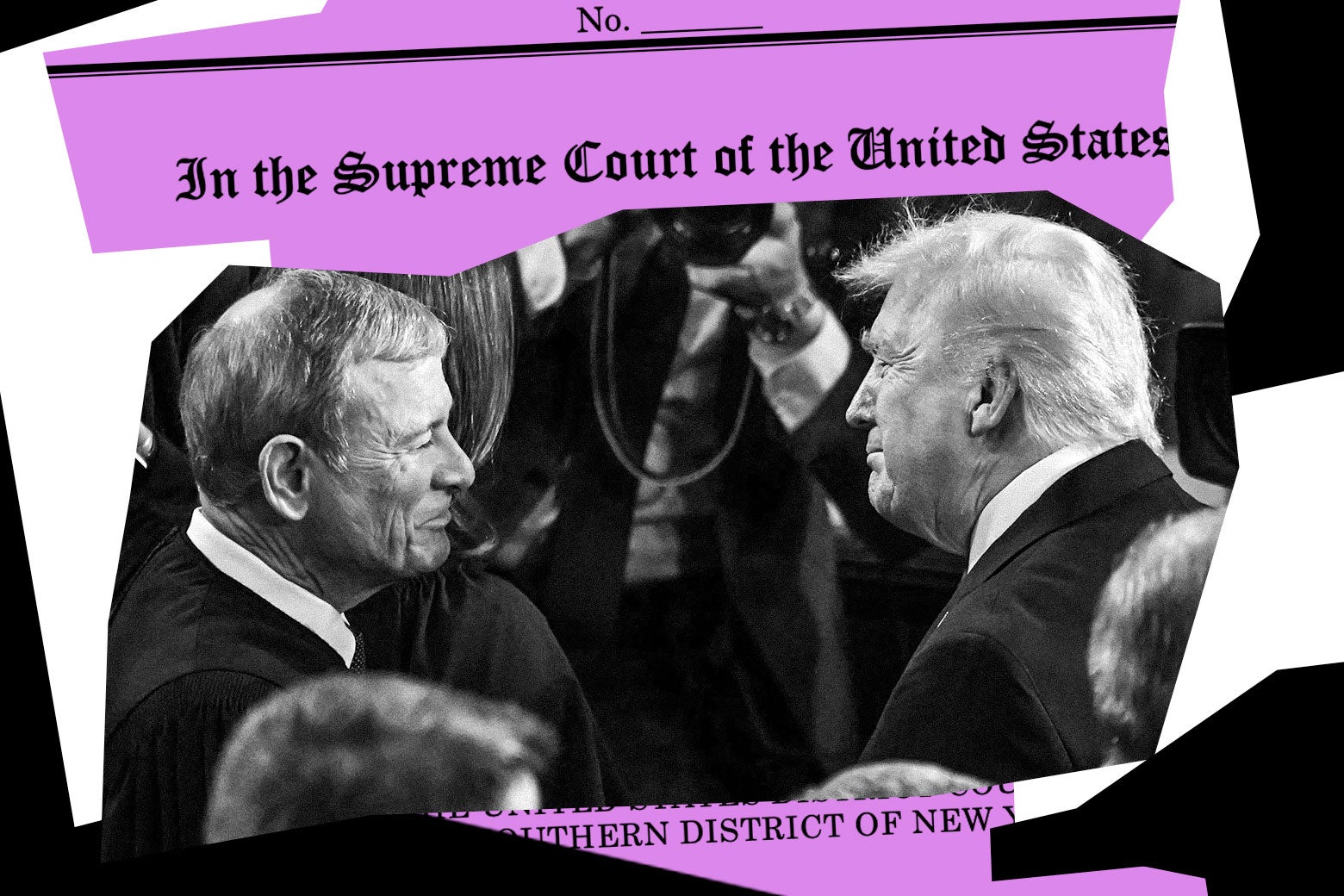
The Supreme Court has entered its final stretch of the term, with about two dozen opinions to hand down before the justices flee for their summer break.

Under pressure from the polls and Gulf allies, the White House is pushing for a deal but Iran wants concessions.
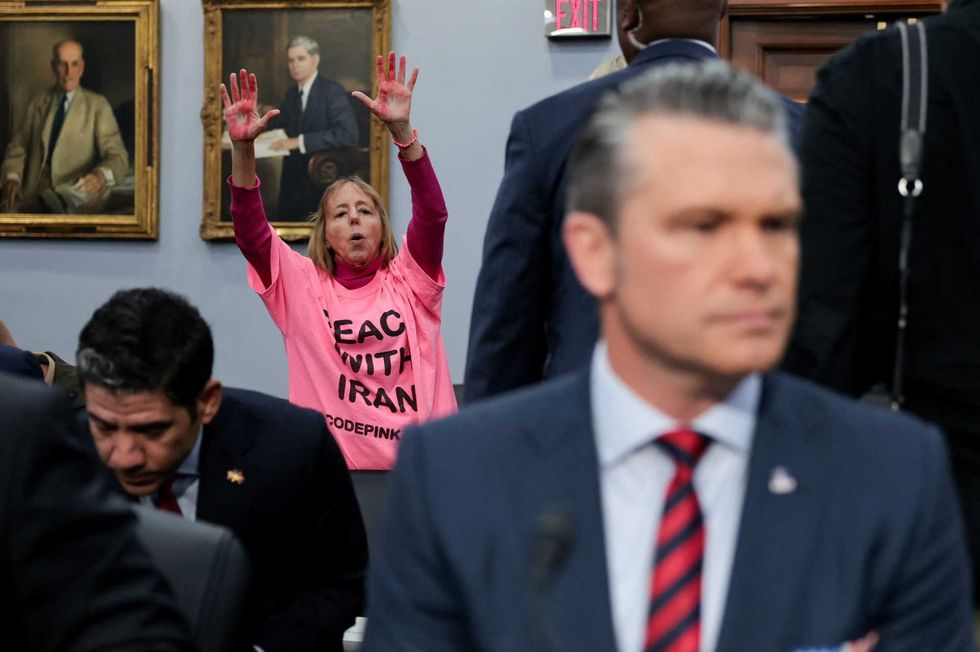
A former senior Trump administration official issued President Donald Trump and those around him an ominous warning on Monday about what they said were “historic consequences” they’ve yet to face, but undoubtedly will – and soon.That former official was Miles Taylor, a security expert who served as a Homeland Security senior advisor in the first Trump administration, and his warning was about the Trump administration’s ongoing operation in the Caribbean targeting suspected drug traffickers, an operation that critics have called illegal and as of Monday has killed 205 people.“More than 200 people have now been killed in Trump’s campaign against ‘drug boats’ since it began in early September,” Taylor wrote in an analysis published on his Substack Monday. “I can tell you from firsthand experience that all of them could have been arrested instead. In other words, the murders are a choice – and one that will have historic consequences.”As Trump’s deeply unpopular war against Iran continues to dominate news headlines, the administration has simultaneously begun ramping up its attacks on suspected drug traffickers in the Caribbean, and without providing evidence to the public proving that those killed were drug traffickers.And, while the Trump administration has yet to face any legal consequences for what even Republican lawmakers have described as “extrajudicial killings,” Taylor warned that consequences were, in fact, coming, and soon enough that “the people who carried this out should be calling their lawyers.”“First, Democrats are very likely to retake at least one chamber of Congress. The day they do, they get subpoena power, and the first thing a serious oversight committee will do is start pulling the thread on the obvious crimes committed by the Trump administration. This boat-strike campaign is top of the list,” Taylor wrote.“Second, congressional investigators will ask the only questions that matter in any abuse-of-power inquiry: who knew, and when did they know it? They will go looking for the paper trail, and they will undoubtedly find it.”