WHAT’S HAPPENING TODAY: Good morning and happy Monday, Daily on Energy readers! After 53 years, the New York Knicks ended their NBA championship drought over the weekend. Congrats to all the New York fans out there. 🗽🏀🏆 Meanwhile, there may just be an end in sight for the closure of the Strait of Hormuz. 🚢 […]
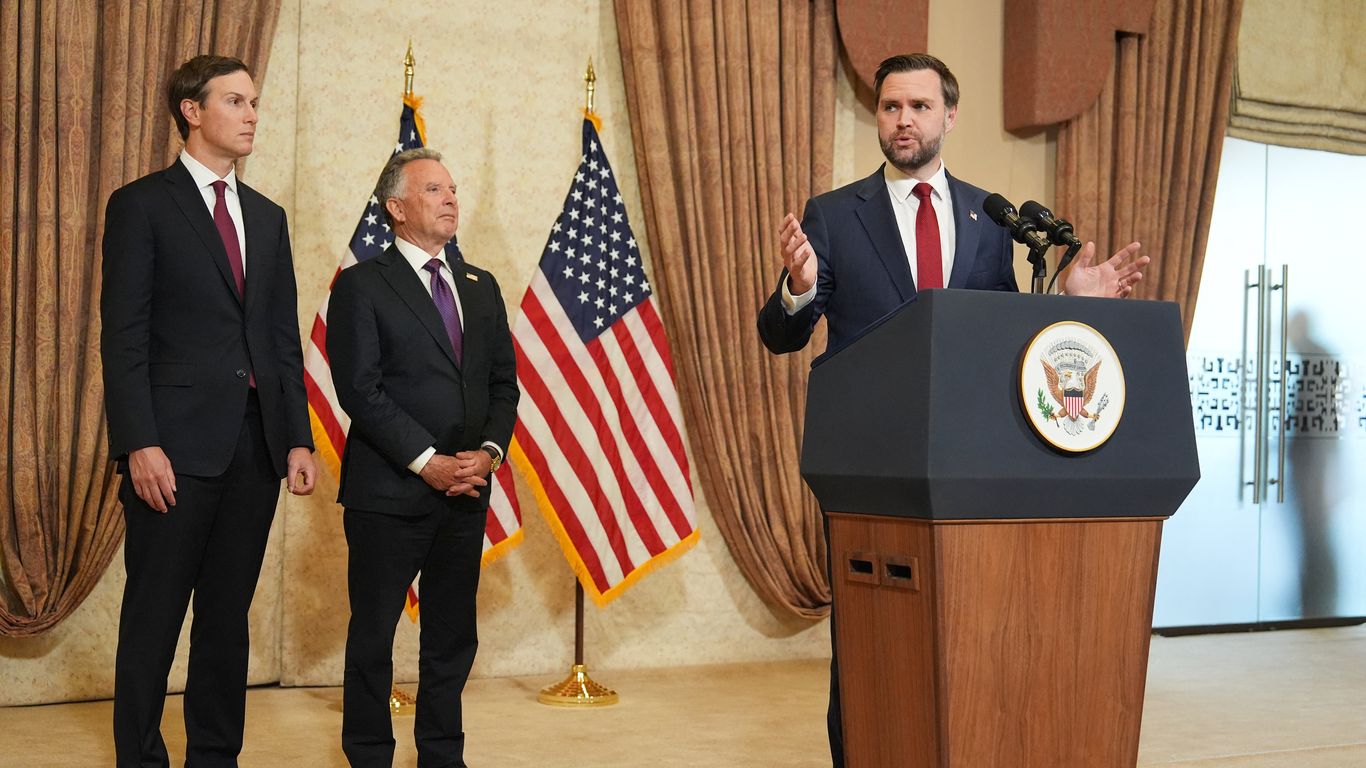
The U.S.-Iran deal was signed electronically on Sunday by President Trump, Vice President Vance and Iranian parliamentary speaker Mohammad-Bagher Ghalibaf, senior administration officials told reporters on Monday. Why it matters: The deal is already testing whether Washington and Tehran can turn a battlefield pause into a broader settlement — starting with the Strait of Hormuz, and then moving to the far thornier question of Iran's nuclear program.State of play: A 60-day ceasefire extension is in effect, U.S. officials say, including in Lebanon. But the Strait of Hormuz is not expected to begin reopening until after a formal signing ceremony Friday in Geneva.Vance, U.S. envoys Steve Witkoff and Jared Kushner, Ghalibaf and Iranian Foreign Minister Abbas Araghchi are expected to meet Friday with Pakistani and Qatari mediators to discuss the next phase.U.S. officials say the full text of the memorandum of understanding (MOU) will be released in the next 24-48 hours, though Trump said it might not be published until after it's signed.The big picture: Washington and Tehran are racing to shape the narrative around a deal that few people have actually read, but which markets, world leaders and ordinary citizens are already reacting to.The U.S. says relief for Iran will be tied to performance. Iranian state media has described a more generous package.Shipping companies say they're waiting for clearer guarantees from Tehran before sending cargo through the Strait of Hormuz.Hawks in Washington and Israel are pressing the White House to explain exactly what Iran is getting — and what happens if nuclear talks fail.Breaking it down: Here are eight key questions that are still swirling around the deal.The White House did not respond to the questions when asked by Axios.1. Is the deal actually in effect?The MOU was signed electronically on Sunday, with a more formal signing ceremony to be held on Friday in Switzerland.The 60-day extension of the ceasefire took immediate effect, but the strait is not yet fully open.While Trump announced the "immediate" lifting of the U.S. blockade and opening of the strait on Sunday, he later said it would open on Friday once the ceremony takes place.A U.S. defense official said the military was ordered to prepare to lift the blockade Friday.Trump claimed Monday that ships were already moving, though Iranian state media said the status of the strait was unchanged.2. Will the strait be truly "open"?The U.S. side has consistently said the deal would open the strait without "tolls" or any other restrictions. A regional diplomat involved in the mediation told Axios last week that the deal called for shipping volumes through the strait to return to prewar levels within 30 days. But Iranian officials have told state media the strait won't simply return to "pre-war status," and that Iran will retain some level of control.The Fars news agency reported that Iran had agreed not to impose tolls during the 60 days, but would begin charging safety and environmental fees after that.The intrigue: A senior administration official said there would be a "regional dialogue" on the future of the strait and how to ensure it will never be closed again.State of play: Shipping companies are moving cautiously. Maersk and others have said they're waiting for more clarity and guarantees of safety, and some analysts doubt volumes will actually return to the pre-war norm any time soon.A senior administration official told reporters the U.S. expects volumes to increase significantly over the next two weeks, though probably not to return to normal."Some crews want to see a little bit more stability for the next couple of days, maybe the next couple of weeks," the official said.3. What does Iran get?Both sides agree that Iran gets two big things: an end to the fighting, and sanctions waivers to allow oil exports. That alone would generate much-needed revenue for Tehran, but Iranian state media has claimed the government is also getting billions of dollars in frozen funds just for signing.A senior U.S. official adamantly denied that, saying Iran would only get access to those funds based on a "pay for performance model." The full economic benefits of the deal, the U.S. side says, depend on signing a more detailed nuclear accord.Some skeptics of the deal have raised concerns there might be side agreements that give Iran access to cash immediately, though the White House calls that "misinformation."Yes, but: The senior administration official said the U.S. was prepared to make some "small gestures" early in the process on frozen funds and sanctions relief if Iran made similar "gestures" reflecting their willingness to comply with the deal.4. Do they agree about what's been agreed?The U.S.
Washington Examiner White House reporter Christian Datoc described the various political, military, and diplomatic pressures on President Donald Trump as the United States nears a peace deal with Iran. “Ultimately, President Trump has a mountain to climb, not only because of ending the war itself, but kind of countering growing public dissatisfaction with the way […]
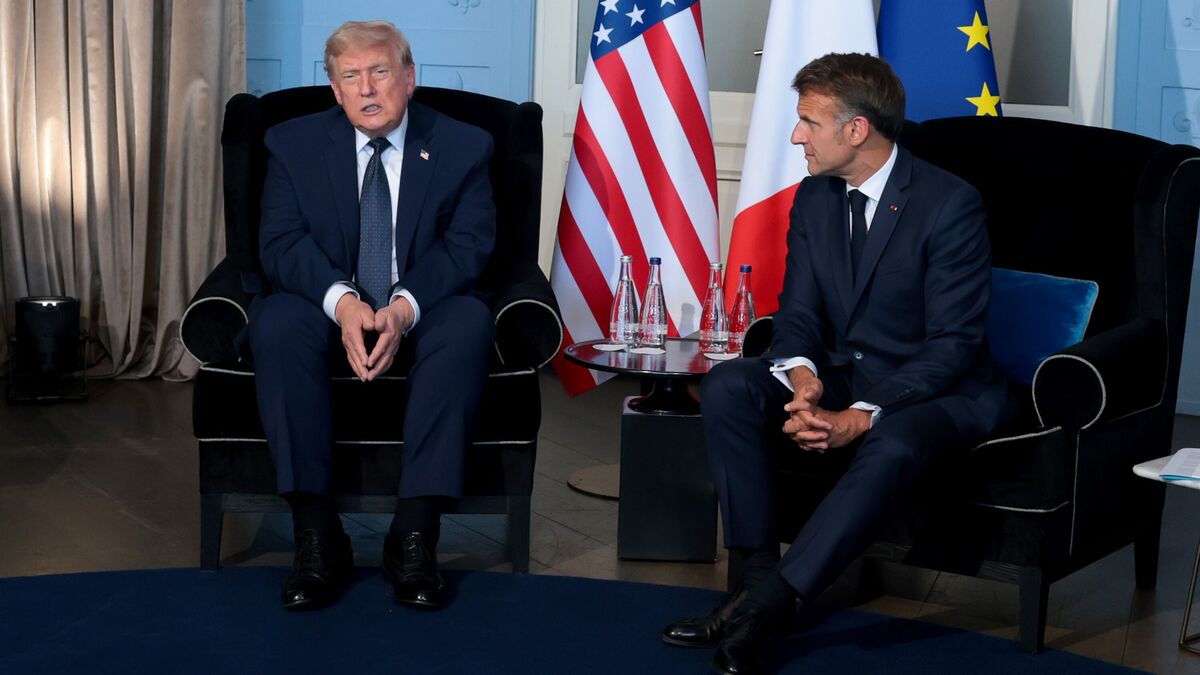
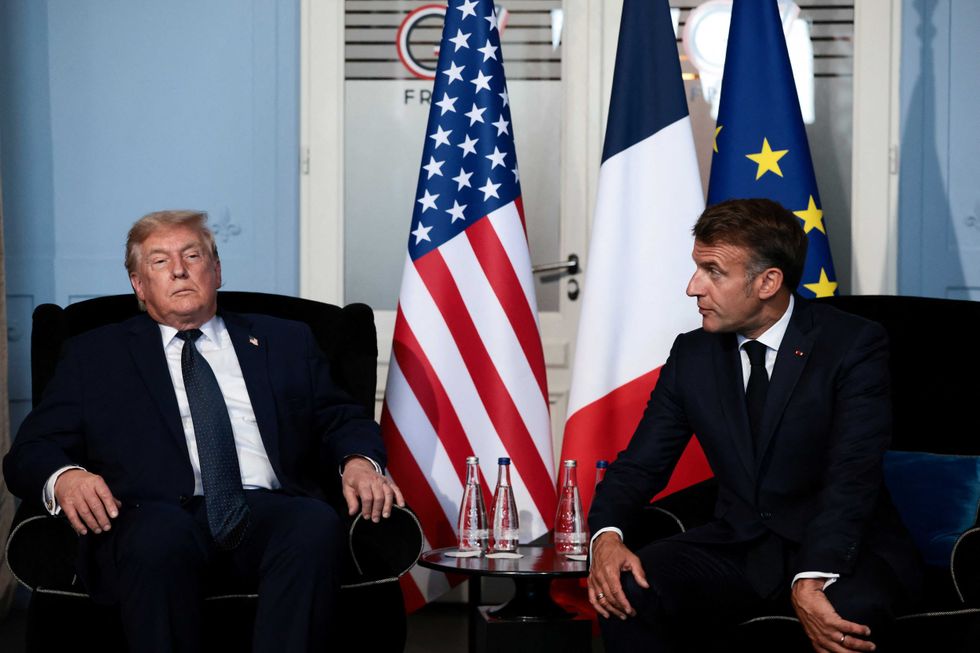
US President Donald Trump says the Strait of Hormuz is already partially opened. He speaks during a bilateral meeting with French President Emmanuel Macron. (Source: Bloomberg)
President Donald Trump’s peace deal with the Islamic Republic of Iran is in jeopardy before it can even take effect, as Israeli leaders signal no sense of obligation to end their war in Lebanon. Iranian President Masoud Pezeshkian said on Monday that “the memorandum of understanding to end the war between Iran and America is […]
The United States and Iran reached a tentative agreement Sunday to bring about an end to the war, which one Iranian official involved in the negotiations credited, in part, to Tehran’s unorthodox approach to addressing what they considered to be President Donald Trump’s “mental illness.”Investigative reporter Jeremy Scahill shared a startling revelation last week that Iranian negotiators had recruited psychologists to help navigate what they believed was Trump’s “impaired mental state.” And on Monday, Scahill provided an update on Iran’s unique approach to the negotiations, which he said Tehran partially credited for Sunday’s success.“Senior Iranian psychologists began working with the negotiating team to try to cater the messages that the Iranians were sending via mediators back to Donald Trump to try to take into account what they say as his specific mental illness and mental deficiencies,” Scahill said in an interview with Democracy Now published on Monday.“Almost quite clinically, they said [they] began to see this process yielding results as [they] worked with psychologists to send these communications to Donald Trump, and they credit that, in part, with getting to this point where Trump finally accepted some version of his manufactured and almost entirely false victory narrative.”Trump’s cognitive function has come under renewed scrutiny during his second term in office, with The Washington Post reporting last week that the president was assessed by 22 medical specialists during his most recent medical checkup, a figure “nearly double the number of specialists who assessed Trump for his past medical checkups as president.” The president has also been spotted appearing to doze off during important meetings.
Shortly after arriving in France Monday for the Group of Seven summit, President Donald Trump revealed that he may not show up to Friday’s signing ceremony cementing the tentative agreement reached between the United States and Iran to end the war.His reason, he explained, was a pre-planned dinner event.“Hey sir, are you gonna try to attend the signing ceremony on Friday?” a reporter asked Trump as he sat beside French President Emmanuel Macron."Well, it depends. [Vice President] JD [Vance] is coming in for it, he was originally going to do it – I'll probably be gone by then, we're having dinner... in a day and a half, right?” Trump said, looking to Macron for confirmation. “We're gonna be staying quite late. So I may be involved, I may not."Trump broadly boasted Sunday that his administration had reached a tentative deal with Iranian officials to bring about an end to the war he initiated back in late February. While Trump bragged of his ability to “make peace with Iran” where all presidents “failed before” him, Iranian officials instead credited their own negotiators for having recruited psychologists to help navigate what they considered to be Trump’s “mental illness."Trump on if he'll attend the Iran deal signing ceremony on Friday:"It depends... I'll probably be gone by then, we're having dinner... in a day and a half, right? We're gonna be staying quite late. So I may be involved, I may not." pic.twitter.com/Tg7H8FXZEX— Alexander Willis (@ReporterWillis) June 15, 2026