Only a small fraction of data center opponents actually live near one, according to new polling by a consulting firm that counsels leading AI labs and tech startups.Why it matters: The findings by Milltown Partners, shared first with Axios, highlight how data centers have become a stand-in for broader anger at an AI future many Americans don't want but fear they'll have to pay for.By the numbers: The public is still divided on data centers, with direct opposition not yet a majority view. But nearly half of respondents support a temporary construction ban, according to Milltown's findings.38% of respondents said they would support a data center being built near their home, while 34% would oppose it.Meanwhile, 49% say they support a moratorium on construction of new data centers, while only 16% oppose a moratorium.Another 27% neither support nor oppose a moratorium and 8% say they don't know.Most opposition to data centers isn't coming from neighbors. Only 8% of the respondents who oppose data centers say they know of one or more data centers near their home, the poll found.Between the lines: The split suggests many voters aren't categorically anti-data center, but they are wary of the pace and terms of the buildout.A temporary moratorium could be a way to force companies and policymakers to answer questions about costs, water use and who benefits.Threat level: Both Steve Bannon on the right and Bernie Sanders on the left have attacked AI as a threat to working people."This isn't happening in a vacuum. The AI transformation is arriving at a time when Americans already feel angry, insecure and pessimistic," Milltown Partners researcher Tom Brookes says.Context: Pew Research Center also found in an April poll that living near an existing or planned data center doesn't have much effect on Americans' views of the facilities.Two-thirds of planned data centers are in rural areas, even though 87% of existing data centers are in urban ones, Pew found.What they're saying: Warnings from tech leaders that AI will bring mass job loss are handing critics more ammunition.If unemployment moves by two percentage points and people think this is caused by AI, we will see a "real populist backlash," Andy Hall, professor at Stanford's graduate school of business and senior fellow at the Hoover Institution, wrote on X last month. The intrigue: The backlash is hitting just as tech companies look for new ways to staff their data centers, at least temporarily."People are building massive scale data centers everywhere and they're facing a severe labor shortage. That's the gap we want to fill," Zhou Xian, co-founder and CEO of Genesis AI, tells Axios.But not always with humans. Genesis AI just launched a new general-purpose robot built to move in complex environments, like data centers.The fine print: Milltown Partners, a global public affairs and communications firm, surveyed 6,872 registered voters between May 10 and May 20 recruited from online panels. The margin of error is 3 percentage points.The polling oversampled voters in Texas, Georgia, Michigan, California, and North Carolina — states with current data center projects.The bottom line: The massive windowless warehouses packed with computing infrastructure have become a physical symbol of wider AI anxiety.
Liberal comedian Bill Maher has beef with his own audience, calling them “a bunch of f**king liars” over the Obama library. The new Barack Obama Presidential Centre’s […]
President Trump on Sunday ordered immediate repairs to the Lincoln Memorial Reflecting Pool after alleging vandalism had damaged the recently renovated landmark.Why it matters: Trump's direct intervention elevates a maintenance dispute at a national landmark into a public test of a high-profile renovation project. Screenshot: President Trump/Truth SocialThe president said on Truth Social Sunday he had personally inspected the damage. A day earlier, he wrote he had met with contractors because much of the pool will probably have to be drained for "necessary repairs."By the numbers: Initial work at the site cost an estimated $14 million.The New York Times reported last week that a no-bid $1.7 million contract was awarded in the spring to a firm tied to a contractor named John "JJ" Cafaro to install a water-purification system.Cafaro is an Ohio businessman and longtime Trump donor, who was convicted in 2002 in a conspiracy-to-bribe case involving a U.S. congressman, and again in 2010 for making a false statement.State of play: Trump announced last November plans to "fix" the 2,000-foot-long pool, including painting it "American flag blue" ahead of the nation's 250th anniversary celebrations on July 4.Workers refilled the pool and completed renovations by June 5, but days later algae turned the water green — a recurring problem at the landmark.Trump wrote on Truth Social Saturday that multiple people had been arrested in connection with alleged vandalism of the pool.Olympian David Hearn told the Washington Post he was among those arrested, but the 67-year-old said he didn't vandalize, "destroy or break or peel anything." He said he just wanted to touch part of the new blue liner that had detached from the bottom of the pool.Zoom in: Trump alleged vandals had used "form of knife or blade, and put a 250 foot long gash" into its facade."They also poured corrosive and destructive chemicals into the Pool," he alleged, without providing evidence of either allegation.The National Park Service has poured hydrogen peroxide into the pool to treat the algae, which the Wall Street Journal notes can be used as a paint remover.What they're saying: U.S. Attorney for D.C. Jeanine Pirro said on Fox News Sunday that anyone found vandalizing the pool would be prosecuted."If there are more serious products that are put into the Reflecting Pool to create more algae or a bigger problem, then we'll consider more serious charges," Pirro told "The Sunday Briefing" host Peter Doocy."But make no mistake, making D.C. beautiful is a priority. And if you damage, vandalize or do anything to impact something like the reflective pool, you can be prosecuted."Representatives for the White House did not immediately respond to Axios' request for comment.
Despite being raised in a Christian home, Haley Furst spent several of her young adult years identifying as a man. She even built a significant social media following around advocacy for transgenderism, abortion, and other left-wing issues.But then Jesus found her in that darkness, pulled her out, and has been healing her ever since.On this episode of “Relatable,” Haley shares her incredible testimony with Allie Beth Stuckey. Although as a child Haley never questioned her gender, social media indoctrination sowed confusion in her young teenage years. In secret, she slowly began to question God’s design for marriage and gender.Then at 16, she was sexually assaulted.“It resulted in me becoming really uncomfortable with myself, with my body. And so, you know, I started to dress in a way that I felt protected me. ... I cut my hair short. I started to wear what would be called men’s clothing,” she tells Allie.Even though Haley was not planning to identify as a man despite her masculine look, her teachers began expressing support for her new appearance and inquired about what name and pronouns she wanted to use.“These YouTubers, these creators that I would watch ... they all had something in their past that was hard, and [transgenderism] seemed to work for them, and people are telling me, ‘Hey, this is what seems to be happening in your life.’ ... I started to believe it for myself,” she recounts.She then started identifying as nonbinary and using they/them pronouns.“I was really, really welcomed in when I started to do that. I began to have more friends. I was a part of an LGBTQ club in my high school, and for the first time in my life, I started to feel like I had an identity that I could cling to that would open doors,” she tells Allie.At 17, she told her parents she was transitioning into a man, leading to a tumultuous final year at home. When she turned 18, Haley moved in with a boyfriend and immediately began cross-sex hormone therapy. Roughly two years later, she had a hysterectomy.All this time, Haley documented and built a large online community around her “transition.”“I would make a lot of videos about my experience coming out and coming out to a Christian family, and a lot of people would identify with that, and we would have discussions ... to encourage each other, to empower each other, and kind of fight against that ‘oppressive’ Christian belief,” she explains.With her Christian foundation withering, Haley began to support and speak on more progressive issues, including abortion, Black Lives Matter, and even “anarchal communism.”But when a bad breakup flipped her entire life upside down, Haley found herself in a deep depression working as a Starbucks barista. Even though she was surrounded by people in the LGBTQ+ community who were hostile to Christianity, she had a couple of co-workers who had recently become Christians.“One evening when we were working together, [a coworker] started to read the Bible to me. ... What he had actually read to me was Romans 8, and he had gotten to Romans 8:38, and something in my heart clicked where I had remembered that scripture from my youth,” Haley recounts.“I became very sure that [Jesus] was what I was needing. ... But I had told myself that there was no way I could ever be a Christian because I’m a leftist, because I’m transgender. ... And so I can’t give my life to Jesus because Christians are conservative, straight people, and I am not that, and I will never be that.”This tension created a deep anger in Haley, but after months of wrestling, she couldn’t shake her desire to follow Jesus.“I prayed the prayer. I said, you know, like, ‘Christ, if you would still have me, I want you come make your home in my heart.’ And right in that moment, the presence of God fell so heavy in that room that I physically could not stand up. I kept trying to get up, and I would just fall on my knees, and I just began to weep,” she says.“The feeling of Christ entering my heart and the experience of his love in that moment, just a touch of his love, made me mourn all the years I had spent apart from that, and I knew in that moment that I can never spend one day of my life apart from that ever again.”But despite this newfound deep faith, Haley refused to de-transition. In fact, she went “further into [her] transition” in an effort to become so indistinguishable from a biological male that people in her new church couldn’t see her true identity.This secretive life, however, consumed her. The anxiety became too much to bear, and one day Haley confessed to her pastor, who pledged to walk with her as she pursued Jesus. Other congregants did the same.“I never had one person ever confront me about [being transgender],” Haley says.But the Lord continued to press on her heart.“I remember one evening thinking to myself, I don’t think I'm going to heaven as a man. ... I don’t think I’m going to look at Jesus, and I don’t think he’s going to see a man.
The deal President Donald Trump's administration struck with the Iranian regime has become a joke in Washington, D.C., and it's left the president embarrassed and flailing for an answer, according to one analyst. Last week, the Trump administration and the Iranian regime agreed to a deal that would immediately reopen the Strait of Hormuz, a critical waterway that accounts for roughly 20% of the world's energy trade, and postpone more substantive talks until later in the week in Switzerland. Those talks were scheduled to take place on Friday, but were delayed until Saturday due to ongoing fighting between Israel and Hezbollah in Lebanon. The Iranian regime also announced on Saturday that it was going to shut the Strait of Hormuz again.Joe Cirincione, a member of the Council on Foreign Relations, told MS NOW's Alex Witt on "Alex Witt Reports" that the negotiations have soured to the point where Trump has resorted to his "Tony Soprano" negotiation tactics by threatening the Iranians with violence. That has only seemed to further deteriorate the talks, even though Trump is telling "This is what happens when he doesn't have any cards to play," Cirincione said. "He's in a weak position, and now he's embarrassed by this deal. His base is revolting against it. If he were to force this deal to be presented to the United States Congress, I don't think it would pass, and that's not something I would have said just a week ago.""So, he's frustrated. He's lashing out. He's acting irrationally, as he often does, and basically lying about what's going on," Cirincione added. "The joke in Washington, D.C., is that Trump told us this war was going to end with unconditional surrender. He didn't tell us it was going to be our unconditional surrender," he continued.
Objections comes as Trump threatens to renew attacks on Iran if it doesn’t rein in its proxy in LebanonUS political figures from left and right voiced fresh objections on Sunday to Donald Trump’s provisional deal with Iran – even as the US president made new threats while Vice-President JD Vance hailed progress during the first round of direct peace talks in Switzerland.Senator John Cornyn, a Texas Republican who recently lost his primary battle for re-election, posted a line on X from a Wall Street Journal article on how rogue regimes evade US economic warfare. It said: “Iran’s ability to withstand sanctions so far exposes a hard fact for Washington: economic pressure has largely failed to cow rogue regimes, as they game out more ways to sidestep US restrictions.” Continue reading...
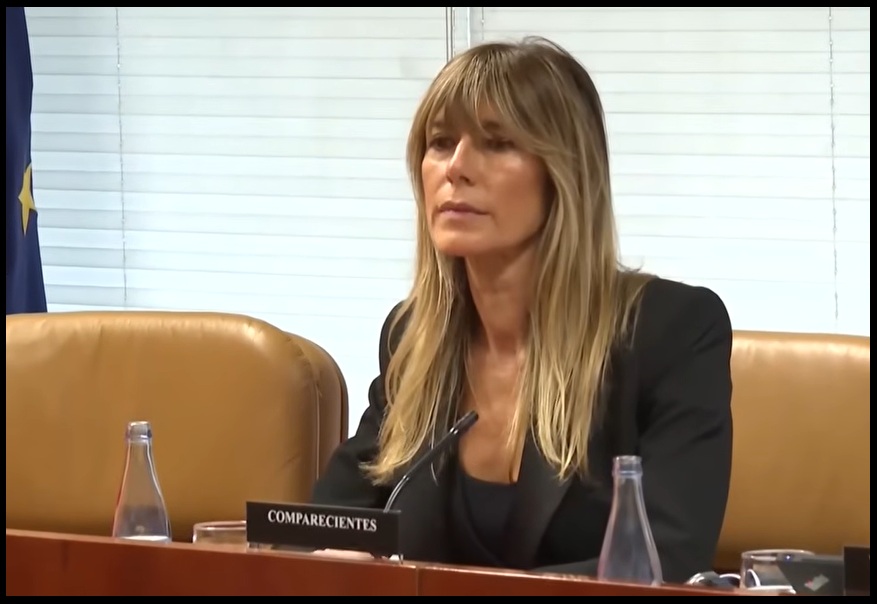
A familiar pattern emerges as the wife of Socialist Spanish Prime Minister Pedro Sánchez, is indicted on corruption charges and remanded to give up her passport and return to court for check-in every 15 days until trial. BARCELONA, Spain (AP) — A judge on Saturday ordered the wife of Spanish Prime Minister Pedro Sánchez to […]
The post Wife of Socialist Spanish Prime Minister Now Facing Corruption Charges, Influence Peddling, Embezzlement – Passport Surrendered appeared first on The Last Refuge.
NBC’s Garrett Haake, filling in for Kristen Welker as Moderator of Meet the Press, joins Sunday TODAY’s Willie Geist to discuss the reaction from Americans and some of President Donald Trump’s allies to his handling of the Iran war. “Only about one-third of the country say they support how the President has handled the war so far. He needs the country to be with him on how to handle the peace, or else this could be a disaster for Republicans in the midterms,” Garrett says.