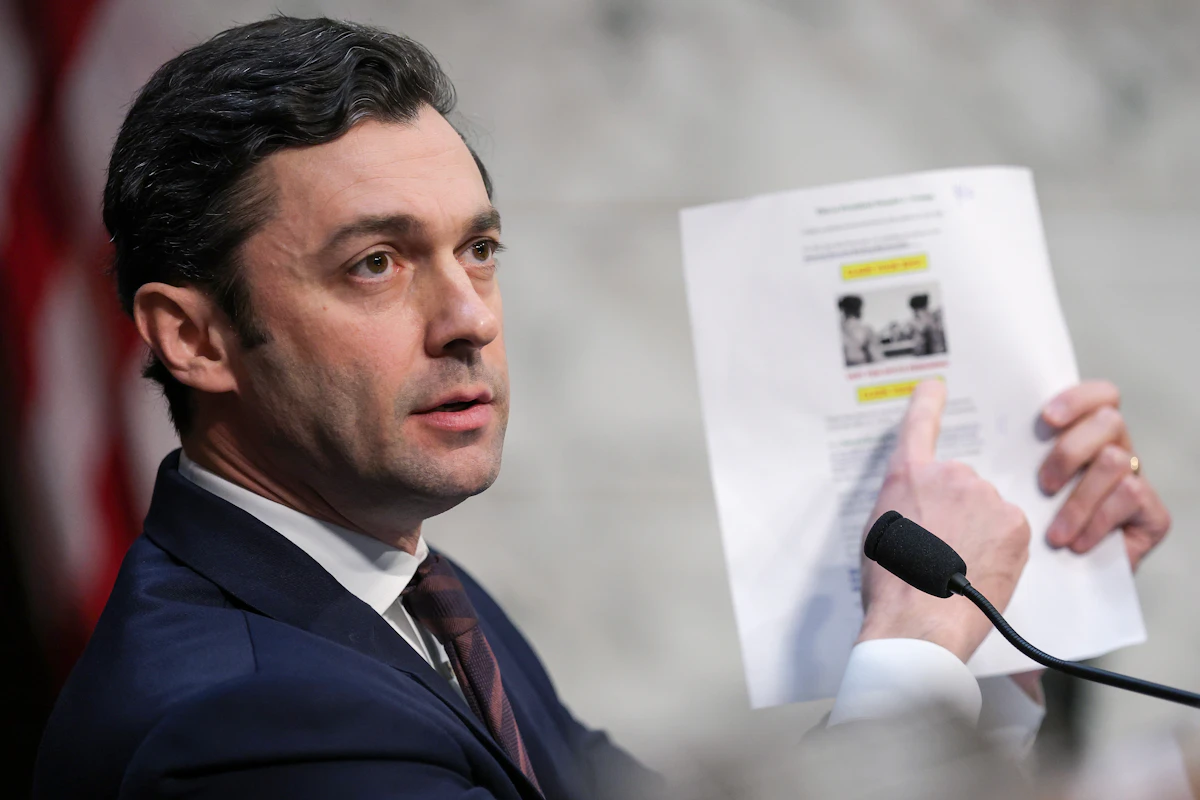
What Suddenly Made Jon Ossoff Into Such a Democratic Rock Star?
Source: The New Republic · Bias: Left
Summary
A year ago, Senator Jon Ossoff seemed like he might be a one-hit wonder—elected in that short period from November 2020 to January 2021 when Georgia turned blue, then defeated in his reelection bid and quickly forgotten. Or if he won reelection, always outshined by his home state colleague, the eloquent Raphael Warnock, who still leads the Atlanta church that Martin Luther King Sr. and Jr. once helmed. But over the last year, Ossoff has become a Democratic star. His strong fundraising and poll numbers have made the 39-year-old the clear favorite in his reelection bid this fall, delighting Democrats who worried the party’s 2022 and 2024 struggles in Georgia suggested that the state had gone back to being red. Ossoff’s campaign ads and lines from his speeches are going viral and being borrowed by others in the party, most notably his February denunciation of what he called the “Epstein class.”And while California Representative Ro Khanna, Kentucky Governor Andy Beshear, and many other ambitious Democrats are flying to fundraisers across the country and appearing on whatever podcasts they can to drum up interest in their presidential bids, there is considerable buzz about a 2028 Ossoff candidacy—even though the Georgian has done nothing to stoke it. “The moment he wins in November he becomes a front runner for 2028,” journalist Mehdi Hasan tweeted a few months ago, along with a clip of one of Ossoff’s speeches. Ossoff recently had to publicly declare that he was not considering a presidential run, as such speculation was becoming so loud that it might have hurt his Senate campaign. How did Ossoff go in less than a decade from baby-faced documentary filmmaker who couldn’t get elected to the House to dream presidential candidate for some Democratic insiders? A combination of luck, skill, and circumstance. Ossoff’s political career didn’t look promising when it started nine years ago. He ran in a special election for a U.S. House seat in the Atlanta suburbs in early 2017. It was the first campaign for Ossoff, who had worked as a legislative aide on Capitol Hill before leading a film company called Insight. The 30-year-old candidate vastly out-raised most of his rivals and picked up endorsements from Stacey Abrams, the late John Lewis, and other prominent figures in Georgia Democratic politics. But after qualifying for a runoff, he was narrowly defeated by Republican Karen Handel. Some Democrats felt Ossoff had lost a winnable race because he didn’t have a clear message or strong platform. His defeat looked even worse after another Democrat, Lucy McBath, beat Handel in that same district in November 2018. Ossoff didn’t give up, though. That House race drew national attention, because it was one of the first elections after Donald Trump’s surprising 2016 victory. So Ossoff had cultivated a national fundraising base. He used that to run for U.S. Senate in 2020 and win a competitive Democratic primary. He and Warnock then effectively campaigned together to defeat two incumbent Republicans in the January 2021 runoff that delivered a U.S. Senate majority to Democrats. Ossoff was officially declared the winner of his race on January 6, 2021—the day of the Trump-led insurrection.At the time, Ossoff’s victory seemed as much about Abrams, Warnock, Trump, and Joe Biden as his own political skills. A backlash against Trump in the Atlanta suburbs and Biden’s popularity back then appeared to have boosted both Ossoff and Warnock. Abrams had spent years mobilizing voters in the state and convincing Democratic donors that Georgia was winnable. And having a charismatic Black candidate (Warnock) running at the same time no doubt helped Ossoff win more African American votes in heavily Black Georgia. But his Senate career suggests that Ossoff is quite savvy on his own. He seems to have started preparing for reelection from the moment he arrived on Capitol Hill, taking a number of steps that would appeal to independent and even conservative-leaning voters in Georgia. He and his aides have focused less on making national news than on being hyperresponsive to Georgia residents. Ossoff told The Washington Post that each week he calls a few Georgians who have contacted his office for help to assess how well his aides are doing in constituent service. In his committee work, Ossoff has worked with his Republican colleagues on investigating and issuing reports on government malfeasance, such as substandard military housing. Ossoff largely voted the party line when Biden was in office, but he didn’t take many high-profile stands that would paint him as super-progressive. Early last year, after Trump’s win, Ossoff took even more aggressive steps to inoculate himself politically. He supported the Laken Riley Act, an immigration bill written by congressional Republicans that calls for the detention of undocumented immigrants if they are arrested for minor crimes like burglary, even if they have not yet been convicted.
Related Coverage
- Bannon warns the ‘old politics are gone’ amid Democrat socialist surge (Far Right — BizPac Review)
- Wes Moore on democratic socialist gains: Voters want ‘someone who is going to fight for them’ (Center — The Hill News)
- Karoline Leavitt on the ‘Full Blown Communist Revolution’ Happening Thanks to Democrats (Video) (Far Right — The Gateway Pundit)
- The Democrat Party Is Literally Communist, and the Voters Admit It! (VIDEO) (Far Right — The Gateway Pundit)
- Vance: Rep. Ocasio-Cortez will lead Democrat presidential race in 2028 (Far Right — One America News Network)
- Time for Democrats To Fret About Platner? (Center Right — RealClearPolitics - Homepage)
- Senator John Fetterman Reveals the One Thing That Would Make Him Leave the Democrat Party (VIDEO) (Far Right — The Gateway Pundit)
- Disgraceful Democrats (Far Right — BizPac Review)
Daily Analysis
Read the full Parallax Pulse for May 6, 2026 — an AI-powered analysis of how Left and Right media covered the biggest stories this day.
More Headlines From May 6, 2026
- FBI Director Kash Patel Outlines Secret Room in FBI Headquarters Not on Building Blueprints (Far Right)
- Do you say 'wash' or 'warsh?' Here's where the pronunciation comes from (Center)
- Republicans fill out the House battlefield with challengers in key districts (Center Left)
- Honda Cancels EV Plant in Canada – Despite Prior Deal for Billions in Subsidies (Far Right)
- Opinion | A Tricky Handoff at the Federal Reserve (Center)