Reason.com
Celebrating American Freedom Means Celebrating Juneteenth
June 19 commemorates the day the final 250,000 people held in slavery gained their freedom. It deserves a place in any celebration of American liberty.
Center Right
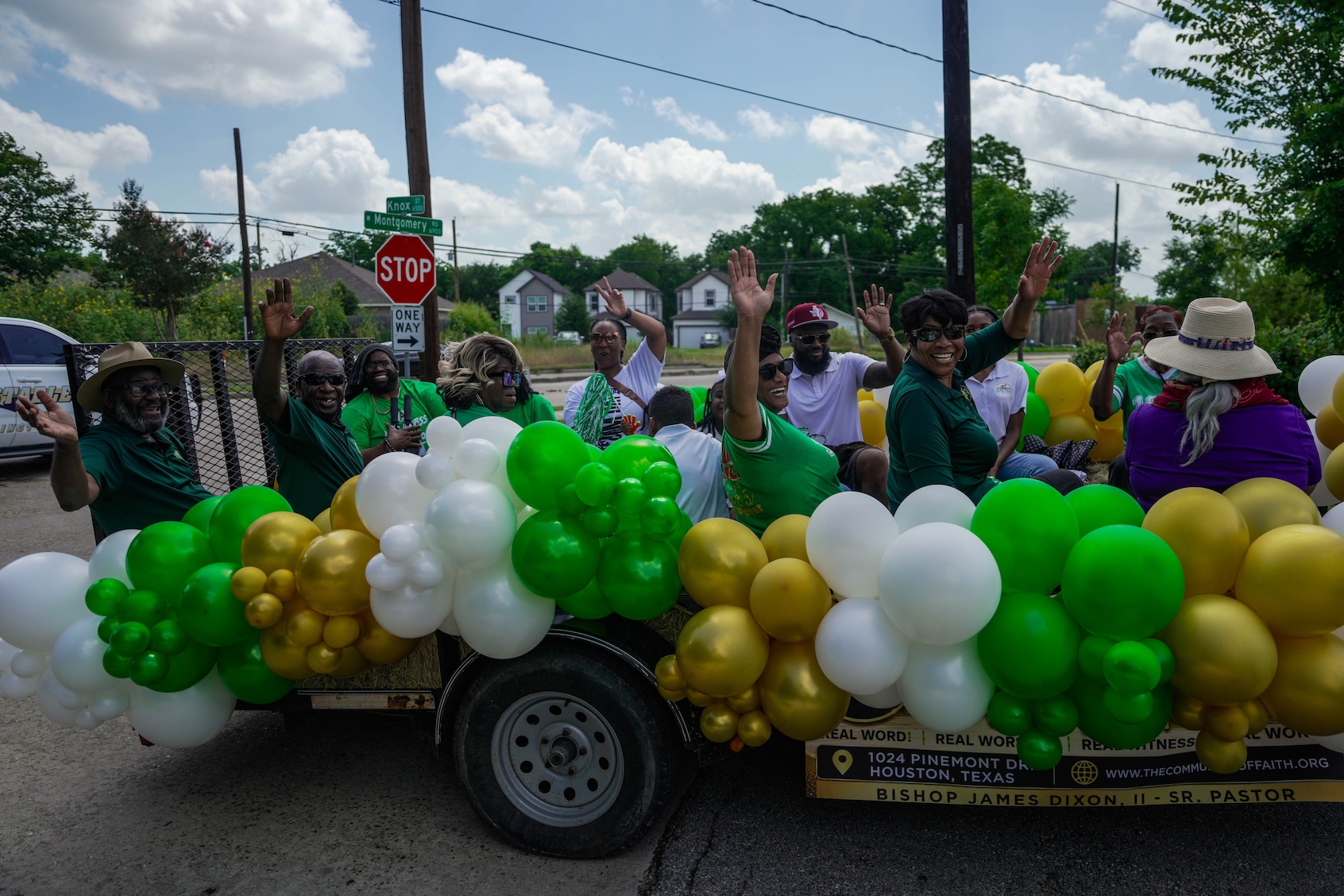
The holiday marking slavery's end has always carried contradictions. In the Trump era, more so than ever
June 19 commemorates the day the final 250,000 people held in slavery gained their freedom. It deserves a place in any celebration of American liberty.
We feature a special broadcast marking the Juneteenth federal holiday that commemorates the day in 1865 when enslaved people in Galveston, Texas, learned of their freedom more than two years after the Emancipation Proclamation. We begin with our 2021 interview with historian Clint Smith, originally aired a day after President Biden signed legislation to make Juneteenth the first new federal holiday since Dr. Martin Luther King Jr. Day. Smith is the author of How the Word Is Passed: A Reckoning with the History of Slavery Across America. “When I think of Juneteenth, part of what I think about is the both/andedness of it,” Smith says, “that it is this moment in which we mourn the fact that freedom was kept from hundreds of thousands of enslaved people for years and for months after it had been attained by them, and then, at the same time, celebrating the end of one of the most egregious things that this country has ever done.” Smith says he recognizes the federal holiday marking Juneteenth as a symbol, “but it is clearly not enough.”
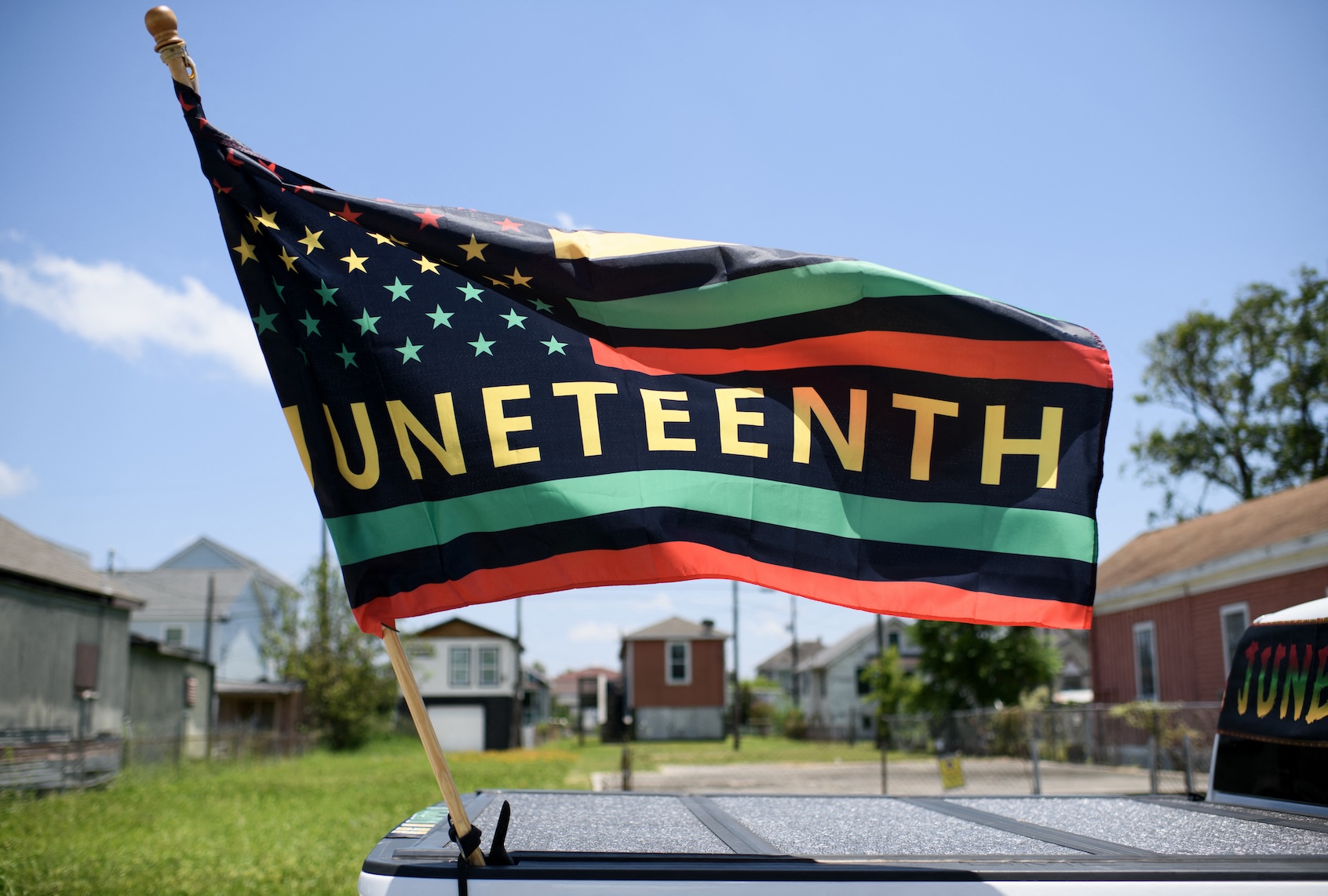
For Black Americans, Juneteenth is a love letter to their history of resistance, including to the president

In December 2025, Trump axed today’s holiday — Juneteenth, the official celebration of the Emancipation Proclamation — from the free admission days at the more than 100 national parks across America. He also axed Martin Luther King Jr. Day as a free admission day. Instead, he substituted his own birthday, June 14, as a free admission day. There you have it: the venal combination of Trump’s white supremacy and his malignant narcissism. It’s much the same with Trump’s celebration of America’s 250th birthday. He has erased any mention of the slavery that scarred most of America’s first century and of Jim Crow, during most of the next — and has instead merged the nation’s anniversary with his own 80th birthday. In 2020, Trump scheduled a campaign rally for himself on Juneteenth in Tulsa, Oklahoma — the site of the 1921 Tulsa Race Massacre. (After a wave of criticism, he rescheduled it for the next day.) America can probably survive Trump’s malignant narcissism. It’s unclear how well we can endure his white supremacy. On May 21, Trump eased the regime’s cap on the number of refugees who can enter the United States by 10,000 slots — from 7,500 to 17,500 — all reserved for white South Africans. The ostensible reason: an “emergency … due to recent increases in the incitement of racially motivated violence on the part of the Government of South Africa.”Rubbish. According to investigative reporters in South Africa, such as Nechama Brodie, who has written extensively about farm murders there, white South Africans are not being persecuted. “Studies consistently show that white South Africans have the highest employment levels, highest education levels and highest income levels of all groups in South Africa, despite being a minority,” Brodie said.Trump’s advocacy for white Afrikaners is in sharp contrast to his dismantling of America’s refugee program for people of color (between 2004 and 2019, refugee allocations were divided among Africa, East Asia, Europe and Central Asia, Latin America/Caribbean, and Near East/South Asia). Trump has a long history of white supremacist activities, beginning with the 1973 lawsuit brought against Trump management for allegedly discriminating against Black renters. He took out full-page ads in 1989 calling for the death penalty for the five Black and Latino teenagers eventually exonerated in the Central Park jogger case.Trump played a major role in spreading the debunked, racially charged conspiracy theory that Barack Obama was not born in the United States. He infamously said there were “fine people on both sides” of the violent white supremacist rally in Charlottesville. He has hosted prominent white nationalist Nick Fuentes at his Mar-a-Lago residence. He has sought to erase Black history from America’s classrooms. He’s eliminated all government diversity, equity, and inclusion programs and is trying to stop them in the private sector. On this Juneteenth, it is important to acknowledge — both in sadness and in outrage — that the person occupying the position of president of the United States is a white supremacist.Robert Reich is a professor of public policy at Berkeley and former secretary of labor. His writings can be found at https://robertreich.substack.com/

Balkan FIFA World Cup fever has officially hit the city of Inglewood.

Today, Bloomberg's Mike Mckee discusses newly minted Fed Chair Kevin Warsh's impact on future decisions as the Fed takes on a hawkish bent under his leadership. Then, Sherry Paul, managing director and private wealth advisor at Morgan Stanley Private Wealth Management, on how she is approaching the investment market as tech stocks dominate the majority of growth. Plus, Deep Fission CEO Liz Muller is joined by Bloomberg's Will Wade to discuss strides in nuclear power innovation as her company begins trading. Finally, Randall Williams recounts the New York Knicks championship ticker tape parade and previews this weekend's slate of World Cup games. (Source: Bloomberg)
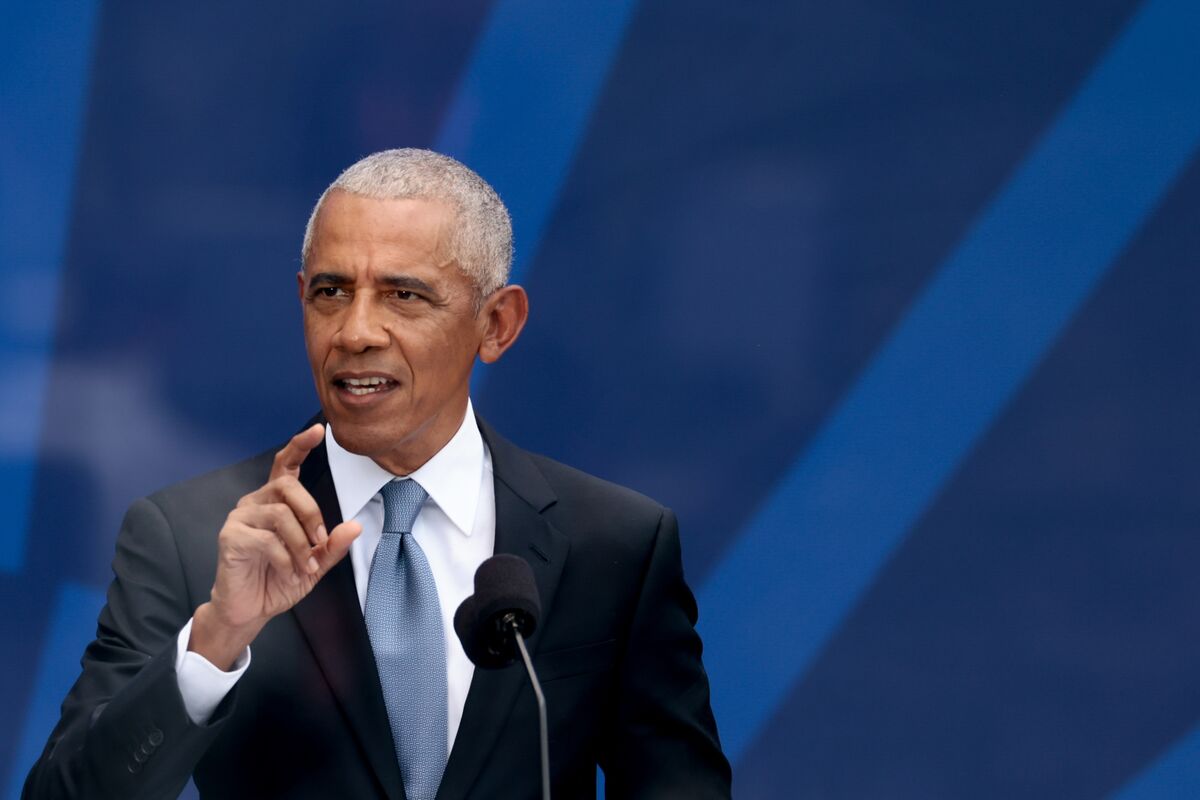
Former president calls for civility, inclusivity as he unveils $850 million campus
The campus opens to the public this weekend with a museum, community amenities and more to honour the 44th US president.