Watching Hoppers With My Kid Was Moving—and Uncomfortable
Source: The New Republic · Bias: Left
Summary
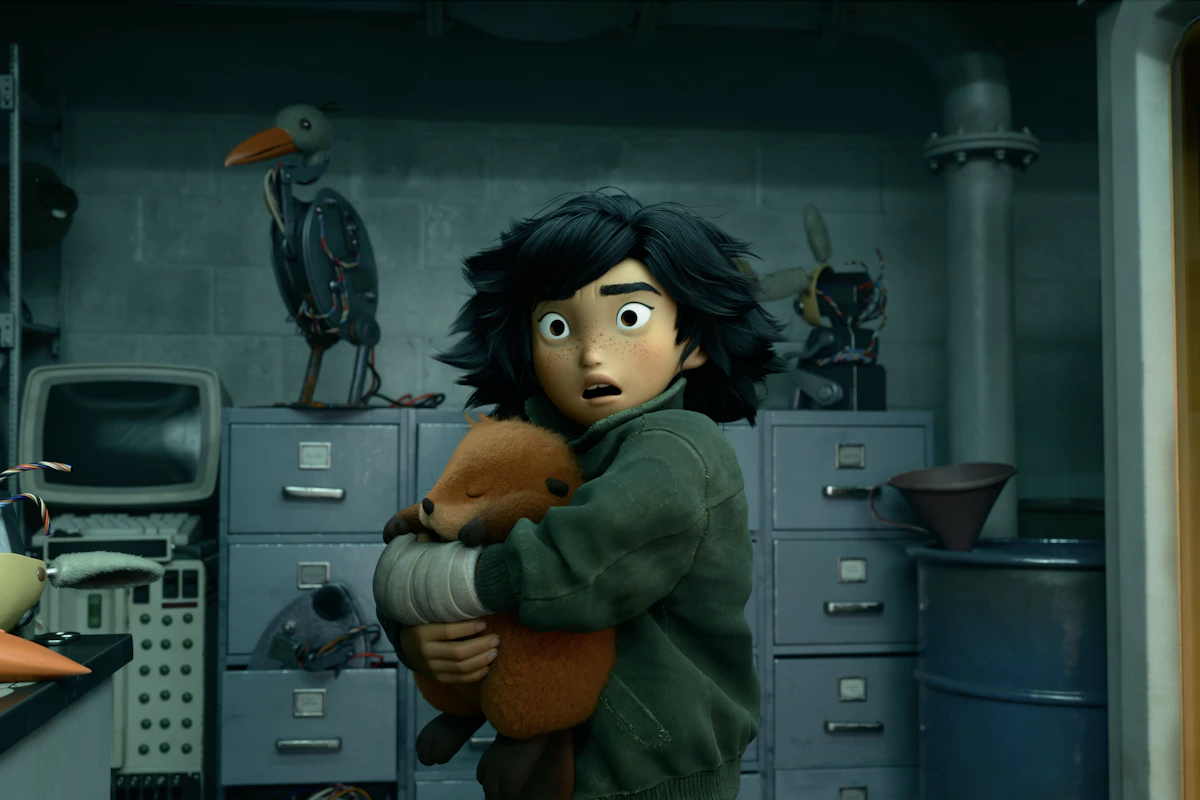
Hoppers, Pixar’s latest feature film, opens with a flashback. Mabel, who will grow up to be our teenage protagonist—a skateboard-riding environmentalist staging one-woman protests in defense of local wildlife—is just a child, staring at her classroom terrarium, home to a much-poked and prodded turtle. She waits until the recess bell rings and her classmates sprint outside before pulling the turtle out of the tank and stowing it carefully in her backpack. Soon, she’s cramming the backpack with every critter in the building—a guinea pig, birds, mice, a snake—and making a run for freedom. But the heist comes to an ignominious end when Mabel is intercepted, and we see on her face—as she’s reprimanded by teachers and parents—a deep sense of anger and sadness, not just that her jailbreak was foiled, but that she’s the only one who sees the need for a jailbreak at all. Why don’t any of her classmates, her teachers, or her parents give a damn? The lonesomeness of Mabel’s fight for animals remains a central theme in Hoppers. We see it again immediately upon cutting to the present day, when Mabel stands alone in front of a demolition crew, trying to stop the bulldozing of a wooded glade—her childhood haven—that the town mayor, Jerry, wants to turn into a new expressway, “getting you where you need to go up to four minutes faster.” Mayor Jerry tells Mabel that she’s the only one who wants to save the glade, whereas everyone in town wants the highway. To prove him wrong, Mabel launches a petition drive, which leads to a montage of doors getting slammed in her face—once more, it seems like Mabel is the only one who cares.After that, the story becomes increasingly zany, as Mabel discovers an experimental “hopper” technology that allows her to Avatar herself into a lifelike beaver robot and set off on a journey to recruit real beavers to return to the glade (since beavers can bring back the wetlands that might create a permitting obstacle to Mayor Jerry’s overpass plans—because yes, this Pixar movie has a distinctly anti-abundance bro sensibility).But throughout these madcap adventures, the film reiterates that taking the plight of non-human animals seriously can be a lonely endeavor. In one moment of despair, Mabel turns to a beaver she has befriended, and cries, “Why doesn’t anyone else care?” Watching this movie with my five-year-old son beside me was a peculiar emotional experience. He is a committed vegetarian, and sometimes—particularly when he sees people he loves, like his cousins or grandparents, eating meat—he’ll get sad or frustrated, unable to wrap his head around how people he knows to be good could be so unconcerned about the suffering of other living creatures. But for the most part, he still lives in a world where feeling empathy and compassion for non-humans is the norm. It’s almost a universal truth that kids love animals, and this fondness is generally encouraged. Until, at some point, it’s not; at some point, we become adults, and adults are supposed to put aside childish preoccupations with animals and center our worldview on people. Understanding humans as the only beings whose welfare truly matters is practically a marker of one’s maturity. And to resist this dominant perspective is to invite ridicule.Anyone who’s spent time as a vegetarian or vegan knows a bit about that ridicule. The internet is full of articles with headlines like “Why do people hate vegans so much?” This animus isn’t just anecdotal—a peer-reviewed study from 2015 found that omnivores evaluated vegetarians and vegans more negatively than people with other dietary restrictions, with those motivated by animal rights or environmental concerns treated particularly poorly. And new versions of this scorn are regularly evolving, with perhaps the most recent iteration coming from the billionaire funders and millionaire pundits behind the abundance movement, who have endeavored to reframe environmentalists—not oligarchs or fascists, but rather people like Mabel fighting to protect their local glades from expressways—as the source of all society’s ills.Of course, there have been valid reasons to criticize the environmental movement over the years, not least the white supremacy of a number of its early founders. And given that our world is overflowing with more human suffering than any one mind could ever hope to get a grip on, it’s a completely reasonable choice to limit one’s empathic focus to our species.But that doesn’t explain why people so frequently treat the destruction of nature and the suffering of animals as undeserving of legitimate concern. If misery and loss are bad, then these are among the greatest catastrophes taking place today. Around 10 billion chickens, turkeys, cows, and pigs are slaughtered in the U.S. every year.
Related Coverage
- WATCH live: 250th celebration event at Mount Rushmore (Far Right — WorldNetDaily)
- Where to watch fireworks in LA for the Fourth of July (Right — New York Post)
- Why All Patriots Should Watch The Patriot On America’s 250th Birthday (Far Right — The Federalist)
- WATCH LIVE: Mamdani speaks on New York’s role in America’s founding ahead of Fourth of July (Center Right — Washington Examiner)
- How did 16 hidden Ohio kids go undetected for years? Experts weigh in (Center — NewsNation)
- Zohran Mamdani gives speech to mark US’s 250th birthday in New York – watch in full (Center Left — US news | The Guardian)
- Penelope Cruz, Javier Bardem and Rosalía watch Spain crush Austria at World Cup (Right — New York Post)
- WATCH: Controversial SCOTUS decision strikes a divide among lawmakers (Right — Latest Political News on Fox News)
More Headlines From March 17, 2026
- GOP lawmaker blasts Joe Kent’s resignation over Iran war: ‘good riddance’ (Center)
- Rubio Urges Korea to Back Hormuz Efforts as Trump Ups Pressure (Center)
- Joe Kent Wasn’t Involved In Iran War Planning, Intel Official Says (Right)
- Trump's Mass Detention Campaign (Center Right)
- 'Insulting and laughable': Trump administration slams Joe Kent's resignation protesting Iran strikes (Right)