Trump Throws Tantrum, Holds Housing Bill Hostage
"This bill is a major step toward reducing housing costs for millions of American families, and Donald Trump just doesn't care," Elizabeth Warren told HuffPost.

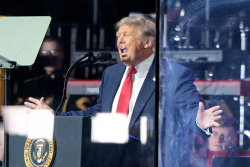
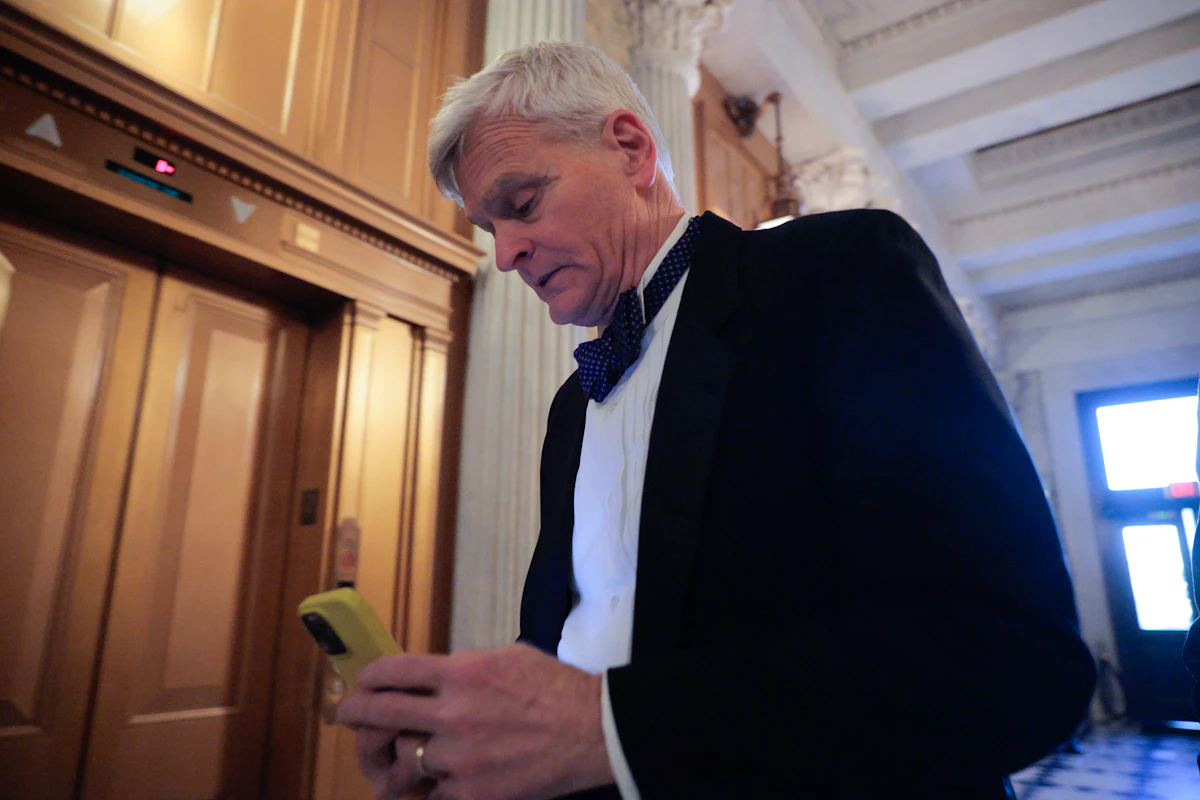
Republican senators proved yet again that their spines are made of pudding on Wednesday, rejecting a resolution to limit President Donald Trump’s war powers, the AP reported. The flip-flop came after Trump blew up at GOP senators for voting “yes” on a similar bill just one day earlier. He got into a shouting match with Louisiana Senator Bill Cassidy, calling him a “lunatic” for voting with Democrats to pass the legislation. Cassidy told reporters after the meeting that he had lost his temper. According to Cassidy, he berated Trump for not being clear with Congress, and with Americans, about what’s going on in Iran. But it turns out Cassidy, who lost his primary election last month to a Trump-backed opponent, just needed a little hand holding. After the heated exchange, Cassidy was invited to a personal briefing at the White House from JD Vance and Middle East envoy Steve Witkoff, according to the AP. He then went back to Capitol Hill and promptly voted the other way on a nearly identical war powers bill. “I want to thank Vice President Vance and Special Envoy Witkoff for the thorough briefing this afternoon on Iran. I appreciate the quick invitation to the White House to address many of my concerns,” Cassidy posted on X.Republican Senator Rand Paul also switched his vote. Paul, who has voted multiple times with Democrats to block the war in Iran, voted “present” as “a way to give the President more space and leverage to negotiate a lasting peace,” he posted on X. Trump celebrated the news on Truth Social, thanking Senators John Thune, Lindsey Graham, and Bernie Moreno, and noting that Cassidy and Paul had changed their votes. “This vote puts Iran on notice!” he wrote. Ultimately, the back-and-forth on the bill doesn’t change much: Both votes were largely symbolic, and neither resolution would have had the power to actually force Trump to change his actions in Iran. But this vote symbolizes something we already knew: that even the Republicans who claim to have principles will gladly sacrifice them at the altar of Trump.
"This bill is a major step toward reducing housing costs for millions of American families, and Donald Trump just doesn't care," Elizabeth Warren told HuffPost.
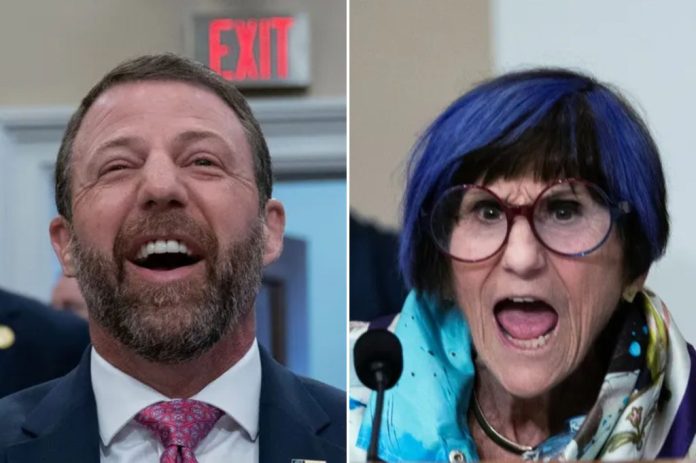
House Appropriations Subcommittee on Homeland Security Chairman Mark Amodei (R-NV) intervened on behalf of Rep. Rosa DeLauro (D-CT) during a particularly heated segment of a hearing with Homeland Security Secretary Markwayne Mullin. Order at the committee broke down when DeLauro, the ranking member of the full House Appropriations Committee, began criticizing Mullin’s Department of Homeland Security over […]
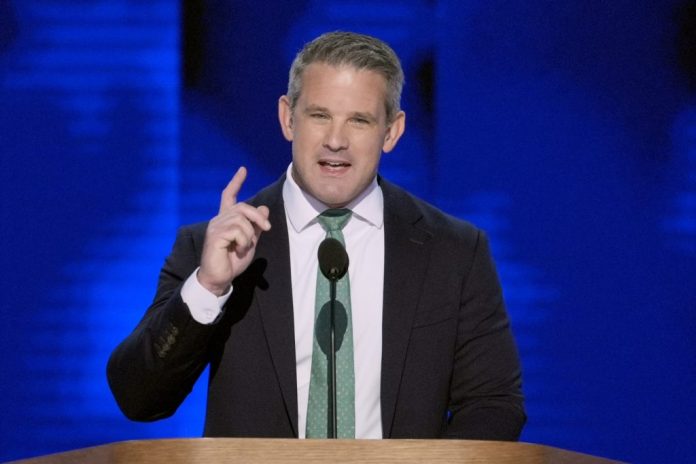
Former Rep. Adam Kinzinger (R-IL) announced on Thursday that he created a new political action committee to support candidates who possess the “courage” to stand up against the Trump administration and protect Democratic institutions. Back the Bold, the official name of the PAC, is aimed at elevating Democratic and independent candidates who challenge the Trump […]
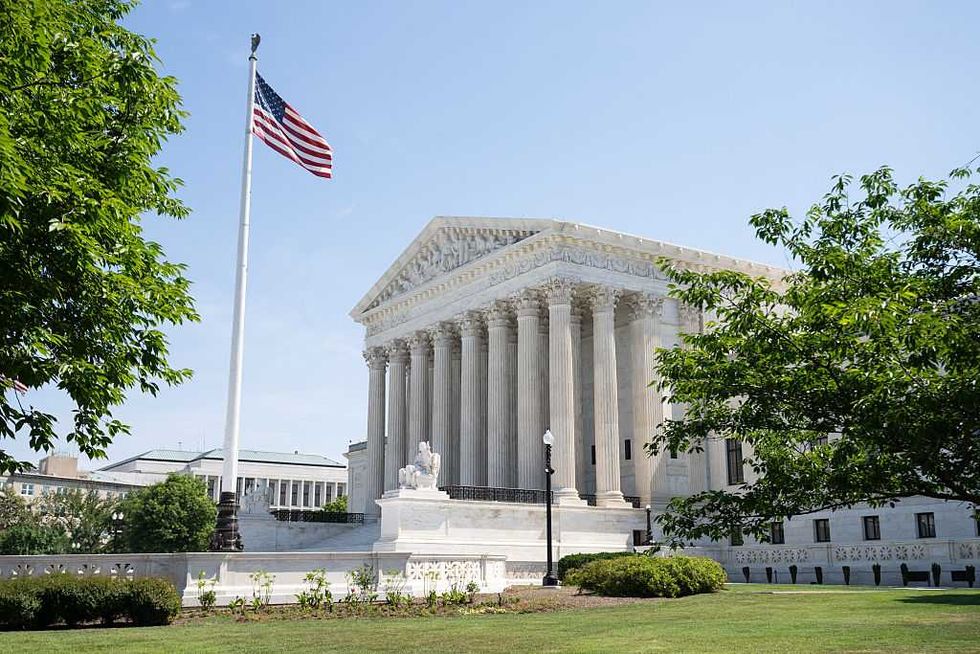
The Supreme Court has ruled in favor of Homeland Security Secretary Markwayne Mullin and the Trump administration regarding when asylum-seekers officially "arrive" in the U.S.In a 6-3 decision split along ideological lines, the Court held that aliens seeking asylum do not “arrive in the United States” until they physically cross the border into the country and therefore are not entitled to inspection by border officials until they have entered onto U.S. soil.'An alien "arrives in the United States" only when he crosses the border.'The case stems from the federal government’s “metering” policy — first adopted in 2016 amid a surge of migrants at the southern border — that limited the number of aliens whom Customs and Border Patrol agents would inspect each day for asylum. When a port of entry reached capacity, officials physically prevented additional aliens from entering until capacity became available again. In 2017, asylum-seekers and Al Otro Lado, an immigration advocacy organization, brought forward a class-action lawsuit arguing that the federal government was unlawfully denying aliens access to asylum procedures. The federal district court in Southern California granted summary judgment in favor of the noncitizens and declared the government’s policy unlawful. The metering policy was then discontinued in November 2021, though the second Trump administration has attempted to revive it. A divided Ninth Circuit panel affirmed the summary judgment, ruling that an alien “arrives in the United States” when said alien — even while standing on the Mexico side of the border — encounters a U.S. official and thus must be inspected for asylum claims. Writing for the majority, Justice Samuel Alito reversed the lower court’s ruling. The court held that the meaning of “arrives in the United States” requires physically entering the country. Therefore, under the Immigration and Nationality Act of 1952, an alien standing on the Mexico side of the border is not entitled to inspection by a U.S. official. “We hold that an alien who is standing in Mexico does not ‘arriv[e] in the United States’ by attempting, and failing, to set foot in this country. An alien ‘arrives in the United States’ only when he crosses the border,” Alito wrote.RELATED: Ketanji Brown Jackson melts down over SCOTUS ruling against Hawaii gun law: 'The court's objective is protecting guns' U.S. Supreme Court Associate Justices Samuel Alito (L) and Clarence Thomas (R).Chip Somodevilla/POOL/AFP/Getty ImagesThe court highlighted the text of other INA provisions and subsequent amendments to the statute to indicate that Congress intended asylum and inspection rights to apply only after an alien enters the country. “That Congress amended §1158(a) in IIRIRA to replace ‘at a land border or port of entry’ with ‘arrives in the United States’ suggests that we should not read those phrases — which carry different ordinary meanings — to have the same meaning.”Justice Sonia Sotomayor, joined by Justices Elena Kagan and Ketanji Brown Jackson, dissented, arguing that Congress intended border officials to inspect and process all aliens who present themselves at ports of entry, regardless of whether they have physically stepped into the U.S. The dissent contended that the majority’s decision “ignores the statutory context and history” of the INA and weakens the asylum protections Congress created for people fleeing persecution. "The Court today holds that the Executive Branch may circumvent all these mandatory procedures by having U.S. immigration officers stand at the border and physically block noncitizens from setting a foot onto U.S. soil.” Sotomayor added, "The Court's illogical interpretation is driven almost entirely by a fixation on a single word: 'in.'"Like Blaze News? Bypass the censors, sign up for our newsletters, and get stories like this direct to your inbox. Sign up here!
The ruling rejected the Trump administration’s attempt to change federal election procedures through an executive order.
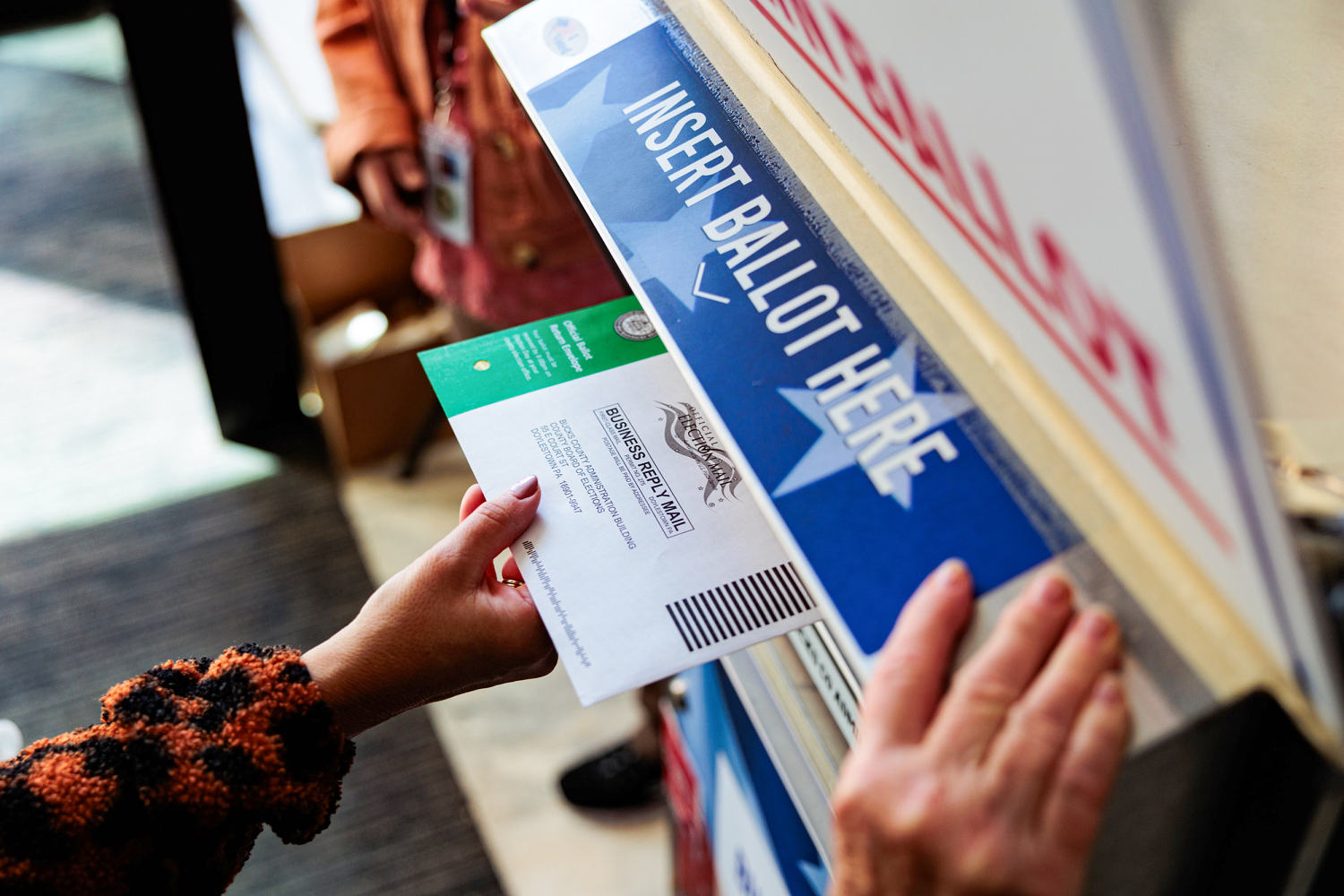
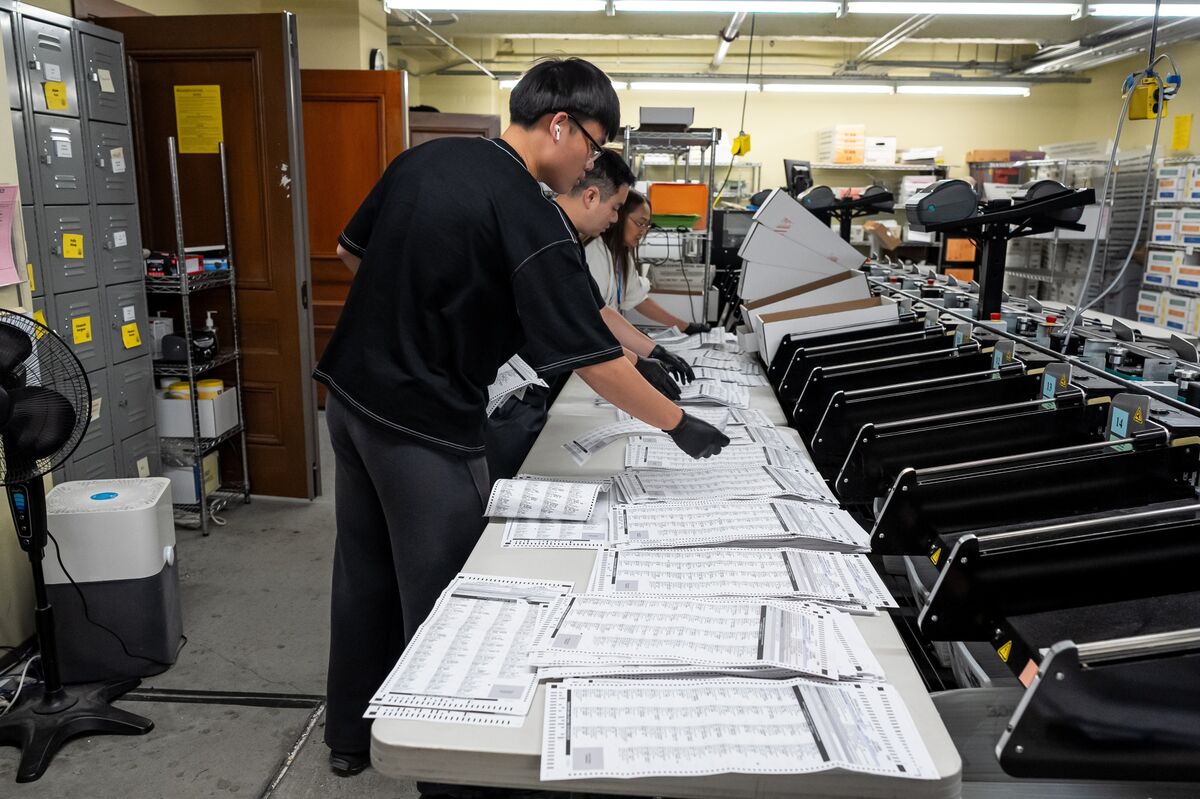
A federal judge blocked the Trump administration Thursday from enforcing key parts of his executive order aiming to create a citizenship list of eligible voters and restricting mail-in voting.The big picture: Fueled by unfounded claims of a rigged election, President Trump has consistently railed against and attempted to undermine mail-in voting. Thursday's decision hands the president yet another loss on his attempts to unilaterally change American elections.Driving the news: U.S. District Judge Indira Talwani of Massachusetts barred the administration from implementing the sections of the order that instruct feds to compile lists of confirmed U.S. citizens eligible to vote and direct the Postmaster General to propose a rule that USPS will not transmit ballots from any people not on their state list.Talwani, an Obama appointee, wrote that Trump's order tried to "intimidate local election officials" into using flawed citizen lists under threat of prosecution, "such efforts fall outside the Presidents' Article II and otherwise-delegated authority."She further ordered the administration to file a status report within a week describing the steps they've taken to ensure compliance.The other side: "President Trump is committed to ensuring that Americans have full confidence in the administration of our elections," White House spokesperson Abigail Jackson said in a statement provided to Axios.She argued that the order "lawfully protects our elections, and we are confident that we will ultimately prevail in its implementation."She wouldn't say if the administration would appeal.Catch up quick: The postmaster general, David Steiner, confirmed to lawmakers Wednesday that under the related proposed rule, USPS would not deliver mail-in ballots in states that refuse to hand over voter information.Talwani determined that Congress had not delegated authority to USPS to control mail-in voting and said it lacks the ability to promulgate regulations on voting by mail.On Wednesday, a separate federal judge blocked Trump from implementing most of his initial second-term executive order on elections that required proof of citizenship to register to vote.What we're watching: Trump's hyper-focus on reshaping election laws reached a fever pitch this week, when he shut down the signing of a landmark bipartisan housing bill over the unrelated SAVE America Act.Go deeper: Mass. joins growing list of lawsuits against Trump's mail-in voting order
A federal judge on Thursday blocked the implementation of key parts of President Donald Trump’s executive order on mail voting, declaring the plans to intervene in state-run elections unconstitutional.
A judge in Boston blocked US officials from carrying out President Donald Trump’s executive order to impose new restrictions on mail-in voting in federal elections while the legal fight moves forward.