DOJ probing outside funding E. Jean Carroll received for Trump civil lawsuits
DOJ is probing a nonprofit run by billionaire Reid Hoffman that funded a portion of E. Jean Carroll's civil litigation against President Trump, several sources said.

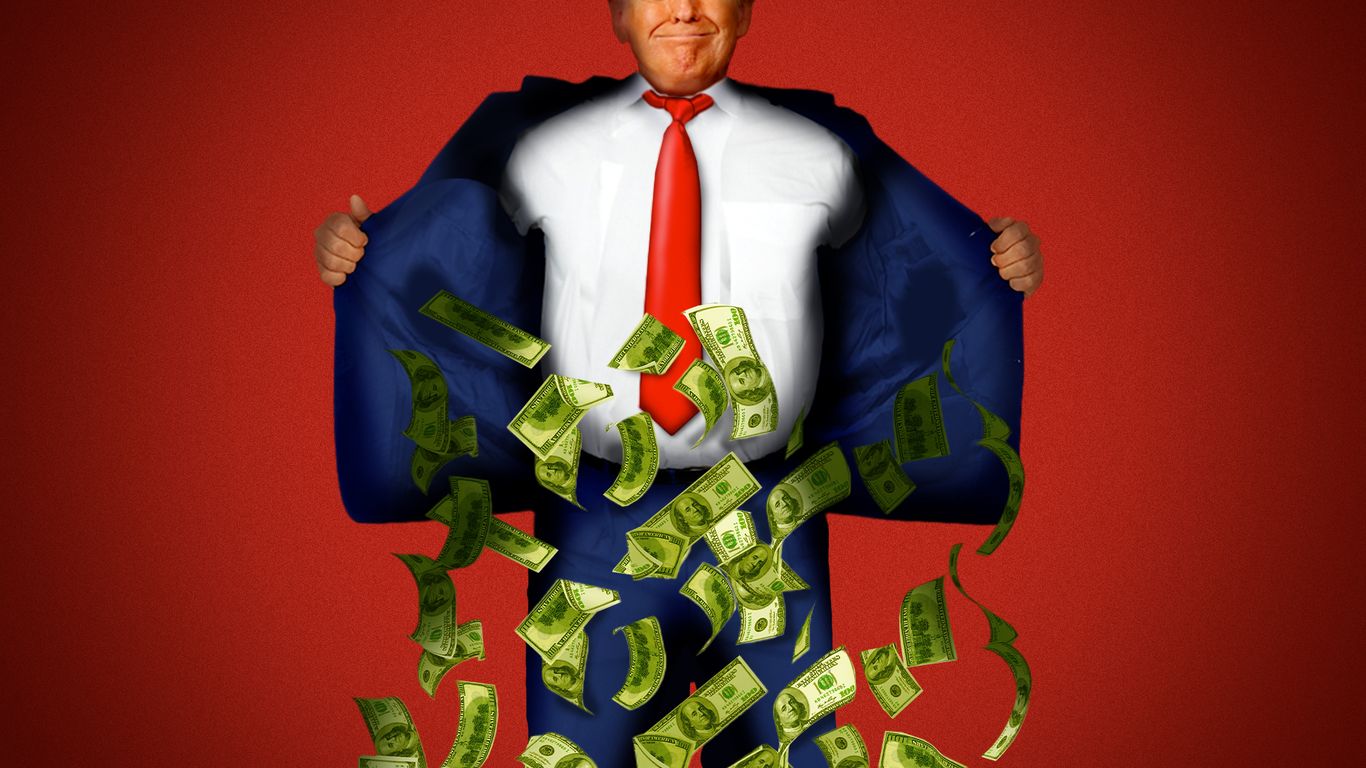
President Donald Trump recently created a $1.8 billion taxpayer slush fund for both his supporters and institutions directly linked to him. Many experts argue that the slush fund is illegal, but Forbes journalist Sara Dorn recently illustrated a point that is perhaps more immediately relevant for Trump — namely, that it is destroying him politically.Writing on Thursday, Dorn wrote that as of an Emerson poll released that day “Trump logged a 39 [percent] approval rating in Emerson’s May poll, down from 40 [percent] in April, while his disapproval rating declined one point, to 55 [percent] (the survey of 1,000 likely voters was conducted May 24-25 and has a margin of error of 3).”Dorn then reviewed Trump’s approval ratings going back several weeks, tracing a consistent decline that began because of his controversial tariffs and equally unpopular war against Iran and then seemingly solidified with his alleged self-dealing at taxpayer expense. Among her most notable findings, Dorn learned from a recent Economist/YouGov poll that “the majority of Republicans, 52 [percent], and a plurality of MAGA supporters, 45 [percent], oppose the controversial fund set up by the Justice Department to pay people who believe they’ve been victimized by the government.”Dorn added, “Republican lawmakers have also revolted against Trump over the fund, which was established to settle Trump’s lawsuit against the IRS and is widely expected to offer taxpayer-funded payments to Jan. 6 rioters and other Trump allies.”Despite some statistically insignificant fluctuations, Trump’s standings have continuously fallen, as have public perceptions of his handling of the economy (in the mid-30s), with a Fox News poll last week finding “the majority of voters surveyed said they disapproved of all five of the issues the poll asked about: border security, foreign policy, the economy, inflation and Trump’s summit with Chinese President Xi Jinping in Beijing last week.”A Reuters/Ipsos poll taken around the same time even found that Republicans, who were once united behind Trump, are slowly peeling away from him.“The share of Republicans who disapprove of his job performance has increased to 21 [percent] from 5 [percent] shortly after he took office in January 2025, while the share of Republicans who said Trump was doing a good job has decreased three points from earlier this month, to 79 [percent], and is down from 91 [percent] at the start of his term,” Dorn wrote.For “key background,” Dorn explained that “Trump began his second term with a 52 [percent] approval rating and 43 [percent] disapproval rating, according to The New York Times’ polling average. He experienced a sharp drop in support with the announcement of his so-called ‘Liberation Day’ tariffs in April last year, and again since the start of the Iran war at the end of February. Voters’ economic concerns have remained high throughout Trump’s second term, and the Iran war has coincided with an increase in negative views of the economy as gas prices have skyrocketed since the start of the conflict.”Dorn concluded, “Trump’s sagging approval rating comes as Democrats have a chance at outperforming Republicans in midterms, with Emerson’s May poll showing Democrats with a 9-point advantage on the generic congressional ballot, though 9 [percent] of voters were undecided.”Trump’s slush fund will be controlled by five members appointed by Acting Attorney General Todd Blanche and has no guidelines about who will be paid and how much. They have not ruled out compensating the Jan. 6th insurrectionists and agencies connected to Trump. The fund was created when Trump sued the IRS for $10 billion as a result of his tax returns being released by a contractor during his first term. The lawsuit was controversial both because no plaintiff whose tax returns were released has ever received financial compensation and because Trump controls the Justice Department, which in theory would defend the IRS in the suit but in practice could not be expected to do so impartially when their boss is the one suing the agency.When Judge Kathleen M. Williams, who was assigned to the case, decided to create a panel to determine the legality of Trump’s attempt to sue the IRS and whether a Justice Department beholden to the president could defend the IRS in good faith. She assigned a May 20th deadline for the matter to be brought back to her — and Trump therefore rushed to create the $1.776 billion slush fund before that deadline was reached.
DOJ is probing a nonprofit run by billionaire Reid Hoffman that funded a portion of E. Jean Carroll's civil litigation against President Trump, several sources said.
Treasury Secretary Bessent backed the idea, which would require legislation allowing a living person to appear on currency.
Treasury Secretary Scott Bessent revealed Thursday that 6 million American children are enrolled in the about-to-launch "Trump Accounts" while brushing off what he called "short-term challenges" to the economy.
An expert in Middle East affairs shared a startling prediction about President Donald Trump's latest peace plan for the region during a new podcast interview on Thursday. Trump has demanded that more Muslim-majority countries in the Middle East sign on to the Abraham Accords, a bilateral agreement the first Trump administration struck with some Middle Eastern countries in 2020, as part of the peace deal for the war in Iran. Reporting from Politico suggests that the idea has been met with "laughter, dismissal and, often, silence" from leaders in Middle Eastern countries. Malcolm Nance, a former intelligence officer, said on a recent episode of the "PolitiCon" podcast that the idea is "mindless" and could lead to a resurgence of extremist groups the U.S. fought to defeat during the War on Terror. "Trump seems to think that if I allow Israel to use force or Iran to use force, I can coerce you into doing something which technically could start the revival of ISIS and al-Qaeda in the Muslim world," Nance said. The war in Iran has metastasized from an isolated conflict between the U.S., Israel, and Iran into a regional conflict over the last three months. Iran retaliated to American and Israeli bombing campaigns by striking Israel, Saudi Arabia, and other U.S. allies in the region. In turn, Trump appears to be using Iran's strikes as leverage to get more Middle Eastern countries to sign on to the Abraham Accords, Nance suggested. "Trump is so absolutely desperate to get something out of this war with this little trick," Nance said. "I can't wait to read who was the person to come up with this crazy plan that we're losing the Iran war.""It's really bizarre. This is Bizarro World," he added.
CLICK HERE TO WATCH RIGHT NOW! The post Watch Live: The WAR Zone Podcast With Wayne Allyn Root Presented by The Gateway Pundit-Newsom Announces Plan to Tax 100% of Trump DOJ Anti-Weaponization Fund Payouts to California Residents appeared first on The Gateway Pundit.
$1.776 billion fund set up after president settled suit against IRS
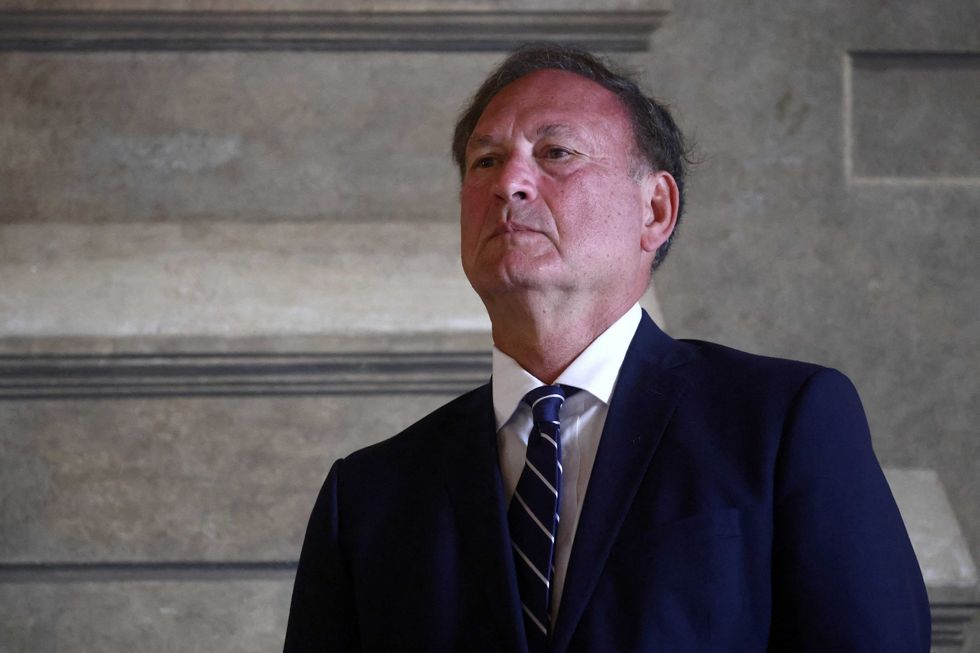
Supreme Court Justice Samuel Alito's son, Philip Alito, has been working as a political appointee attorney at the U.S. Treasury Department's Office of the General Counsel since the early months of President Donald Trump's second administration, raising serious conflict of interest concerns.According to reports by NOTUS, Philip Alito's presence was treated as something close to a government secret. "If people were introducing themselves by first and last name, he'd just say 'Phil,' not Phil Alito," said one former official. "He's a pretty soft-spoken guy."Four former government officials also claimed he maintains no public resume or LinkedIn profile. As an attorney-adviser in the general counsel's front office, he was briefed on important Treasury matters and provided legal feedback at the highest levels. The Treasury Department's general counsel's office handles legal matters related to taxation, economic policy, and law enforcement, including potential cases challenging Trump's anti-weaponization fund that could reach the Supreme Court. A tariff lawsuit naming the Treasury as defendant was argued before the justices in November, with Philip Alito's employment never disclosed in court documents. Justice Alito did not recuse himself from the case, nor did he respond to a request for comments by NOTUS.Watch the video below. Your browser does not support the video tag.
Republican lawmakers want a $250 bill featuring President Trump for the nation's 250th anniversary celebration, but the proposal faces legal and legislative hurdles.Why it matters: Federal law bars living people from appearing on U.S. currency, creating a significant obstacle to the proposal without congressional action.State of play: The Washington Post reported Thursday that, despite the stalled legislation, U.S. Treasurer Brandon Beach and his senior adviser requested prototypes of the $250 bill.The Treasury Department already announced that the president's signature will appear on paper currency to honor the nation's 250th, a first for a sitting president.Catch up quick: A Treasury spokeswoman confirmed to Axios that in response to "active legislation," the Bureau of Engraving and Printing (BEP) was "moving proactively" to produce the "commemorative note" and "conducting appropriate planning and due diligence."Rep. Joe Wilson (R-S.C.) introduced a bill last year that would require Treasury Secretary Scott Bessent to print $250 notes featuring Trump's portrait, but the proposal has stalled in the House Committee on Financial Services.A Republican committee aide told Axios the panel is talking with its members and senators about the idea.Behind the scenes: A spokesman for Wilson said the congressman had discussed moving the bill forward with the committee's chair multiple times and that both Bessent and Trump spoke with Wilson "about their support for this on multiple occasions."Beach backed Wilson's proposal and offered to draft mock-ups of the proposed note, per a letter provided to Axios by the congressman's office.Beach acknowledged in the correspondence he was aware the law banned living people from appearing on U.S. currency but added that he believes it is "appropriate for us to honor the sitting President for the 250-year celebration."However, Beach "never asked staff to print the $250 note before congressional action occurs," the Treasury spokeswoman told Axios.Friction point: U.S. Code reads, "Only the portrait of a deceased individual may appear on United States currency and securities."After a then-living Treasury official, Spencer Clark, appeared on a note and caused public uproar, Congress prohibited the portrait or likeness of any living person on currency notes, bonds or securities.A separate piece of U.S. Code specifies the denominations of notes to be $1, $2, $5, $10, $20, $50, $100 and so on. It does not include a $250 bill.But Bessent said in a Thursday briefing that he doesn't believe "there's anything untoward about having the president of the United States ... on the 250th anniversary bill."Yes, but: Wilson's legislation has shown little movement, and the BEP says banknote development can take years of testing.The bottom line: We're likely a long way away from Americans carrying Trump dollars in their wallets.But the possibility of legal challenges and the risk of running afoul of historic norms hasn't stopped the administration in the past.Go deeper: Here's how U.S. residents feel about Trump's signature on American cash