Trump’s Humiliation in Orbán Defeat Stunner Is Only Just Beginning
Source: The New Republic · Bias: Left
Summary
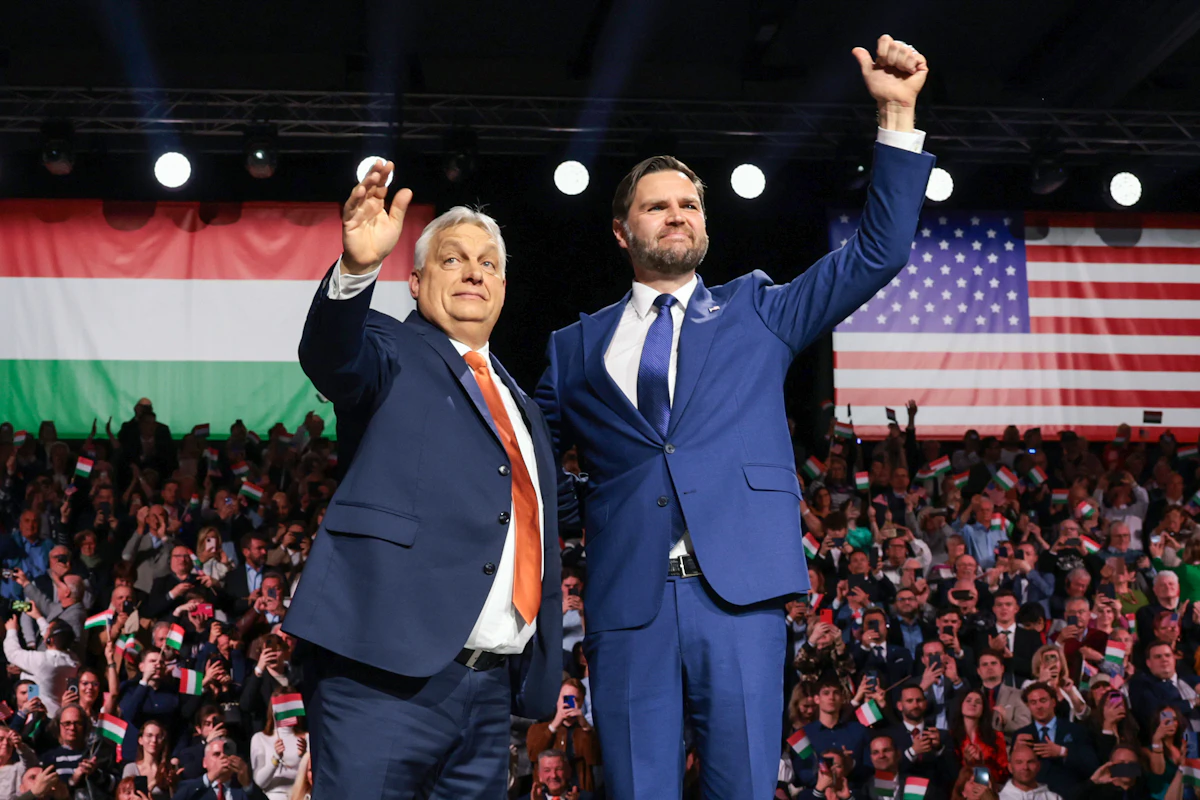
The extraordinary defeat of Viktor Orbán in Hungary has unleashed much mockery of JD Vance, and it’s richly deserved. The vice president’s last-minute rally in Budapest cast the Hungarian election as a referendum on global illiberal movements, which makes Orbán’s epic defeat all the more humiliating for him—and for Donald Trump, who dispatched Vance and has long seen Orbán as a kindred ideological spirit.But there’s another moral to draw here. It’s that American liberals and Democrats should more firmly align themselves with anti-authoritarian, anti-ethnonationalist, pro–liberal democracy forces abroad. They can better connect the drama of the battle against Orbánism to the struggle against Trumpism at home.The scale of Orbán’s defeat was extraordinary. Challenger Péter Magyar’s Tisza party is on track to win a two-thirds parliamentary majority, potentially enabling the reversal of many Orbánist antidemocratic policies designed to lock in his power forever. As Vox’s Zack Beauchamp explains, the “overwhelming frustration of the Hungarian population” under Orbán unleashed a popular turnout large enough to triumph even though Orbán had “thoroughly stacked the electoral playing field.”In other words, the victory over Orbán can legitimately be called “too big to rig,” as Trump often dishonestly describes his 2024 vote totals. Trump’s victory was historically narrow in an election that wasn’t tilted against him. By contrast, in Hungary it took record turnout against Orbán to overcome his deep counter-majoritarian rigging.So what does all this mean for American politics? It’s true, as Damon Linker says, that this isn’t a full victory for liberals and doesn’t guarantee that “right populism is on the way out,” either domestically or globally. Magyar is a center-right politician: Though a vast improvement on Orbán, he hardly campaigned as a full-blown liberal on immigration or LGBTQ rights, for instance.But the Hungarian election doesn’t have to map neatly onto U.S. politics for American Democrats to seize upon it. To see why, consider the speech Vance delivered in Hungary. It was packed with MAGA-right buzzwords, claiming Orbán must be elected to save “Western civilization” from mass migration and the “bureaucrats in Brussels”—the European Union and the woke, globalist enemies of national “sovereignty.” Obviously that message failed; Magyar campaigned aggressively on a vow to reverse much of Orbán’s hostility to the EU and NATO. That won resoundingly.Yet Vance did several things there that deserve our attention. By my count, he used the word “future” no fewer than 10 times. He stated common cause between American right-populist voters and Hungarian right-populist voters, particularly traditionalist young people looking to start families. He offered his own vision of a shared international future: It’s one in which nations don’t cede authority to international institutions, largely don’t allow in immigrants, and resist outside influences on their supposed cultural and ethnonationalist identities.In this rendering, illiberal nationalists in each of these countries support each other in this endeavor, in an agreed-upon understanding of democratic self-determination. Vance cast the West’s liberal small-d democrats as the enemies of this version of freedom.Unsurprisingly, most liberals will see this as a terrible vision for our common future. But it’s still a vision, it’s shared, and it’s one with ambition. Which is exactly why its failure in Hungary provides an opening for Democrats.What if American liberal Democratic politicians were to speak more overtly and forcefully to other liberal democrats—again, small-d—throughout the West about what our vision of a shared international future should be?Here’s a start: They could point out that right-populist hostility to international alliances and multilateral institutions, both in Hungary and the United States, has proven disastrous. They could note that, as Noah Smith outlines, the assimilation of immigrants has historically made our country better and absolutely has been working even with those non-European immigrants that MAGA dreads.They could point out that the Trump-Orbán illiberal-populist vision of national self-determination is a sham: It relies on countermajoritarian cheating to impose it on unwilling populations. Yes, Trump won legitimately in 2024. But after only one year, every pillar of his nationalist agenda—the tariffs, the deportations, the “America First” imperialism and conquest—has already proven profoundly unpopular.Trump’s response? Trying to hyper-gerrymander the nation’s House map and pushing for voter suppression on steroids.Which brings us to a powerful moment that Michelle Goldberg of The New York Times witnessed as the results in Hungary came in:Among those celebrating by the Danube on Sunday night were Eszter Kalocsai, a 30-year-old bisexual woman, and Milan Gabriel Berki, a 24-year-old gay man.
Related Coverage
- Melania gives Congress private deadline as she works around Trump's team: report (Far Left — Raw Story)
- Trump announces pardons for pollution violators prosecuted for "fixing their car" (Center — Politics - CBSNews.com)
- Trump Pardons Six People Pursued for ‘Fixing Their Car’ (Center — Bloomberg Politics)
- Sources: Trump likely to pardon pollution violators; weighing clemency for Diddy (Center — Politics - CBSNews.com)
- Fox host warns Trump will pay for his 'breathtaking' corruption (Left — Alternet.org)
- Trump Scores Appeals Court Victory in Battle Over National Park Historical Displays (Right — RedState)
- Signs of Victory: I-95 Welcomes President Donald Trump Int'l Airport (Right — RedState)
- Trump’s ‘ramped up’ rhetoric leaves unifying tone of July Fourth speech in question (Center Left — NBC News Politics)
Daily Analysis
Read the full Parallax Pulse for April 13, 2026 — an AI-powered analysis of how Left and Right media covered the biggest stories this day.
More Headlines From April 13, 2026
- Trump deletes post with AI image of himself as Christ-like figure after outcry (Center Left)
- Rep. Eric Swalwell announces resignation from Congress after accusations of sexual assault (Center Left)
- DoorDasher delivers to White House, joins Trump in talking to press (Center)
- Trump says he thought controversial AI image he shared depicted him 'as a doctor' (Center Left)
- Senate majority leader just delivered a stern warning to Trump (Left)