Trump Thinks the Supreme Court Works For Him
Source: The New Republic · Bias: Left
Summary
About a decade ago, I moved into an apartment in Washington, D.C., that seemed like a bargain. The unit was in good shape and in a nice location. The price was reasonable—slightly below market rate, but not suspiciously low for a fourth-floor walkup. I did a brief walkthrough before signing the lease, just in case, only to cut it short when my editor at the time called to let me know that the Brexit vote was looking closer than expected.Only after I moved in and tried to fall asleep on the first night did I realize why I was able to rent the place so easily: It was a few blocks down the street from a fire station, and the trucks passed under my window whenever they responded to a call. It took me about a month—a painful, exhausting, bleary-eyed month—to get used to it. Now I can sleep through almost anything.I think about that fire station whenever I stumble across one of President Donald Trump’s social-media posts during his second term. Gone are the days when his 140-character remarks on Twitter would shape the news cycle in the late 2010s. Now it is easier to tune out the long jeremiads that he cranks out on Truth Social, which also might be the least readable social-media website in Internet history.Trump’s social-media rants these days are so frequent and so voluminous that it is rarely worth paying them any specific attention to them. But his Mother’s Day post about the Supreme Court is a notable exception. The president gave a surprisingly frank assessment of his view of the Supreme Court—and how he expects personal loyalty from the justices that he appoints to it.In the lengthy post, Trump criticized two members of the high court for voting in Trump v. Learning Resources, the case that nixed his purported ability to impose hundreds of billions of dollars in tariffs under a Cold War-era emergency-powers law. The Supreme Court held 6-3 that Trump had exceeded the powers laid out in the statute.“I ‘Love’ Justice Neil Gorsuch! He’s a really smart and good man, but he voted against me, and our Country, on Tariffs, a devastating move,” Trump wrote. “How do I reconcile this? So bad, and hurtful to our Country. I have, likewise, always liked and respected Amy Coney Barrett, but the same thing with her. They were appointed by me, and yet have hurt our Country so badly!”It would be hard to find a better example than this of Trump’s thinking that the justices that he nominated to the high court should be personally loyal to him. Justice Brett Kavanaugh, his third appointee to date, was among the dissenters. There were six justices in the Learning Resources majority; four of them did not warrant a mention here. Trump did not even bother to criticize Chief Justice John Roberts, who actually wrote the opinion.Naturally, that partial silence was not out of respect for the court. Trump obviously does not hold the three liberal justices in high regard. Last month, for example, he described Justice Ketanji Brown Jackson as “low IQ,” an insult that he typically reserves for Black lawmakers and officials, in another social media post. Chief Justice John Roberts has also been frequently criticized by Trump in the past, but received a less harsh treatment after his rulings for Trump in the disqualification case and the immunity case.Instead, Trump focused on the two justices he appointed who ruled against him. “I’m working so hard to, MAKE AMERICA GREAT AGAIN, and then people that I appointed have shown so little respect to our Country, and its people,” he continued. “What is the reason for this? They have to do the right thing, but it’s really OK for them to be loyal to the person that appointed them to ‘almost’ the highest position in the land, that is, a Justice of the United States Supreme Court.”Two things stand out here. One is that Trump implicitly admits that, by siding with him, Gorsuch and Barrett would not be doing “the right thing.” So deeply ingrained in American culture is judicial independence that even Trump himself, the arch-heretic of American civil republicanism, must acknowledge it. The other is that Trump drops the pretense and explicitly demands loyalty from them.Trump’s demands for personal loyalty are no surprise ten years after his first rise to power. The Russia investigation, which consumed the first half of Trump’s first term, exploded into public view after Trump demanded personal loyalty from then-FBI Director James Comey and then fired him after he didn’t receive it. So highly does Trump prize loyalty that he has packed his second-term Cabinet and key federal agencies with loyalists who often place his personal whims above ethics, the public interest, and the law itself.But it is still striking to see him demand it from Supreme Court justices—and, by extension, from a co-equal branch of government—simply because he appointed them.
Related Coverage
- Trump announces new pardons after privately weighing "Diddy" clemency, sources said (Center — Politics - CBSNews.com)
- Trump Heads to Mount Rushmore, Where He Wants to See His Face (Center — WSJ.com : U.S. News)
- 'Total disaster' at Trump's fair as scorching heat leaves 7 on 'advanced life support' (Far Left — Raw Story)
- Trump, ballot seizures and a ‘declaration’: Gavin Newsom teases tiresome July 4 address to the state (Right — New York Post)
- 'Not mentally well': MAGA suspects Trump sabotaged by liberals armed with weather machines (Far Left — Raw Story)
- 'God is angry': Internet bemused as Mother Nature comes for Trump's Mount Rushmore speech (Far Left — Raw Story)
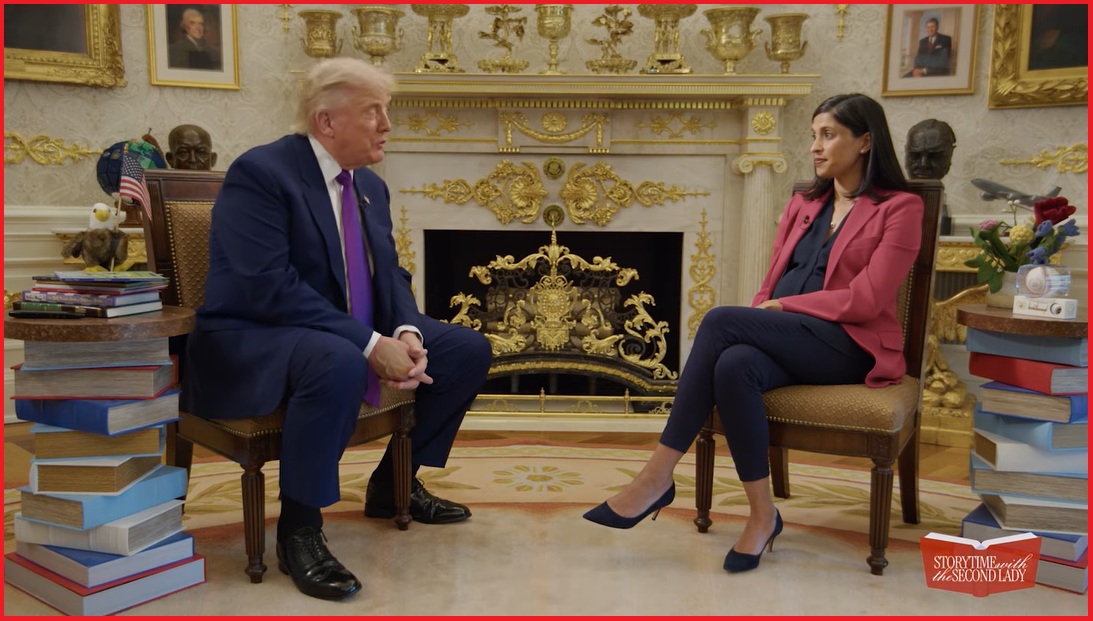
- ‘The second-most good-looking president’: Trump entertains on Usha Vance’s program (Far Right — WorldNetDaily)
- President Trump Reads “Presidents Play” (Far Right — The Last Refuge)
Daily Analysis
Read the full Parallax Pulse for May 11, 2026 — an AI-powered analysis of how Left and Right media covered the biggest stories this day.
More Headlines From May 11, 2026
- This week on the hill: Congress returns from recess facing high-stakes fights (Center)
- Trump vows to pause federal gas tax after Iran war boosts US fuel prices to four-year high (Center Left)
- White House ballroom funds hang over GOP push to fund ICE (Center)
- Trump weighs military action against Iran with ceasefire "on life support" (Center Left)
- Transcript: Trump Blurts Out Plot to Rig Midterms as Polls Turn Brutal (Left)