Trump suffers two massive snubs as new funding bill ditches key demands
Left
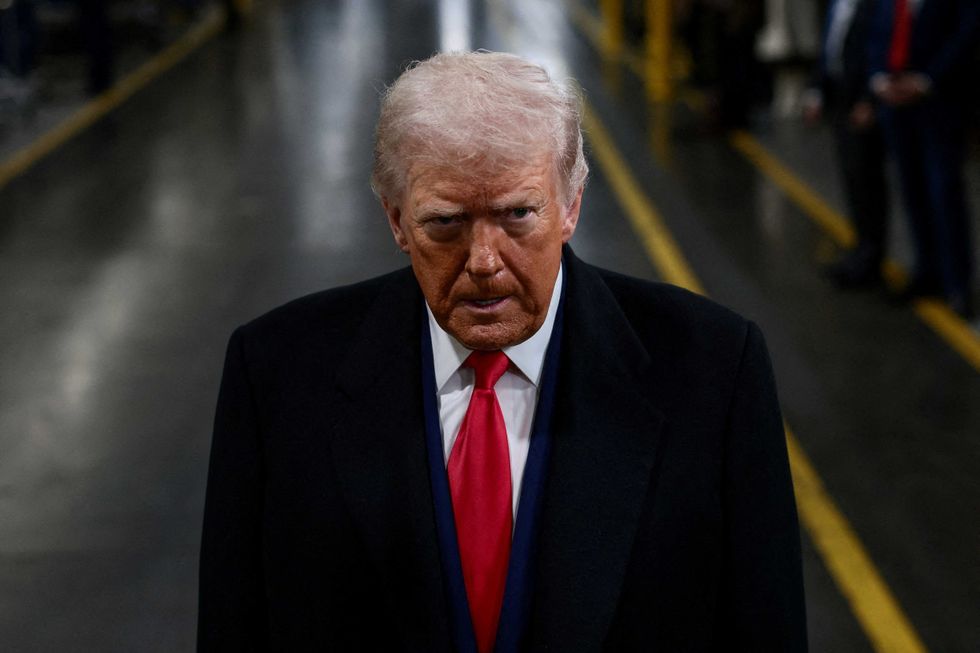
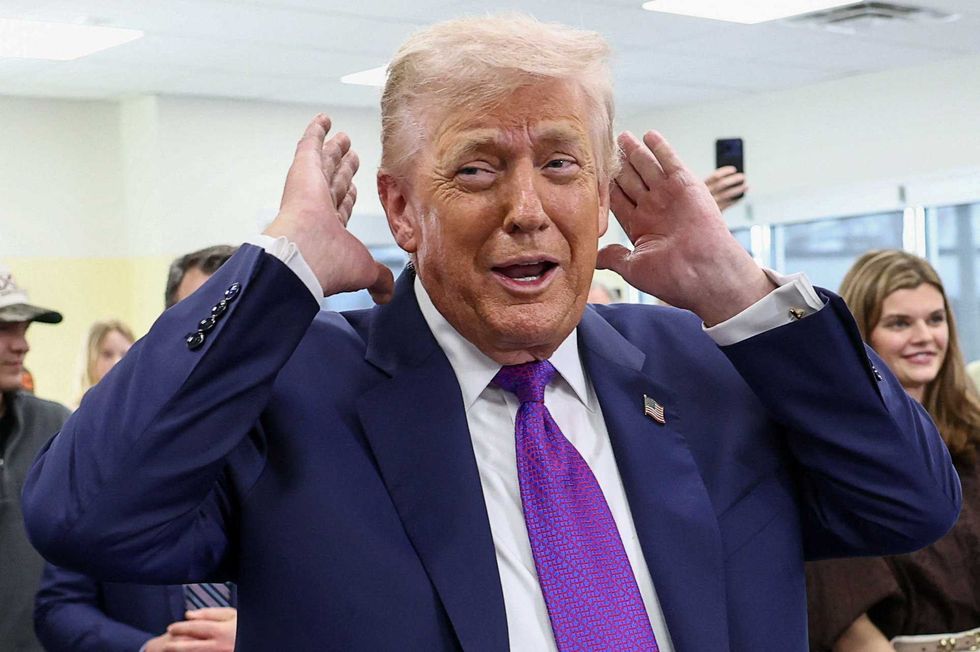
Congress has finally released the text of a new funding bill ahead of a new round of debates and voting, and according to the text of the bill, it has dealt President Donald Trump some massive losses as two of his biggest priorities have been snubbed for the time being.Prior to the release of this new bill, Trump had put heavy pressure on Republicans in Congress to allot new taxpayer funding for his White House ballroom, a project that he has become increasingly fixated on to the detriment of other, more important issues. The ballroom has become massively unpopular with voters, as Democrats have positioned it as a symbol of Trump's disregard for the harsh economic conditions Americans are dealing with heading into the midterms.The DOJ, in settling a lawsuit brought by Trump against the IRS, was also set to request nearly $1.8 billion in taxpayer dollars for the creation of an "anti-weaponization" fund, which critics said would be another excuse to provide kickbacks to Trump's close allies and supporters. Following a temporary order from a judge halting the fund's creation, the administration has reportedly begun backing away from the idea, which had become immediately toxic among both Democrats and Republicans.Now, the newest funding bill set to go before the Senate has made it official that neither of these Trump-backed plans will be receiving any money, at least for the time being."Senate Republicans are moving forward with a package to fund the Department of Homeland Security's immigration agencies on Wednesday, following a back-and-forth over the Justice Department's 'anti-weaponization' fund that threatened to derail the long-sought funding," CBS News reported on Wednesday.It continued: "A revised version of one part of the package released Wednesday also dropped language that would have provided $1 billion in security funding for the Secret Service, including for President Trump's East Wing renovation, where he plans to build a massive ballroom. That funding faced intense scrutiny from a handful of Republicans, prompting senators to abandon it."The text of the bill does, however, include new funding allocations for ICE and other immigration enforcement entities, after Democrats had dug in their heels in opposition to the idea after agents killed two American citizens in Minneapolis earlier this year. Republicans are now committed to using the reconciliation process to get the funding bill passed, which allows them to pass things with a simple majority. Otherwise, complete Democratic opposition would have prevented the bill from getting past the 60-vote filibuster threshold.
A relatively unknown farmer who openly touted his ties to the Make America Healthy Again movement upset President Donald Trump’s endorsed candidate in Iowa’s GOP gubernatorial primary […]
While warning signs have been flashing ever since President Donald Trump’s war with Iran resulted in the closure of the Strait of Hormuz, fallout in the form of a major economic disaster is yet to manifest. “That won’t last forever,” writes the American Prospect columnist Ryan Cooper, who warns that “something is going to snap.”The danger wouldn’t be so looming if the war appeared to be nearing its end, but as Cooper points out, there is little evidence to support such a hope, noting that Iran has “cut off contact with American negotiators, and the two sides are once again shooting at each other. Trump, for his part, recently told a CNBC reporter that I’ really don’t care. I couldn’t care less’ if negotiations are over. They ‘started to get very boring,’ he added.”So apparently, according to Trump himself, he’s feeling no pressure to make a deal, which is exactly what he said in early May. Cooper warns that this places the U.S. in a dangerous position, because while there hasn’t been a “truly major crisis” yet, “it’s only a matter of time before one or more of the severely strained parts of the global economy breaks.”Total catastrophe has so far been avoided based on four factors. First, despite Trump’s best efforts to oppose a green-energy transition, companies and countries around the world have leaned into alternative energy as fossil fuel prices have shot up. At the same time, many nations, particularly in Asia, have begun rationing oil consumption, which while painful, has helped stave off collapse. But a third “more ominous” factor, says Cooper, is that the world has been forced to draw heavily on existing stocks of oil and natural gas. According to Cooper, “Many people saw the Iran war coming, and filled up every oil tanker and storage facility they possibly could. A great deal of that has since been used up. The vast storage complex at Cushing, Oklahoma (regarded as a storage benchmark), has declined from 33 million barrels to 24.5 million — and they can’t be fully emptied. ‘You can’t draw them down to zero because there is gunk at the bottom of the tanks,’ oil analyst Matt Smith told CNN.” At the same time, countries around the world are depleting their reserves. “We’re approaching unheard of inventory levels,” Exxon Senior Vice President Neil Chapman said recently. “Once you get to that point, then you’ll see price shoot up.” A fourth factor, writes Cooper, is “the behavior of the media and financial markets. The D.C. political press can be relied on to uncritically repeat Trump’s preposterous lies about an imminent deal, no matter how many times they have been proved false. Traders on oil and oil futures markets, being either deluded by the media or blinded by wishful thinking or simply incapable of believing that the president of the United States is as stupid and insane as he in fact is, have consistently expected the strait to open back up soon…Oil prices again fell sharply after Trump’s latest promise.” Despite this market manipulation, Cooper warns, “Sooner or later, oil traders are either going to face reality, or bankrupt themselves.”As Cooper points out, “reserve releases and comically underpriced oil futures are effectively subsidizing oil consumption.” While a few countries, primarily in Asia, have taken measures to reduce oil usage, many world leaders “have encouraged their nations to continue using energy at normal levels, and therefore to chew through global inventories more quickly. That means if and when the supply shock hits, it will hit even harder.”On that note, Cooper dives into the looming crises that are poised to destroy several key sectors of the economy. “The most obvious one is in oil itself,” Cooper explains. “As storages dwindle and run out, the only way to match demand to supply will be for the price to rise high enough to destroy something like 10 to 20 percent of global oil consumption. And because a great deal of oil demand is obligatory and therefore not very price-sensitive, that price will likely be north of $150 per barrel. That means gas and diesel at the pump in the $8-to-$10 range, and a corresponding price hike for anything that needs to be transported, or involved in plastic in some way, which is to say basically everything.” Other sectors like agriculture, aluminum, and industrial commodities are in similarly precarious situations due to plunging stock and skyrocketing prices, the fallout from which will be wide-ranging and devastating.And worse still, notes Cooper, “even if the Strait of Hormuz opens tomorrow, these problems are going to take years to resolve.” Oil fields will take months to resume production, vital infrastructure will take years to rebuild, and the need to restock reserves will drive years of structurally higher demand. What’s more, the situation is still in flux, and it could continue to deteriorate in ways no one has forecasted.
Senate Republicans removed $1 billion in Secret Service security funding for the White House and President Donald Trump’s yet-to-be-built East Wing ballroom from the party’s immigration enforcement bill, according to new legislative text released Wednesday. The move was in response to Republican opposition over the optics of taxpayers footing the $220 million bill for ballroom […]
Adults on Medicaid will be required to work 80 hours per month. The Trump administration says people who are sick will have to prove they are too sick to work to be exempt from the new work rules.
Washington Examiner columnist Guy Benson raised questions about New Jersey Democratic congressional candidate Adam Hamawy and his ties to the 1993 World Trade Center bombing. Benson argued that Hamawy’s earlier legal and international work revelations could pose political problems for Democrats. In 1994, Hamawy volunteered in Bosnia with a Chicago-based nonprofit group called the “Benevolence International […]