Trump Is Silencing Government Warning Signals of an Economic Crash
Source: The New Republic · Bias: Left
Summary
If the U.S. economy is headed off a cliff, better that we receive no warning in advance. That may not be the stated goal of the Trump administration, but, to borrow a term from the late MIT economist Paul Samuelson, that’s its “revealed preference.” The preference in this case is revealed by Russell “Project 2025” Vought’s determined efforts, as director of the White House budget office, to shut down two agencies created by the 2010 Dodd-Frank Financial Reform and Consumer Protection Act.Dodd-Frank was Congress’s attempt to head off another catastrophe like the 2008 financial crisis. It was the first major financial overhaul since the Great Depression, and despite commentators’ general feeling that it never went far enough, bankers hated it. Now those same bankers want President Trump to gut two significant parts of it, and he’s obliging—at the very moment that the economy is teetering like a spring breaker at Panama City Beach.The first of the two offending agencies is the Treasury Department’s Office of Financial Research, or OFR. This is a small office—it’s never employed many more than 200 people—dedicated to furnishing policymakers with the kind of detailed information they lacked during the late aughts about mostly unregulated “shadow banks,” such as mortgage companies, private equity, private credit, hedge funds, and the repurchase agreement market, or “repo.” This last provides overnight short-term loans to manage corporate cashflow. The Washington Monthly has called OFR “The Most Important Agency You’ve Never Heard Of.” Here’s a detailed summary of OFR’s accomplishments.Every year OFR sends an annual report to Congress that’s written in a typically cheerful tone that downplays financial risks. Still, the necessary information is there if you look for it. The latest report, covering the fiscal year that ended on September 30, noted that student loan defaults rose to 9 percent; that, at a time when private credit is stumbling, about 7 percent of the regulated banking system’s assets consist of loans to shadow banks; that hedge funds’ dependence on repo increased by 154 percent; and that growth in private repo (the Fed also has a repo operation) is off the charts. One conclusion I draw from this report is that I need to think a lot more about repo! It’s ballooned in recent years to $12 trillion, or more than one-third the size of the entire U.S. gross domestic product. “If large lenders suddenly decide not to roll over repo,” the report says, “borrowers, many of which are securities dealers, must quickly find other sources of financing or sell assets, which may transmit repo market stress to other markets.” To quote Harry Dean Stanton in the eponymous 1984 film: “A repo man spends his life getting into tense situations.”The financial world doesn’t appreciate seeing the federal government advertise its vulnerabilities, even sotto voce, and Republican Senator Ted Cruz of Texas, who between 2019 and 2024 collected nearly $2 million in campaign contributions from the securities and investment sector, introduced during that same time period three successive bills to abolish OFR, which he called “useless and unaccountable.” Last year’s “one big, beautiful” reconciliation bill initially zeroed out OFR’s budget, but the Senate parliamentarian ruled against that. So Vought took matters into his own hands. Having already halved OFR’s staff from 196 employees to 100, Treasury officials informed staff last month that 64 percent of the remainder will be laid off, according to reports this week by Government Executive and the Federal News Network. This was proposed in President Donald Trump’s 2026 budget, but Vought must have figured: Why wait for Congress? “As risks emerge in the financial system and cracks in the credit markets spread,” Senator Elizabeth Warren told Government Executive, “the Trump administration is gutting the office designed to evaluate financial risks in a giveaway to Wall Street. This is just the latest move by President Trump and his financial regulators to undermine financial stability and pave the way for another crash.”The other Dodd-Frank agency Vought is trying to shut off is the better-known Consumer Financial Protection Bureau, or CFPB. CFPB’s function is not merely informational but regulatory; it polices abuse of consumers by financial institutions, which is epidemic. Already Vought has reduced CFPB to what E. Tammy Kim, writing last month in The New Yorker, called “The Zombie Regulator.” (The coinage is from Seth Frotman, its former general counsel.) CFPB’s headquarters, Kim reported, “is now mostly empty,” despite repeated court interventions barring Vought from conducting mass firings.
Related Coverage
- Trump, ballot seizures and a ‘declaration’: Gavin Newsom teases tiresome July 4 address to the state (Right — New York Post)
- 'Not mentally well': MAGA suspects Trump sabotaged by liberals armed with weather machines (Far Left — Raw Story)
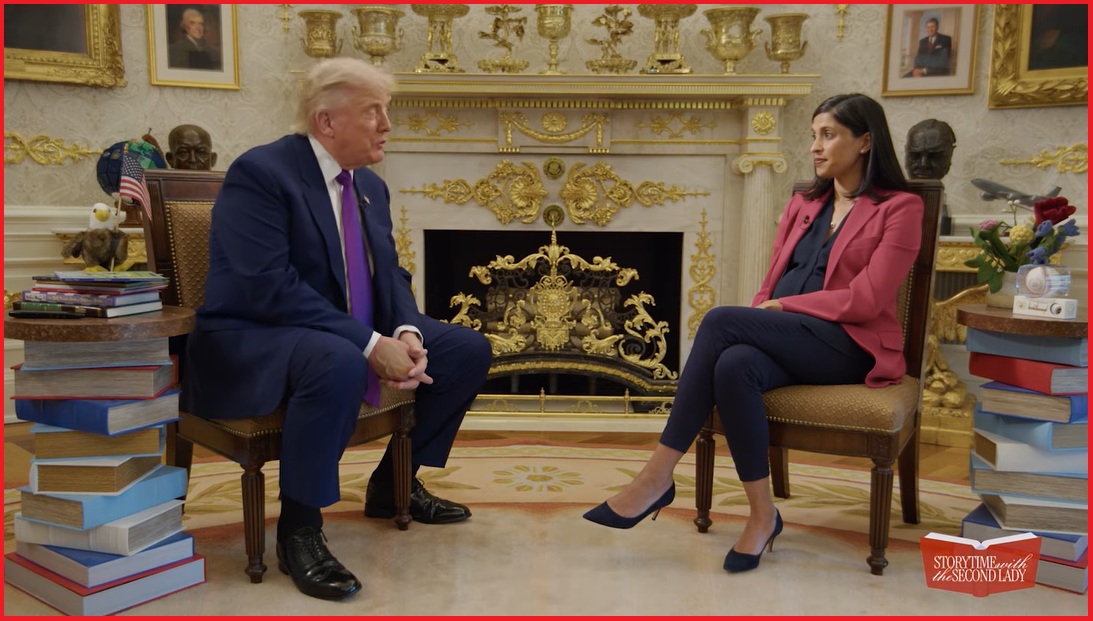
- ‘The second-most good-looking president’: Trump entertains on Usha Vance’s program (Far Right — WorldNetDaily)
- President Trump Reads “Presidents Play” (Far Right — The Last Refuge)
- Melania gives Congress private deadline as she works around Trump's team: report (Far Left — Raw Story)
- Trump announces pardons for pollution violators prosecuted for "fixing their car" (Center — Politics - CBSNews.com)
- Trump Pardons Six People Pursued for ‘Fixing Their Car’ (Center — Bloomberg Politics)
- Sources: Trump likely to pardon pollution violators; weighing clemency for Diddy (Center — Politics - CBSNews.com)
Daily Analysis
Read the full Parallax Pulse for April 3, 2026 — an AI-powered analysis of how Left and Right media covered the biggest stories this day.
More Headlines From April 3, 2026
- Who is Christopher LaNeve, set to lead the US army? (Center)
- White House calls reports of Gabbard’s impending ouster ‘fake news’ (Center)
- Trump threatens to break NATO's promise over Iran war (Center Left)
- US Allies Work on Plan B for Hormuz Strait If Trump Walks Away (Center)
- Hegseth says he will let troops take personal firearms onto military bases (Center)