Trump Is Rage Posting His Way Into Genocide Charges
Source: The New Republic · Bias: Left
Summary
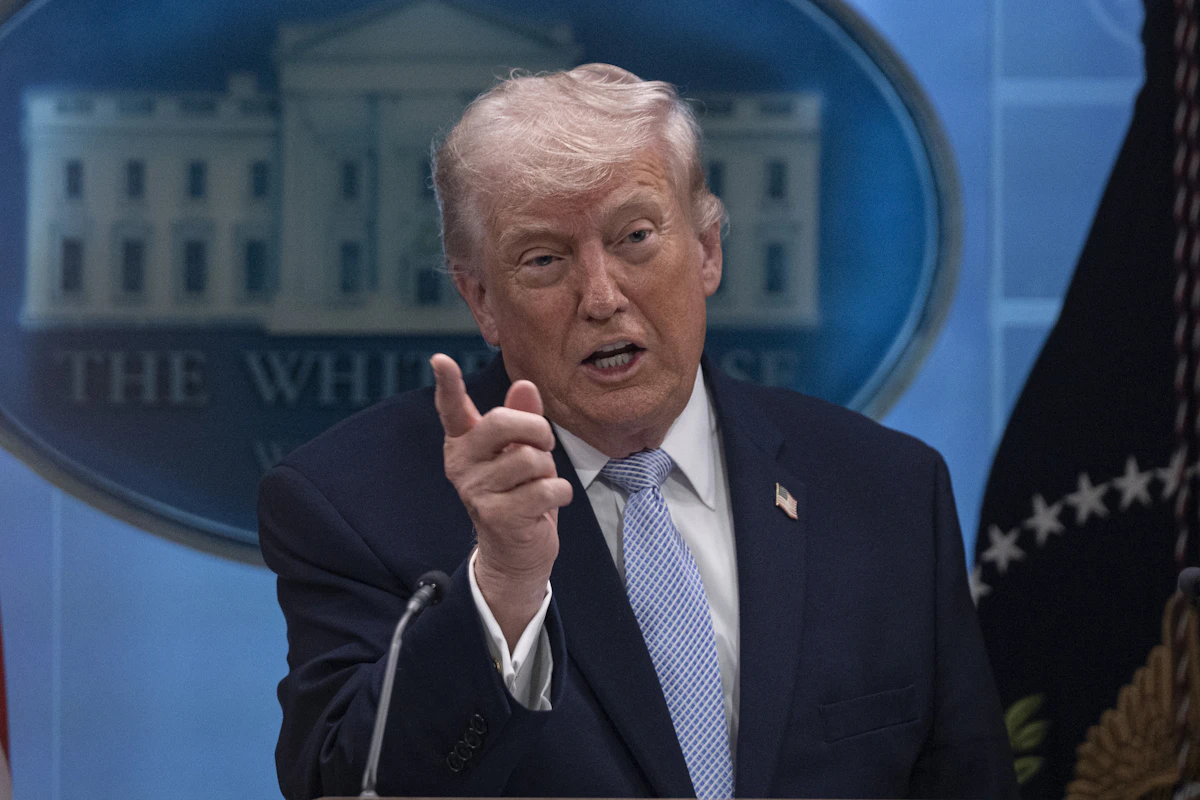
President Donald Trump spent the Easter weekend issuing a belligerent stream of threats to destroy Iranian civilian infrastructure. He set a deadline of 8 p.m. Eastern time on Tuesday night for the Iranian government to reopen the Strait of Hormuz or U.S. airstrikes would destroy the country’s power plants and bridges. On Tuesday morning, his language took an even darker turn towards genocidal rhetoric.“A whole civilization will die tonight, never to be brought back again,” he wrote on his personal social-media website. “I don’t want that to happen, but it probably will. However, now that we have Complete and Total Regime Change, where different, smarter, and less radicalized minds prevail, maybe something revolutionarily wonderful can happen, WHO KNOWS? We will find out tonight, one of the most important moments in the long and complex history of the World. 47 years of extortion, corruption, and death, will finally end. God Bless the Great People of Iran!”Trump administration officials have already faced serious allegations of war crimes for their military operations in Latin America and Iran. In an article for our March issue that went to press before the Iran war began, I reported on Trump’s legal peril under international law at length. But the president’s latest post opens up him and members of his administration to something completely new: potential criminal charges for genocide.Genocide has been considered a violation of international law for almost 80 years. Since then, genocide-related prosecutions have typically occurred through bespoke international tribunals like the ones created for the Yugoslav wars, the Khmer Rouge, and the Rwandan genocide. The International Criminal Court in The Hague has also had jurisdiction to prosecute genocide-related crimes since its establishment in 2002.A federal law passed in 2002 on the eve of the Iraq War forbids the U.S. government from extraditing U.S. citizens to the International Criminal Court or cooperating with its investigations in any meaningful way. The law is colloquially known as the Hague Invasion Act because it gives free-standing congressional authorization for military operations to “use all means necessary and appropriate to bring about the release” of any U.S. soldier or official in ICC custody. It is meant to deter international-law investigations into U.S. military operations.International tribunals are not necessary to prosecute Americans who commit genocide, however. The Genocide Convention Implementation Act of 1987 criminalizes the act of genocide “whether in time of peace or in time of war” under federal law. Unlike ordinary crimes, genocide is carried out “with the specific intent to destroy, in whole or in substantial part, a national, ethnic, racial, or religious group.” Notably, there is no statute of limitations to this offense, meaning that anyone who participates in the offense could face prosecution at any point for the rest of their life.The 1987 law applies to anyone who kills, injures, permanently impairs or permanently impairs of those specific groups. One particularly provision that is relevant to Trump’s threats applies to any efforts to “subjec[t] the group to conditions of life that are intended to cause the physical destruction of the group in whole or in part.” Normally it might be difficult to prove a genocidal intent for a specific military strike. Trump’s threat to use U.S. military power to ensure that a “whole civilization will die tonight” removes that obstacle. He could only be clearer and less ambiguous if he wrote, “I will commit genocide tonight.”Trump’s threats to target Iranian civilian infrastructure, if carried out, may already amount to war crimes and crimes against humanity. While the U.S. does not claim universal jurisdiction over acts of genocide, Trump’s potential actions would likely meet that threshold. The Justice Department’s Criminal Resource Manual, an internal tool for federal prosecutors, noted that the federal government has jurisdiction over genocide prosecutions if the offense is “committed within the United States” or when “the offender is a national of the United States.”As an act, genocide is an ancient offense that can be found throughout human history. As a specific concept and criminal offense, genocide dates back to the post-World War II era. The concept gained attention after Nazi Germany murdered millions of people, including more than 6 million European Jews in the Holocaust, before and during the war.Raphael Lemkin, a Jewish lawyer who lost dozens of family members to Nazi murders, coined the term genocide before the war’s end to describe a crime that previously had no name.
Related Coverage
- Dems rage after Florida bans illegals from attending state colleges (Far Right — BizPac Review)
- Trump, ballot seizures and a ‘declaration’: Gavin Newsom teases tiresome July 4 address to the state (Right — New York Post)
- 'Not mentally well': MAGA suspects Trump sabotaged by liberals armed with weather machines (Far Left — Raw Story)
- Bryce James drools over girlfriend Sadie’s photo in first post since LeBron James’ Lakers exit (Right — New York Post)
- 'Perverted little fantasy': Stephen Miller instantly buried after bizarre post (Far Left — Raw Story)
- ‘The second-most good-looking president’: Trump entertains on Usha Vance’s program (Far Right — WorldNetDaily)
- President Trump Reads “Presidents Play” (Far Right — The Last Refuge)
- Melania gives Congress private deadline as she works around Trump's team: report (Far Left — Raw Story)
Daily Analysis
Read the full Parallax Pulse for April 7, 2026 — an AI-powered analysis of how Left and Right media covered the biggest stories this day.
More Headlines From April 7, 2026
- Vance calls Iran cease-fire a ‘fragile truce’ with Trump ‘impatient’ to end war (Right)
- Arizona Senate Republicans force Dem AG to review border county’s anti-ICE measure (Far Right)
- Trump threatens "whole civilization will die tonight" amid 11th hour Iran negotiations (Center Left)
- Vance Endorses Orban, Accuses EU of Election 'Interference' (Center)
- Vance Picks Fight With Europe Over Orban in Vote Endorsement (Center)