Trump Hit Oil and Gas Harder Than Climate Policy Ever Could
Source: The New Republic · Bias: Left
Summary
A fifth of the world’s oil supplies typically flow through the Strait of Hormuz. Amid America’s disastrous war of choice against Iran, it’s now been closed since March. As the United States and Iran edge closer to a prospective deal to end that war, analysts have marveled at the fact that oil markets have taken it mostly in stride. Prices never soared to the $200-per-barrel heights many feared. Before news of a possible agreement earlier this month, the price of a barrel of Brent crude—the global benchmark—remained below $100 per barrel. Gasoline prices stateside have risen only modestly.Extractive interests in the U.S. brag that this stability is a product of their own dynamism. “The lesson from this moment is not that the United States is immune from global disruption,” the American Petroleum Institute argued last month. “It’s that decades of growth in American oil and natural gas production have fundamentally strengthened America’s energy position during periods of global instability. Maintaining that advantage will require continued investment in the infrastructure needed to connect abundant supply to growing demand—both at home and abroad.”But the strength and nimbleness of the U.S. oil and gas industry isn’t the whole story. We don’t actually know how drivers in the U.S. might have fared if global prices had really soared. Booming U.S. domestic production is only part of why they didn’t. Pipelines across Saudi Arabia and the UAE kept about five million barrels per day flowing from the Persian Gulf. China ratcheted down fossil fuel demand, reducing imports by nearly 40 percent from 2025 averages. Affordable Chinese solar panels, electric vehicles, and two-wheelers helped other countries in Asia to destroy demand for imported fossil fuels too. Wealthier nations, meanwhile, were able to draw on preexisting stockpiles to mitigate price shocks. The U.S. did this using its Strategic Petroleum Reserve. One of many federal energy security policies prompted by the oil shocks of the 1970s, the SPR is now emptier than it’s been since 1983. Earlier this month, oil executives warned the Trump administration behind closed doors that those stockpiles in the U.S. and elsewhere could start to run out and cause global energy prices to jump. Just because prices haven’t spiked doesn’t mean they never will.One clear takeaway from all this is that oil markets can put up with a lot more disruption than even top oil executives claimed. If a climate-conscious government had credibly threatened to bring about “the largest supply disruption in the history of the global oil market,” as the International Energy Agency has called the monthslong closure of the Strait of Hormuz, fossil fuel producers would have rioted. During the Biden years, executives whined endlessly that the administration’s climate policies were suffocating them. In reality, those years were fat ones for this country’s fossil fuel industry. Drillers enjoyed record profits and production. What if Biden had tried holding back 15 million barrels of oil every day for three months? It would never have happened. Although you wouldn’t have known it from the CEOs’ grousing, the Biden administration never took a serious interest in phasing out fossil fuels. It opted for tax breaks and modest regulations to gradually incentivize lower-carbon alternatives; after Russia invaded Ukraine in 2022, former Energy Secretary Jennifer Granholm promptly begged our fossil fuel industry’s top brass to drill more. Ironically, it took one of the world’s biggest coal, oil, and gas enthusiasts—Donald Trump—to trigger “the largest fossil fuel capital annihilation event in history,” as French philosopher Pierre Charbonnier called it in the first month of the Iran war. Comparing Trump’s actions with the visions of climate advocates is grimly instructive. No climate law or treaty promised to knock out even a fraction of the supplies that were taken offline during the Iran war. Drillers nevertheless persisted in warning that the sky would fall if climate policymakers got their way, explaining that they had a moral duty to satisfy surging fossil fuel demand in fast-growing Asian countries. In the last days of the Biden administration, in November 2024, ExxonMobil CEO Darren Woods complained that the climate policies “that have been pursued to date are very narrowly focused on limiting the supply of traditional sources,” which wasn’t remotely true. He cautioned that such (nonexistent) strategies threatened global economic growth and prosperity for the world’s poor. The same year, the CEO of Saudi Aramco talked about the need to “abandon the fantasy of phasing out oil and gas,” which was never on the verge of happening at any meaningful scale.If there is a silver lining to be found in the last few months, it’s that middle- and low-income countries are increasingly seeing the fossil fueled development that Exxon and Aramco have tied their futures to as a bad bet for energy security.
Related Coverage
- Melania gives Congress private deadline as she works around Trump's team: report (Far Left — Raw Story)
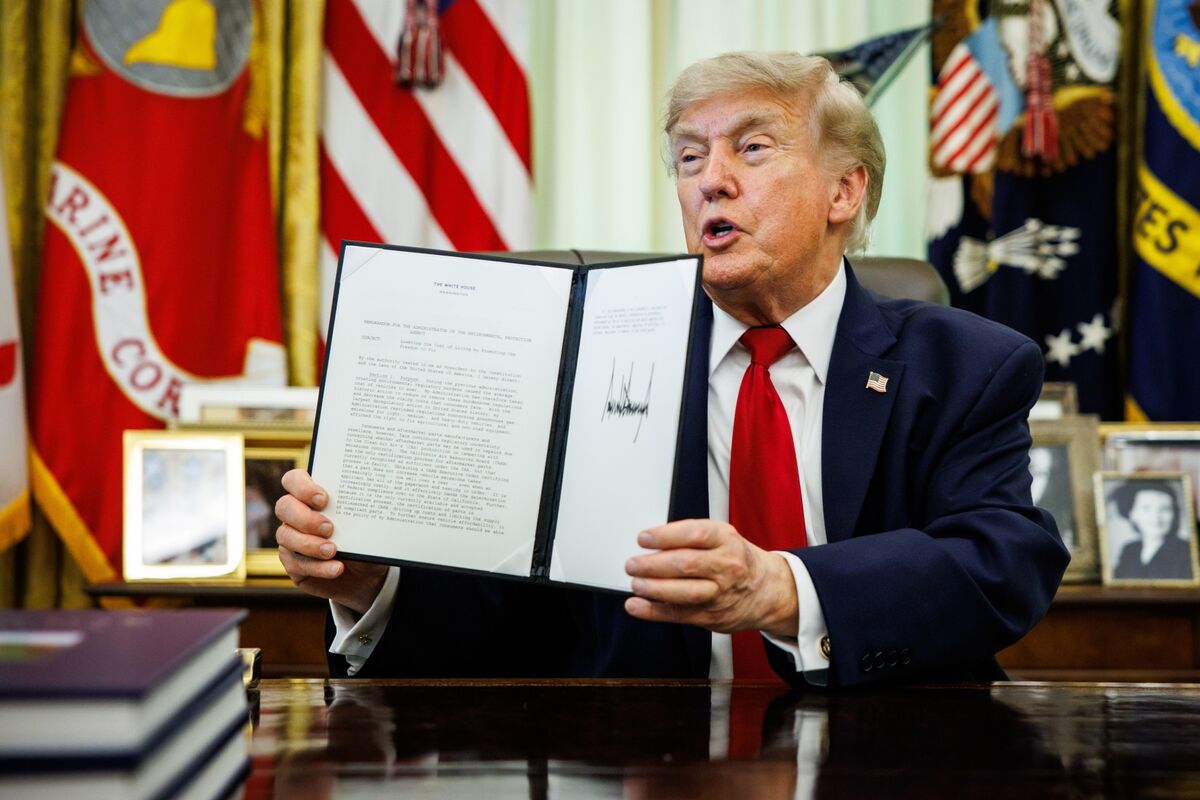
- Trump announces pardons for pollution violators prosecuted for "fixing their car" (Center — Politics - CBSNews.com)
- Trump Pardons Six People Pursued for ‘Fixing Their Car’ (Center — Bloomberg Politics)
- Sources: Trump likely to pardon pollution violators; weighing clemency for Diddy (Center — Politics - CBSNews.com)
- Fox host warns Trump will pay for his 'breathtaking' corruption (Left — Alternet.org)
- Trump Scores Appeals Court Victory in Battle Over National Park Historical Displays (Right — RedState)
- Signs of Victory: I-95 Welcomes President Donald Trump Int'l Airport (Right — RedState)
- Trump’s ‘ramped up’ rhetoric leaves unifying tone of July Fourth speech in question (Center Left — NBC News Politics)
Daily Analysis
Read the full Parallax Pulse for June 17, 2026 — an AI-powered analysis of how Left and Right media covered the biggest stories this day.
More Headlines From June 17, 2026
- Republicans in Uproar Over Trump’s Deal With Iran: “Total Surrender” (Left)
- G7 Leaders Call For 'Immediate Cease-Fire' in Lebanon as They Welcome U.S.-Iran Peace Deal (Center Left)
- Trump abruptly halts confirmation process for Jay Clayton as US intelligence chief (Center Left)
- What's in the US-Iran agreement? (Center)
- Fed holds US interest rates steady as uncertainty over Trump's Iran deal remains (Center)