Trump Has Brought American Paramilitary Violence Home
Source: The New Republic · Bias: Left
Summary
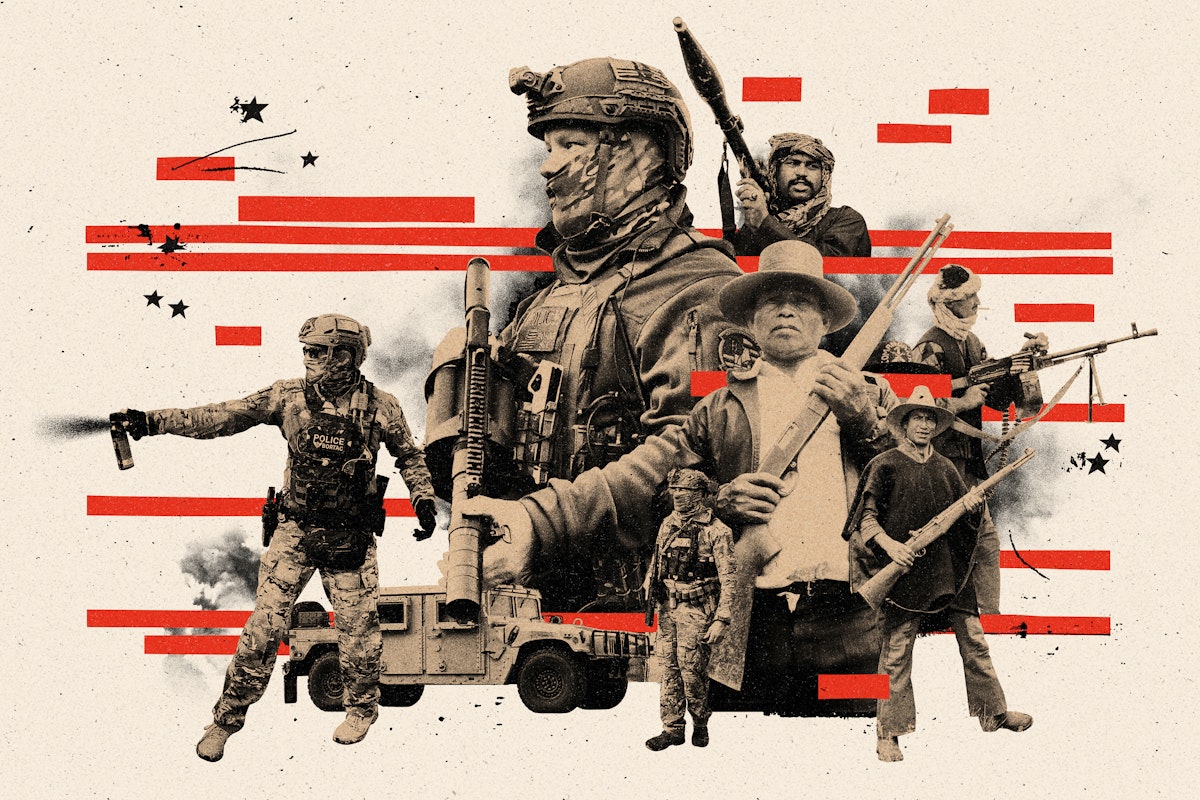
Hours after Renee Good was gunned down on a Minneapolis street by an Immigration and Customs Enforcement agent inside her Honda Pilot, Aurin Chowdhury, the council member for Minneapolis’s Twelfth Ward, told me the city was under siege. “We’re already in a mass, mass militarized occupation,” Chowdhury said, referring to the thousands of armed federal agents who had invaded the Twin Cities a month earlier as part of the Department of Homeland Security’s “Operation Metro Surge.”My conversation with Chowdhury took place during what the Department of Homeland Security touted as its “largest … operation ever.” As in Operation Midway Blitz, which began in Chicago last September, masked men in tactical gear, equipped with military-grade firearms, recklessly deployed chemical weapons as they prowled local neighborhoods populated predominantly by immigrants. Some of their detainees included a worker at a Spanish immersion daycare center and the husband of a woman who was pregnant with their fourth child. (The mother has since given birth, but her husband is still nowhere to be found—perhaps lost in the ever-growing labyrinth of the ICE detention system.) A couple of days before Good’s killing, an additional 2,000 armed agents had been deployed to the Minneapolis metro area.Chowdhury had reached out to city leaders in Chicago not long after the start of Operation Metro Surge so she could get a handle on what was to come—and to prepare for the worst-case scenarios. Her foresight proved tragically accurate. As she was relaying to me how dire the situation was, a convoy of agents led by Greg Bovino, then the commander at large of the Border Patrol, was arriving at Roosevelt High School to detain a special-education paraprofessional. The arrest couldn’t have been more poorly timed: School was being dismissed, and in the chaos, rounds of tear gas were fired into a crowd of students. “We have to go,” I heard a muffled voice mutter in the background. “All right, well, there’s ICE agents at the high school in my ward, so I gotta run,” Chowdhry said before hanging up.To many in the United States and around the world, the sight of militarized, federal police forces operating with immunity on U.S. streets seemed inconceivable. Of course, heavily armed, virtually unaccountable forces are not new to American policy; they’re only new to American soil.Lost in the rush to metabolize the Trump administration’s unprecedented domestic conduct was any real reckoning with what we were witnessing. Since the end of World War II, paramilitary violence—the use of armed, military-style operations conducted by forces who operate outside the formal armed services and are therefore unaccountable to them—has been a crucial component of U.S. foreign policy. But such operations have also been obscured by both definition and distance, with U.S.-backed militias, intelligence units, special operations proxies, and death squads typically operating thousands of miles from America’s borders. No more. Now, the Trump administration has brought the paramilitary violence home.The anti-immigration sweeps by ICE should be viewed as an extension of a broader U.S. paramilitary tradition that began decades ago. At the beginning of the Cold War, the United States was trapped by the contradictions at the heart of its two major obligations: on one hand, maintaining an international liberal order premised on the relatively novel concept of universal human rights; on the other, eradicating the rise of nascent communist movements and governments across the world, at any cost.U.S. paramilitary politics was born out of these contradictions. Efforts to “excise” left-wing revolutionaries required targeting the vulnerable populations where leftist insurgents operated, such as those in rural hamlets or impoverished urban centers. Conscious of its own anti-colonialist history and wary of public disapproval, successive U.S. governments sought to covertly outsource the bloodiest aspects of anti-communism to puppet governments in Latin America and the Middle East. With a few notable exceptions like Vietnam and Korea, the United States relied less on traditional boots on the ground and more on the subtlety of proxies who operated with impunity.It wasn’t limited to the Third World, either. After the Allies carved up Europe, the United States created a postwar network of clandestine “stay-behind” cells in Western Europe, should a hypothetical Soviet invasion occur. This CIA-backed network, known as Operation Gladio, was staffed with reactionary ideologues, and weapons caches were planted in countries like Germany, Belgium, Italy, and Greece. When a Russian incursion failed to materialize, Gladio operatives, particularly in Italy, began carrying out terrorist attacks—such as the bombing of a bank in Piazza Fontana that left 17 dead—in an effort to intimidate and pacify left-wing parties that might be sympathetic to communism.
Related Coverage
- Melania gives Congress private deadline as she works around Trump's team: report (Far Left — Raw Story)
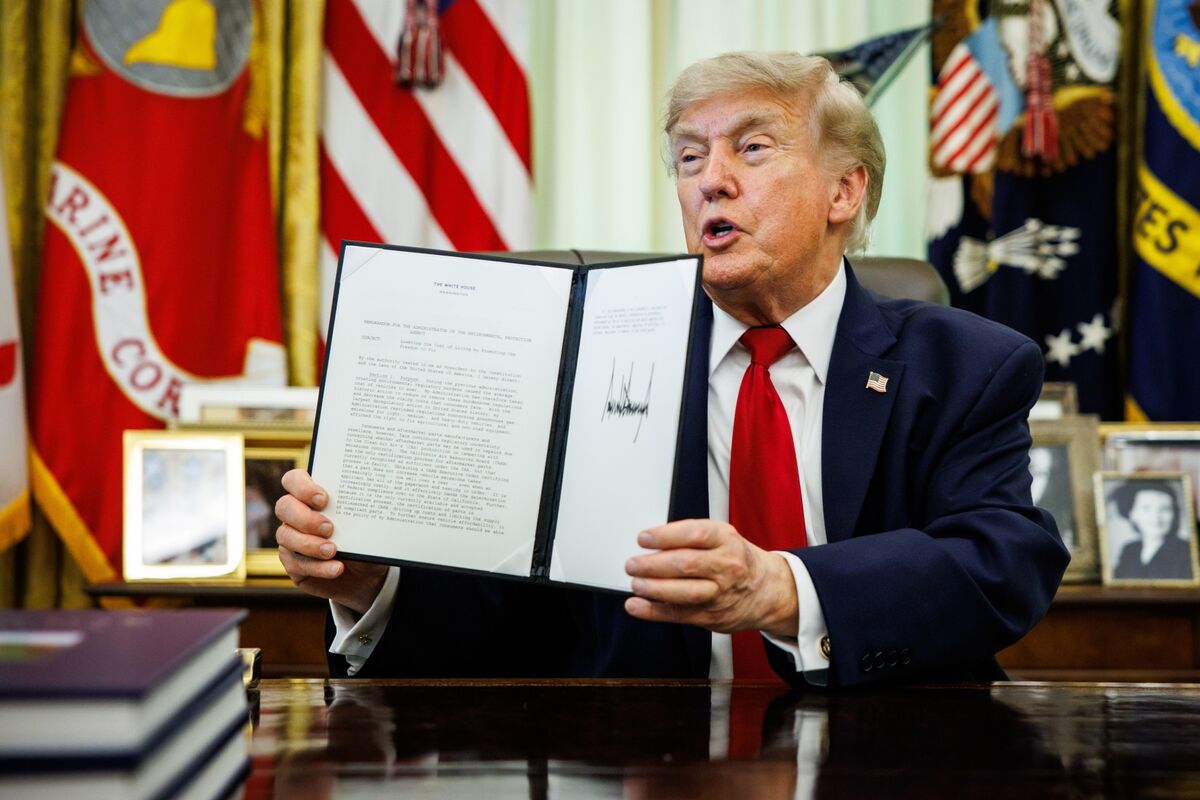
- Trump announces pardons for pollution violators prosecuted for "fixing their car" (Center — Politics - CBSNews.com)
- Trump Pardons Six People Pursued for ‘Fixing Their Car’ (Center — Bloomberg Politics)
- Sources: Trump likely to pardon pollution violators; weighing clemency for Diddy (Center — Politics - CBSNews.com)
- Fox host warns Trump will pay for his 'breathtaking' corruption (Left — Alternet.org)
- Trump Scores Appeals Court Victory in Battle Over National Park Historical Displays (Right — RedState)
- Signs of Victory: I-95 Welcomes President Donald Trump Int'l Airport (Right — RedState)
- Trump’s ‘ramped up’ rhetoric leaves unifying tone of July Fourth speech in question (Center Left — NBC News Politics)
More Headlines From March 15, 2026
- Israel says Michigan synagogue attacker’s brother was Hezbollah commander (Center)
- Targeting the faces of evil: The US confronts a rogue state (Center)
- Rep. Jasmine Crockett’s fugitive security guard had extensive criminal history, under federal probe before fatal SWAT standoff: report (Right)
- **Livewire** Operation Epic Fury Day Sixteen: Iran Denies Asking for Peace Talks, Ready to Fight 'as Long as It Takes' (Far Right)
- Gingrich: Americans won’t back Trump ‘forever’ on Iran war (Center)