Trump admin reverts to an old playbook in Cuba
Source: Alternet.org · Bias: Left
Summary
For months, US President Donald Trump has been fixated on Cuba. He’s issued threats and imposed additional sanctions on the island. The US military has conducted dozens of intelligence-gathering flights off the coast in recent weeks, suggesting a prelude to an invasion.The Cuban government has indicated a readiness to negotiate with the Trump administration on some issues, such as migration, drug trafficking and investment openings for Cuban-Americans. But Cuba’s sovereignty is not negotiable.After interviewing Cuban President Miguel Díaz-Canel last month, US journalist Kristen Welker seemed to catch on: Nothing gets under [Cubans’] skin more than the notion that the United States can tell the Cuban government who should lead it or what it should be doing, how it should be governing, because that challenges the very idea of the sovereignty of the country.This US obsession with controlling, influencing and coercing Cuba long predates Trump and even the Cold War. This is how President Theodore Roosevelt described the island in 1906:I am so angry with that infernal little Cuban republic that I would like to wipe its people off the face of the earth. All we have wanted from them was that they would behave themselves and be prosperous and happy so that we would not have to interfere. And now, lo and behold, they have started an utterly unjustifiable and pointless revolution.Understanding the current impasse between the two adversarial neighbours requires looking at this full arc of history. While the 1823 Monroe Doctrine sought to establish US predominance in the entire American continent, Cuba has always been a particular focus of Washington’s attention.‘Americanisation’ of the islandFrom the moment the 13 American colonies declared independence from Britain, Americans assumed Cuba would become part of the union. Successive US administrations sought to purchase, annex or otherwise control Cuba, claiming this was inevitable by virtue of the laws of gravity and geography. It was also seen as part of a self-proclaimed “civilising mission”. When the Cubans eventually defeated their Spanish colonial masters in 1898, the United States stepped in and occupied the island to thwart its independence.At the time, at least one third of Cubans were former slaves or of mixed race. The US governor of Cuba, Leonard Wood, argued they were not ready for self-government. Illustration shows Uncle Sam talking to a young boy labelled ‘Cuba’ on a beach, from a 1901 publication. Library of Congress Certainly, the US – especially the Southern former slave holders – didn’t want another Haiti in its neighbourhood. Haitian slaves had seized control of their island nation from the French in a violent rebellion in 1804, echoing the cries of the French revolution for liberty, fraternity and equality. The US military occupation of Cuba ended in 1902 and Cuba formally declared independence – albeit with provisions. These allowed for future US intervention whenever Washington thought the Cuban people needed a guiding hand (which turned out to be fairly often).In the decades that followed, US business interests deeply penetrated every sector of Cuba’s economy and had complete sway over Cuban governments. On a cultural level, Cuba rapidly became “Americanised” through a new US-style education system. Travel to the island picked up, too. The popular Terry’s Guide to Cuba reassured US visitors in the 1920s they would feel right at home because “thousands [of Cubans] act, think, talk and look like Americans”.Castro’s missionAll of this changed with the rise of Fidel Castro. During the Cuban Revolution, Castro announced in April 1959 that the revolutionary government would be “Cubanising Cuba”. This might seem “paradoxical”, he explained, but Cubans “undervalued” everything Cuban. They had become “imbued with a type of complex of self-doubt” in the face of the overwhelming US influence on the island’s culture, politics and economy. US journalist Elizabeth Sutherland similarly observed at the time that Cubans suffered from a “cultural inferiority complex typical of colonised peoples”. For North Americans, however, Castro’s blunt statement seemed at best to reflect ingratitude, and at worst, an insult. As the US broadcaster Walter Cronkite recalled:The rise of Fidel Castro in Cuba was a terrible shock to the American people. This brought communism practically to our shores. Cuba was a resort land for Americans […] we considered it part of the United States.At the heart of Cuba’s revolutionary project has been an assertion of Cuba’s sovereignty, independence and national identity. The drive has been to create a new, united and socially just Cuban nation, as envisioned by its great national hero and poet, José Martí.So, for Cubans it’s a matter of history. For North Americans, it’s a matter of self-image. They had “convinced themselves,” writes historian Louis A.
Related Coverage
- Melania gives Congress private deadline as she works around Trump's team: report (Far Left — Raw Story)
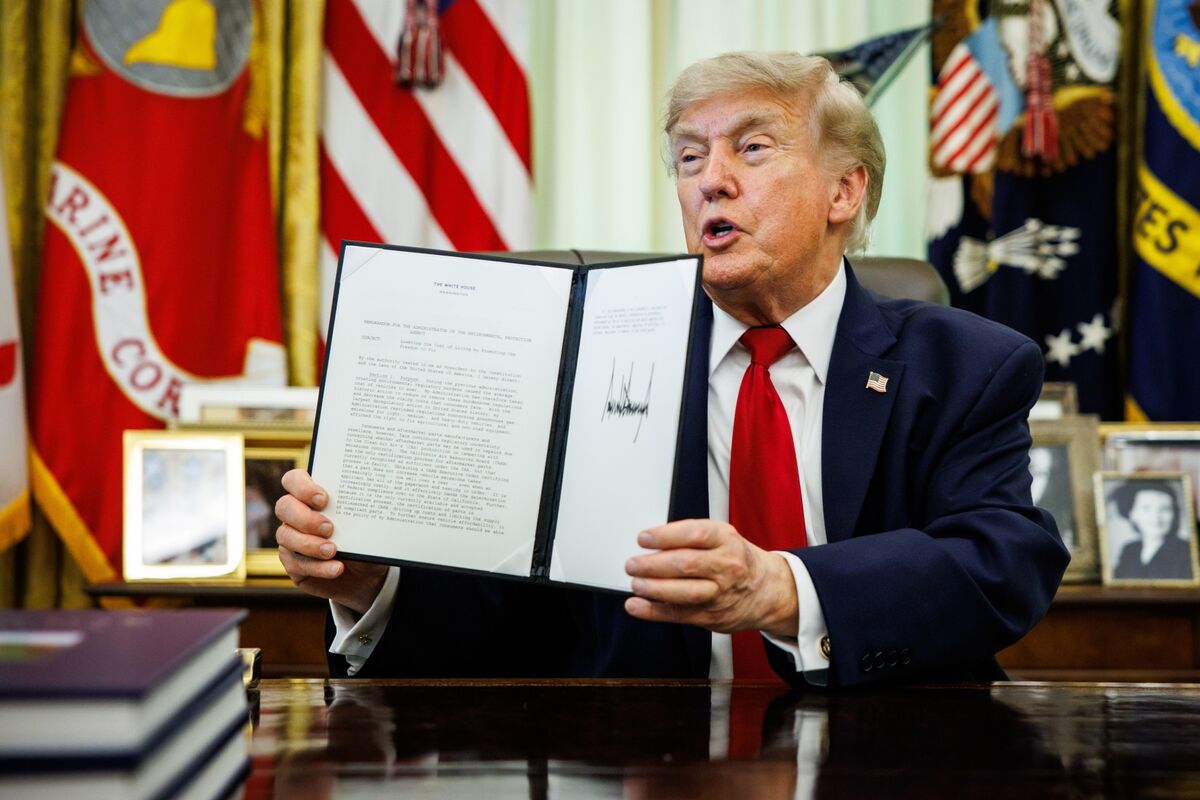
- Trump announces pardons for pollution violators prosecuted for "fixing their car" (Center — Politics - CBSNews.com)
- Trump Pardons Six People Pursued for ‘Fixing Their Car’ (Center — Bloomberg Politics)
- Sources: Trump likely to pardon pollution violators; weighing clemency for Diddy (Center — Politics - CBSNews.com)
- Fox host warns Trump will pay for his 'breathtaking' corruption (Left — Alternet.org)
- Trump Scores Appeals Court Victory in Battle Over National Park Historical Displays (Right — RedState)
- Signs of Victory: I-95 Welcomes President Donald Trump Int'l Airport (Right — RedState)
- Trump’s ‘ramped up’ rhetoric leaves unifying tone of July Fourth speech in question (Center Left — NBC News Politics)
Daily Analysis
Read the full Parallax Pulse for May 12, 2026 — an AI-powered analysis of how Left and Right media covered the biggest stories this day.
More Headlines From May 12, 2026
- Judge Lagoa Shows How SCOTUS Should Rule On Birthright Citizenship (Far Right)
- US Soy Growers Want Commitments From China as Season Slips Away (Center)
- How the Trump-Xi summit could set superpower relations for many years to come (Center)
- INSIDER: No justice for Dr. Fauci? (Far Right)
- Kash Patel SHREDS Democrat Senator Chris Van Hollen in Fiery Exchange Over Accusations of “Excessive Drinking” (VIDEO) (Far Right)