Treasury Sec. Attacks Elizabeth Warren in Freakout Over Trump’s Stocks
Left
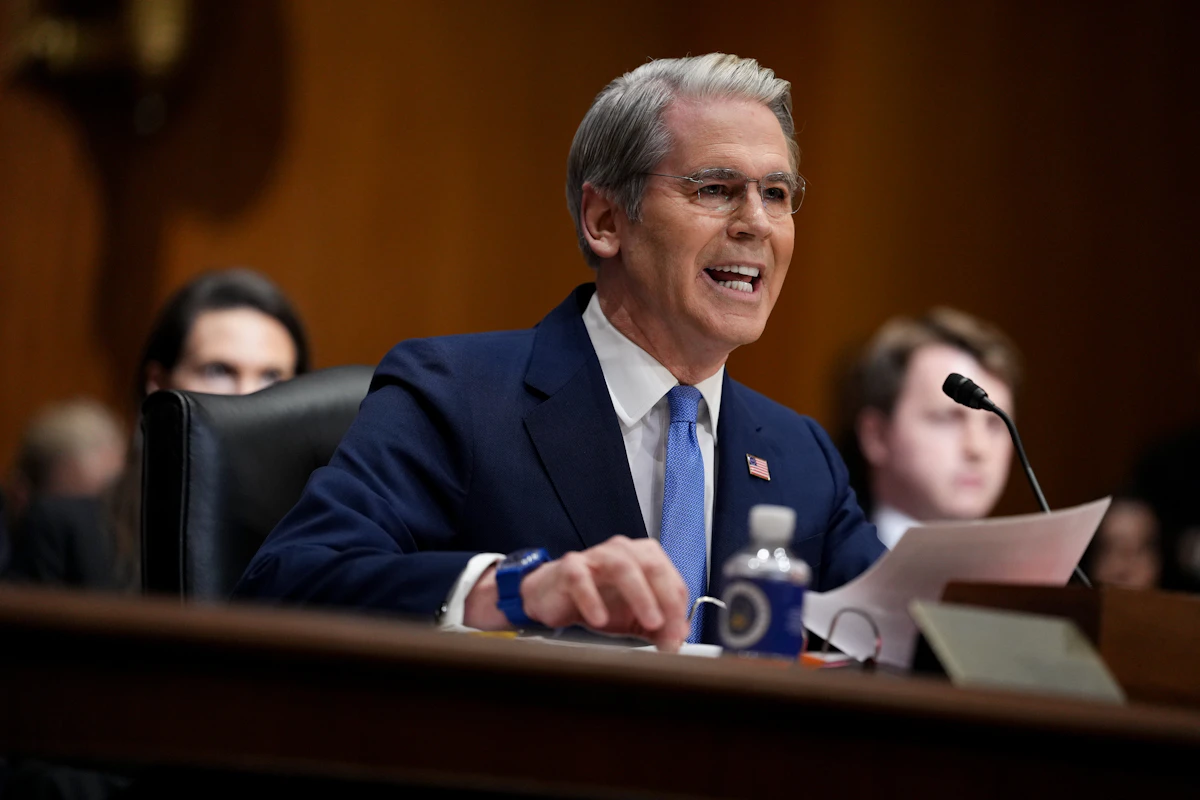
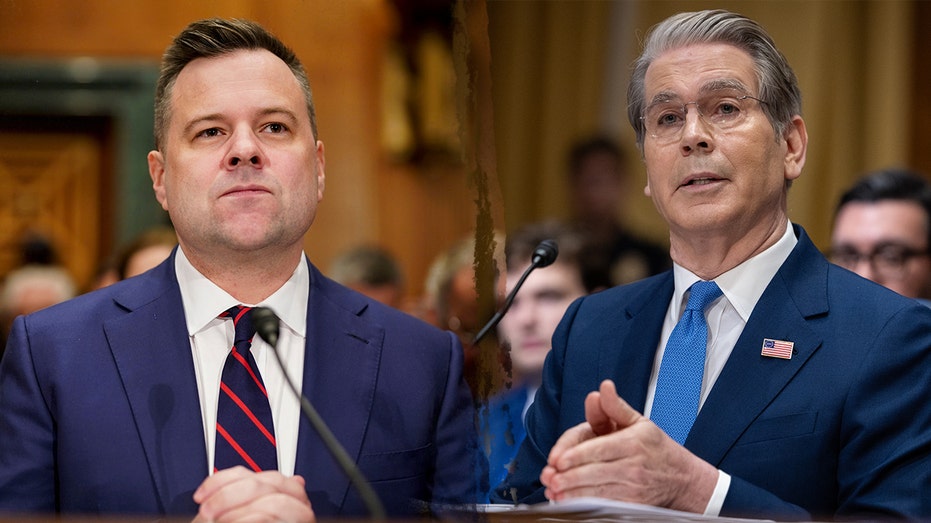
Treasury Secretary Scott Bessent repeatedly refused to acknowledge Donald Trump’s blatantly corrupt stock trading under fierce questioning by Senator Elizabeth Warren on Wednesday. During a Senate Finance Committee hearing, Warren hammered Bessent for pushing to end congressional stock trading, while Trump made more than 3,400 stock trades worth more than a quarter of a billion dollars in the first three months of 2026 alone.“So, Secretary Bessent, you and I agree that it is a conflict of interest for members of Congress to trade stocks. Do you also agree that it’s a conflict of interest for President Trump to trade stocks?” Warren asked. “President Trump is not sitting in the Oval Office engaging in high frequency trading strategy, clearly he had an outside manager who was doing that,” Bessent said. “I think it’s incumbent upon both houses of Congress to get their house in order before you move to the administrative branch—”“You’re a Wall Street guy, so you know better,” Warren said. “The investments that President Trump has made are not blind.”🔥 here is the full video of Elizabeth Warren grilling Scott Bessent on Trump's indefensible stock trading. This is a master class. pic.twitter.com/Ur8biJMXC3— Aaron Rupar (@atrupar) June 3, 2026The Massachusetts Democrat explained that Trump had signed a 113-page document listing all of his individual stock trades, while simultaneously making policy decisions that affected those stocks. “So you’re going to sit here with a straight face and say it’s not a conflict of interest for the president of the United States to do that?” she asked. “I am going to say this body needs to get its house in order first, I would encourage you to do that—” Bessent said.“I don’t trade in individual stocks. I don’t own any individual stocks,” Warren said. “My house is in order, thank you Mr. Secretary.”Warren questioned Bessent about Trump’s purchase of between $500,000 and $1 million worth of Nvidia stock one week before his administration moved to loosen export restrictions, allowing the sale of Nvidia chips to China and causing the stock price to soar. The senator asked whether the SEC should knock on Trump’s door to investigate this trade, but Bessent continued with his obstinate denials. “Please lead by example,” Bessent said. “I would like to see the president of the United States lead by example,” Warren said.Warren also asked about Trump’s purchase of tens of thousands of dollars of stock in the Bank of New York (BNY) and its partner Robinhood. Shortly after his purchase, the Treasury Department announced that the Trump accounts would be managed through, you guessed it, BNY and its partner Robinhood. “If these stock purchases that Trump made were made using inside information, would that be illegal?” Warren asked. Clearly, the answer would be yes, but Bessent played dumb. “Again, I’m not a lawyer,” Bessent said.“Would it be worth investigating?” Warren asked. “Why don’t we investigate many people on this committee?” Bessent said smiling. The secretary has good reason to avoid condemning Trump’s blatant corruption—he appears to be instrumental in pulling it off.
Iran is using Lebanon as leverage in peace talks with the U.S., exploiting tensions between President Trump and Israeli Prime Minister Benjamin Netanyahu’s government in the process. Trump held two expletive-laden calls with Netanyahu earlier this week, demanding he retreat on a major military offensive in Beirut against Iranian-backed Hezbollah. Trump, speaking with the New…
Donald Trump's imploding festival commemorating America's 250th anniversary has sparked an inquest inside the White House over a 'grossly negligent' decision.
Thousands of Albanians have taken to the streets — and the internet — to rage against a planned luxury resort linked to Ivanka Trump and her husband Jared Kushner, with protesters demanding the government cancel the project and chanting "Ivanka, go home."The flashpoint is a proposed €4 billion ($4.7 billion) development — described by Prime Minister Edi Rama as an "extraordinary investment" — on Sazan Island and the protected Vjosa-Narta coastal wetlands in southern Albania. Ivanka described it in dreamy terms on a recent podcast."It's an unbelievable, beautiful, 1,400-hectare private island in the middle of the Mediterranean," she told host David Senra. "We swam to the island, we went on a hike, barefoot all the way up to the top, and we were just captivated."She did not mention the protests.On the ground in Albania, the mood was rather less romantic. Anadolu Agency reported thousands gathering in Tirana under the slogan "Albania is not for sale." TV Klan presenter Leftioni Peristere flagged AFP wire coverage of the demonstrations, which have now stretched into a fourth consecutive day — with police firing water cannons at crowds that included children.One Albanian, posting a video of the country's stunning Adriatic coastline, put the stakes simply: "Do you know what we are protesting for?"Another, in a widely shared video, was blunter. "All the blood, sweat, and tears that our people and ancestors have fought for is being sold by a leader who has betrayed us," he said, calling out Prime Minister Edi Rama by name.Protest crowds have echoed that sentiment, chanting "Thieves!" and demanding Rama's arrest by SPAK — Albania's Special Anti-Corruption Prosecutors, who opened a formal investigation into the project this week.Ivanka told Senra the resort is "the culmination of all of my experience in real estate, all of my travel, a lot of reflection on how I want to live, how I think people increasingly want to live."Albanians, it seems, have thoughts about that too.
A relatively unknown farmer who openly touted his ties to the Make America Healthy Again movement upset President Donald Trump’s endorsed candidate in Iowa’s GOP gubernatorial primary […]
While warning signs have been flashing ever since President Donald Trump’s war with Iran resulted in the closure of the Strait of Hormuz, fallout in the form of a major economic disaster is yet to manifest. “That won’t last forever,” writes the American Prospect columnist Ryan Cooper, who warns that “something is going to snap.”The danger wouldn’t be so looming if the war appeared to be nearing its end, but as Cooper points out, there is little evidence to support such a hope, noting that Iran has “cut off contact with American negotiators, and the two sides are once again shooting at each other. Trump, for his part, recently told a CNBC reporter that I’ really don’t care. I couldn’t care less’ if negotiations are over. They ‘started to get very boring,’ he added.”So apparently, according to Trump himself, he’s feeling no pressure to make a deal, which is exactly what he said in early May. Cooper warns that this places the U.S. in a dangerous position, because while there hasn’t been a “truly major crisis” yet, “it’s only a matter of time before one or more of the severely strained parts of the global economy breaks.”Total catastrophe has so far been avoided based on four factors. First, despite Trump’s best efforts to oppose a green-energy transition, companies and countries around the world have leaned into alternative energy as fossil fuel prices have shot up. At the same time, many nations, particularly in Asia, have begun rationing oil consumption, which while painful, has helped stave off collapse. But a third “more ominous” factor, says Cooper, is that the world has been forced to draw heavily on existing stocks of oil and natural gas. According to Cooper, “Many people saw the Iran war coming, and filled up every oil tanker and storage facility they possibly could. A great deal of that has since been used up. The vast storage complex at Cushing, Oklahoma (regarded as a storage benchmark), has declined from 33 million barrels to 24.5 million — and they can’t be fully emptied. ‘You can’t draw them down to zero because there is gunk at the bottom of the tanks,’ oil analyst Matt Smith told CNN.” At the same time, countries around the world are depleting their reserves. “We’re approaching unheard of inventory levels,” Exxon Senior Vice President Neil Chapman said recently. “Once you get to that point, then you’ll see price shoot up.” A fourth factor, writes Cooper, is “the behavior of the media and financial markets. The D.C. political press can be relied on to uncritically repeat Trump’s preposterous lies about an imminent deal, no matter how many times they have been proved false. Traders on oil and oil futures markets, being either deluded by the media or blinded by wishful thinking or simply incapable of believing that the president of the United States is as stupid and insane as he in fact is, have consistently expected the strait to open back up soon…Oil prices again fell sharply after Trump’s latest promise.” Despite this market manipulation, Cooper warns, “Sooner or later, oil traders are either going to face reality, or bankrupt themselves.”As Cooper points out, “reserve releases and comically underpriced oil futures are effectively subsidizing oil consumption.” While a few countries, primarily in Asia, have taken measures to reduce oil usage, many world leaders “have encouraged their nations to continue using energy at normal levels, and therefore to chew through global inventories more quickly. That means if and when the supply shock hits, it will hit even harder.”On that note, Cooper dives into the looming crises that are poised to destroy several key sectors of the economy. “The most obvious one is in oil itself,” Cooper explains. “As storages dwindle and run out, the only way to match demand to supply will be for the price to rise high enough to destroy something like 10 to 20 percent of global oil consumption. And because a great deal of oil demand is obligatory and therefore not very price-sensitive, that price will likely be north of $150 per barrel. That means gas and diesel at the pump in the $8-to-$10 range, and a corresponding price hike for anything that needs to be transported, or involved in plastic in some way, which is to say basically everything.” Other sectors like agriculture, aluminum, and industrial commodities are in similarly precarious situations due to plunging stock and skyrocketing prices, the fallout from which will be wide-ranging and devastating.And worse still, notes Cooper, “even if the Strait of Hormuz opens tomorrow, these problems are going to take years to resolve.” Oil fields will take months to resume production, vital infrastructure will take years to rebuild, and the need to restock reserves will drive years of structurally higher demand. What’s more, the situation is still in flux, and it could continue to deteriorate in ways no one has forecasted.