Transcript: What the Democratic Moderation Debate Gets Wrong
Source: The New Republic · Bias: Left
Summary
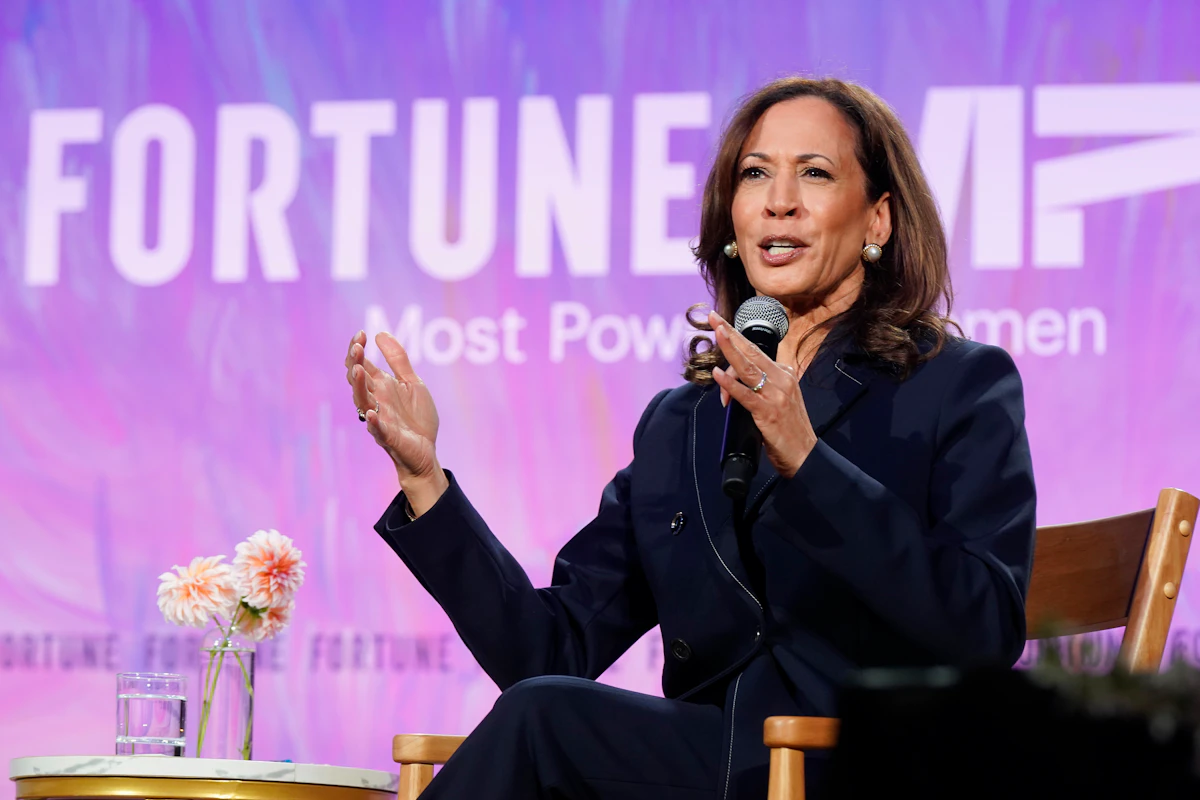
This is a lightly edited transcript of the March 27 edition of Right Now With Perry Bacon. You can watch the video here or by following this show on YouTube or Substack.Perry Bacon: Good afternoon. This is Perry Bacon—I’m the host of Right Now, a show from The New Republic. I’m joined today by Jake Grumbach. He’s a professor at the University of California, Berkeley, and he’s been a guest once before. Jake, welcome.Jake Grumbach: Thanks for having me back on, Perry.Bacon: Good to see you. So I want to talk about something you’ve written a lot about—this Democratic Party debate about so-called moderation. There were two pieces this week that I thought were really telling. One is from The New York Times: “Why Are So Many Democratic Politicians So Far Out of Touch?” And the second is from a site called The Liberal Patriot, titled “No Learning Please, We’re Democrats.” Both pieces are different in some ways, but they share the same basic argument: that after the 2024 election there was a lot of talk about the Democratic Party needing to move—to become more so-called moderate, particularly on so-called social or cultural issues. And both authors are now lamenting that the Democratic Party has not moved to the right as much as they had hoped.I think they’re correct that the Democratic Party has not necessarily become more anti-immigration or moved on trans rights. I might feel differently about whether that’s the right diagnosis, but I want to unpack a little bit why this has happened. Let’s start with the Liberal Patriot piece, because it goes through several specific issues. I’m going to ask you two questions about each one: first, do you think this is an actual problem with the Democratic Party? And second, would moderating help—would moderating in a policy sense help? And if not, what would?The first issue the Liberal Patriot raises is what it calls the culture problem: there’s a yawning gap between the cultural views of the Democratic Party, dominated by liberal professionals, and those of the median working-class voter. So: is the culture problem a real problem, and is it solved by ideological moderation?Grumbach: I think political parties—both the Democratic and Republican parties—represent different groups within society, and therefore always struggle to combine sets of committed activists, party stalwarts, and constituencies they’ve represented for a long time: Black voters in the Democratic Party, rural whites and evangelical whites in the Republican Party. This is a known challenge for political parties around the world, in democracies and partial democracies like the U.S. But the thing that strategists and pundits have really locked in on over the past couple of years is this very simple answer: the Democratic Party needs to moderate, get more centrist on the left-right dimension—typically with an emphasis on culture-war issues.Ruy Teixeira is the writer of The Liberal Patriot blog, and he is a fascinating character. Back in the Obama era, he was writing about the permanent Democratic majority on the basis of young people and voters of color as this new multicultural coalition. Then the Trump era comes, and suddenly it’s about the white working class that’s been lost. The point here is that there are a lot of moving parts, and moving in a centrist direction is not something that can just be done easily.We saw Kamala Harris—a mainstream California liberal, I would say, in the middle of the Democratic Party—really try to run a moderate campaign in the 2024 presidential election. Not speaking to Gaza, tough-on-crime prosecutor, the toughest cop on the beat, very much not defund the police. And that didn’t work. There were other structural reasons—things like inflation and the way voters who don’t pay a ton of attention to the news reacted to it. And it’s actually really hard to make yourself look more moderate; you end up looking like a flip-flopper who doesn’t believe in anything. There’s this uncanny valley for Democratic candidates, as Chris Hayes recently mentioned in an interview I liked, where you are seen by the base of the Democratic Party as a centrist sellout, and seen by the Republican Party as the ultimate partisan lib—capital-D Democrat. That was the Hillary Clinton problem. Hillary Clinton actually governed as a New York senator as a moderate Democrat—she’s part of the Clinton family, a historically nineties-moderate part of the Democratic coalition—and that still didn’t work.What my coauthor Adam and I have been advocating is breaking out of this left-right dimension—particularly in this age of authoritarianism. We actually don’t know what works; elections are hugely uncertain. There are some things we know, but most things we don’t, and polls are very volatile right now. So anybody selling you the idea that just moderating will save democracy is selling you something.
Related Coverage
- Bannon warns the ‘old politics are gone’ amid Democrat socialist surge (Far Right — BizPac Review)
- Wes Moore on democratic socialist gains: Voters want ‘someone who is going to fight for them’ (Center — The Hill News)
- A Vietnam Nurse Who Came Home, Helped Get Us to 250 (Center Right — RealClearPolitics - Homepage)
- Karoline Leavitt on the ‘Full Blown Communist Revolution’ Happening Thanks to Democrats (Video) (Far Right — The Gateway Pundit)
- The Democrat Party Is Literally Communist, and the Voters Admit It! (VIDEO) (Far Right — The Gateway Pundit)
- Vance: Rep. Ocasio-Cortez will lead Democrat presidential race in 2028 (Far Right — One America News Network)
- Time for Democrats To Fret About Platner? (Center Right — RealClearPolitics - Homepage)
- Senator John Fetterman Reveals the One Thing That Would Make Him Leave the Democrat Party (VIDEO) (Far Right — The Gateway Pundit)
Daily Analysis
Read the full Parallax Pulse for March 30, 2026 — an AI-powered analysis of how Left and Right media covered the biggest stories this day.
More Headlines From March 30, 2026
- Trump Threatens Iran Energy Sites If No Deal Reached on War (Center)
- How Yemen’s Houthis Could Worsen the Oil Crunch (Center)
- House Democrat warns of ‘boots-on-the-ground quagmire’ in Iran (Center)
- Why one Democrat broke ranks to save Trump's DHS nominee (Right)
- US, Israel Keep Up Strikes on Iran After Troops Arrive in Region (Center)