Transcript: Trump Erupts as Damning Leaks on His War Blunders Hit Hard
Source: The New Republic · Bias: Left
Summary
The following is a lightly edited transcript of the March 17 episode of the Daily Blast podcast. Listen to it here.Greg Sargent: This is The Daily Blast from The New Republic, produced and presented by the DSR Network. I’m your host, Greg Sargent.Over the weekend, Donald Trump exploded in several tirades over media coverage of his Iran war. He accused news organizations of deliberately producing false stories about the war and even said they want us to lose to Iran. And then, in an angry rant to reporters, he rebuked other countries for refusing to help open the Strait of Hormuz—and things got truly weird.All this comes as a new exposé about Trump’s handling of the war reveals shocking new details about his incompetence and derangement, showing that we really need the free press right now more than ever. Which raises a question: is Trump about to use the war to launch a domestic information crackdown? We’re talking about all this with Molly McKew, an international relations expert and author of a good new piece on the deeper stakes of this moment. Molly, nice to have you on.Molly McKew: Thanks for having me, I appreciate it.Sargent: So the big story right now is that Trump is trying to determine how to get the Strait of Hormuz reopened, with many of our allies rebuffing his demands for help, and Trump trying to decide whether to go all in for an extended commitment. Molly, can you bring us up to date real quick on where this stands and why it all matters?McKew: I think we’re on what day 17 now of the strikes against Iran. No one is sure what the strategic objective is. In any war game tabletop exercise of should we strike Iran or not, one of the first questions has always been: can we keep the Strait of Hormuz open or not? Because the impact on shipping, on global transit of goods—particularly energy and oil supplies—if the strait is closed, is catastrophic, as we’ve seen in previous instances in the ‘70s and otherwise. The impact on the economy, on energy prices, on prices we will pay for everything, on how markets fluctuate, will be extremely significant if there is not a solution to what Iran is doing right now.Sargent: Well, Trump erupted in a wild fury at the media on Sunday night. Clearly this stuff is getting to him. One of his Truth Social posts said this:“The New York Times and the Wall Street Journal and other low-life papers and media actually want us to lose the war. Their terrible reporting is the exact opposite of the actual facts. They are truly sick and demented people that have no idea the damage they caused the United States.”In a second post, Trump accuses news organizations of deliberately suppressing the U.S.’s successes against Iran and hails Federal Communications Commission Chair Brendan Carr for threatening action against media organizations whose reporting on the war displeases Trump. Molly, there’s little chance the press curtails itself, but Carr’s threat is a serious matter. What’s your take on it?McKew: I think in general, the president’s tone and his supposition that media is not telling his story—not telling the truth—is extremely problematic. And the use of government resources to now pursue these claims as if they are reality is something that should concern us all, in the same way they’ve pushed the line on defining what is a domestic terrorist or not. The pursuit of people not telling the truth, using sanctions from the U.S. government, could be extremely significant. We’ve already seen people self-editing and sort of suppressing their views—in universities, in the media and other places—for fear of the kind of things Trump lashes out at.And I don’t think this will be helpful. Americans deserve to know what is happening in Iran, what our objectives are in Iran, that more than 200 Americans have been injured in the pursuit of whatever our goals are in Iran, that more Americans are deploying to the region and why and what that’s for and what it will look like. And they deserve to know that this war is not a standalone thing, but connected to the bigger war being fought. And the idea that the lies being told to the American public, quote-unquote, prevent them from seeing the truth—we’ve gotten so used to, as an American public, this sort of bombast from the president. And I think one by one so many institutions have caved to that strategy that we’re really in a dangerous place.Sargent: The New York Times had an extraordinary exposé on Trump’s handling of the war against Iran. One big revelation is that a “frustrated” Trump asked Joint Chiefs Chair Dan Caine why the U.S. can’t immediately reopen the Strait of Hormuz, and he was told gently that supertankers would be very vulnerable to even one missile in an attack. Trump’s also urging companies to show “some guts” and brave the strait, even though it’s obvious how dangerous this is.
Related Coverage
- Trump announces new pardons after privately weighing "Diddy" clemency, sources said (Center — Politics - CBSNews.com)
- Trump Heads to Mount Rushmore, Where He Wants to See His Face (Center — WSJ.com : U.S. News)
- 'Total disaster' at Trump's fair as scorching heat leaves 7 on 'advanced life support' (Far Left — Raw Story)
- Trump, ballot seizures and a ‘declaration’: Gavin Newsom teases tiresome July 4 address to the state (Right — New York Post)
- 'Not mentally well': MAGA suspects Trump sabotaged by liberals armed with weather machines (Far Left — Raw Story)
- 'God is angry': Internet bemused as Mother Nature comes for Trump's Mount Rushmore speech (Far Left — Raw Story)
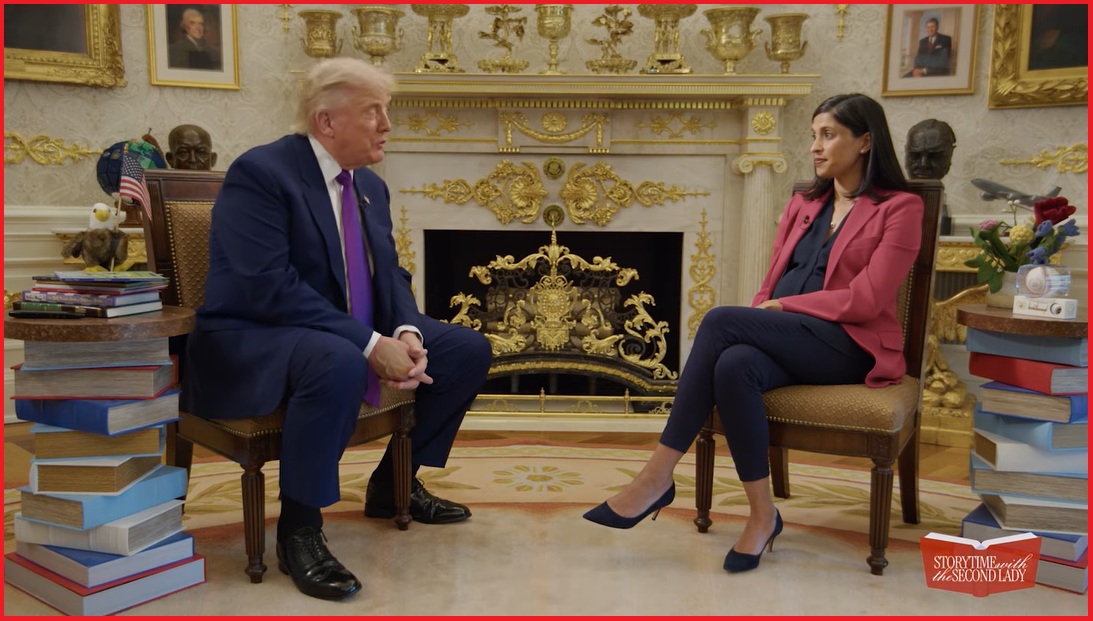
- ‘The second-most good-looking president’: Trump entertains on Usha Vance’s program (Far Right — WorldNetDaily)
- President Trump Reads “Presidents Play” (Far Right — The Last Refuge)
More Headlines From March 17, 2026
- ICE Agents Arrest Illegal Aliens Convicted of Murder, Child Sex Crimes, Sex Abuse (Far Right)
- BEASTMODE: Trump Declares That UK Prime Minister Keir Starmer 'Is Not Winston Churchill' (Center Right)
- Trump says China summit is delayed to focus on Iran war (Center Right)
- Pam Bondi subpoenaed for April 14 House deposition on Epstein files handling (Center Right)
- Israeli leadership give military blank check to target any Iranian official without additional approval (Center Right)