Transcript: Trump Blurted Out Vile Plot to Censor ABC—and It Backfired
Source: The New Republic · Bias: Left
Summary
The following is a lightly edited transcript of the July 31 episode of the Daily Blast podcast. Listen to it here.Greg Sargent: This is The Daily Blast from The New Republic, produced and presented by the DSR Network. I’m your host, Greg Sargent.It’s been a while since we checked in on Donald Trump’s use of government power to silence networks that displease him, and there’s a new development. ABC just put out their challenge to the Federal Communications Commission’s vile efforts to punish it by going after its broadcasting licenses. And something funny happened. Trump’s own tweets and declarations have become evidence of his corrupt intent to use the FCC as a weapon of censorship. And this captures something really essential about Trump’s open corruption and whether our institutions are capable of constraining it.So we’re talking about all of it with one of our go-to people on these things, University of Michigan law professor Leah Litman. Hey, Leah, always good to have you on.Leah Litman: Glad to be back.Sargent: So at the center of this sordid story is FCC Chair Brendan Carr, who’s one of Trump’s most slavishly devoted accomplices. Whenever Trump gets upset about networks telling the truth about him, Carr is right there in the background. In the spring, Carr launched an early review of broadcast licenses at eight TV stations owned by ABC, which is a network Trump hates because of Jimmy Kimmel and other things. Leah, can you just bring us up to date on this, and what Carr is really all about?Litman: Yeah, so Carr has been basically attempting to use the Federal Communications Commission’s power over these media companies in order to get them to ensure there is favorable coverage for the president, and coverage that the president likes. And sometimes he does this by threatening to review licenses that allow these companies to distribute their programming onto other channels. Other times he uses the FCC power by threatening investigations into the companies that might impose regulatory sanctions on them. And so this is not the first time this has happened. You know, we saw, for example, the FCC kind of try to coerce Disney to cancel Kimmel. We saw them trying to strong-arm CBS to cancel Colbert. And they do this, again, by threatening the agency’s regulatory authority to award benefits or impose punishments on companies that are subject to their control.Sargent: And these agencies, particularly FCC, have huge power, right? If they don’t grant licenses, that’s the end of the company. They don’t have business anymore. Yeah. And we should note here that the FCC claimed that its review of the broadcast licenses of these stations was about looking at their DEI policies. And I think we know that’s bullshit, right?Litman: Yeah, I mean, I don’t know what this administration thinks DEI stands for. You know, on our podcast, we’ve joked that it’s “dicks, ex-husbands, imbeciles.” In light of the diarrhea—it’s “diarrhea for everyone, because of incompetence,” right? Like, I don’t know. But they kind of use that word as their go-to for saying, we don’t like something that you’re doing, and so we are just going to target you.Sargent: Yeah. There’s almost like a Soviet quality to it. It’s like they really just say it, and they’re visibly full of shit, and they know it. And that’s part of the exercise of power.Litman: Yes, indeed. We can just toss this label out and use that to go after anyone we want. Sargent: And there’s nothing you can do about it. So ABC put out its formal response to the FCC’s review, and it’s scathing stuff. I’m going to read one line. ABC says, “The retaliation against ABC is a signal to every media company in the country: Accommodate the administration’s view of what news coverage should look like, or pay the price.” Leah, that’s the plain truth, isn’t it?Litman: No, absolutely. And I think the president has taken this approach to many different regulatory initiatives or prosecutions. You know, he’s tried to indict, for example, former FBI director Jim Comey, New York Attorney General Letitia James. And it’s clear that those prosecutions also serve as a warning, right? Like, do our bidding, or stand down, or you will face the penalty. And so this attempt to bully ABC is just another example of that. And here, in the context of media coverage—and I think another manifestation of this are the president’s litigation against different media companies. You know, he sues them for running a story that he doesn’t like. And here he’s leveraging the immense power of the federal government to serve the same purpose.Sargent: Now, here’s the really good part. In order to show that the FCC is trying to punish ABC for its content and its viewpoints, punish it for its reporting and its speech, ABC cites one of Trump’s own tweets, in which Trump says this directly.
Related Coverage
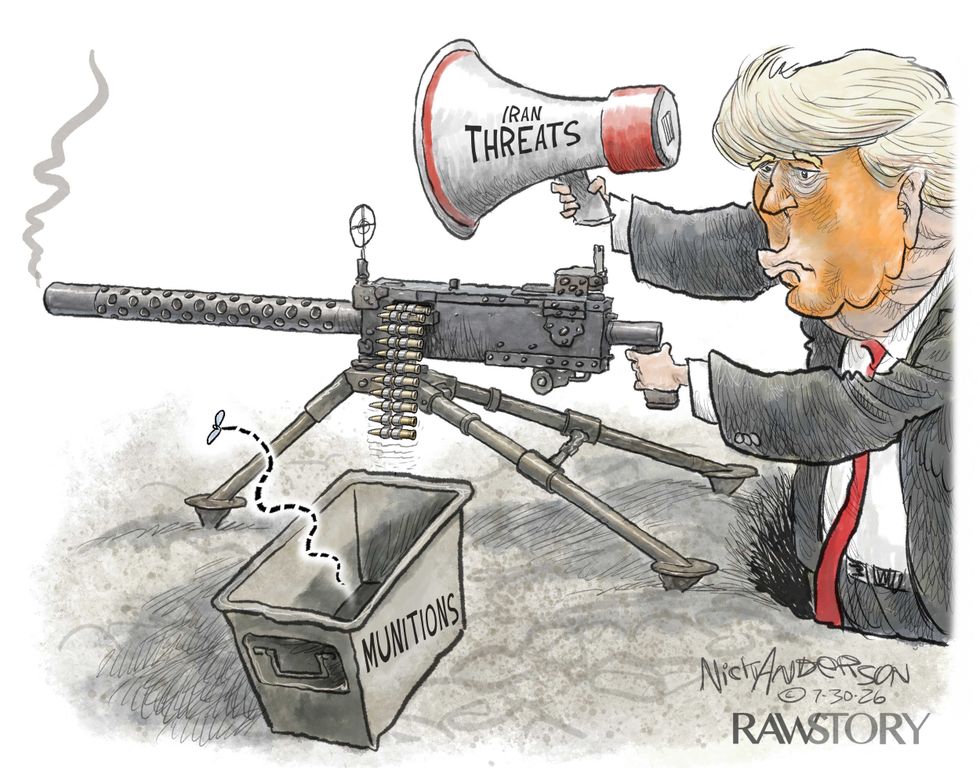
- Trump's empty threats show he's out of ammo (Far Left — Raw Story)
- FBI takes 'extraordinary step' to chase down Trump's voter-fraud claims: report (Far Left — Raw Story)
- 'Eggs skyrocketed': Trump busted for 'unequivocally false' claims (Far Left — Raw Story)
- Trump's humiliating end would be almost guaranteed by this single Dem hire (Far Left — Raw Story)
- ABC Accuses Trump’s FCC of Trying to Censor the Whole Media Industry (Left — The New Republic)
- Trump Blurted Out Openly Corrupt Plot to Censor ABC—and It Backfired (Left — The New Republic)
- Trump announced a deal for Hamas to disarm. And, the U.S. economy slowed a bit (Center — NPR Topics: News)
- What Is the Board of Peace? The Trump-Backed Group, Explained. (Center Left — NYT > U.S. > Politics)
Daily Analysis
Read the full Parallax Pulse for July 31, 2026 — an AI-powered analysis of how Left and Right media covered the biggest stories this day.
More Headlines From July 31, 2026
- Poll: Majority Of Americans Worried About ‘Ineligible’ Voters Casting Ballots As Dems Fight Voter ID (Far Right)
- Trump announced a deal for Hamas to disarm. And, the U.S. economy slowed a bit (Center)
- Two looming primaries will test pro-Israel Democrats’ role in the party (Center Left)
- REPORT: Kamala Harris’ New California Mansion is in an Area With No Black People (Far Right)
- New Faces at the Clark via a Splendid Gift (Center Right)