Transcript: Platner Is Testing A New Strategy to Defeat Susan Collins
Source: The New Republic · Bias: Left
Summary
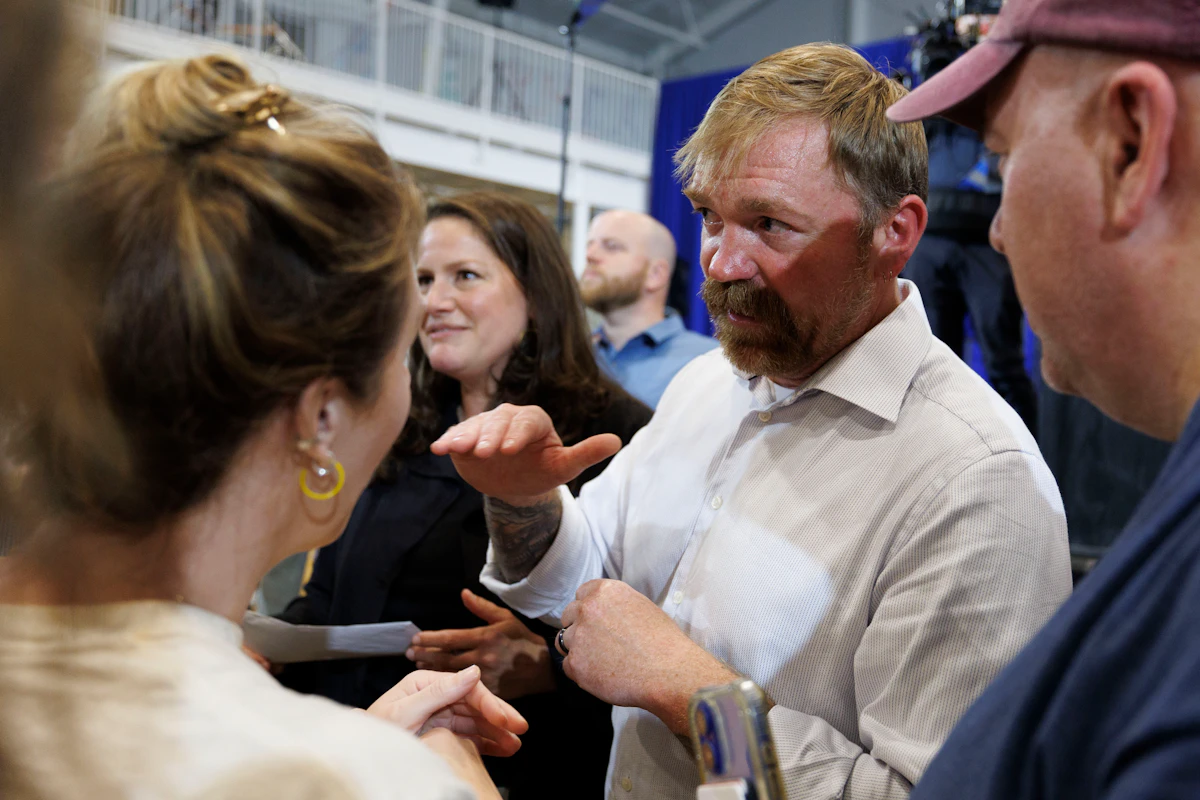
This is a lightly edited transcript of the June 10 edition of Right Now With Perry Bacon. You can watch the video here or by following this show on YouTube or Substack.Perry Bacon: This is The New Republic show Right Now. I’m the host, Perry Bacon. I’m here Wednesday morning after the primaries happened in Maine—very interesting. Graham Platner has been capturing the attention of the nation. And so I’m joined by Billy Kobin. He’s a reporter at the Portland Press Herald. Portland, of course—Portland, Maine, is the other Portland, we’ll call it. Billy, thanks for joining me.Billy Kobin: You bet, Perry. It’s the original Maine.Bacon: It’s the original Maine. That’s good to know. So I guess first of all, I’ll start in the broadest terms possible. If you had told me last June that Janet Mills, the two-term governor of Maine, would run for the Senate and lose by 50 points to someone named Graham Platner, I would have had some questions. Ultimately, this is a big thing that happened here, right? A big surprise. Even though Graham’s been leading for a while, stepping back, this is a weird thing that’s happened, right?Kobin: Yeah. It’s worth putting it in that context. It was last August that I got this initial email from some guy named Joe Calvello—realized that he has ties to Zohran Mamdani, he’d been working in PR for Fetterman. I think then the Fight Agency came up, Morris Katz came up. But that initial email was like, I have this guy named Graham Platner, he’s from Sullivan, Maine—which those of us here in Maine know is a small town. I think the email had a small typo in it. It just didn’t come off as, Oh wow, this is the super-polished guy.But at the same time, there were whispers already that the New York Times was doing a piece—a profile of this new candidate in the race to try to unseat Susan Collins. You had that sense of something’s a little different here. Jordan Wood was the only one in the race at that point. He’s this former Capitol Hill operative who worked for Katie Porter of California, actually, and then is from Maine. He was the only one in the race really at that point.Bacon: But we assumed Mills was running, or at that point it was rumored that Mills might run, and she was the big dog in the race, so to speak, right?Kobin: Exactly. But then this guy—all of a sudden, within a day, he had all this national press. And we were only in August. Mills was still two months away from getting in, but we thought at the time maybe she’s going to expedite the timeline, maybe she’s going to speed things up, try to jump in now. And no, it didn’t come until October. And by that point, Graham had rally after rally after rally. That was huge. He had Bernie Sanders come with him.So again, like you said, I think it’s worth stepping back and thinking: wow, in August we were just getting introduced to this guy for the most part, and now we expected him firmly to win yesterday, despite anything else happening controversy-wise.Bacon: You said something interesting—that the press came. So what came first? The national press came and the big crowds came? Or did the big crowds come and then the national press? It was interesting the way you framed it. Did the press get there first, in a certain way?Kobin: Yes. Press first. And to specify, it was on an embargo last August.Hey, I’m going to give you an interview on a Monday with Graham over the phone, and then Tuesday morning, 5:00 a.m., you can post it. Everybody respected that embargo, too. The New York Times followed it. The Press Herald followed it. I was at the Bangor Daily News actually at the time, the other statewide paper in Maine, so I followed it. Everybody followed it.But what was interesting too is his website went live that Monday, probably as a shell. And we noticed that and were like, Should we break a story on this guy? And then we were just like, There’s nothing really on the website. So it’s just funny again how small-scale it felt at first.But then, as soon as those first stories came out on a Tuesday morning in the second or third week of August, people really started latching on. And then Labor Day, the rally came with Bernie and Troy Jackson, who’s running for governor in Maine. And by that point, people were all in on the Graham train. If you’re a progressive really wanting to beat Susan Collins, you felt, Gosh, finally, this is somebody who’s a little more down-home, aggressive, isn’t trying to play nice and say she’s done some good things for Maine. We’ve got to just replace her.He was trying to say, No—she’s voted with Trump most of the time. Let’s not keep giving her credit for trying to play nice at times or be in the middle at times. We’ve got to call her out. And I think that obviously resonated with a lot of voters—not just Democratic voters, but independent voters.Bacon: What was the initial—you interviewed him. It sounds like you interviewed him before he announced. What was the initial interview like? How long was it?
Related Coverage
- Business Leader Calls on New York City to Resist Mamdani (Far Right — The Gateway Pundit)
- Luka Doncic weighs in on new-look Lakers roster amid heavy criticism (Right — New York Post)
- Pay-to-play cycle behind GOP's corporate tax cuts exposed in new report (Far Left — Raw Story)
- Mamdani mocked by GOP for telling New Yorkers to set thermostats to 78 (Center — The Hill News)
- READ IN FULL: Zohran Mamdani’s America 250 address from George Washington’s desk at New York City Hall (Center Right — Washington Examiner)
- Time for Democrats To Fret About Platner? (Center Right — RealClearPolitics - Homepage)
- Mamdani Is Telling A Brazen Lie About ‘Capitalist Mismanagement’ Of New York (Far Right — The Federalist)
- WATCH LIVE: Mamdani speaks on New York’s role in America’s founding ahead of Fourth of July (Center Right — Washington Examiner)
Daily Analysis
Read the full Parallax Pulse for June 9, 2026 — an AI-powered analysis of how Left and Right media covered the biggest stories this day.
More Headlines From June 9, 2026
- The Real California Lesson: The Democratic Party Has No Actual Leaders (Left)
- Trump says Iran shot down U.S. helicopter (Center Left)
- Ret. Rear Adm. Urges Trump to Keep Iran Response ‘Proportionate’ (Center)
- Opinion | High-Tech Seeks Skilled Tradesmen (Center)
- Best political cartoons: The most PATHETIC show on EARTH (Far Right)