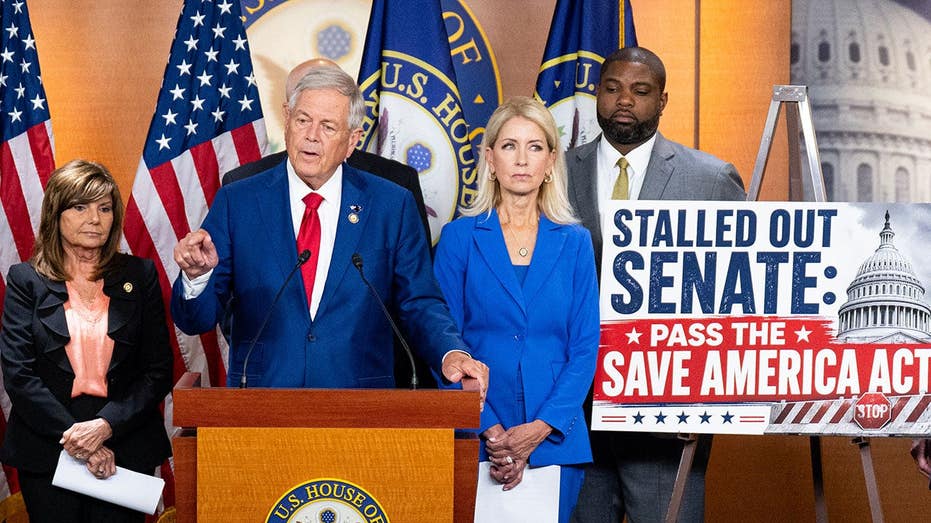
The following is a transcript of a conversation between election rights lawyer Marc Elias, TNR’s Win McCormack, and Carol Butler. The transcript has been edited for length and clarity.Marc Elias: Donald Trump’s going to impose provisions [attacking voting rights] through executive orders. He issued a voting executive order last year that we were successful in striking down, and we will succeed in striking [the next] one down.… The Department of Justice right now is operating like his private law firm and is seeking to obtain confidential voter data from all 50 states, plus the District of Columbia. Win McCormack: Oh, I thought it had stopped with Georgia and Arizona.Marc Elias: No, no. So those are the ballots that they’re seeking from 2020. They have seized the ballots from Georgia from 2020, and they have [sued to get] the ballots from Arizona from 2020, but the Department of Justice is suing to get access, essentially, to the unredacted voter rolls in all 50 states. And they’re suing 30 of those states, and we have intervened to oppose them in all those states. And so I think that’s one of the big battles to focus on, because if you want to run a voter-turnout program, you need the voter files, but if you also want to run a voter suppression operation at scale, you need the voter files. We’re entering the season in which we will see lots of different state laws by Republican legislatures try to suppress voting rights, and we’re litigating against those. We’re going to see more efforts by the administration, perhaps, to deploy federal paramilitary like [U.S. Immigration and Customs Enforcement]. And we’ll have to be prepared to litigate against that. It’s just gonna be a knife fight from here to the end.Carol Butler: Can I ask a question on the private voter roll data? I know that a lot of [states’ attorneys general] have been filing lawsuits. Have some A.G.s been beaten in court anywhere on this yet? Have there been any victories on that?Elias: Seventeen states turned them over voluntarily. Thirty states and D.C. have fought [back]. In the 30 states that have fought, we have intervened to defend voters in all 30. We have won alongside the A.G.s in Oregon, California, and … Michigan. There are three states that have dismissed their claims. So we are awaiting decisions in the other statesMcCormack: And is there anything in the law that actually gives [Republicans] the right to have what they want?Elias: No. [Laughter.] They’re claiming their versions of the law that let them have access to this, but this is unprecedented, and there’s a reason why we’re 3 and 0, and soon to be 4 and 0, then 5 and 0, and then 6 and 0. Look, they are trying to bully these states in ways that you see them try to bully states in other arenas. The challenges are that the Department of Justice can literally litigate everywhere. But for every state that opposes this, we also have states like Florida, Texas, Alabama, and Mississippi that are voluntarily complying with these requests. And that’s going to be a challenge as we go forward, because we assume—everyone assumes—that where there is voter suppression, we are necessarily fighting against the federal government. But remember, most voter suppression is actually fighting against states where either the state itself or the Republican National Committee or Republicans are doing it.McCormack: So the Republican National Committee can come in and intervene in states?Elias: Well, the RNC runs voter suppression programs to try to prevent people from voting, and they also bring litigation to try to make voting harder. There’s a case [Watson v. Republican National Committee] that was just argued in the U.S. Supreme Court, in which the RNC sued Mississippi to try to make mail-in voting more difficult.McCormack: Well, I heard somebody on MS NOW last night saying that, regardless of what happens with the Save America Act [a suppressive “voter ID” bill that would also give the Trump administration a federal surveillance system of voters], they have a very well-worked-out plan for doing what they want to do. Is that what you were referring to before, or is there more to what they said?Elias: There’s more to it. What we’ve seen from Donald Trump in the past is that he starts with lies, then he increases the rhetoric behind the lies, then you see the legal process, and then when he fails in the legal process, we have violence. We are on that progression. He has lied about voting, he has now upped the rhetoric for all of the SAVE Act, which began as a proof-of-citizenship law. It’s now become a voter suppression, voter purge, ban on mail-in voting, trans-targeting law. So when he loses in court in the cases I referenced, and he’s not able to pass this law through Congress, as we’ve discussed, I think he’s going to escalate further. Ultimately we’ll see some type of violence, I fear.