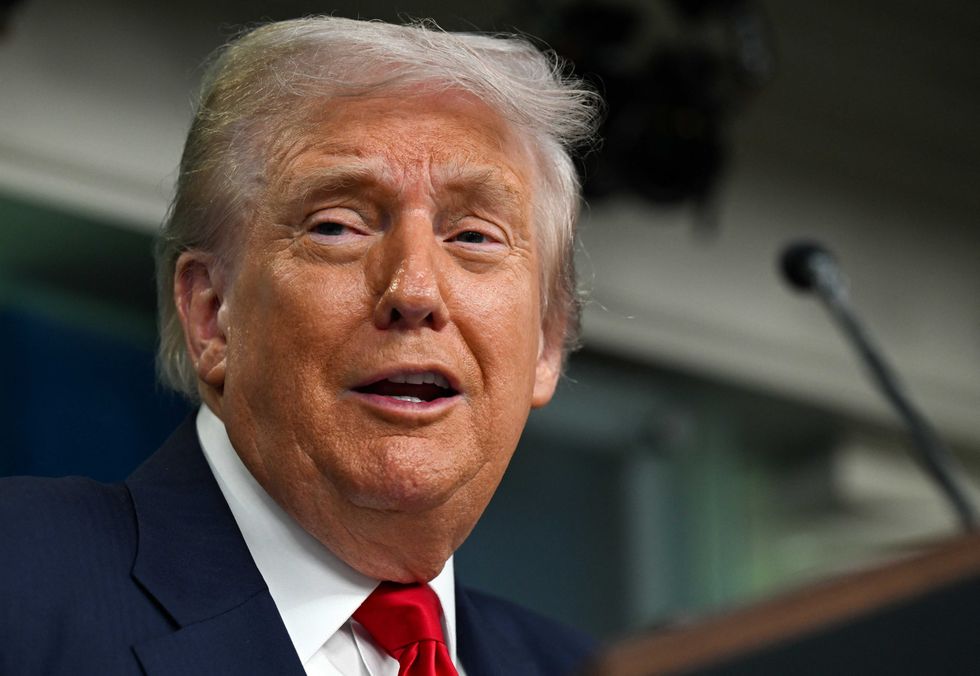
On June 1st, despite a ceasefire ostensibly underway in the US-Israeli war on Iran, Israel’s prime minister launched a major escalation against Lebanon, including threatening airstrikes against the Lebanese capital. The US president called the Israeli leader, furiously demanding an end to Israel’s escalation. Six days later, Israel attacked Beirut’s southern suburbs, long understood to be a red line for Hezbollah. The Lebanese resistance organization launched a limited response, sending 11 rockets towards Israel, almost all of which were intercepted; no one was hurt or killed. Trump called Netanyahu again, telling him in a brief call that now that Iran and Israel had each “had their fun,” that Israel should stand down.Commentators across the Middle East and beyond debated whether Netanyahu would abide by Trump’s demand. What virtually none of them mentioned was that Trump had refused to even mention his most important pressure point: that if Israel resisted his order to stand down, the US would simply stop sending tons of weapons and tens of billions of dollars to the Israeli military. The close but sometimes divergent interests of the Middle East’s two powers, the global and the regional, was on full display. It’s now been 106 days since Trump launched his preemptive and illegal military attack on Iran. On February 28, 2026, the world awoke to the fury of a new war in the Middle East after the United States and Israel had launched their joint assault against Iran, with President Trump and Prime Minister Netanyahu standing shoulder to shoulder against their common foe. Claiming unbridled hegemony was on the agenda for both.The US-Israeli war on Iran is rooted in longstanding US imperialist strategy and Israel’s national goals.Today, with yet more fresh promises of a so-called “peace deal” that is nearly ready to be signed by Trump and Iranian leadership, the Israeli military is bombing the suburbs of Beirut despite ongoing claims of a “ceasefire.” Trying to understand the current doom loop, it’s vital we remember how we got here.In the opening salvo of the US-Israeli attack, Iran’s supreme leader Ali Khamenei, along with an unknown number of other top military and political leaders, was assassinated with a ballistic missile. Just an hour later, the US fired a Tomahawk missile directly at the Shajareh Tayyebeh Elementary School in the northern Iranian city of Minab—killing 156 people, 120 of them children, and destroying the school. The war’s official reasons, initially, were to eliminate the ostensible threat of Iran creating a nuclear weapon, and to destroy its conventional military capacity. The no-daylight US-Israeli partnership, Trump and Netanyahu as BFFs, the collaboration between the US and Israeli warplanes, bombers, drones, missiles… all seemed seamless and perfect.Three months later, and half a dozen or so “ceasefires” announced, renounced, ignored and denounced, headlines around the world gleefully recounted a Trump phone call with Netanyahu. Focused on Israel’s escalating bombing of Lebanon threatening to derail the latest US-Iran ceasefire, the June 1 call reportedly started with Trump telling Netanyahu “you’re f------- crazy—you’d be in prison if it weren’t for me.“ The US president then went on to his ”Everybody hates you now“ remark. ”Everybody hates Israel because of this,“ he reportedly said.Trump acknowledged saying it, and then, as is his usual style, moved on, quickly reclaiming his friendship with the Israeli prime minister. As was true with so many earlier ceasefires, Israel continued its massive bombing and its brutal occupation of south Lebanon, making a US-Iran ceasefire impossible. In the meantime, throughout the months of the war, commentators, politicians of all stripes, journalists and analysts across the globe were struggling to figure out what that war was actually being fought for. War for What?Real fear of an actual nuclear bomb was certainly not the answer. After all, US intelligence agencies have agreed for years that “Iran is not building a nuclear weapon and that [Supreme Leader Ali] Khamenei has not reauthorized the nuclear weapons program he suspended in 2003.” Despite that clear assessment, US B-2 stealth bombers still dropped 14 of their 30,000-pound “bunker-buster” bombs on Iran’s civilian centrifuges at Fordo, Isfahan and Natanz at the end of Israel’s 12-day war in June 2025. Trump and his supporters bragged of having “completely and totally obliterated” Iran’s nuclear facilities. And then, eight months after that, in the early days of the US-Israeli 2026 war, those B-2s were back in the air, dropping more 30,000-pound and some smaller versions of the bunker-busters on Iran.