The Week Where Republicans May Have Stolen the Midterms
Source: The New Republic · Bias: Left
Summary
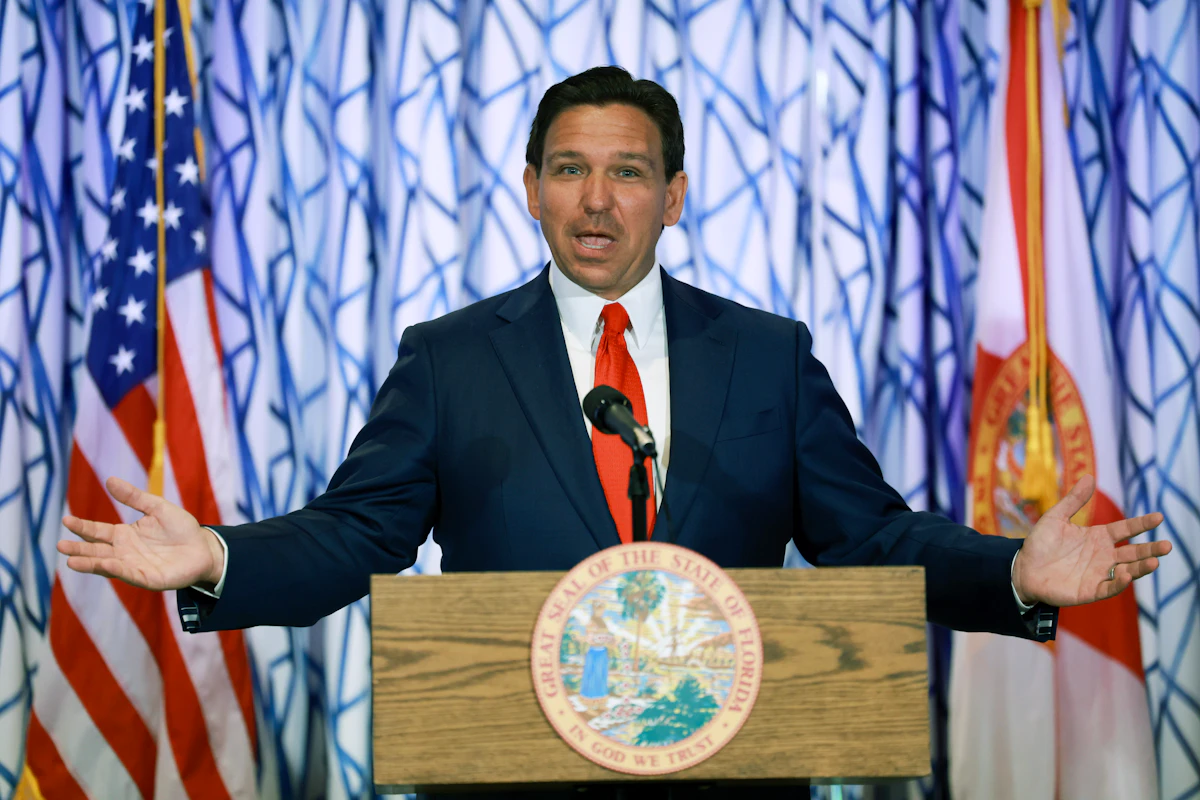
Republican state legislators, governors, state supreme court justices, and U.S. Supreme Court justices have combined over the last week to effectively hand up to 10 U.S. House seats to the GOP. That’s not just bad for the Democrats, although it most definitely is that. It’s bad for democracy. This can’t be accepted as normal. Early last week, Florida Governor Ron DeSantis signed into law a gerrymander so that Republicans could win as many as four additional seats. Three days later, Tennessee Republicans later seized on the U.S. Supreme Court’s Louisiana v. Callais ruling to eliminate the lone majority-Black congressional district in the state. On Friday, four Virginia state Supreme Court justices, three appointed by the state’s legislature when both houses were controlled by Republicans, invalidated a ballot measure that could have resulted in four additional seats for Democrats through redistricting. Later that day, Louisiana Republicans, also taking advantage of Callais, presented new maps that will almost certainly result in the defeat of one Democratic member of Congress there. Five days; ten seats; zero votes from members of the public. Adding immediate context only makes it worse. Florida voters approved a ballot measure in 2010 that explicitly bans partisan gerrymandering. The all-Republican Florida Supreme Court is almost certainly going to let the redistricting stand anyway. In contrast, a clear majority of voters in Virginia, more than 1.6 million people in total, backed the redistricting that four judges wiped away. Voting had already started in Louisiana, but has now been suspended. The South, a region with a long history of discriminating against Black Americans, is now rushing to eject from Congress Black members elected by Black citizens. Then broaden the picture further. We have an authoritarian president who ignores laws and core democratic values. He knows that the party in the White House often loses a ton of House seats. He knows that trend is particularly likely to continue if the president is unpopular, as Trump is now. And he knows that a Democratic House might force him to actually follow the law. So instead of taking steps to become more popular or accepting defeat, he ordered Republican officials to start gerrymandering districts to ensure a party totally under his thumb keeps control of the House. And the plan is working. Republicans have won themselves on net from six to eight additional seats in these gerrymandering fights. A lot of non-partisan analysts and even a few Democrats are trying to downplay these redistricting gains by Republicans. Some argue that Trump is so unpopular that Democrats will still win the House. Others even claim that the redistricting will result in Democrats winning more seats than they would have otherwise, because Republicans have spread out their voters too much. Perhaps. But some estimates suggest that the Democrats will need to win the national popular vote by at least four percentage points to carry the House. That’s a lot. Remember that Trump’s 2024 victory, which was covered by many pundits as some dramatic shift in American politics, was by 1.5 percent over Kamala Harris. It would be terrible if Republicans lost the popular vote 48 percent to 52 percent but remained in control of the House. Or if Republicans won 226 seats or below—meaning their majority was retained only because of the Trump-ordered redistricting. I don’t mean terrible in a Democratic sense, but a democratic sense. Trump would have escaped accountability (electoral defeat) and a check on his power (a Democratic-controlled House) by rigging the election rules. And that rigging would have been an entirely partisan project, with GOP state legislatures and governors driving the process while judges appointed by Republicans somehow always determined that the law aligned with the GOP’s preferred outcome. Democrats would be essentially punished for having created independent redistricting commissions in Virginia and other states over the last decade. But let’s say that Democrats win the House in November. Trump would get the punishment and constraints that he deserves. But that wouldn’t make what’s happened over the last year, particularly over the last week, less of a democratic crisis. We have a Supreme Court whose rulings, such as Callais, almost always align with the Republican Party’s priorities. We have a Republican Party that is constantly trying to shield itself from voter accountability. And where that party is popular, such as the states in the South, it wants to completely silence the political voices of anyone who opposes it. We have a political system that allows and really encourages parties to constantly change district lines and other procedural rules to gain electoral advantage.
Related Coverage
- Trump may weigh pardon for Diddy while granting clemency to pollution violators (Center — The Hill News)
- This Republican Has a Wild Idea for Fixing Housing Prices: Let the Market Actually Work (Far Right — Townhall)
- Republican unveils Declaration of Independence bill ahead of America's 250th birthday (Right — Latest Political News on Fox News)
- Photos of the Week: World Cup, Wine Battle, White Kimono (Center Left — The Atlantic)
- Trump hijacks the US at 250 celebrations | Politics Weekly America (Center Left — US news | The Guardian)
- Trump hijacks the US at 250 celebrations | Politics Weekly America (Center Left — US news | The Guardian)
- ‘It’s crazy’: GOP rebel declares war on Republican leadership (Far Left — Raw Story)
- Photos of the Week: World Cup, Wine Battle, White Kimono (Center Left — The Atlantic)
Daily Analysis
Read the full Parallax Pulse for May 11, 2026 — an AI-powered analysis of how Left and Right media covered the biggest stories this day.
More Headlines From May 11, 2026
- Trump vows to pause federal gas tax after Iran war boosts US fuel prices to four-year high (Center Left)
- Transcript: Trump Blurts Out Plot to Rig Midterms as Polls Turn Brutal (Left)
- Trump weighs military action against Iran with ceasefire "on life support" (Center Left)
- This week on the hill: Congress returns from recess facing high-stakes fights (Center)
- Trump Calls Iran’s Response to US Peace Proposal ‘Unacceptable’ (Center Left)