The Supreme Court’s Shadow-Docket Secrets Have Been Spilled
Source: The New Republic · Bias: Left
Summary
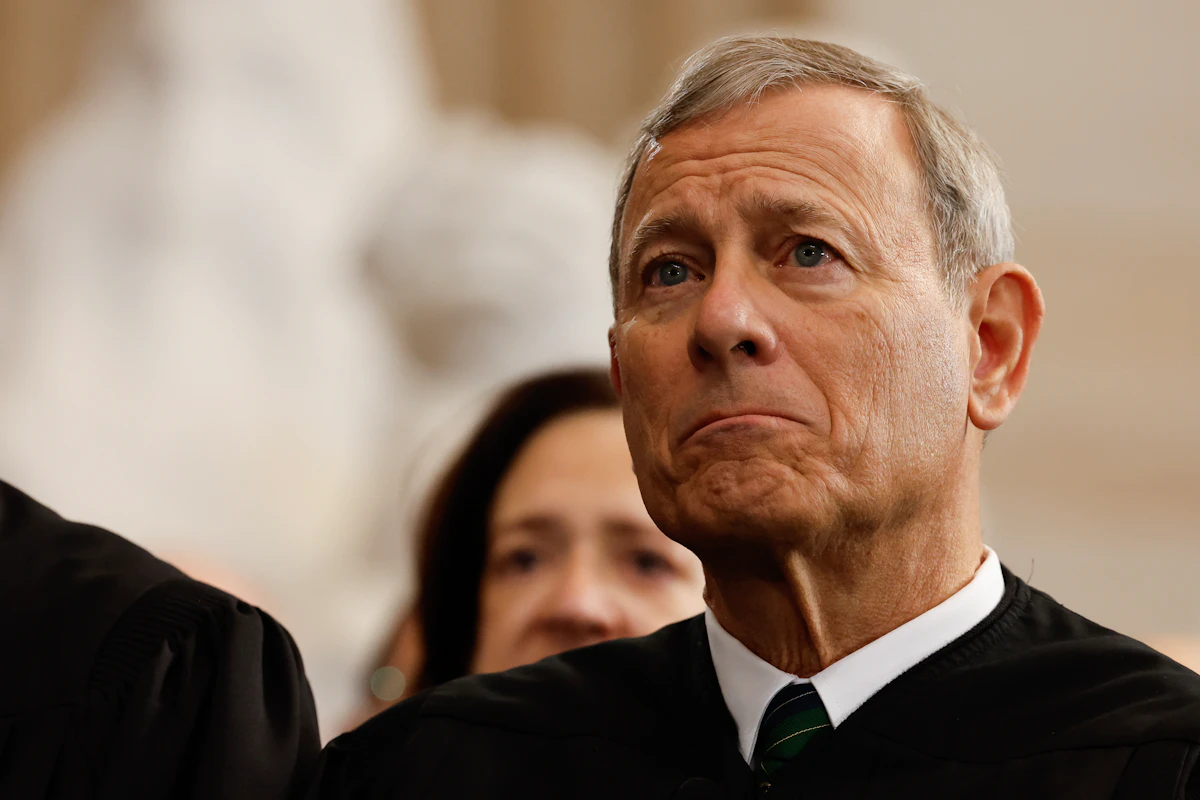
The New York Times on Saturday published a series of Supreme Court internal memos that amount, in hindsight, to a major milestone in the decline of American democracy. The closely held memos show how the justices’ shadow docket—particularly their use of brief, unsigned decisions on cases before they’ve even reached the court—transformed from a simple administrative mechanism into a major roadblock for progressive governance.There are caveats, of course: It is impossible to know whether these memos, from a 2016 climate-change case, represent the entire conversation between the justices. No memos were published from Justices Antonin Scalia, Clarence Thomas, or Ruth Bader Ginsburg. And while it is tempting to think they are a complete snapshot of the court’s deliberations, there are signs that they may not be. One memo omits a page with the signature line of the justice who wrote it; we can only infer that it is from Justice Sonia Sotomayor because Justice Samuel Alito later references her by name when describing its contents.Even if this is not the entire discussion from the justices, it is nonetheless damning for them and for the shadow docket itself. The memos show how Chief Justice John Roberts pressured the other justices to lean heavily in favor of the oil and gas industry so they could kneecap a major EPA climate-change regulation, even as the court’s liberal justices warned that it was an unprecedented and unjustified expansion of the court’s powers.The shadow docket’s origins are not as mysterious as its workings. The Supreme Court has used its motions docket for the last decade to shape the outcome of major policies through selective stays and injunctions. Legal scholars and court watchers have known all along that the first real step towards this dynamic came in West Virginia v. EPA in 2016.In February 2016, the state of West Virginia, a coalition of other Republican-led states, and major energy companies were mounting a legal challenge to the Obama administration’s Clean Power Plan, or CPP. The Environmental Protection Agency had enacted the CPP through its regulatory progress under its Clean Air Act authority to regulate carbon emissions from coal-fired power plants. If it had gone into effect, it could have significantly reduced U.S. carbon emissions and boosted the nation’s efforts to curb climate change.At the time, the D.C. Circuit Court of Appeals was already considering whether the EPA had exceeded its powers under the Clean Air Act when promulgating the CPP. The plaintiffs had asked the D.C. Circuit to stay the CPP from taking effect during litigation, but it declined to do so in January 2016. In response, the plaintiffs then asked Roberts to grant a stay instead.Americans are most familiar with the court’s merits docket—the big-name cases where the justices review briefs from litigants and interested third parties, hold oral arguments where they can publicly ask questions of each side, and then write formal opinions that are binding on the parties and the lower courts. Virtually every case name that comes to mind, from Brown v. Board of Education to Trump v. United States, followed this pattern.Beyond the merits docket, however, the Supreme Court is also constantly at work on a variety of administrative and procedural motions for each case. William Baude, a University of Chicago law professor, first described this workload in 2015 as the “shadow docket,” which he used to refer to “a range of orders and summary decisions that defy its normal procedural regularity.” As originally used by Baude, “shadow” did not mean “sinister,” but rather “partially hidden”: Court watchers could see the outcomes of these decisions through the court’s orders, but not the rationale behind them because the justices did not write opinions to explain them. “People criticize the Court’s merits cases for being political, unprincipled, or opaque,” Baude explained in the 2015 law-review article. “But those criticisms may be targeted at the wrong part of the Court’s docket. It is the non-merits work that should most raise questions of consistency and transparency.”To understand how the shadow docket works, it is worth explaining how the court distributes its massive administrative workload. Most of this work is performed by the nine members of the court in their roles as circuit justices. Each member is assigned to one of the geographic circuit courts of appeal. Since there are twelve circuits—eleven for the states plus one for the District of Columbia—some justices get multiple circuits. The chief justice, for example, traditionally gets the D.C. Circuit, as we’ll see later.In this role, a circuit justice typically gets the first look at each motion filed in a case. Their job is to dispense with the easiest ones—when one side requests additional time to file a reply brief, for example—and refer more substantial motions to the rest of their colleagues.
Related Coverage
- Trump Scores Appeals Court Victory in Battle Over National Park Historical Displays (Right — RedState)
- Lawfare: Kangaroo court picks fight with state’s conservative attorney general (Far Right — WorldNetDaily)
- UPDATE: Louisiana Supreme Court Temporarily Blocks Politically Motivated Indictment Against AG Liz Murrill (Far Right — The Gateway Pundit)
- Iran’s supreme leader bails on first day of late dad’s funeral ceremonies (Right — New York Post)
- Louisiana court halts criminal indictment against state attorney general (Center Left — US news | The Guardian)
- Some Thoughts on the Court's Opinion(s) in the Birthright Citizenship Case (Center Right — Reason.com)
- Dissecting the Supreme Court's Scary 'Birthright' Betrayal (Center Right — RealClearPolitics - Homepage)
- The Supreme Court ruled seven years ago. Taxpayers are still paying the price (Center Right — Washington Examiner)
Daily Analysis
Read the full Parallax Pulse for April 21, 2026 — an AI-powered analysis of how Left and Right media covered the biggest stories this day.
More Headlines From April 21, 2026
- Warsh declines to say whether Biden won 2020 election (Center)
- Chip Roy’s ‘MAMDANI Act’ Takes Aim at Marxists, Islamists in US (Right)
- ‘Please do them no harm!’ Trump urges Iran not to kill 8 women scheduled for execution (Far Right)
- Virginia voters approve new congressional map favoring Democrats, CBS News projects (Center)
- Ethics panel to decide penalty for Rep. Cherfilus-McCormick over theft allegations (Center)