The Supreme Court may have set a trap for conservative Christians that could backfire
Source: Alternet.org · Bias: Left
Summary
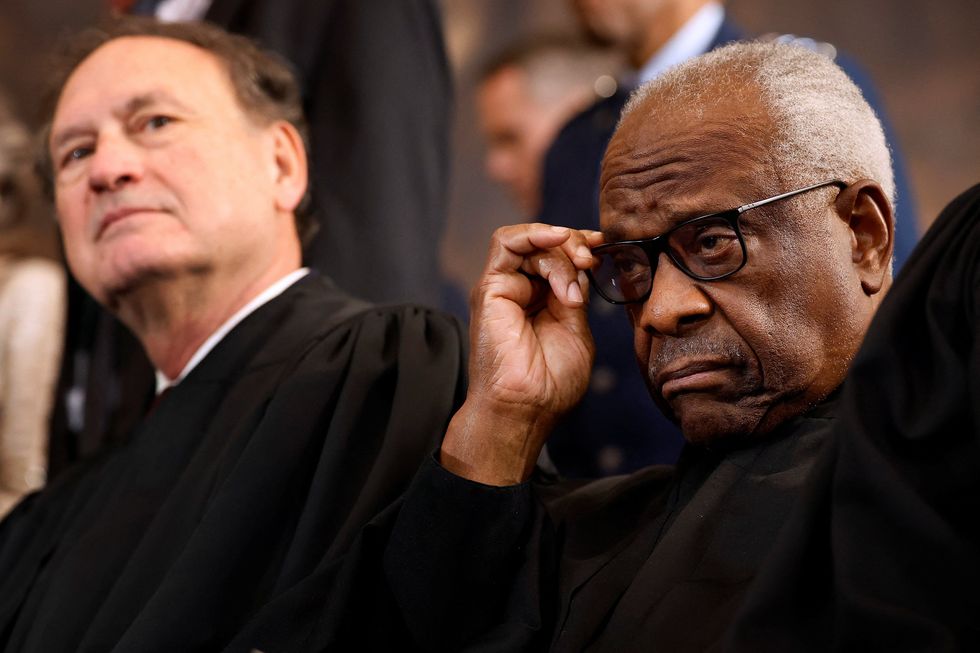
For more than two decades, the Supreme Court has issued a long series of wins for plaintiffs seeking to protect their religious practices. On June 23, 2026, though, the majority delivered an uncommon defeat in this contentious area.Landor v. Louisiana Department of Public Education and Safety, a 6-3 judgment, rejected the claim of Damon Landor, a Rastafarian whose hair was forcibly shaved in prison. Landor had worn long dreadlocks for almost 20 years as an expression of his beliefs – part of a biblical practice known as the “Nazarite vow.” Like lower court judges, the Supreme Court did not dispute that officials violated Landor’s rights. However, the high court’s majority ruled that he could not sue individual officials at the prison. The case stands out for at least three other reasons. First, Landor v. Louisiana underscores the complexity and far-reaching nature of religious freedom laws in the United States and the increasingly diverse faith traditions to which they apply. Christians now represent 62% of the American population, down from 78% in 2007, while 29% have no religious affiliation and 7% belong to other faith traditions. Second, Landor’s case gained support from many groups typically at odds over how to protect religious freedoms – groups disappointed with this week’s decision.Finally, the case highlights the religious rights of the nearly 2 million people in U.S. prisons, jails and detention and correctional facilities – and the challenge of holding their public employees accountable when those rights are violated.Religious vowLandor was incarcerated in Louisiana in 2020 for possessing methamphetamine, cocaine, amphetamine and marijuana. At first, officials respected his religious practice. Just three years earlier, a federal appeals court affirmed that Rastafarian inmates must be allowed to keep their dreadlocks under a federal law passed in 2000: the Religious Land Use and Institutionalized Persons Act. Toward the end of his sentence, Landor was transferred to a different correctional facility in the state. There – with three weeks left for Landor to serve – the warden ignored the judicial order, directing guards to shackle Landor and forcibly shave his head.After finishing his sentence, Landor filed suit for money damages under the Religious Land Use and Institutionalized Persons Act. The act forbids the government and its officials from imposing “substantial burden(s)” on incarcerated people’s First Amendment right to the free exercise of religion. It also protects religious groups from discrimination through zoning restrictions.Journey through the courtsIn 2022, a federal trial court in Louisiana condemned Landor’s treatment but rejected his claim, concluding that money damages were not an appropriate remedy under the act.The following year, the 5th U.S. Circuit Court of Appeals “emphatically condemn(ed) the treatment that Landor endured.” However, the panel unanimously affirmed the lower court’s decision, based on its earlier ruling that plaintiffs cannot sue government officials in their individual capacities for monetary damages – only the institution.Landor’s attorneys then sought an “en banc” hearing. In this uncommon procedure, parties seek further review by all of the judges in a federal circuit. The court denied this request, as a majority of judges in the circuit wrote that this was a question for the Supreme Court.The Supreme Court agreed to hear an appeal after a variety of organizations, including the federal government, submitted amicus curiae, or “friend of the court,” briefs in favor of Landor. These included Americans United for Separation of Church and State, for example, which typically supports plaintiffs wishing to keep religion out of public life. They also included the Becket Fund, which usually represents people seeking to increase faith’s role in public life, and the Trump administration. At issue was not whether Landor’s rights had been violated but whether he could sue an individual official, namely the warden, for monetary damages. During oral arguments on Nov. 10, 2025, the Supreme Court seemed skeptical. Legal dilemmaThat skepticism was reflected in the court’s ultimate ruling. It was essentially a procedural ruling about the Religious Land Use and Institutionalized Persons Act rather than a judgment on the merits of Landor’s religious freedom claim. Justice Neil Gorsuch wrote the majority opinion, joined by Chief Justice John Roberts and Justices Clarence Thomas, Samuel Alito, Brett Kavanaugh and Amy Coney Barrett. Justice Ketanji Brown Jackson’s dissent was joined by Justices Sonia Sotomayor and Elena Kagan. The majority’s argument that Landor could not sue centered on the spending clause of the U.S. Constitution – the source of Congress’ authority to create the Religious Land Use and Institutionalized Persons Act.
Related Coverage
- Trump Scores Appeals Court Victory in Battle Over National Park Historical Displays (Right — RedState)
- Trump may weigh pardon for Diddy while granting clemency to pollution violators (Center — The Hill News)
- Lawfare: Kangaroo court picks fight with state’s conservative attorney general (Far Right — WorldNetDaily)
- UPDATE: Louisiana Supreme Court Temporarily Blocks Politically Motivated Indictment Against AG Liz Murrill (Far Right — The Gateway Pundit)
- Conservative Catches CNN Host Abby Phillip in a Glaring Hypocrisy as She Defends Communist NYC Mayor Zohran Mamdani’s Absurd Demand on Air Conditioning (Video) (Far Right — The Gateway Pundit)
- Mamdani mocked by GOP for telling New Yorkers to set thermostats to 78 (Center — The Hill News)
- Iran’s supreme leader bails on first day of late dad’s funeral ceremonies (Right — New York Post)
- Louisiana court halts criminal indictment against state attorney general (Center Left — US news | The Guardian)
Daily Analysis
Read the full Parallax Pulse for June 26, 2026 — an AI-powered analysis of how Left and Right media covered the biggest stories this day.
More Headlines From June 26, 2026
- Byron Donalds Goes Scorched Earth on Both Parties for Stalling on SAVE America Act: 'The Senate Sucks' (Right)
- Breaking: After Iran Attacks Cargo Ship, Trump Makes Them Regret It (Right)
- U.S. strikes Iran in response to a drone attack on a ship (Center)
- Israel and Lebanon sign framework agreement (Center Left)
- Trump threatens 100 percent tariff on any country that imposes tax on US tech firms (Center)