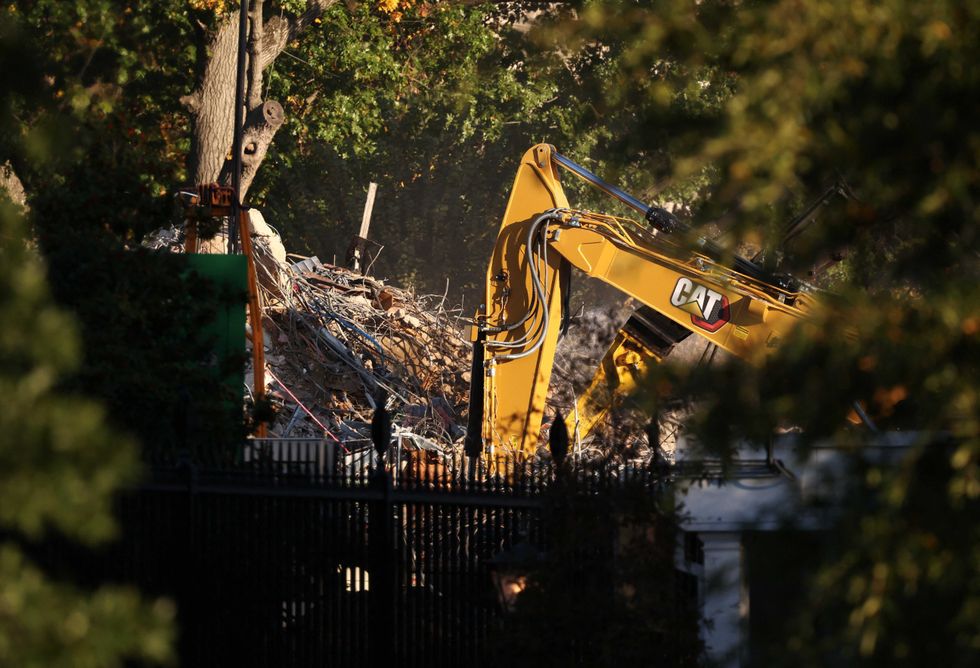
President Donald Trump has orchestrated yet another massive no-bid contract, this time channeling $500 million in taxpayer funds through a loophole to pay for his East Wing ballroom in secret, a report says.According to Washington Post reporting, White House officials used back channels and awarded the half-billion-dollar contract to Clark Construction last year in what the outlet described as a deliberately "unusual arrangement" designed to circumvent standard cost-control procedures and public disclosure requirements.The scheme exploited a legal gray area. By routing the contract through the Executive Residence—an office "typically responsible for routine mansion repairs and furniture purchases" —the White House once again "sidestepped" federal rules.Confidential documents obtained by the Post reveal Trump "personally negotiated" certain costs for the East Wing project, suggesting direct presidential involvement in structuring the deal to avoid scrutiny.The ballroom contract represents just one chapter in Trump's broader strategy of awarding no-bid deals to handpicked contractors reshaping Washington according to his personal vision. The administration has similarly bypassed competitive bidding for Lafayette Square upgrades and the controversial Lincoln Memorial Reflecting Pool renovations, which have become a public relations disaster for the administration.Experts warned the approach has deprived taxpayers of potential savings. "I would certainly expect them to compete a project of this size and complexity," Anthony Costa, a former General Services Administration official with decades of experience overseeing complex federal real estate projects across multiple presidential administrations, told the Post.While the Executive Residence technically operates under exemptions from standard competitive bidding rules, experts noted that soliciting bids would have ensured the "best pricing for taxpayers"—particularly crucial given the extraordinary scale and cost of the East Wing project.
A Republican lawmaker slammed the calamity the Trump administration has created by revoking Temporary Protected Status for thousands of immigrants. Last year, the Trump administration abruptly revoked TPS for Haitian and Syrian immigrants, a move that impacted approximately 356,000 people currently living in the U.S. The order was swiftly challenged, but the Supreme Court recently ruled that President Donald Trump has the authority to unilaterally revoke TPS, an opinion that stunned many legal analysts. Rep. Mike Lawler (R-NY) slammed the decision during a new interview with CNN's Jake Tapper on "The Lead." "As I have stressed to the administration for over a year, while I don't dispute the president's ability to end TPS ... it is foolish to do it at this moment because we are going to create a calamity within our own health care system as a result," Lawler said. Lawler, whose district includes one of the largest Haitian immigrant populations in the U.S., noted that many of these immigrants work in health care, caring for the elderly and disabled. He added that he's asked the administration to instead extend work visas to the immigrants, some of whom have lived in the U.S. for decades. Lawler also noted that it would be dangerous to send Haitian and Syrian immigrants back to their home countries, which raises a host of questions about the timing of the move. "The fact is, from a humanitarian standpoint, it is disastrous to send them back home at this moment, and it will have a profound negative impact on the American people," Lawler said.
The Colorado Supreme Court on Monday tossed out two cases involving new redistricting ballot measures that would have favored Democrats. One ruling said the redistricting measure violated the state constitution’s “single subject” requirement that calls for measures proposed by petition to focus on one issue for inclusion on the ballot. The Democratic aligned group, Coloradans…
The failure of the American media is one of the biggest disappointments of the last 11 years. Instead of standing together and standing their ground with integrity and dignity when Trump began bullying them in 2015, media organizations let him wear them down with his never-ending litany of insults. Once a toxic narcissist knows they can get away with it, they’ll just keep hurting you and taking things from you. Our media never properly pushed back against Trump because, before his 2016 campaign, they’d never had to defend themselves against personal attacks from a candidate or a president. They went from treating him like the joke he should have always been to giving him absolute power over their newsrooms. While we’ve seen individual moments of pushback here and there, Trump ultimately prevails every time. Either he makes the reporter the story by bullying them, or he gets away with not answering their questions because he’s too busy scapegoating them as a distraction from whatever he was asked about. It disgusts me every time, because no one stands together on that press line. I don’t care which outlet you work for — when Trump bullies one reporter, he’s bullying them all. They should be demanding the answers he refuses to give, because that’s their job. But they should also be demanding that he stop treating their colleagues like a middle school bully. From the outside, it might look like it’s too late. Every news outlet we once trusted is now owned by a billionaire with their own personal political agendas. While ABC beefs with the FCC over Jimmy Kimmel, CBS’s full capitulation to Trump is complete. And now, David Ellison is about to do the same to CNN by putting Bari Weiss in charge there as well. Everything about this is anti-American. Our First Amendment rights are being violated by an oligarch class that’s been allowed to take over far too many media outlets, and with the White House now targeting members of the independent media, how long before Trump tries to shut down the internet so no one can talk about the Epstein Files or his failing health?There are many ways to fight back against male white corporate oppression, however, and one news network is setting the examples for all of us to follow. And there’s no way the FCC can intervene on Trump’s behalf this time, because it’s not an American network.All hail the venerable British Broadcasting Company (BBC), both on television and over the wireless, as they used to say. The BBC has always set the standard for journalism, and that’s remained true during the Trumpian nightmare garbage fire. Because he can’t control them. He can sue them, however, because that’s what Trump does whenever anyone with a big enough audience tells the truth about him. It’s a favorite con of his, burying and then bankrupting his enemies with endless depositions and appeals. Trump is desperate to rewrite the history of his failed coup after losing the 2020 election to Joe Biden, despite all of the footage that’s still readily available to everyone.So, of course, Trump is now suing the BBC for $10 BILLION, crying “defamation” after it aired a documentary about the January 6th insurrection, in which they used some of the footage of his Ellipsis speech that he claims was “edited.” Yes, the same speech that was live-streamed by all of the MAGA terrorists in the crowd, just like the subsequent attack on the Capitol. While plenty of other institutions have caved to Trump, the stiff upper lips at the BBC aren’t intimidated so easily. In fact, they’re going after what the January 6th House Select Committee never could get: Trump’s January 6th phone records.Discovery is glorious, especially when it’s used for good. Not only are they asking for Trump’s phone records from the Day of Rage, but also the days leading up to his desperately violent attempt to stay in power. But they’re not stopping with Trump’s actions regarding January 6th; the BBC has also served a subpoena related to his revocable trust, which is run by Don Jr. It contains private information on the Trump Crime Family’s assets and business relationships, so just imagine what the BBC might find if they gain access to all of Trump’s financials. It’ll be interesting to see how this plays out. Trump’s phone records would show whether or not he ever called any state’s governor to have them send their National Guard troops to the Capitol to fight off the MAGA crowds. We already have the footage of Nancy Pelosi and Chuck Schumer essentially co-Presidenting by taking the action Trump never did and, hopefully, the BBC will also use this clip as part of its defense should the lawsuit go to trial.Any American news outlet could have done the same as the BBC, even without a lawsuit against them, but they haven’t, and they won’t. We all know the truth about January 6th because we were all witnesses. Whether we watched it online or on TV, the live feeds were readily available and were recorded.
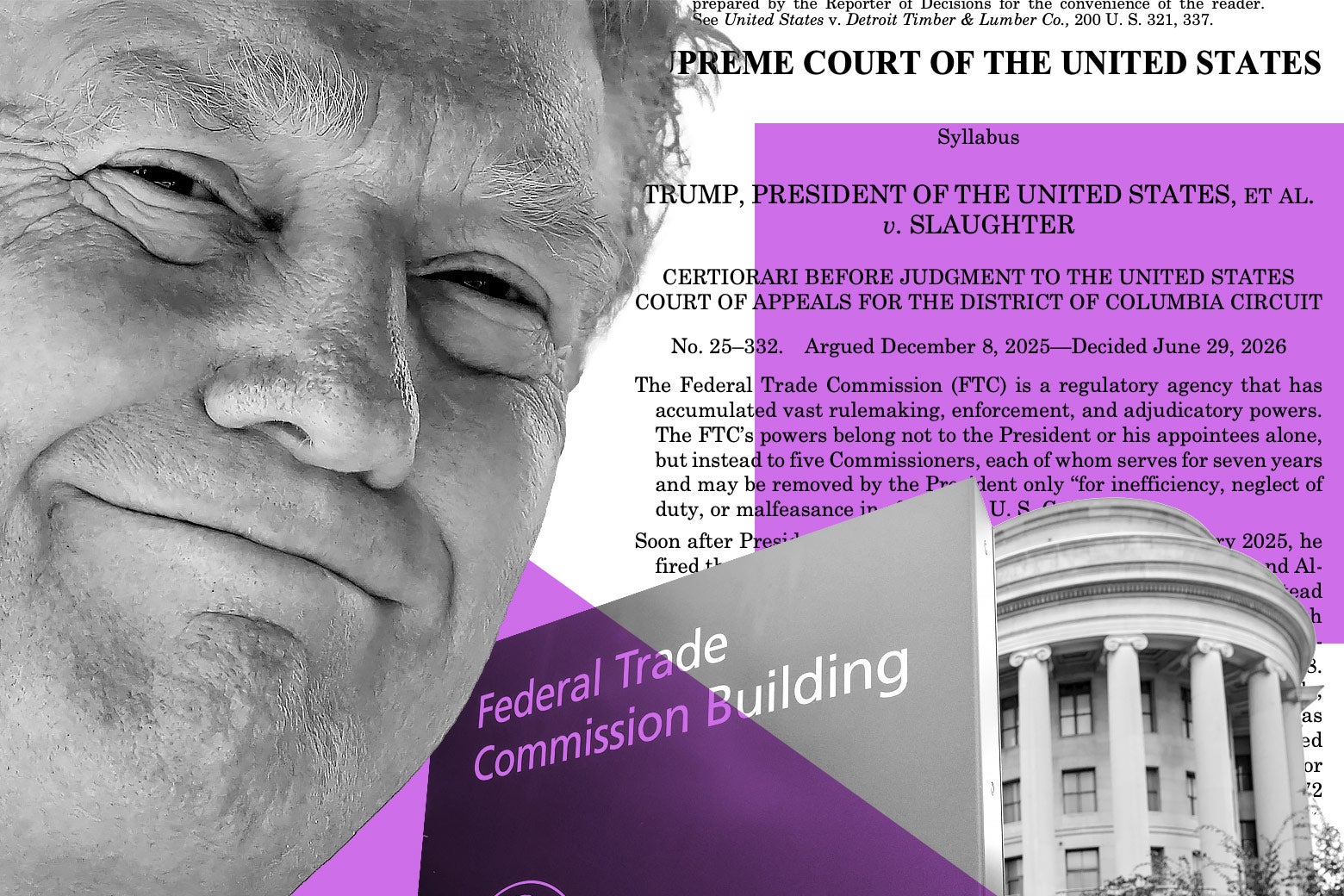
The Supreme Court this term gave President Trump powers over the federal government that no modern president has held. But it blocked his administration on two of the biggest issues for markets: the Fed and tariffs.Why it matters: Its rulings hand the president firmer command of the federal bureaucracy, signaling to businesses that regulatory policy will be less stable — and more political — with every election.But the cases preserve limits around the Fed and emergency tariff powers, where investors feared political interference could unsettle markets.Between the lines: Case by case, the court gave Trump a freer hand to fire, deport and act before judges could catch up.The court gave his administration major immigration wins, including on asylum access and immigrants' temporary protected status.It repeatedly sided with Trump on emergency appeals, letting contested policies take effect while litigation continued.It also let him fire Federal Trade Commission officials at will, weakening the ability of Congress to create independent agencies outside direct White House control.Yes, but: The court gave Trump more control over business regulations, but not over the authorities governing tariffs or the Federal Reserve.Tariffs: It ruled he couldn't use the International Emergency Economic Powers Act (IEEPA) to impose sweeping tariffs — eliminating one of his fastest and broadest trade tools.The Fed: It denied his bid to immediately fire Federal Reserve governor Lisa Cook, upholding Congress' requirement that he clear legal and procedural hurdles.Reality check: The rulings haven't ended either battle.The White House has continued to pursue tariffs through other legal authorities after losing on IEEPA.Trump has said his administration will keep investigating whether it can ultimately remove Cook.The intrigue: The court carved out the Fed from the broader expansion of presidential removal power it announced the same day.It means future presidents can more quickly replace leaders at agencies overseeing antitrust, consumer protection and other major areas of economic regulation.That makes the agencies inherently more political and gives Trump and his successors more power to quickly rewrite regulations and abandon their predecessors' policy agendas.What they're saying: "Now when a new president comes in, they can clean house at all these agencies," says Graham Steele, a former Biden-era Treasury administration official."You have a regulatory pendulum that goes back and forth, depending upon whether you have a Republican or Democratic president," creating more uncertainty for businesses, Steele says.The big picture: Investors worried that giving Trump broader authority to remove Fed officials could erode the central bank's independence and its resolve to keep inflation in check when that inevitably clashes with White House priorities.That, in turn, risked unsettling the Treasury market and raising borrowing costs across the economy.Chief Justice John Roberts justified the Fed exception by warning that the Founders understood the "calamities" that could arise from even the "suspicion" of political manipulation of monetary policy.What to watch: The tariff case carried a different risk: blessing broad emergency tariff powers could make U.S. trade policy swing with the politics of the moment — the kind of uncertainty businesses and investors hate.
Trump's Great American State Fair, commemorating America's 250th anniversary, drew sparse crowds and generated online ridicule over multiple problems. The event, hosted on the National Mall, was plagued by bad weather that canceled rapper Vanilla Ice's performance, power outages that damaged ice cream, and a Confederate flag display that sparked controversy. Reporters broadcasting from the nearly empty fairgrounds prompted social media commentary. During a Fox News reporter's live broadcast of the event, journalist Aaron Rupar questioned on X, "Did the rapture happen overnight? Fox & Friends is broadcasting from a completely empty Trump state fair on the National Mall."Rep. Melanie Stansbury (D-NM) wrote on X, "I went to the Great American State Fair this weekend…and it really was as empty as reported. **And where did the rest of our taxpayer dollars go?""The Great American State Fair on Saturday at 2:15pm. What do you make of the crowd?" White House correspondent Jon Michael Raasch posted on X.Strategist Christopher Webb wrote, "The Great American State Fair was really just the remaining MAGA faithful refusing to admit it’s over." Watch the video below. Your browser does not support the video tag.
A pair of legal experts were astounded on Monday while discussing a trap the Trump Department of Justice may have laid for itself in a recent case. One of the arguments Acting Attorney General Todd Blanche made when the DOJ created the $1.776 billion settlement between the Trump administration and the IRS was that Trump had been irreparably harmed by a government contractor or employee, which is why they sought such a large payout. However, that argument could get the Trump DOJ into trouble in other cases where privacy matters are concerned, according to Lisa Graves, co-host of the "Court Accountability Action" podcast and Christopher Swartz, the senior ethics counsel for the Democracy Defenders Fund. The two legal experts reacted to the trap in a new episode on Monday. "This is a clear case of failure of those baseline duties of any lawyer, whether they're a first-year lawyer or a lawyer who's been out practicing for 20 or 30 years," Graves said about the settlement agreement. "The misconduct, the failure to defend the interests of the United States, the IRS, and the other agencies, is jaw-dropping."The $ 1.776 billion settlement was initially established to pay claims from people who were wrongfully prosecuted by the federal government. However, the idea was quashed after it received strong bipartisan pushback. Even so, the Trump administration has refused every attempt to make it put in writing that the fund will never be established. Swartz, whose organization filed an ethics complaint against Blanche over the IRS settlement, argued that Blanche's argument "prejudices the government's position" in other cases that involve privacy matters. The ethics complaint was filed at a time when Blanche was seeking confirmation for the full Attorney General role. Some Republicans have already said they won't support Blanche's nomination, which sets the stage for a contentious confirmation battle.