NPR Topics: News
Morning news brief
A planned Switzerland meeting between the U.S. and Iran has been put on hold, JD Vance has become the face to U.S. negotiations with Iran, Obama Presidential Center gets star-studded opening ceremony.
Center
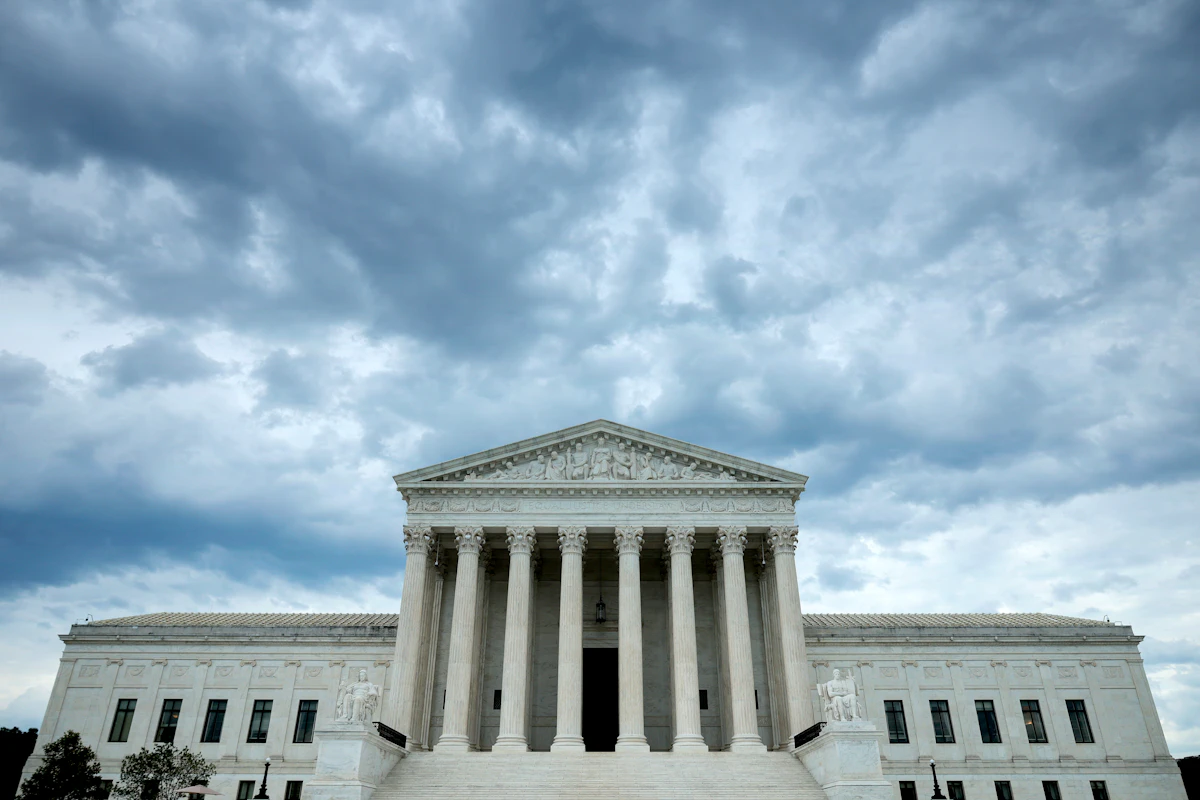
The Supreme Court narrowed a federal law that made it a criminal offense for illegal drug users to own firearms, ruling on Thursday that the conviction of a Texas man under that measure was “inconsistent with the Second Amendment.” While the ruling was a rare moment of unanimity, the various judges displayed some interesting fissures between them—and highlighted how thorny Second Amendment cases have become since the court imposed a new test for gun-rights cases.Justice Neil Gorsuch, writing for himself and six other justices, said that federal prosecutors had not found a sufficient historical analogue under the court’s “history-and-tradition” test to support the prosecution. “Without more, the government asks us to analogize all such persons to habitual drunkards,” he wrote in United States v. Hemani. “To state the analogy is to expose its deficiency.”Thursday’s ruling is another milestone in the federal courts’ four-year quest to reconcile America’s numerous gun restrictions with the Supreme Court’s new history-and-tradition test. While it marks the first time since adopting the test that the court has used it to invalidate a federal law, it also underscores how much the high court has curtailed the test’s original ambitions.The case began when federal agents searched the family home of Ali Hemani in 2022. The U.S. government suspected that Hemani, a Texas-born American who also has Pakistani citizenship, had ties to terrorist organizations. During the search, Hemani surrendered a firearm that he otherwise lawfully owned and told them that he regularly smoked marijuana, some of which he had in his possession. He also took ownership of a bag of cocaine that the agents found in his parents’ closet.Thanks in part to Hemani’s forthrightness, federal prosecutors charged him with violating Section 922(g)(3), which make it a federal offense to knowingly possess a gun in one’s home while being an “unlawful user” of a controlled substance. “The charge had nothing to do with terrorism—the reason for the search in the first place,” Gorsuch noted. “Nor did the charge involve possession of cocaine, drug trafficking, or anything like that.” Indeed, one gets the distinct impression that prosecutors were trying to prove that they weren’t wasting everyone’s time.Before trial, Hemani sought to dismiss the indictment by arguing that it violated the Second Amendment. The Supreme Court held in District of Columbia v. Heller in 2008 that the amendment protects an individual right to bear arms. In the 2022 case New York State Rifle and Pistol Association v. Bruen, the court’s conservative majority laid out a strict new test to determine when a gun restriction runs afoul of this right.Under Bruen, such laws that limit the individual right to bear arms are presumptively unconstitutional. “The government must then justify its regulation by demonstrating that it is consistent with the Nation’s historical tradition of firearm regulation,” Justice Clarence Thomas wrote for the court. “Only then may a court conclude that the individual’s conduct falls outside the Second Amendment’s unqualified command.”This history-and-tradition test prompted a wave of gun-related litigation in the lower courts. The Supreme Court revisited it in United States v. Rahimi, a case challenging the federal ban on gun ownership for certain domestic abusers, to clarify that the government need not provide a “historical twin” to successfully defend a gun restriction. Instead, lower courts can uphold them by identifying a “historical analogue” to the existing law—in Rahimi’s case, for example, founding-era surety and affray laws.In Hemani’s case, the Justice Department argued that Section 922(g)(3) was akin to founding-era laws that prohibited gun ownership for “habitual drunkards.” Some of these laws required them to post surety bonds to carry a gun; others allowed legal guardians or civil officials to involuntarily place them in workhouses or asylums. In either event, federal prosecutors argued, these laws pointed to a historical tradition of disarming people who use certain substances.The trial court and the Fifth Circuit Court of Appeals found this reasoning unpersuasive. It fared no better at the Supreme Court, in part because of the sweeping nature of what prosecutors sought. “It doesn’t matter what controlled substance an individual uses, in what amounts he does so, or whether his drug use has ever made him a danger to himself or others,” Gorsuch noted. “It doesn’t even matter why he keeps a gun or how safely he does so. And for violating this automatic ban, the government insists, an individual like Mr. Hemani may be sent to prison for up to 15 years and disarmed for life.”All those laws cited by the government, Gorsuch explained, affected a much narrower subset of people who used intoxicants. There is some historical evidence that early nineteenth-century Americans drank considerably more alcohol than their modern descendants do today.