Morning news brief
A planned Switzerland meeting between the U.S. and Iran has been put on hold, JD Vance has become the face to U.S. negotiations with Iran, Obama Presidential Center gets star-studded opening ceremony.

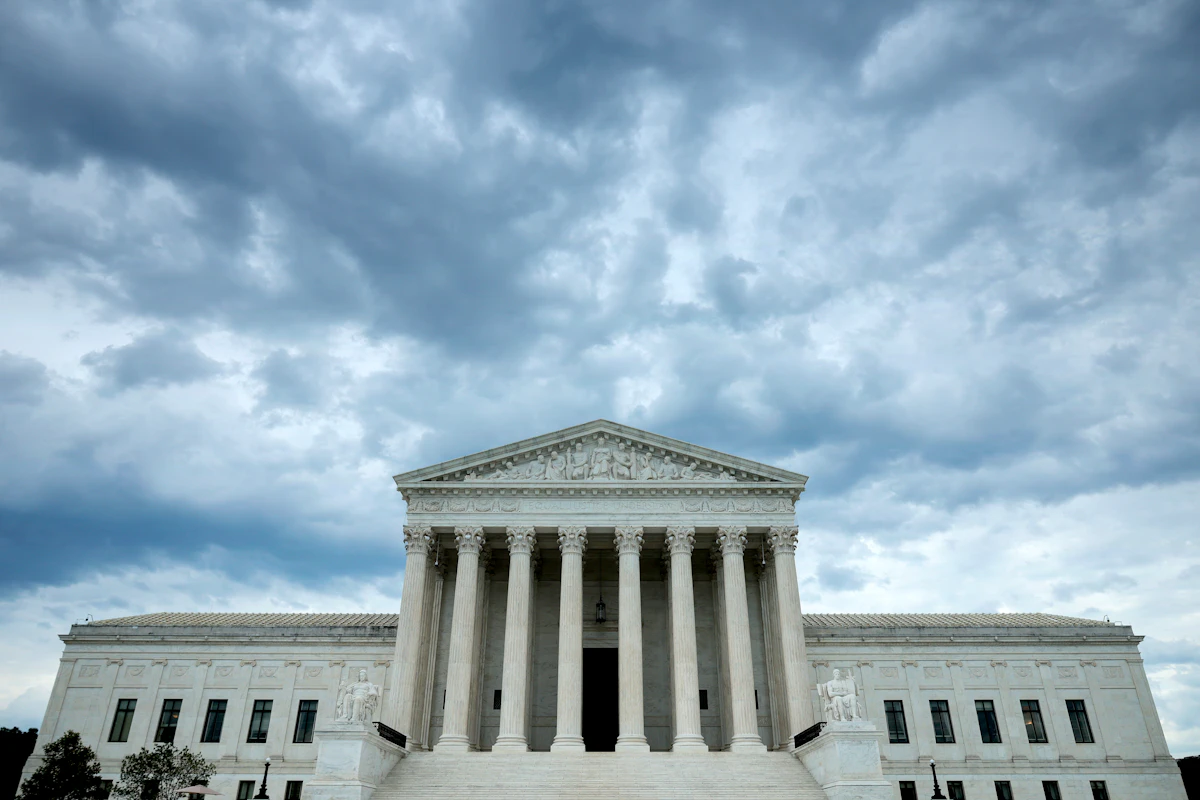
The Supreme Court narrowed a federal law that made it a criminal offense for illegal drug users to own firearms, ruling on Thursday that the conviction of a Texas man under that measure was “inconsistent with the Second Amendment.” While the ruling was a rare moment of unanimity, the various judges displayed some interesting fissures between them—and highlighted how thorny Second Amendment cases have become since the court imposed a new test for gun-rights cases.Justice Neil Gorsuch, writing for himself and six other justices, said that federal prosecutors had not found a sufficient historical analogue under the court’s “history-and-tradition” test to support the prosecution. “Without more, the government asks us to analogize all such persons to habitual drunkards,” he wrote in United States v. Hemani. “To state the analogy is to expose its deficiency.”Thursday’s ruling is another milestone in the federal courts’ four-year quest to reconcile America’s numerous gun restrictions with the Supreme Court’s new history-and-tradition test. While it marks the first time since adopting the test that the court has used it to invalidate a federal law, it also underscores how much the high court has curtailed the test’s original ambitions.The case began when federal agents searched the family home of Ali Hemani in 2022. The U.S. government suspected that Hemani, a Texas-born American who also has Pakistani citizenship, had ties to terrorist organizations. During the search, Hemani surrendered a firearm that he otherwise lawfully owned and told them that he regularly smoked marijuana, some of which he had in his possession. He also took ownership of a bag of cocaine that the agents found in his parents’ closet.Thanks in part to Hemani’s forthrightness, federal prosecutors charged him with violating Section 922(g)(3), which make it a federal offense to knowingly possess a gun in one’s home while being an “unlawful user” of a controlled substance. “The charge had nothing to do with terrorism—the reason for the search in the first place,” Gorsuch noted. “Nor did the charge involve possession of cocaine, drug trafficking, or anything like that.” Indeed, one gets the distinct impression that prosecutors were trying to prove that they weren’t wasting everyone’s time.Before trial, Hemani sought to dismiss the indictment by arguing that it violated the Second Amendment. The Supreme Court held in District of Columbia v. Heller in 2008 that the amendment protects an individual right to bear arms. In the 2022 case New York State Rifle and Pistol Association v. Bruen, the court’s conservative majority laid out a strict new test to determine when a gun restriction runs afoul of this right.Under Bruen, such laws that limit the individual right to bear arms are presumptively unconstitutional. “The government must then justify its regulation by demonstrating that it is consistent with the Nation’s historical tradition of firearm regulation,” Justice Clarence Thomas wrote for the court. “Only then may a court conclude that the individual’s conduct falls outside the Second Amendment’s unqualified command.”This history-and-tradition test prompted a wave of gun-related litigation in the lower courts. The Supreme Court revisited it in United States v. Rahimi, a case challenging the federal ban on gun ownership for certain domestic abusers, to clarify that the government need not provide a “historical twin” to successfully defend a gun restriction. Instead, lower courts can uphold them by identifying a “historical analogue” to the existing law—in Rahimi’s case, for example, founding-era surety and affray laws.In Hemani’s case, the Justice Department argued that Section 922(g)(3) was akin to founding-era laws that prohibited gun ownership for “habitual drunkards.” Some of these laws required them to post surety bonds to carry a gun; others allowed legal guardians or civil officials to involuntarily place them in workhouses or asylums. In either event, federal prosecutors argued, these laws pointed to a historical tradition of disarming people who use certain substances.The trial court and the Fifth Circuit Court of Appeals found this reasoning unpersuasive. It fared no better at the Supreme Court, in part because of the sweeping nature of what prosecutors sought. “It doesn’t matter what controlled substance an individual uses, in what amounts he does so, or whether his drug use has ever made him a danger to himself or others,” Gorsuch noted. “It doesn’t even matter why he keeps a gun or how safely he does so. And for violating this automatic ban, the government insists, an individual like Mr. Hemani may be sent to prison for up to 15 years and disarmed for life.”All those laws cited by the government, Gorsuch explained, affected a much narrower subset of people who used intoxicants. There is some historical evidence that early nineteenth-century Americans drank considerably more alcohol than their modern descendants do today.

A planned Switzerland meeting between the U.S. and Iran has been put on hold, JD Vance has become the face to U.S. negotiations with Iran, Obama Presidential Center gets star-studded opening ceremony.
Vice-president says Israeli cabinet members shouldn’t attack the country’s ‘only powerful ally’ left; Iran says it will impose fees on strait of Hormuz – key US politics stories from Thursday 18 JuneJD Vance has sharply rebuked Israeli government critics of the US deal with Iran, saying the cabinet members should remember that two-thirds of the defensive weapons that have protected Israel “have been built by American hands and paid for by American tax dollars”.The US vice-president, asked about a report that Israeli prime minister Benjamin Netanyahu was fuming over the agreement, told reporters at the White House: “If I was in the cabinet of the Israeli government, I might not be attacking the only powerful ally that I have anywhere left in the entire world.” Continue reading...
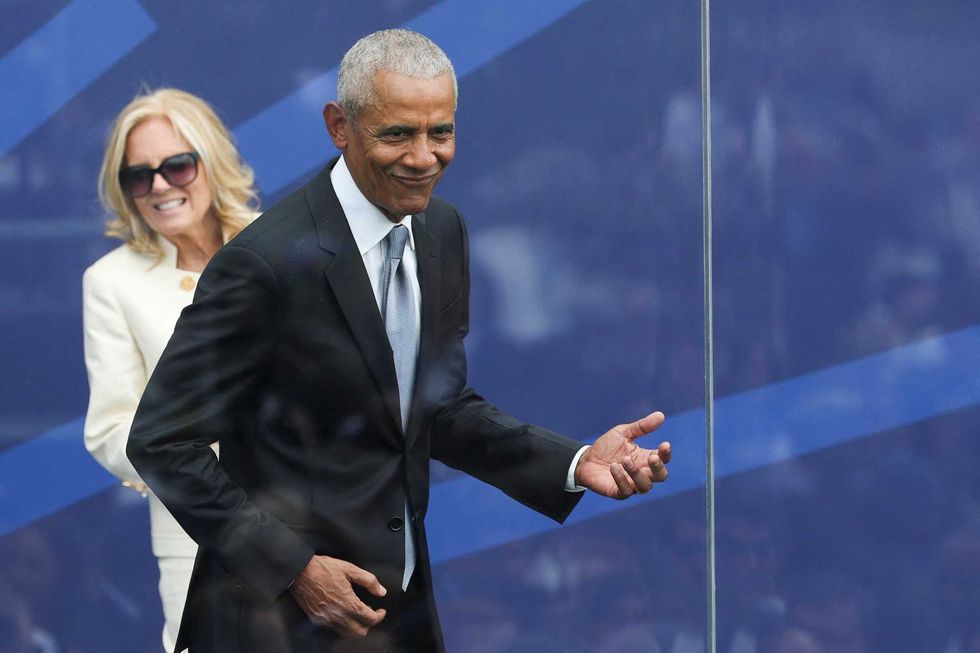
Fox News cut away from former President Barack Obama's historic remarks at the opening of his presidential library on Thursday to go to political analyst Reince Priebus.The abrupt switch came during Obama's dedication speech at the $850 million Obama Presidential Center in Chicago's Jackson Park, where three former presidents and a roster of A-list performers had gathered for an invitation-only ceremony.Obama was mid-sentence when anchor Sandra Smith pulled the plug."Hard things are hard," Obama told the crowd. "And that's especially true in a big, raucous, diverse, argumentative democracy like the United States of America. Everybody's got an opinion. And that means getting stuff done involves reconciling the demands of a couple hundred million people.""Alright," Smith said, cutting him off. "You've been listening live to former President Barack Obama there in Chicago at the grand opening of the Obama Presidential Center."Co-anchor John Roberts offered a brief recap — noting that former Presidents Bill Clinton and George W. Bush were in the audience and remarking that Bono "still looks pretty good" — before pivoting hard to Iran."JD Vance becoming a public face to the Trump administration's deal with Iran and what could be a moment that shapes a potential 2028 White House bid," Roberts said. "Reince Priebus is standing by."Priebus, a Fox News political analyst and former Republican National Committee chairman, then held forth on the Iran memorandum of understanding, calling it "a sixty-day trial run.""Americans care more about $5 gasoline than they do staying in a war with Iran," Priebus said. "That is an unpleasant thing for some people out there to live with, but it's true."President Donald Trump was not invited to the ceremony. Obama Foundation CEO Valerie Jarrett said the event was reserved for those who supported Obama's journey.The center opens to the public on Friday.
In a massive victory for common sense, American history, and executive authority, a federal appeals court has completely demolished a rogue activist judge's attempt to micromanage the executive branch. The post Huge Win for President Trump as Appeals Court Smacks Down Rogue Judge’s Order Blocking the Replacement of Exhibits at the President’s House National Park Site in Philadelphia appeared first on The Gateway Pundit.
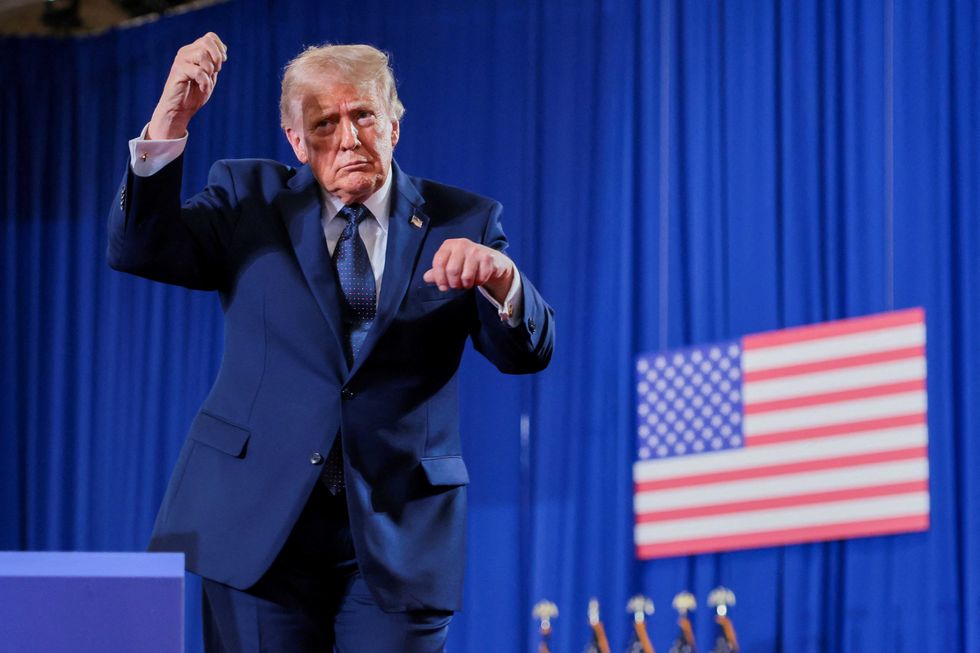
President Donald Trump is already a lame duck, argued a conservative columnist on Thursday, thanks to his own actions.“Here’s why so many Americans voted for Donald Trump and continue to cheer him on: They were sick of D.C. stasis, tired of GOP politicians whiffing on promises, eager for someone to break lots of Wedgwood,” wrote The Wall Street Journal's Kimberley A. Strassel. “Here’s where things go off the rails: When the president fails to acknowledge some hills simply can’t be held, and charges up anyway. That’s what happened in the fight over Bill Pulte, wiretapping and the SAVE America Act. His no-win standoff with his Senate GOP risks more than national security. It’s accelerating his lame-duck status.”Strassel argued that, although Trump had an opportunity earlier this week to push through Jay Clayton as director of national intelligence and reauthorize the Foreign Intelligence Surveillance, he blew those opportunities to make progress by pushing for his voter suppression legislation.“In a post combining a stream of complaints about ‘blue slipping,’ ‘Dumocrats,’ FISA, a U.S. attorney nomination and the fate of the ‘talented’ Mr. Pulte, the president unilaterally announced the cancellation of the Clayton hearing and vowed to not sign any FISA reauthorization until it was accompanied by his elections bill, the SAVE Act (which encompasses voter ID, proof of citizenship, the end of most mail-in ballots, and prohibitions against men in women’s sports and so-called gender-affirming surgeries on minors),” Strassel wrote.After reviewing the political fallout of Trump’s various moves, Strassel concluded that “the only thing Mr. Trump is accomplishing is earlier lame-duck status. Growing numbers of Republicans are furious over the unrelenting stream of sideshow brawls that suck headlines, divide the caucus, tank bills and divert from an election message. The ballroom. The ‘weaponization’ fund. The Pulte silliness. Washington is getting a renegade feel, especially as members internalize that Mr. Trump won’t be on another ballot.”As a result of Trump’s waning influence, the Republican Senate Majority Leader John Thune only has 46 functional votes despite there being 53 Republicans in the Senate. GOP senators like Lisa Murkowski of Alaska, Bill Cassidy of Louisiana, Susan Collins of Maine, Thom Tillis of North Carolina, Rand Paul of Kentucky and others have proved willing to stand up to him, especially in cases like Cassidy and Tillis where they are no longer facing the need to get reelected.“As for MAGA enthusiasts who think they’ll fix this by getting ‘better’ senators out of the midterms, good luck with that, too. Realistically, the best-case scenario is that the GOP ends up with a smaller Senate majority, and even that depends on returning moderates like Maine’s Ms. Collins,” Strassel explained. “If the House is lost, that tinier majority will be crucial to protecting Mr. Trump from investigations, as well as facilitating his nominations, including for judges. But by all means, sir, keep unmaking friends by using the Senate GOP as whipping boy for dead-end legislation.”She concluded, “There’s plenty this president can be getting on with. Even more were he to work with his Congress. It’s that, or his voters can watch him flail on this hill.”
Pro-Second Amendment groups praised the Supreme Court’s unanimous decision Thursday that pared back the applicability of a federal law prohibiting marijuana users from possessing firearms. The Supreme […]
A new poll finds voters now view Big Tech as a greater threat than Big Government, a 28-point reversal since 2019, as AI integrates into daily life.
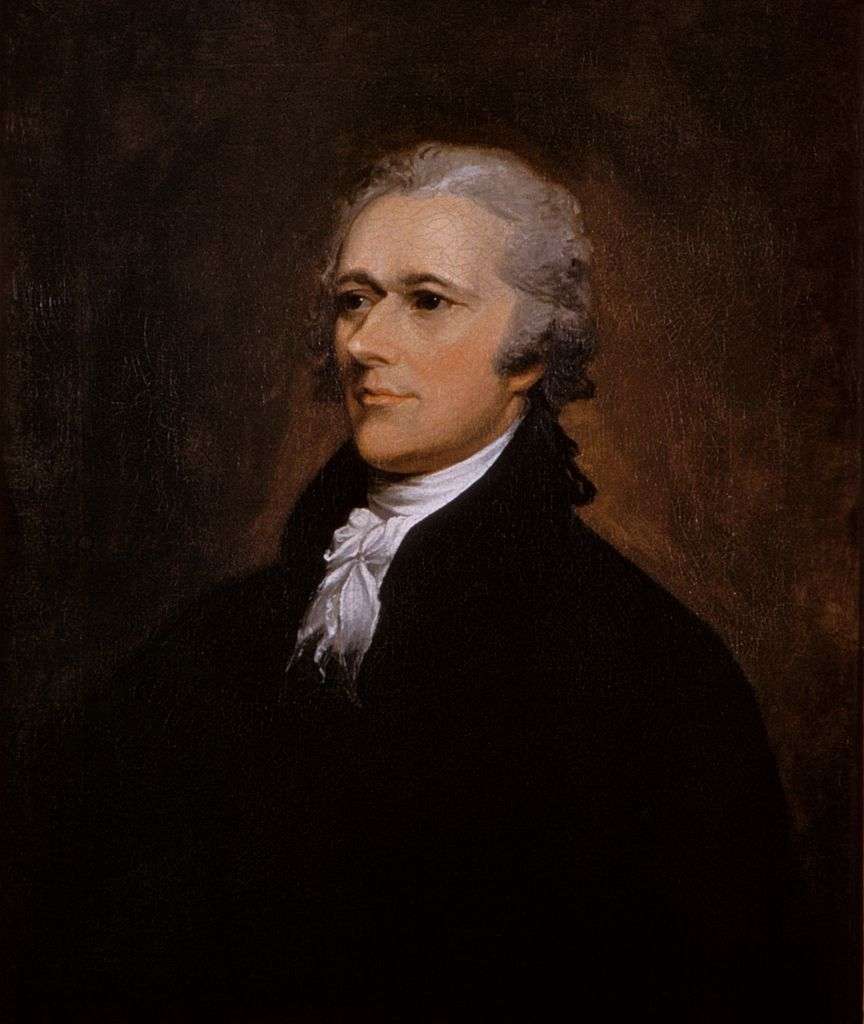
6/18/1787: Alexander Hamilton introduces his plan to the Constitutional Convention. The post Today in Supreme Court History: June 18, 1787 appeared first on Reason.com.